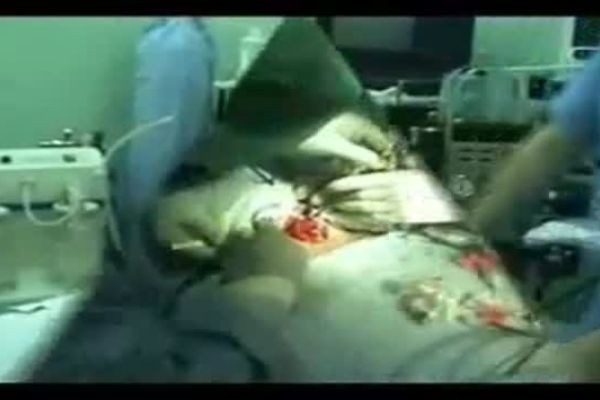
What Is Coronary Bypass Surgery (CABG)?
What is coronary bypass surgery (CABG)? Learn how surgeons reroute blood around blocked heart arteries, and what recovery involves.
10/25/26 • 17 Vues

Step one, in plain terms: a surgeon builds a detour. When one of the arteries supplying the heart muscle has narrowed or blocked, a healthy blood vessel taken from elsewhere in the body can be stitched in above and below the blockage, giving blood a new route past it. That operation is coronary artery bypass grafting — CABG for short — and the new vessel is called a graft.
The recording at the top of this page is a full-length one: at 25 minutes 49 seconds, the video follows an actual coronary bypass operation in the operating room, rather than an animation. Its own summary puts the idea simply — the surgeon takes vessels from another part of the body to go around a blocked artery, so that more blood and oxygen can reach the heart again. If you'd like the shorter version first, this site also carries a brief CABG explainer video of just under three minutes.
Before the first stitch: mapping the blockages
Bypass surgery starts long before the operating room, with pictures of the coronary arteries. The test that usually maps them is a coronary angiogram — if that term is new to you, our guide to how a coronary angiogram is done explains what it shows. Looking at those images alongside your overall health, the heart team judges where the blockages sit and how many grafts would help. That planning step is why two patients having "a bypass" may leave theatre with a different number of grafts.
The graft vessels: borrowed, not artificial
The detour vessels come from your own body. Surgeons commonly use an artery from inside the chest wall, a vein taken from the leg, or an artery from the arm. While one part of the team prepares the graft vessel, another opens the chest — usually through the breastbone — to reach the heart. The operation is done under general anaesthesia, so you are fully asleep throughout.
Keeping blood moving while the heart is worked on
In the traditional approach, a heart-lung machine temporarily takes over the work of the heart and lungs during the most delicate part of the operation, which lets the surgeon sew the tiny grafts onto a still heart. In some cases the team instead works on the beating heart, stabilising just the area being stitched. Either way, each graft is sewn with fine stitches — one end beyond the blockage, the other connected so blood can flow into the new route. When the grafts are in place and blood is flowing through them, the chest is closed and you are moved to intensive care or a recovery unit to wake up.
Afterwards: the slower steps
Recovery is a process rather than an event. The first phase is close monitoring in hospital, with attention to the chest wound, the place a graft vessel was taken from, and how the heart settles into its improved blood supply. Then comes gradual movement — sitting up, walking a little further each day — and, once home, a healing period for the breastbone during which lifting and driving are usually restricted for a time your team will specify. Follow-up visits, heart-protective medicines as prescribed, and attention to the habits that affect arteries all form part of the longer picture. A bypass reroutes blood around today's blockages; it doesn't remove the underlying tendency of arteries to narrow, which is why the aftercare matters as much as the operation itself.
MedicalVideos.com has published trusted medical videos since 2007. The site was founded by Dr. Mohamed Ibrahim, MD, PhD — physician and researcher.
Educational only — this article is general information about coronary bypass surgery, not medical advice and not a guide to anyone's diagnosis or treatment. Whether bypass surgery, a stent, or medical therapy alone is right in a particular case is a decision for the patient's own heart team.
Frequently Asked Questions
What does CABG stand for?
CABG stands for coronary artery bypass grafting. It is the formal name for heart bypass surgery, in which a graft vessel is sewn in to carry blood around a narrowed or blocked coronary artery.
Where do the graft vessels come from?
They come from the patient's own body — commonly an artery from inside the chest wall, a vein from the leg, or an artery from the arm. The surgeon chooses based on the vessel's quality and where the blockage sits.
Is the heart always stopped during bypass surgery?
No. The traditional approach uses a heart-lung machine while the heart is still, but some operations are performed on the beating heart, with only the area being stitched held steady. The team chooses the approach for each case.
How is a bypass different from a stent?
A stent is a small mesh tube placed inside the artery from within, usually through a catheter, to hold it open. A bypass leaves the blocked section in place and builds a new route around it with a graft vessel. Which approach fits depends on the pattern of blockages and the patient's overall picture.
Does bypass surgery cure coronary artery disease?
No. It improves blood flow around existing blockages, but the underlying tendency of arteries to narrow remains. Ongoing follow-up, prescribed medicines, and lifestyle care are part of treatment after surgery.
Articles Liés