

Hypertrophic Cardiomyopathy

Hypertrophic cardiomyopathy (HCM) is very common and can affect people of any age. It affects men and women equally. It is a common cause of sudden cardiac arrest in young people, including young athletes. Hypertrophic cardiomyopathy occurs if heart muscle cells enlarge and cause the walls of the ventricles (usually the left ventricle) to thicken. The ventricle size often remains normal, but the thickening may block blood flow out of the ventricle. If this happens, the condition is called obstructive hypertrophic cardiomyopathy. Sometimes the septum, the wall that divides the left and right sides of the heart, thickens and bulges into the left ventricle. This can block blood flow out of the left ventricle. Then the ventricle must work hard to pump blood. Symptoms can include chest pain, dizziness, shortness of breath, or fainting. Hypertrophic cardiomyopathy also can affect the heart's mitral valve, causing blood to leak backward through the valve. Sometimes, the thickened heart muscle doesn't block blood flow out of the left ventricle. This is referred to as non-obstructive hypertrophic cardiomyopathy. The entire ventricle may thicken, or the thickening may happen only at the bottom of the heart. The right ventricle also may be affected. In both obstructive and non-obstructive HCM, the thickened muscle makes the inside of the left ventricle smaller, so it holds less blood. The walls of the ventricle may stiffen, and as a result, the ventricle is less able to relax and fill with blood.
Video Transcript
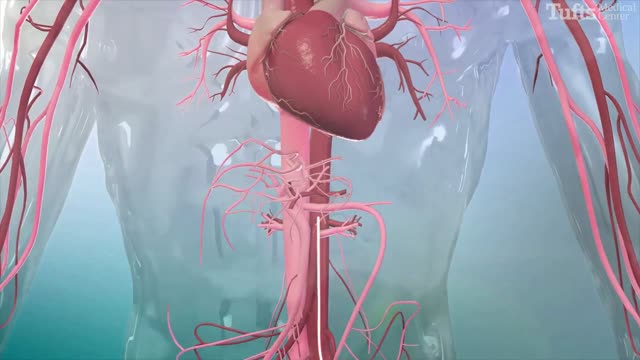
An animated explainer on hypertrophic cardiomyopathy. The narration describes how the ventricular septum thickens in this genetic heart disease, the difference between the non-obstructive and obstructive forms — including the mitral valve making contact with the thickened septum, obstructing outflow and leaking back into the atrium — the typical symptoms of breathlessness, chest pain and dizziness, and that effective treatments exist to relieve them.
Read the full transcript
The heart is a beating muscle that continually pumps blood to the lungs and organs of the body. Inside the heart are four chambers, two upper chambers or atria and two lower chambers or ventricles. The ventricular septum is the muscle which separates the two ventricles. Hypertrophic cardiomyopathy, HCM, is a genetic heart disease where there is increased thickness of the left ventricle, predominantly affecting the ventricular septum. There are two types of HCM, non-obstructive and obstructive. Obstructive HCM occurs when the mitral valve makes an abnormal motion and contacts the thickened septum,
obstructing the flow of blood from the left ventricle out of the heart. As well as causing leakiness or regurgitation of blood back into the left atrium. This obstruction to blood flow and mitral regurgitation creates high pressures in the heart and is the main cause of limiting symptoms in patients with obstructive HCM. Symptoms may include shortness of breath with exertion, chest pain, dizziness or exertional fatigue. Although there is no cure for HCM, there are several effective treatment options available to improve symptoms.
Transcript auto-generated from the video’s audio for accessibility and study. Educational content only — not medical advice.
Video Overview
From our Cardiology collection: ECG interpretation, echocardiograms, angioplasty, stents and heart conditions explained by cardiologists. Browse all Cardiology videos →
SORT BY-
Meilleures Commentaires
-
Derniers Commentaires