




Parasites Accidentally Seen During Colonoscopy

Parasites Accidentally Seen During Colonoscopy
Video Transcript
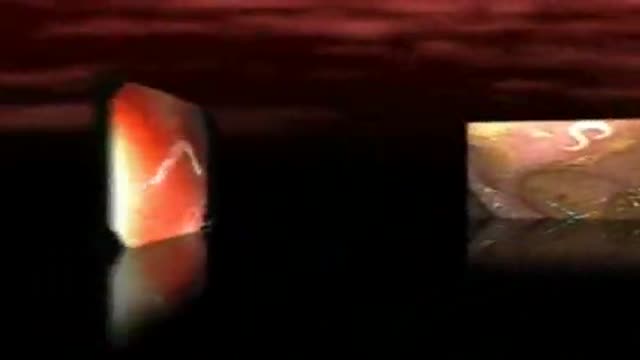
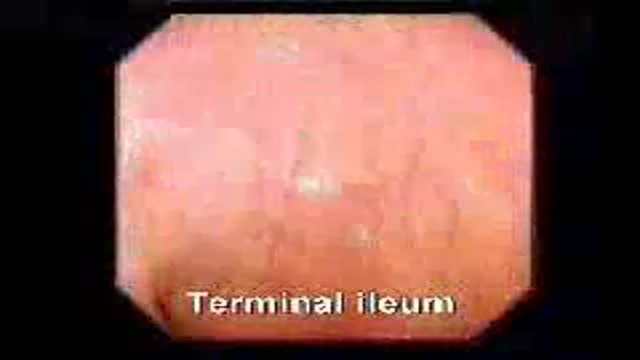
An endoscopy lecture about intestinal worms found during colonoscopy and endoscopy. The narrator discusses roundworm burdens and obstruction, then lingers on tapeworms in a pig-farm worker from China — their segments, self-fertilization and lengths of up to several meters — while the worms are watched moving away from the scope's light. The recording's last moments trail off into unrelated garbled chatter.
Read the full transcript
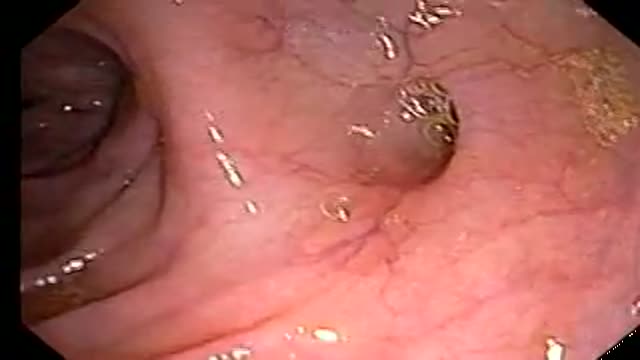
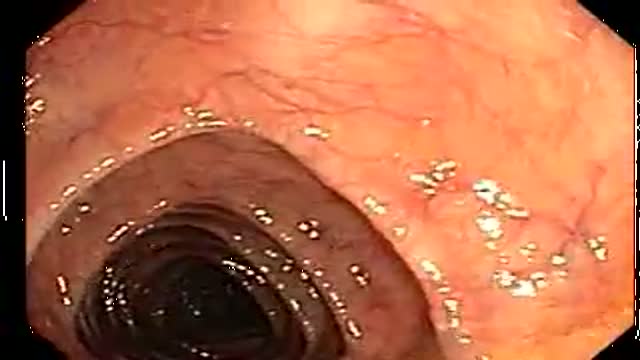
or to mechanical obstruction of the lumen by the worm. Heavy worm burden can result in intestinal obstruction, and migrating worms can cause pancreatitis and or colongitis when involving the pancreaticobiliary tree. Multiple medical therapies are approved for its treatment, including mibendazole. Epidemiologically, infections are most common in areas of lower socioeconomic conditions. This man manages a pig farm in China that is used to test pharmaceutical agents. From an endoscopic standpoint, it is noteworthy that the worms do not like light and will move away from the attention it is receiving.
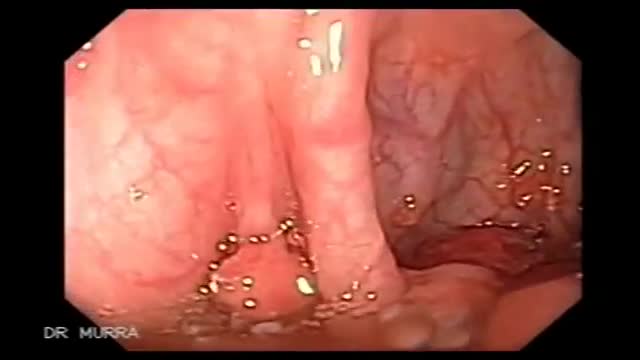
In this example, the endoscopist was too slow to snare his prey, which succeeded in escaping temporarily into the cooler and darker confines of the small bowel out of reach of the endoscope, but not from the soon to be consumed anti-hemithytherapy. This is the first glimpse of one of the tape worms. This worm is probably between 1 and 2 meters in length. You can see how closely the worm is associated with the intestine. We have the wall of the intestine closing in around the worm. So very tightly it adhered to it.
The segments themselves increase in size as we move down the length of the worm. So this is still quite near the front end, because these segments are quite shallow. OK, I think we can see some much bigger segments here. This is further down the length of that worm, getting towards the back end of it. The segments get bigger. They get more mature. Here we've got the biggest segments here. So these segments are probably about a centimeter or so in size. And again, dipping back down into the back parts
of the intestine. So here we have a fairly sexually mature segment here. It's ready to start producing eggs. And the animals themselves self-fertilized. So there are male and female parts within this segment. And self-fertilization takes place. The whole of the segment will then become completely full of eggs and will eventually detach from the worm and pass out in the fecal material. And that's how the animal reproduces. OK, so here's the very end of that worm. This is the last segment which has been produced. They would have started off as very small segments
near the neck of the parasite. And as the parasite gets older, they become further, further back and become more mature, bigger. These are the oldest ones which are occurring in the intestine. OK, as we move further down the intestine, we come across the second of the two tapeworms. And it's quite interesting to note that the position of these worms, they're not exactly together. They're spaced out along the intestine. So they're sort of avoiding each other to some extent and finding a different part of the intestine to inhabit.
The length of the small intestine is about seven meters in an adult's human. These worms can maybe get up to about 10 meters in length. So the worm itself, quite often when it's fully mature, is very folded and coiled up so it's taking up a bit less space in the intestine. Inside each segment are quite significant muscle systems, and they can actually move to different parts of the intestine, be detaching and then reattaching to the wall. We're now moving to the third worm. Here we can see the actual very front end of the worm.
This is called the skull-ex. And we can actually see there are four suckers. So these suckers grasp on to the wall of the intestine and they hold the worm in place. Other tapeworms might have some hooks around the top as well, which they sort of anchor into the intestinal wall. These worms don't have any intestine. They simply absorb the nutrients across the body wall. So they don't actually eat anything. They absorb as well as the intestine absorbs food so does the worm itself. In most cases, the worms themselves
don't cause a huge problem to the host. Generally speaking, the intestine is full of nutritional material, which is sufficient for the host and also sufficient for the parasite, even if there are three of those parasites there. Oh, no. Then record why you're building. I'm not sure what I'm doing here. I'm not very good at doing it. I just, I just am a jumpstitch. Ha ha ha ha ha ha ha ha ha ha ha. Hi. Hi. How are you? I'm good, I'm good. How are you? I'm good, I'm good.
I'm good, I'm good, I'm good. Hi. Too much of that's hot. There's still, still no cook. I can't feel it. I know this case actually Western. It's Western.
You can actually see what I'm talking about. Our professor used to handle them with bare hands. Mm, you know that, don't you? No, I don't know. So, just a few. I need to know that. You get it. The record, you can check even. You can check up on something. Mm. It is good. You know the record, you can check. You think. You think. You think. You think. You think.
Transcript auto-generated from the video’s audio for accessibility and study. Educational content only — not medical advice.
Video Overview
From our Surgical Examination collection: Pre-op assessments, wound and hernia exams, and clinical surgical skills demonstrated step by step by surgeons. Browse all Surgical Examination videos →
SORT BY-
Top Comentarios
-
Últimos comentarios