An epidural numbs pain from the waist down through a tiny tube in your lower back. What to expect when it is placed, how it starts to work, and what it feels like afterwards — in plain English, with v..
10/23/26 • 44 ভিউ

Picture the moment most people ask for one: you're on the edge of the bed, contractions are coming closer together, and someone says the anaesthetist is on the way. An epidural is simply a way of delivering numbing medicine right next to the nerves that carry pain from the lower half of your body — so contractions become much easier to cope with, while you stay awake and present for the birth.
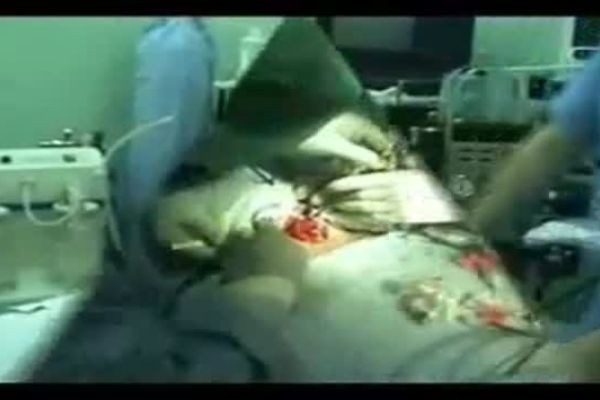
The video at the top of this page walks through a complete placement from start to finish — positioning, puncture, and the application of the anaesthesia — which makes the steps below much easier to picture.
First, a quick picture of where the medicine goes
Your spinal cord sits inside a protective tube in your back. Just outside that tube is a narrow space called the epidural space. An epidural places a very fine, soft tube — a catheter — into that space in your lower back. Numbing medicine can then be given through the catheter, a little at a time or as a slow, steady flow, and it bathes the nerves as they leave the spine towards your belly, hips, and legs.
That's also what makes an epidural different from a spinal anaesthetic, which is a single injection given slightly deeper. Because the catheter stays in place, an epidural can be topped up as labour goes on, and it can also be used for pain relief during some operations on the lower body, not only for childbirth. If you're preparing for the labour side of things, our guide to the stages of childbirth shows where an epidural usually fits into the timeline.
Sitting still is honestly the hardest part
You'll be asked to sit on the edge of the bed (or lie on your side) and curl forwards, rounding your lower back — think of making a "C" shape. It sounds simple, and between contractions it usually is. The anaesthetist cleans your back, numbs a small patch of skin with a quick sting of local anaesthetic, then guides a needle between the bones of your lower back until its tip reaches the epidural space. The thin catheter is threaded through the needle, the needle comes out, and only the soft catheter remains, taped along your back.
A small test dose may be given first, and you'll be asked what you feel. Try not to worry about moving at the wrong moment — the team does this positioning every day, and they'll pause and talk you through each step.
What you'll feel as it starts to work
Relief doesn't arrive all at once. Over the next several minutes, most people notice their legs growing warm and heavy, and the sharp edge of each contraction softening into pressure rather than pain. You may still feel touch and pressure — that's expected, and it's useful when it comes time to push. Your blood pressure and the baby's heart rate are monitored while the epidural is running, and the dose can be adjusted: lighter if you want more feeling and movement, stronger if pain breaks through.
If you'd like to see a related technique used in labour, the site also carries a video on combined spinal-epidural anaesthesia for childbirth, which pairs a spinal injection with an epidural catheter.
Afterwards, as the feeling comes back
When the catheter is removed — usually a quick, painless moment after delivery — sensation and strength return gradually over the following hours. Your legs may feel wobbly at first, so the first walk to the bathroom is normally with help nearby. A sore spot in your back where the needle went in, and a headache afterwards, are the complaints teams ask about most; mention either one, and anything else that worries you, rather than waiting it out quietly.
Whether an epidural is right for you depends on your health, your labour, and your own preferences — there's no single correct choice, and your midwife, obstetrician, and anaesthetist can talk through the trade-offs in your situation.
MedicalVideos.com has published trusted medical videos since 2007. The site was founded by Dr. Mohamed Ibrahim, MD, PhD — physician, researcher, and former Duke faculty.
Educational only — this article is general information about epidurals, not medical advice. Decisions about pain relief in labour or surgery belong with your own care team.
Frequently Asked Questions
Does having an epidural placed hurt?
Most people say the brief sting of the skin-numbing injection is the worst part. You may feel pushing or pressure in your back as the catheter is placed, but sharp pain during placement is something to tell the anaesthetist about straight away.
How long does an epidural take to work?
It builds gradually over several minutes rather than switching pain off instantly, and it can be topped up through the catheter if you need more relief later.
Can I still move and push with an epidural?
Your legs will usually feel heavy and weaker than normal, so you'll stay in bed, but many people can still feel pressure and push when guided. Lighter, lower-dose mixtures aim to preserve more movement and feeling.
Is an epidural the same as a spinal?
No. A spinal is a single injection into the fluid around the spinal cord and works very quickly for a set period. An epidural uses a catheter in the space just outside that fluid sac, so medicine can be given continuously and adjusted over time.
সম্পরকিত প্রবন্ধ