


How to control arterial bleeding - First Aid

Controlling arterial bleeding is a core first-aid skill, and this educational video demonstrates the direct-pressure technique used while waiting for emergency help to arrive. It is intended for first-aid training and general learning. In an emergency, call your local emergency number.
Video Transcript
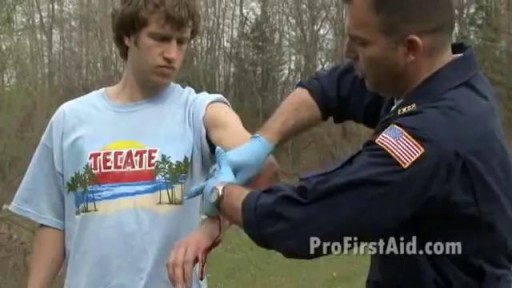
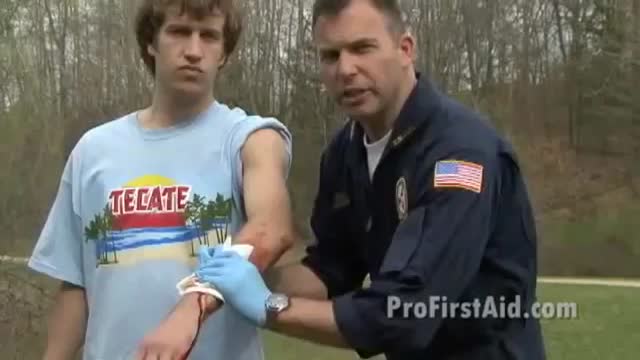
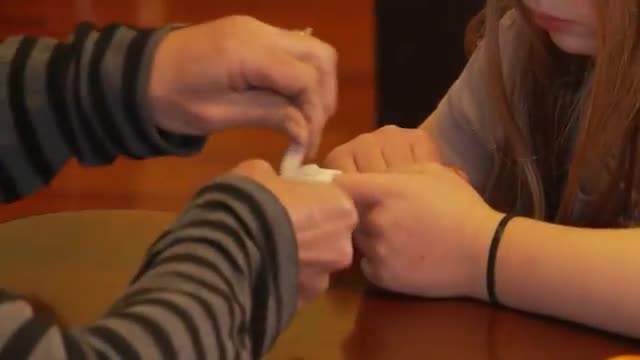
A first-aid instructor demonstrates controlling arterial bleeding. He explains how arterial bleeding shows itself — pulsating, brighter red, harder to stop — then teaches firm direct pressure, adding more bandage on top if it leaks through and never removing the bottom layer (that would pull the clot off), plus elevation when there is no fracture or spinal involvement, letting gravity help while direct pressure does the main work.
Read the full transcript
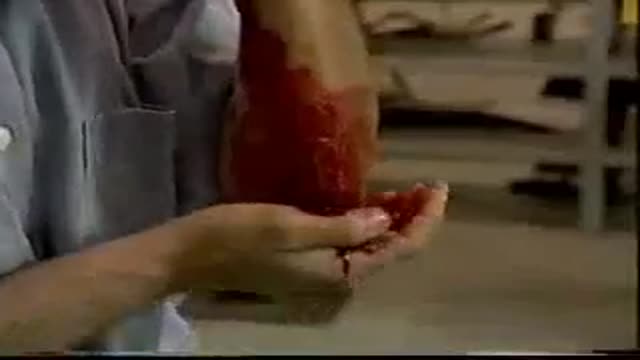
Now when controlling an arterial bleed, you're gonna notice that arterial is indicated more by like a pulsating, brighter red blood that's harder to stop. If there's no bone fractures, we're gonna use really good salad direct pressure. If it starts to leak through, you'll only add more bandage to the top of it. You never take away the bottom because then it pulls the clots off and you start from scratch again. I still like to go with the elevation as long as there's no bone fracture, spinal cord involvement.
That lets gravity work with us, not against us, but direct pressure normally, even if it's at heart level, is usually pretty good. Once the bleeding is under control, the wrapping of the bandage works very similar. You're gonna keep that direct pressure down. We're gonna start at the distal end or the end of the arm and work towards the heart. That way we're not gonna trap blood down in the hand anymore than we have to. When you get to the top where the wound is, you can put a little twist to the tie,
which helps apply a little more pressure. After you've got this tight enough, check for any leak through bleeding. Make sure you check for capillary refill to make sure you're not having a tourniquet effect with a too tight a bandage. Elevate above the heart, activate EMS. Watch for reoccurrence of that arterial bleeding if it does add more bandage and more wrapping to create a pressure dressing and then let's get this patient to the hospital.
Transcript auto-generated from the video’s audio for accessibility and study. Educational content only — not medical advice.
Video Overview
From our Nursing Videos collection: Nursing videos: catheterization, wound care, injections, IV therapy and patient-care skills demonstrated for nursing students and professionals. Browse all Nursing Videos videos →
SORT BY-
Mga Nangungunang Komento
-
Pinakabagong komento