


Breast Augmentation Surgery

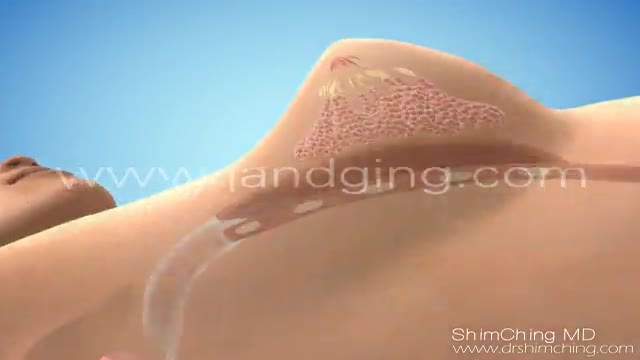
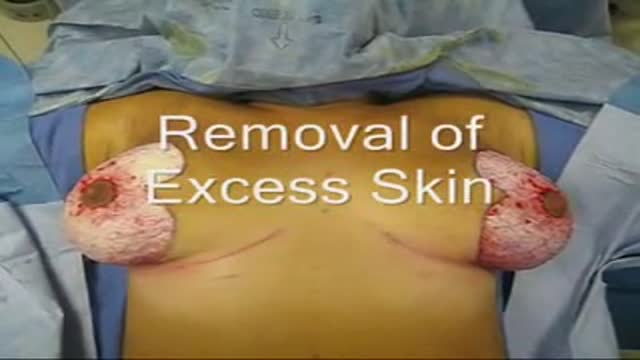
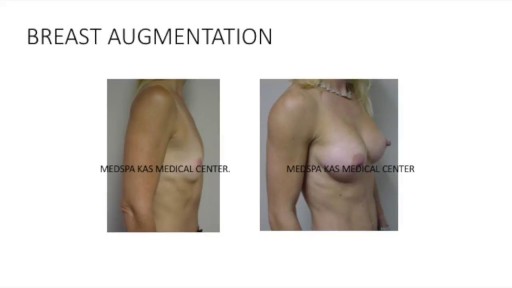
Breast augmentation is a surgical procedure to enhance the size and shape of a woman's breasts for a number of reasons: To enhance the body contour of a woman who, for personal reasons, feels her breast size is too small To restore breast volume lost due to weight loss or following pregnancy To achieve better symmetry when breasts are moderately disproportionate in size and shape To improve the shape of breasts that are sagging or have lost firmness, often used with a breast lift procedure. By inserting an implant behind each breast, surgeons are able to increase a woman's bustline by one or more bra cup sizes.
Video Transcript
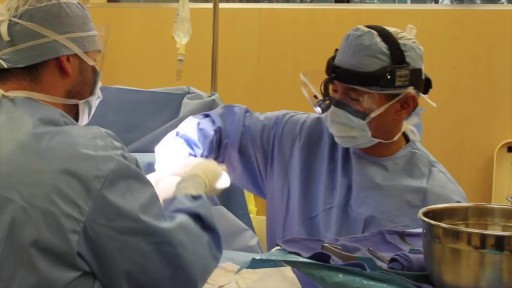
A surgeon's own narrated recording of a breast augmentation operation. He talks through marking the incision at the lower edge of the areola, tunnelling down to create a pocket under the chest muscle, inserting saline implants deflated and filling them through a closed system, adjusting both pockets for symmetry and cleavage, and closing with buried dissolving stitches — finishing with aftercare such as the support bra patients wear home.
Read the full transcript
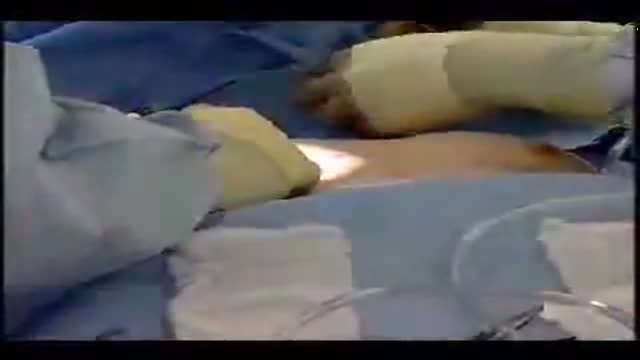
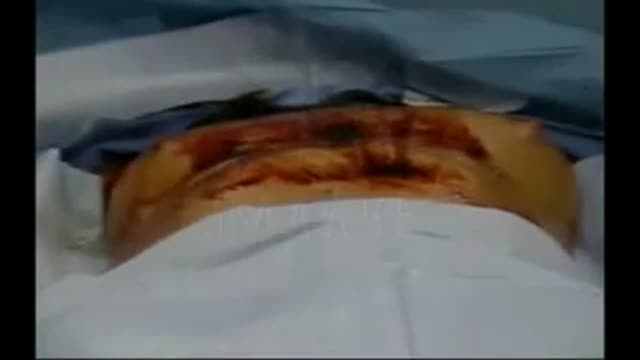
Thanks for choosing to watch this video of an augmentation surgery. What you're going to see now is the sequence of events in surgery. This is an actual patient who is going to undergo a breast augmentation or breast enhancement. The video is about 7 or 8 minutes long so it's just the highlights of the surgical procedure. This was filmed in our office. Now the patient has already been washed off and that's the orange color of the skin. And the only part of the patient which is exposed is just the area we're doing surgery on.
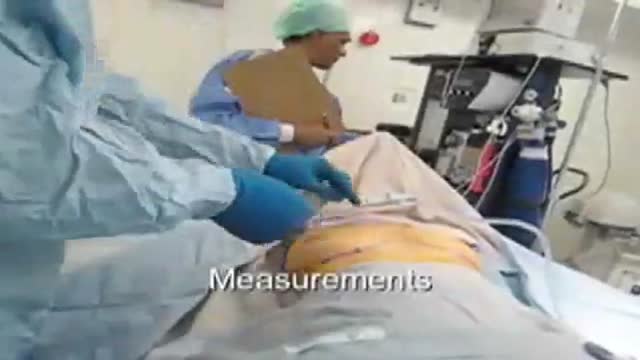
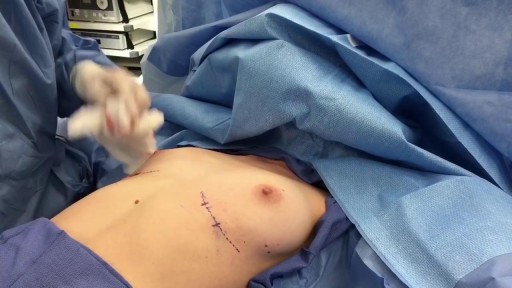
Now I'm just showing this patient has a very wide sternum or the breast bone is pretty wide. And her breasts are somewhat divergent. She has a little bit of breast tissue with some extra skin but not a great deal of laxity of skin. Our typical incision is just at the base or underneath the pigment at the bottom part of the arela. And that's what I'm marking out with my pen. Now I'm just showing you here the width of the sternum and where the implant is going to go.
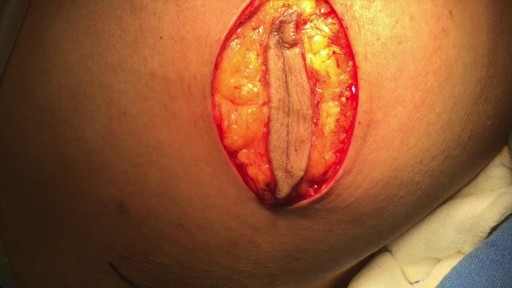
We try to give people as much cleavage as possible. Here I'm making incision on the lower part of the arela. Now this should not cause any numbness or change in sensation at all. Now I make a little pocket through the breast tissue. I'm making a little tunnel down to the muscle. And then I want the implant to go underneath the muscle. Typically there's not much in the way of bleeding as you see with this type of surgery. Now I've found the muscle and separated the muscle fibers.
And now I'm making a little pocket underneath the muscle. And this is all with digital or finger dissection. There usually isn't much in the way of bleeding by doing this. Now that's just a shot of the operating room more from a distance. As you can see I've already started with the left side making the pocket equally on both sides. Now it's very important once this pocket is created that when we put the implant in we make sure both pockets are identical on the breast set uniformly. On some patients we actually put in a larger implant on one side.
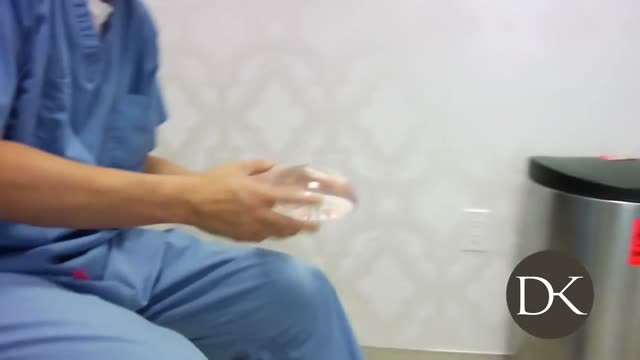
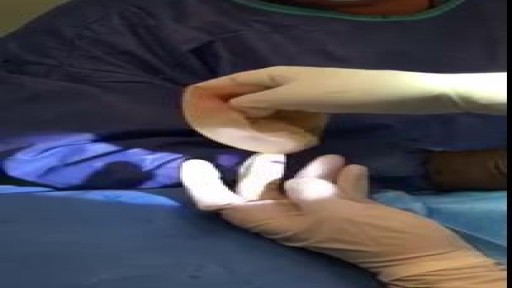
And that's where the implant is going to go. We want to give the patient a lot of projection. But specifically we want to give the patient more cleavage and narrow that wide sternum or the wide breast bone because some people just have that real wide look. The easy thing is to make the pocket too lateral or too far out to the side. So we try to minimize the dissection laterally. Here's the implant. It's just a bag that is filled up with salt water. The same thing that you get through the IV.
It's totally safe if it ever leaks. It's physiologically not harmful in any way. Now I'm folding that up and putting that implant in essentially deflated. It goes in quite easily. And then of course once we fill that implant up it won't want to come out through that little incision. The incision itself is probably about an inch to an inch and a quarter in size. Now we're going to go and hook up that little fill valve there. And there's the IV fluid that we used. The same IV fluid that the patient gets through the vein.
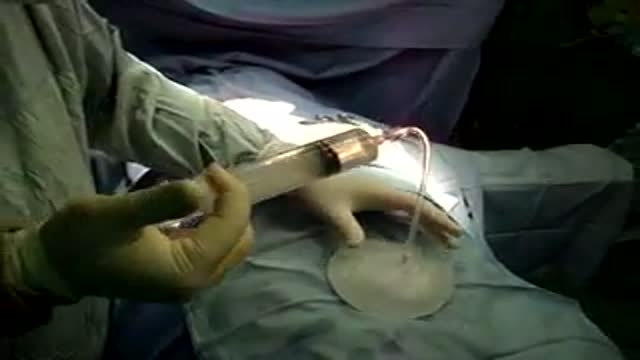
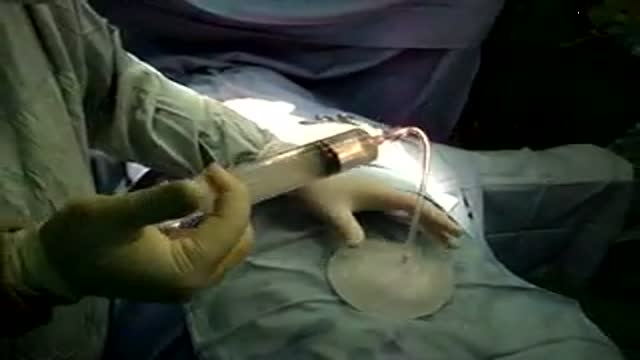
That's what we use to fill up the implant. And then the nurse uses a closed system and just fills up that implant slowly as I adjust the pocket. And you'll see that right breast starts to get bigger as this range goes back and forth. Typically what we'll do is we'll fill up both implants to the same size and then we adjust them for symmetry. Here's the left implant. You can see it's deflated. It has a little bit of salt water into it just to get the air bubbles out.
We put the implant in and it slides right in there. But once we start filling up it really takes up a lot of space. We'll get both breasts filled up so that they have a good symmetrical look. And then we can adjust the pockets up or down or sideways or laterally. And then once we do that we decide whether the patient actually needs more volume placed in. Now we've finished putting the volume in. I pulled that little valve out and that valve seals just like a valve.
Probably on a volleyball or basketball or any kind of... We really haven't seen any problem actually with deflation. And then I sweep around with my finger to make sure there's no bands or irregularities that would cause any distortion of that implant. And once the implants look really symmetrical I go ahead and put a few stitches in. The muscle, that cut in the muscle just goes directly in the direction of the muscle fibers. And so when that's closed up the muscle functions perfectly normally. And now I've closed up the skin incision with stitches underneath the skin.
This way there's no stitches that the patient sees. These stitches all dissolve. And we just ask the patients to leave these little tapes on the skin for the first three to four weeks following surgery. The patient can shower a day or so after surgery and as often as they want they just have to kind of pad this area dry. The patients bring in a jogging bra or sports bra on. We ask them to wear that for the first couple of days. Now you're seeing the incision. You see how nice that incision looks.
It's all closed up underneath the skin. And you see no stitches actually in the skin surface. So we minimize the scarring. Now we put these little tapes on. Frequently patients after a month it's very difficult to even see this incision once the tapes come off. It heals so well. And it's rare to have any patient complain about the appearance of the incision. Again there shouldn't be any numbness or change in sensation with this kind of procedure. If anything the nipples might be a little more sensitive because they project a little more.
Initially in the first week after surgery frequently patients will feel like those implants are up on their clavicles. They're too high or they're kind of a kidney bean shape. Because the implant is actually underneath the muscle and it's very tight. And it does take time for that implant to settle out depending on the patient's skin and the amount of muscle they have. The implant really does look a lot different from the first week to the second week. But sometimes it will take as much as two or three months to settle out and become nice and soft.
We really want these implants to be or the breasts to be as soft as a natural breast. And to look and feel natural. But it does take a few months for all this to occur. And it can vary a lot from patient to patient.
Transcript auto-generated from the video’s audio for accessibility and study. Educational content only — not medical advice.
Video Overview
From our Plastic Surgery collection: Rhinoplasty, liposuction, breast augmentation, facelifts and reconstructive procedures performed step by step. Browse all Plastic Surgery videos →
SORT BY-
Komentar Teratas
-
komentar terbaru