








Diabetes Effects on Body Animation 3D

Diabetes Effects on Body Animation 3D
Video Transcript
An animated patient-education film about diabetes. It explains how carbohydrate becomes glucose, how insulin from the pancreas acts as a key letting glucose into muscle cells, and how the liver tops up blood glucose between meals. It then covers what goes wrong in type 1 and type 2 diabetes, effects of persistently high blood glucose such as slow-healing wounds and clouding of the lens of the eye, and closes with the usual treatment ladder for type 2, from diet and activity to medication.
Read the full transcript
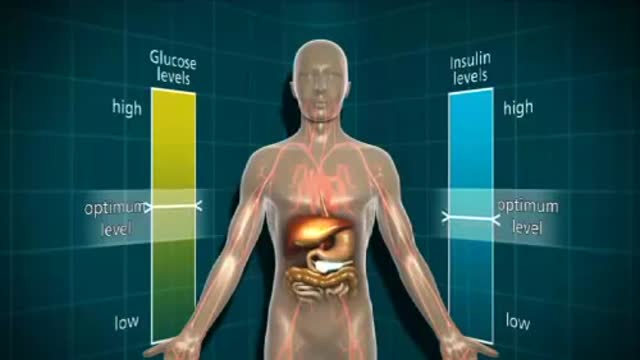
In this film we're going to explain how your body processes the food you eat in order to provide all your body cells with the energy they need. And also what happens when you have diabetes and this system doesn't work properly. When you eat food that contains carbohydrate it's broken down in the stomach and digestive system into glucose which is a type of sugar. We need glucose from food because that's what gives us energy. Carbohydrate containing foods are things like starchy foods, sugary foods, milk and some dairy products and fruit.
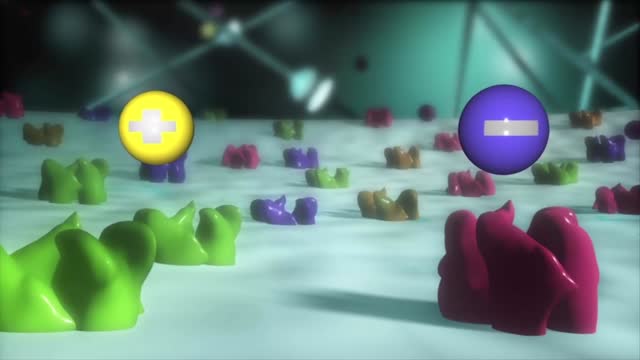
This glucose then moves into the bloodstream and the body detects that the blood glucose level is rising. In response to that the pancreas which is a little gland that sits just underneath the stomach starts to release a hormone called insulin. And it's insulin that helps our body get the energy from the food we eat. The bloodstream then takes the glucose and the insulin to every cell in our body that needs it. To make this easier to understand let's look at muscle cells. At the muscle cells it's insulin that allows the glucose to get into the cells where it can be used for energy.
It's a bit like insulin is a key unlocking the door to the cells so the glucose can get in. That way the blood glucose level starts to drop. But the blood glucose level can be topped up at any point by the liver releasing extra glucose that it has stored. The blood glucose rises again and again the pancreas produces more insulin to move with that glucose through the bloodstream to the muscle cells. Open the doors and let the glucose in. The body functions best with the blood glucose at an optimum level.
It doesn't like it if the blood glucose rises too high. Normally there's a cycle within the body which balances out the glucose and the insulin level. And this is achieved by the food you eat, the pancreas and the liver. However in some people the system doesn't work properly and they develop diabetes. There are two main types of diabetes, type 1 and type 2. In type 1 diabetes the body isn't making any insulin at all. This is because of an autoimmune response whereby the body has destroyed the insulin producing cells in the pancreas.
We don't entirely know why that happens in some people and not in others. Type 1 diabetes accounts for about 15% of all cases. It's most often found in the under 40s and it's by far the most common type of diabetes found in childhood. In type 1 diabetes the carbohydrate containing food is broken down into glucose as normal. That glucose then moves into the bloodstream. Normally the body would produce insulin to let that glucose into the cells. But in type 1 diabetes there is no insulin being produced so the glucose can't get into the body cells at all.
So the level of glucose in the blood rises and rises. The body tries to lower the level of glucose, it tries to get rid of the glucose through the kidneys. That's why people who have undiagnosed type 1 diabetes tend to go to the toilet a lot to pass urine. As the kidneys filter the glucose out of the blood they also take a lot of water with it. So the person with diabetes will get very thirsty. The urine contains a lot of glucose and that creates an environment where it's quite easy for bacteria to thrive.
So it's also quite common to get thrush or genital itching. In the same way the blood contains a high level of glucose as well. So more bacteria than usual will tend to breed in flesh wounds and they might be slow to heal. Glucose can also build up in the lens at the front of the eye causing the liquid in the lens to become cloudy. That can mean that some people with undiagnosed type 1 diabetes can have blurred vision. Because the glucose can't get into the cells to be used for energy,
somebody who's got undiagnosed type 1 diabetes is going to start feeling very tired, lethargic and unable to go about their normal daily routine. But the body still needs an energy source in order to work properly. So what it does is it starts to break down its fat stores and that can lead to weight loss. So the main symptoms of type 1 diabetes are going to the toilet a lot, first, thrush or genital itching. Slow healing of wounds, blurred vision, tiredness and weight loss. These symptoms generally happen quite quickly, often over a few weeks and can be reversed once the diabetes is treated with insulin.
Type 2 diabetes accounts for about 85% of all cases in the population. It's most common in the over 40 age group in the white population and in the over 25 age group in the black or south Asian population. Type 2 diabetes is a little more complex because of slightly more processes at work. Either the body isn't producing quite enough insulin or the insulin it is producing isn't working properly. That can be due to being overweight because a build up of fat can stop insulin doing its job properly.
But it can also happen in people of a healthy weight. So in type 2 diabetes the carbohydrate containing food is broken down into glucose in the stomach and digestive system as normal. That glucose then moves into the bloodstream. The pancreas starts to produce insulin which moves with the glucose through the bloodstream to all the body cells which need glucose for energy. However, the glucose can't always get into the cells because the locks to the cell doors have become third up with fat deposits. That means that the insulin can't open the cell doors properly.
So the level of glucose in the blood continues to rise. In response to this, the pancreas produces even more insulin. So the blood glucose levels continue to rise and the insulin levels continue to rise. This situation is further complicated by the cells who are desperate for energy sending out emergency signals to the liver to release stored glucose. The blood glucose level goes up and up and the pancreas produces more and more insulin until it can't cope anymore and eventually it wears out.
As with type 1 diabetes, the symptoms of type 2 diabetes are going to the toilet a lot, thirst, throschogenetic lipching, slow healing of wounds, blurred vision, tiredness and weight loss in some people. The symptoms for type 2 diabetes come along very slowly and some people don't have any symptoms at all. So for that reason, people can live with type 2 diabetes for up to 10 years before they realise that they have it. Type 2 diabetes can be treated in a number of different ways. Initially it may be sufficient to make changes to the food you're eating and to take extra physical activity or lose any weight that may be appropriate.
But type 2 diabetes is a progressive condition and most people will need some form of medication to treat it.
Transcript auto-generated from the video’s audio for accessibility and study. Educational content only — not medical advice.
Video Overview
From our Endocrinology collection: Diabetes, thyroid, adrenal and hormone disorders explained — diagnosis, treatment and patient guidance. Browse all Endocrinology videos →
SORT BY-
Meilleures Commentaires
-
Derniers Commentaires