



Female Foley Genital Catheter Insertion Procedure

Watch that Female Foley Genital Catheter Insertion Procedure
Video Transcript
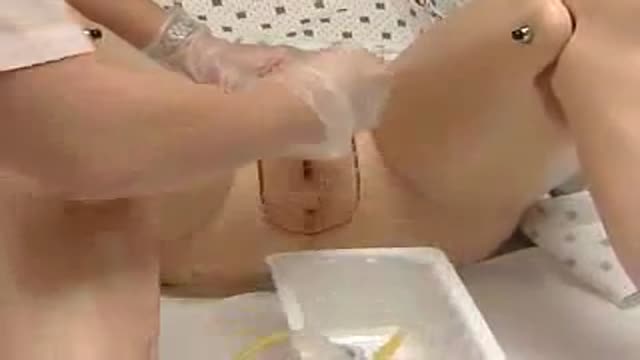
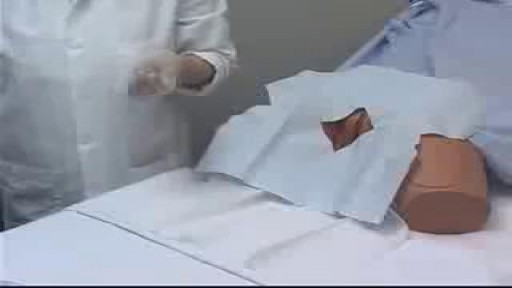
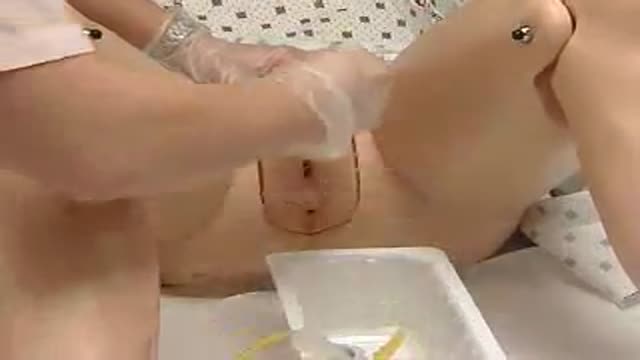
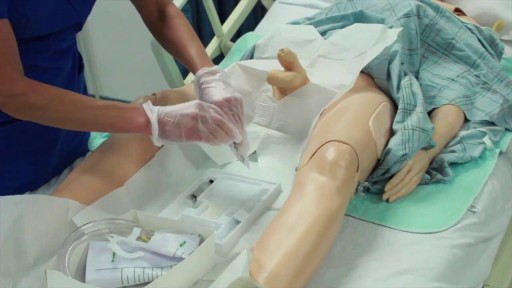
A nursing-skills demonstration of female Foley catheter insertion. The nurse talks through the full routine — verifying the order, checking allergies, explaining the procedure, setting up the sterile field, draping and cleansing, inserting the catheter, fitting the leg strap, and watching the drainage bag — explaining sterile technique throughout.
Read the full transcript
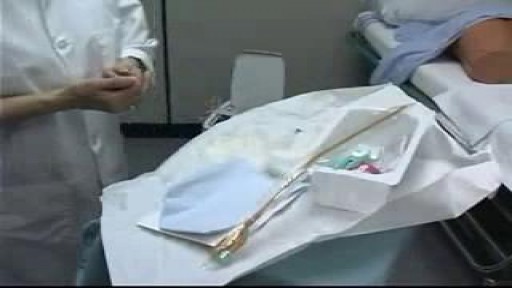
Sometimes the catheter kit doesn't come with a catheter or a bag, so just make sure that you're reading what's on the package. Verify that you have an order to put in a Foley cap. Verify that it makes sense for your patient. Some common reasons for Foley insertion are urinary retention, and if a patient's going to the operating room, you've washed your hands before you come into the patient's room. Good morning. My name is Becky. I'm going to be your nurse today. Could I take a look at your arm band?
Can you wait for the patient to give you their arm? Could you tell me your name and date of birth? And she tells me that it matches perfectly. Can you tell me if you have any allergies? How about specifically to iodine or latex? We are ready to explain the procedure to the patient. Your physician has ordered for you to have a Foley catheter. A Foley catheter is a soft, flexible tube that goes in the urethra and up to your bladder, drain the urine from your bladder. They may ask if it's going to be uncomfortable.
It may be a little uncomfortable. You may feel a little pinch, but we're going to work together and get it done as quickly as possible. If your patient needed peri care, you're going to want to make sure that you're cleaning that area first with either soap and water, some of the wipes or some of the personal cleansing spray. Of course, then you would change those gloves, re-wash your hands before you began setting up your sterile field. Raise my patient's bed to a comfortable working height. I'm making sure that my patient is laying a slotted sheet and tolerate.
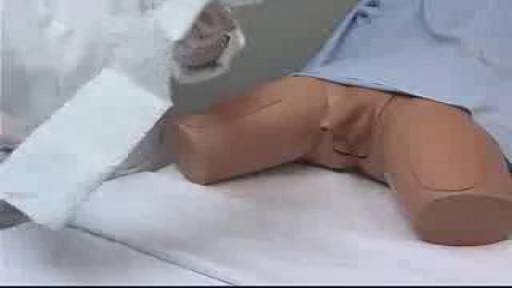
My bedside table is clean and dry and waist high. Open up my kit. I'm just going to pull your covers back. I'm going to move them all the way down to the end of the bed and raise your gown. Of course, you've provided for privacy for your patient. This is her in bending her knees. Put this package down at the end of the bed. I'm going to open it away from me first. Not touching the inside. I need to keep that sterile. Then I'll open up the edges.
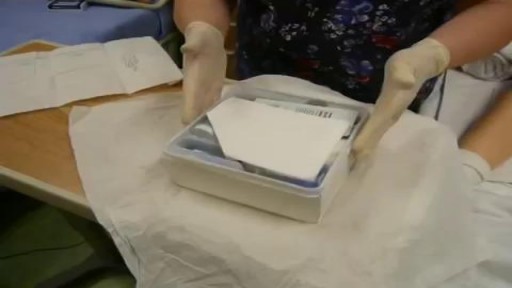
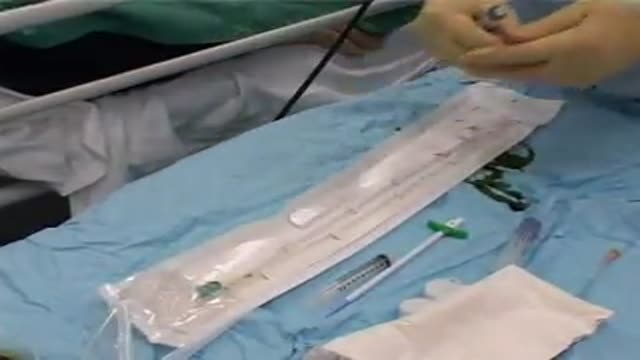
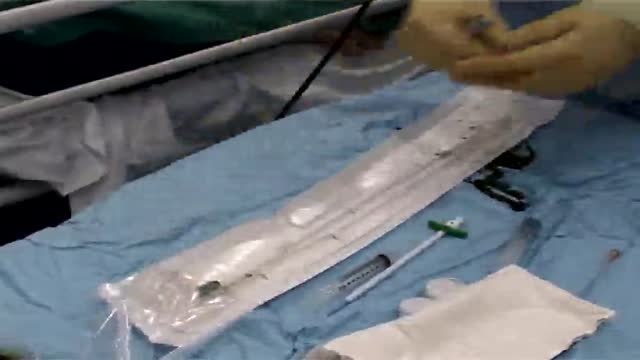
Now I'll open the top. Notice that I'm not touching the inside of the package at all because I may need to push the top dressings away to better enable me to get the gloves out of there without contaminating my sterile field. Without touching anything else in the kit, I'll touch the outer one inch border and slide my kit a little bit to the right so that I can have some room to don my gloves here on the end. Open up my package. I'm going to be very careful not to let my package touch my sterile field at all.
I'm only going to grab this outer edging. That way, if the package shuts, I'm not going to be contaminating my gloves because I didn't touch the inside. So only touch the outside edges. I'll give it just a little bit of a pinch to keep the package from shutting. The palm is facing up. I'm grabbing just the inside of the cuff. This is actually the inside of the glove. I don't want to touch the outer portion that has the sterile. Without flinging it around, pull that on. Pull onto the corner of this package
so it doesn't hit my sterile field when I go to manipulate this glove. Put all four fingers under that cuff to protect them. Pull my thumb away because if I have my thumb here, I run the risk as I pull it on of hitting my wrist and contaminating this glove. Again, my palm is going to be up. I can touch anything on this kit now because I'm sterile. Then I straight a drape out. And I'm just going to drop it. I'm going to put my tray to the side.
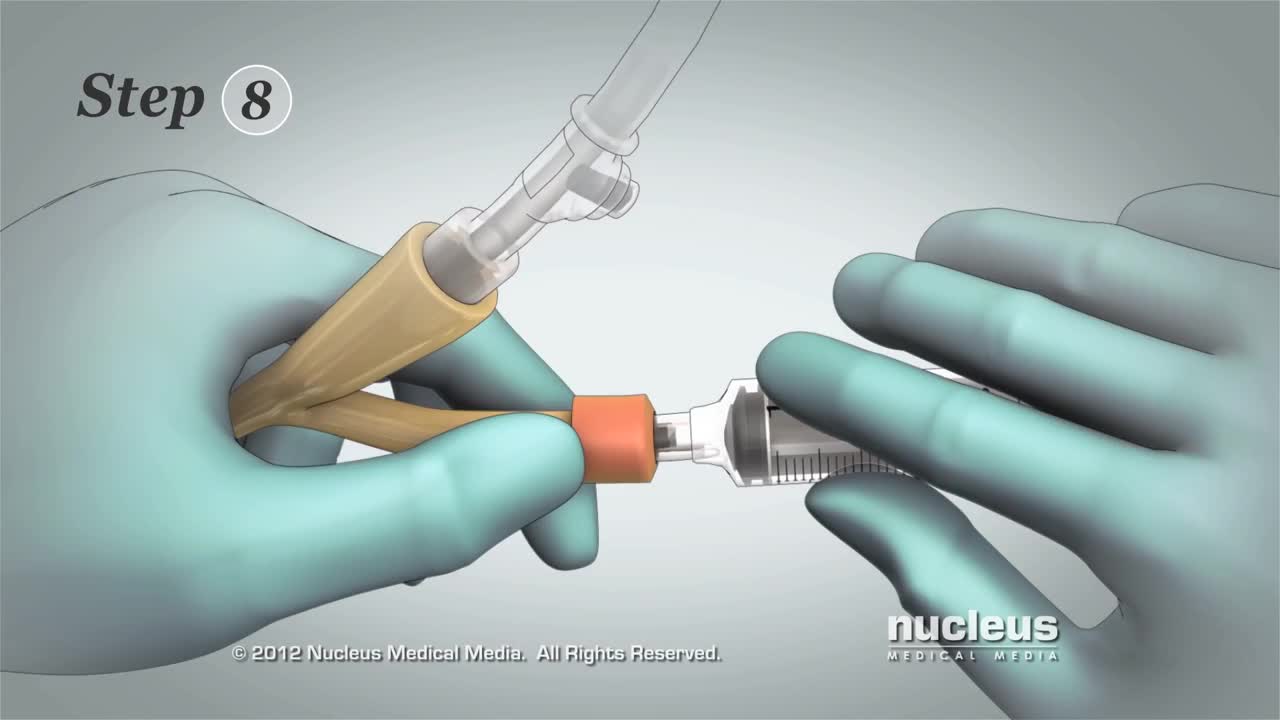
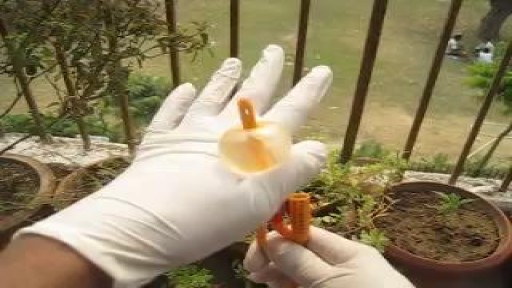
Check and make sure that my Foley bag is locked. I'm careful not to move this out of my packaging too much because then the Foley catheter can slip and get contaminated. The next thing that I want to do is test my balloon. Very carefully take my Foley catheter out. I want to drop that over here. And now I'm going to go ahead and inflate and inject the fluid. And I'm looking for the balloon to take all the fluid and not leak. I'm going to go ahead and pull all that water back out.
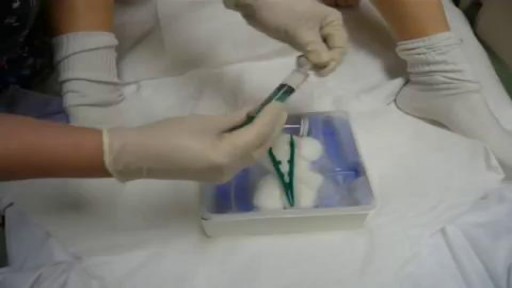
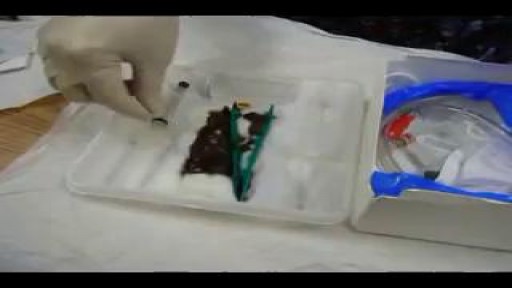
Now very carefully I'm going to set this catheter back in my box. Put the top back on. Prepare the supplies on top. I have a number of cotton balls here. I'm going to fluff them or separate them because if I don't separate them first before I put the betadine on them, they're going to stick together and it will be more difficult for me to get them separate. So I'm going to pull the supplies with me that I've opened up my betadine and I'm pouring it all over the top of my cotton balls.
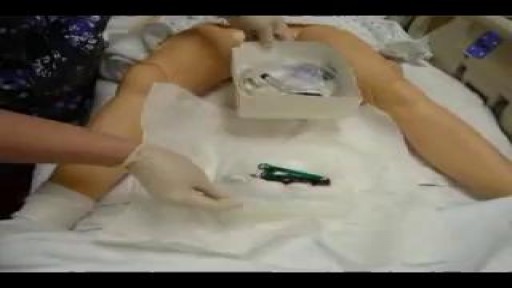
I'm going to drop that over here. And now I'm going to grab my lubricant. This might come in a packet that you tear open. It might come in a syringe. Take that off. Support a little bit right here. Drop that. And this urine container, I can just leave it there. Now that I have everything prepped, I'm going to grab my drape that I'm going to put underneath my patient. I'm going to put my knee or the table. Put my thumb on the back. So I've got the drape like this.
And the same thing here. Keep my arms away from my body. Curl my hands together. That's going to protect my sterile gloves from hitting her leg or her bed linens when I go to put this down. You're going to ask your patient just to lift their bottom a little bit. And then you put down without contaminating your gloves on their skin and bring your hands back out. Bring my package over to the bed right on the inside. I don't want to touch that outer one inch border
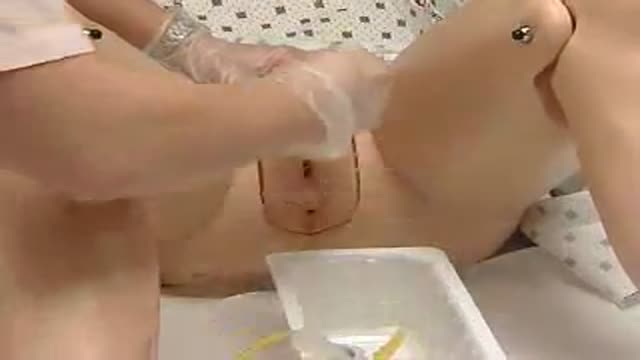
because that may be contaminated. I'll just the inner part. And remember, underneath this drape, it's not sterile. So I'm careful not to cover my sterile field here. I've set this down so that it meets up with this sterile drape. Set this package close to my patient. Let your patient know that she's going to feel your hand. And you're going to place your hand so that it's not at the anus, but it's fairly close. Separate the labia and then you lift so that you're pulling that extra tissue up and away
to help you better visualize the arena. Now this hand is contaminated. I cannot move this hand. Let your patient know that she's going to feel something wet and cold. Take one of my betadine saturated cotton balls. I clean from the top to the bottom. One cotton ball at a time. Drop that on my packaging over here. And I'm careful not to drag it across my sterile field. Go down one of the sides, front to back. Drop that. Pop to bottom on the other side. Drop it down the center.
Do the center with my last cotton ball. I drop not only the cotton ball, but my four steps over there as well. Grab your fully catheter. You have to be very careful not to let this catheter hit the legs of the patient. Put it in a little bit of a lubricating jelly. And let your patient know that she's going to feel a little bit of pressure. Just take a few slow breaths in and out, okay? There you go. And notice that I'm really careful not to let my right hand
touch her perineum, because then I would be inserting a non-sterile fully catheter. Insert that until I see urine in my fully tubing. When I do, I'm going to go another two to three inches, because I could still be in the urethra. Pinch my index and middle finger on this hand to hold that catheter and keep it from popping out. While I blow up the balloon. I'm going to go ahead and insert. If your patient was to say that they were having pain, you would stop inflating the balloon,
because you could be in the urethra. Bring that over here and take off the syringe. I want to make sure that this is anchored, so I'm going to go ahead and gently tug. And it is anchored. Now visualize with me that this hand is covered with beta dye. So I'm going to use this hand to take the fully catheter bag, pop the hook out so that I can secure this to the fully hooked down here on the bed. Again, visualize that this hand is very covered in beta dye.
Clean her perineal area. She's got a little bit of lubricant and a little bit of beta dye left. And I'm going to use one area. And if need be, I'll use a clean area to go down the other side. All this will go in the trash can and remove my gloves before I touch my patient's gown or her bed linen. So we take off our gloves the proper way by grabbing the glove itself, falling it up on our hand, and then reaching underneath this glove and disposing of it in the trash.
I'm going to put the leg strap on. This is the velcro area here. And I'm going to hold the clear portion of the tube. So it's okay that I don't have my gloves on right now, because I'm just holding on to this area that's still clean. I'm just going to patient to a comfortable position here and pull her gown down, her blanket up, lower my patient down to the lowest possible level. I also want to watch the slowly bag, because if my patient, for instance, had urinary retention,
she could have a lot of urine in her bladder. And if that bag fills to 1,000 milliliters, and I see that it's still flowing in that tube, and I'm going to clamp that tube, kink the tubing, and set this on top. That will stop the urine flowing out of her bladder. I'm going to do that for about five minutes, and then I must remember to come back to unclamp that. That will prevent her from possibly going into bladder spasms by emptying too much urine too quickly. Your final steps, of course, are to wash your hands
and to document your procedure.
Transcript auto-generated from the video’s audio for accessibility and study. Educational content only — not medical advice.
Video Overview
From our Gynecology collection: Pelvic exams, Pap smears, IUD insertion, hysteroscopy and women's health procedures explained step by step. Browse all Gynecology videos →
SORT BY-
Top Comentarios
-
Últimos comentarios