
- Physical Examination
- Surgical Examination
- Ophthalmology
- Clinical Skills
- Orthopedics
- Surgery Videos
- Laparoscopy
- Pediatrics
- Funny Videos
- Cardiothoracic Surgery
- Nursing Videos
- Plastic Surgery
- Otorhinolaryngology
- Histology and Histopathology
- Neurosurgery
- Dermatology
- Pediatric Surgery
- Urology
- Dentistry
- Oncology and Cancers
- Anatomy Videos
- Health and Fitness
- Radiology
- Anaesthesia
- Physical Therapy
- Pharmacology
- Interventional Radiology
- Cardiology
- Endocrinology
- Gynecology
- Emergency Medicine
- Psychiatry and Psychology
- Childbirth Videos
- General Medical Videos
- Nephrology
- Physiology
- Diet and Food Health
- Diabetes Mellitus
- Neurology
- Women Health
- Osteoporosis
- Gastroenterology
- Pulmonology
- Hematology
- Rheumatology
- Toxicology
- Nuclear Medicine
- Infectious Diseases
- Vascular Disease
- Reproductive Health
- Burns and Wound Healing
- Kidney Zone Podcast
- Other
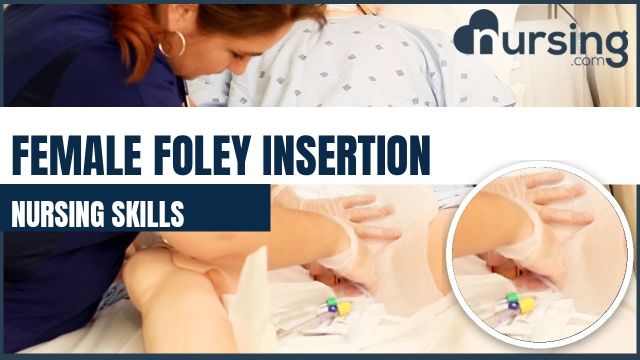
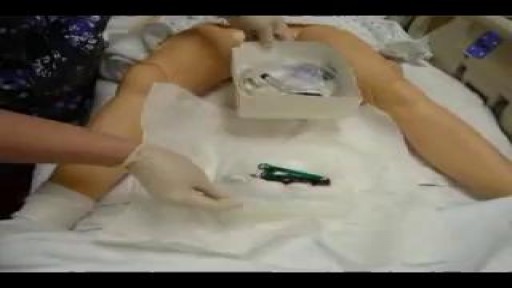
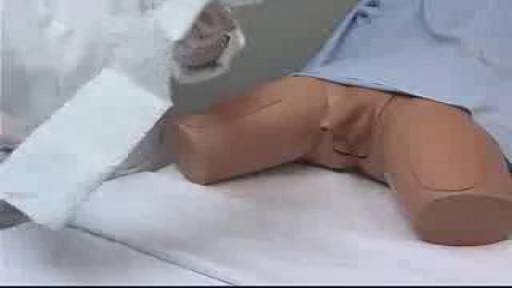
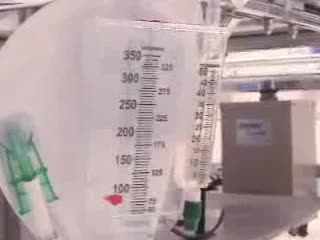
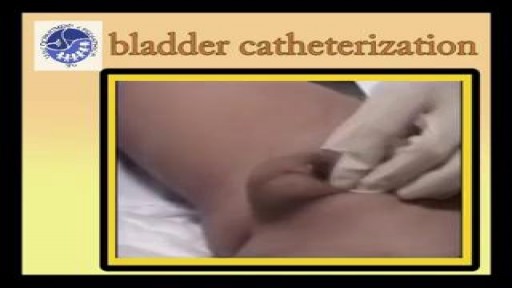
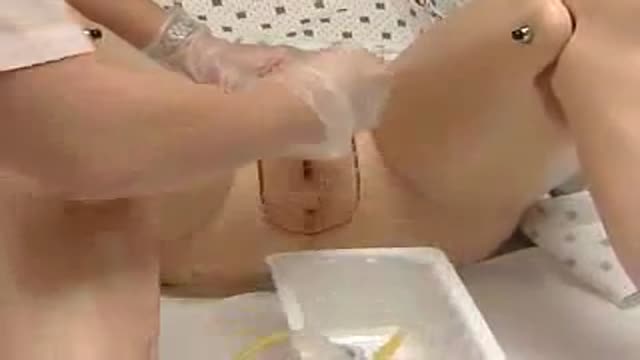
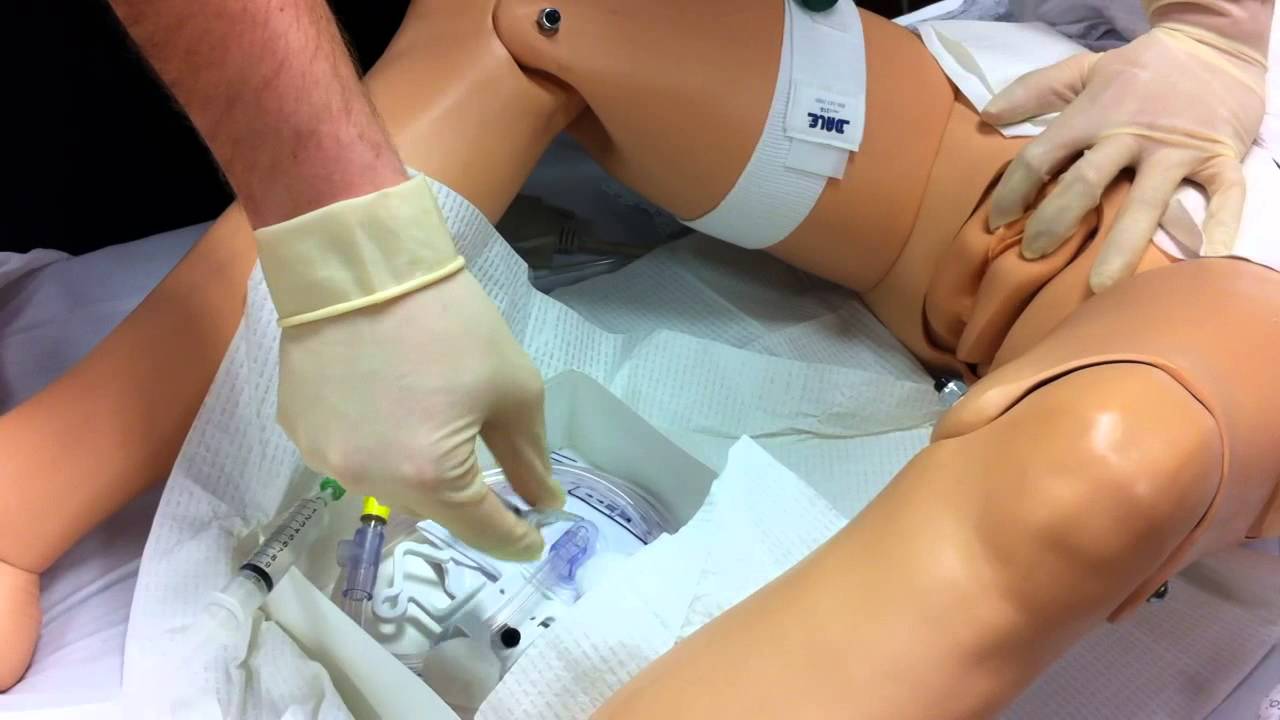

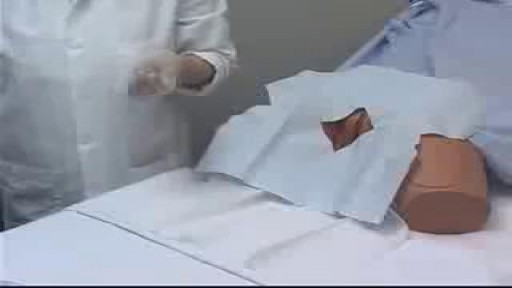
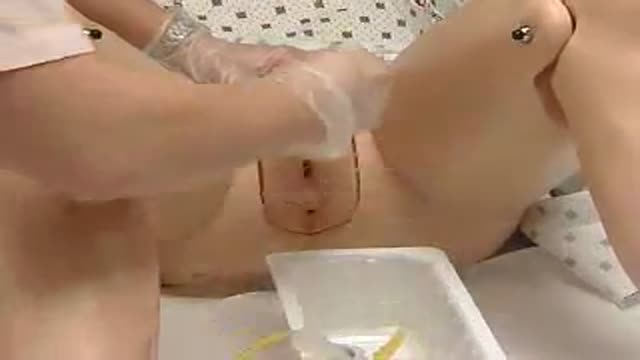


Insert Foley Catheter

Educational only: videos on MedicalVideos.com are for general information and are not medical advice. Always consult your own doctor about your health.
It is held in place with a balloon at the end, which is filled with sterile water to prevent the catheter from being removed from the bladder. The urine drains through the catheter tube into a bag, which is emptied when full. The procedure to insert a catheter is called catheterization.
This video in 30 seconds
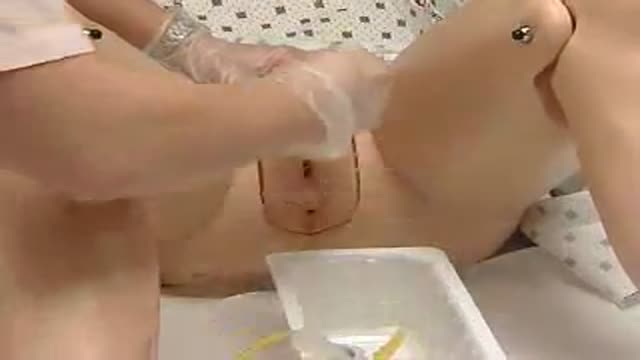
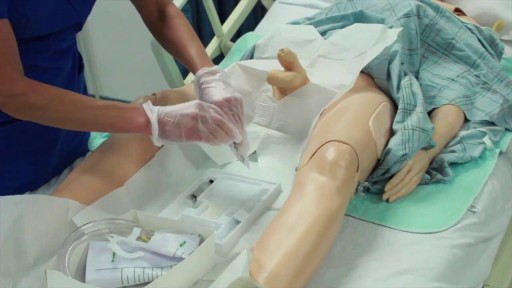
A narrated bedside demonstration of male Foley catheter insertion by a nurse-clinician. She checks the order and patient, explains the procedure, positions the patient with the bed at waist height, sets up the sterile kit and gloves, cleanses with antiseptic, inserts the catheter, secures it to the bed, cleans up and documents the procedure.
Key points
- The clinician verifies the order and patient identity and explains the procedure before gathering supplies
- The sterile field is set up on a bedside table and sterile gloves are put on using cuff technique
- Lubricant, antiseptic and the catheter are prepared on the sterile field, including the balloon port syringe
- The clinician cleanses in concentric circles with antiseptic swabs before inserting the lubricated catheter
- The catheter is secured, connected to the bed clip, and the clinician finishes by documenting the catheter type and urine appearance
Chapters
- 0:05 — Introduction and patient setup
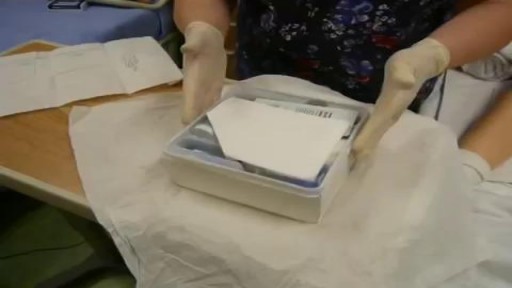
- 0:49 — Opening the catheter kit
- 1:45 — Putting on sterile gloves
- 2:44 — Preparing lubricant and catheter
- 4:02 — Cleansing with antiseptic swabs
- 4:51 — Inserting the catheter
- 5:46 — Securing the catheter and cleanup
- 6:54 — Documenting the procedure
Key Steps — Inserting a Foley catheter — male patient
- Check the order, confirm the patient's identity, and explain what you are about to do.
- Assemble the catheter kit and position the patient comfortably with the bed at working height.
- Set up the sterile field, keeping the outer border as your non-sterile margin, and lay the drape.
- Put on sterile gloves and prepare the antiseptic swabs, lubricant and catheter; attach the water syringe to the balloon port.
- Cleanse the glans in circular motions with antiseptic swabs, holding the penis with your other (now non-sterile) hand.
- Lubricate the catheter and insert it into the urethra, advancing steadily until urine appears.
- Fill the balloon with the sterile water supplied in the kit, stopping to reposition if the patient feels pain.
- Connect the drainage bag, secure the catheter, and keep the bag below the bladder.
- Remove the sterile gloves, wash the antiseptic off the patient with clean gloves on, and settle the patient.
- Document the catheter type and size, the urine returned, and how the patient tolerated the procedure.
Download the printable Key Steps checklist (PDF)
Steps summarise this demonstration for education. Always follow your institution's protocol. More Catheters, Tubes & Elimination skills →
Video Transcript
A narrated demonstration of male Foley catheter insertion — the catheter that stays in place with a balloon filled with sterile water while urine drains into a bag. The nurse-clinician talks through the whole routine: checking the order and the right patient, explaining the procedure, gathering the kit, setting the bed at waist height and positioning the patient, then the sterile insertion itself.
Read the full transcript
Male catheter insertion. First thing you need to do is to check your patient's orders. Make sure you're the right patient. Make sure you've explained the procedure to your patient, and then you need to make sure you gather your supplies. I also have made sure that my patient is ready. The bed is at waist height. He has his gum pulled up. The blankets pulled down. His legs are out at about a 45-degree angle from each hip, and then I make sure I have my supplies. I have my fully catheter kit.
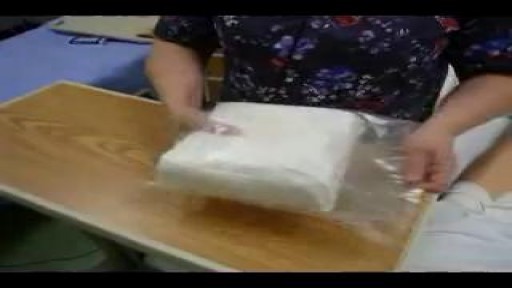
I have a towel with a washcloth and a clean pair of gloves so that when I'm all done putting in the catheter, I can clean him up. Now because I'm sitting at my sterile field on the bedside table in front of me, I'm going to put the towel washcloth and gloves on the bed so that they're where I want them to be when we're done. I'm going to take out my catheter kit from the packaging. I'm going to throw away the outside packaging. I also have a garbage can at my foot,
so you may see me drop some things off the end of the field, and that's where they're going. The first flap always goes away from me. After that, I walk it around to make sure that I don't cross over my sterile field. Now the first trip that's in here I'm going to reach over. I'm going to pull it up and out, and I'm going to bring it to my patient, making sure that I know that I can walk around the edges because I have a one-inch sterile margin,
or contaminated margin, excuse me, and I'm going to bring it, and I'm going to slide it under so that I have another little mini sterile field to work with. Now if I had someone on the other side of the bed, they could reach under his leg over there, but because I don't, for demonstration purposes, this is just going to fold right there. Now I'm going to come back to my sterile field that I have on the bedside table, and the next thing that I see in my kit is my sterile gloves,
so I'm going to take those out. I'm going to step next to my kit over there, and I'm going to put on my sterile gloves. Open them up. First glove I grab with a cuff, up and away, slide on, reposition the cuff once if I need to. Second glove, cuff, check my thumb up and away, pull it on, no repositioning. If you have any questions on sterile gloving, please see the sterile gloving video that's on the YouTube website as well. Now I'm going to finish getting my sterile field ready in here.
What I'm going to do is I'm going to separate these two. Remember there's a one-inch border, so as long as I stay within that I'm fine. If I'm a straight-a drape, I don't need. I'm going to open up my iodine by tearing it down like this. Notice in the female catheter video I did not do that. That was to save supplies. This one I'm actually going to do it so that you can see it. It's liquid, so be careful. Soak all the cotton balls. I'm going to squirt my lube into this little container where the syringe was.
Goes on my garbage pile. Then I'm ready to get my catheter ready. I'm going to move over to my catheter in the box, and I'm going to take off the blue sterile covering. Now when I do this, I need to make sure that I don't contaminate my catheter. The catheter is very flexible, and so you have to make sure you walk it out to make sure you have maintained control of it. This blue piece is now garbage, so it goes on my garbage pile. Once I have that ready, I can put this back in.
I don't want it flopping around. I want it to be safe. The last thing I need to do is I need to take my sterile water syringe, and I need to make sure that I connect it to my pigtail here, which is the balloon insertion port right there. I do not have to chest my balloon because this is a barred catheter, so I don't test my balloon. Now I'm going to put these back together so that I can move the sterile field to the bed. When you move your sterile field, you come in from the sides with your fingers,
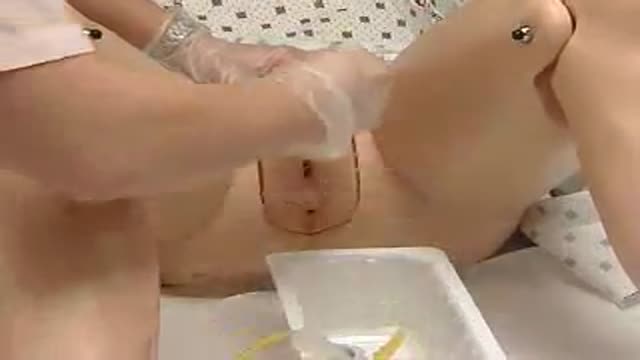
making sure you maintain that one inch border, and I'm going to slowly bring it over and place it down between his legs on the bed. Now it looks exactly like the female catheter insertion that you saw before. You separate the two containers, and when I do my last survey to make sure everything's correct, lube, betadine, and catheter ready, now I'm going to contaminate my hand by putting my hand on his synthesis pubis. I'm going to wrap my fingers around his penis, starting with my finger, my pinky finger working up to my thumb and index finger,
making sure that I have good control of it. I'm going to start with the betadine. It might be helpful if you tell your patients it's going to be a little bit cold because it's room temperature, and so I grab it with my sterile forceps, and I start at the middle and do concentric rings around to cover the whole tip of the gland's penis. Now when I bring my cotton ball around my sterile field so I don't contaminate it, and it goes in my garbage pile, which is still on my bedside table,
and I grab the next betadine cotton swab, go all the way around, make sure I don't cross over my sterile field, and you do at least three cotton balls. And I have my third one, back and forth and around, and there we go. Next I'm going to grab my catheter out of the box. I'm going to dip it in my lube about two inches up, make sure that I come, I'm going to find the urethral opening, I'm going to rotate it a little bit in, and make sure that I don't touch the tip of the penis with my right hand,
which is still sterile, and I'm going to insert it about six to seven inches. I see urine coming down my catheter. I'm going to do my thumb and first finger off, like that, to make sure that I have a little bit of room in case I need to reposition the catheter. I'm going to grab my syringe with sterile water. I'm going to begin to inflate. If I meet any resistance where my patient complains of any pain, I stop, look what I'm doing and reposition it. He does not complain of any pain.
I'm going to continue to insert the water. I fill the balloon up with the 10ccs of sterile water. Once that's done, I can bring my fingers off. I can come and disconnect here and put that down. Now I'm going to transition from sterile gloves to clean gloves. So I'm going to grab my clean gloves that I have right next to me here. After I get these on, I'm going to clean up my garbage. I'm going to secure the catheter to him, and then I'm going to clean him off.
So first I clean up my garbage. Take the catheter out of here. Take that box, that sterile drape. I connect my catheter to a non-movable part of the bed. This is another option for a cath security. It's the bed clip. So in case I don't have any tape, I can bring that right around to secure it to his bed like this. And then last but not least, with my clean gloves, I'm going to wash him off and make sure that I get rid of all the iodine.
So I take my wash cloth, which is wrapped up in my towel, and I go around the tip of his penis, making sure that I reposition. I start at the base and I come off and I do that again. And then I make sure that I dry him off. My clean gloves come off, and then I make sure that my patient is covered. And I put the bed down. Once I put the bed down, I may wash my hands, and then I'm going to document. And remember, I document the type of catheter I put in,
the size of catheter, if I had any difficulties, and the amount of urine, the color of the urine, the quality of the urine, and that is male catheter insertion.
Transcript auto-generated from the video’s audio for accessibility and study. Educational content only — not medical advice.
Video Overview
From our Clinical Skills collection: Suturing, injections, catheterization, IV insertion and OSCE-style examination techniques demonstrated step by step. Browse all Clinical Skills videos →
Medical Videos
Free medical and surgery videos for patients, students and professionals — trusted since 2007.
Founded by Dr. Mohamed Ibrahim, MD, PhD — physician-scientist.
Follow us on Facebook · Instagram
SORT BY-
Top Comments
-
Latest comments