














Laparoscopic Cholecystectomy Video

Whereas it is true that no operation has been profoundly affected by the advent of laparoscopy than cholecystectomy has, it is equally true that no procedure has been more instrumental in ushering in the laparoscopic age than laparoscopic cholecystectomy has. Laparoscopic cholecystectomy has rapidly become the procedure of choice for routine gallbladder removal and is currently the most commonly performed major abdominal procedure in Western countries.[1] A National Institutes of Health consensus statement in 1992 stated that laparoscopic cholecystectomy provides a safe and effective treatment for most patients with symptomatic gallstones and has become the treatment of choice for many patients.[2] This procedure has more or less ended attempts at noninvasive management of gallstones. The initial driving force behind the rapid development of laparoscopic cholecystectomy was patient demand. Prospective randomized trials were late and largely irrelevant because advantages were clear. Hence, laparoscopic cholecystectomy was introduced and gained acceptance not through organized and carefully conceived clinical trials but through acclamation. Laparoscopic cholecystectomy decreases postoperative pain, decreases the need for postoperative analgesia, shortens the hospital stay from 1 week to less than 24 hours, and returns the patient to full activity within 1 week (compared with 1 month after open cholecystectomy).[3, 4] Laparoscopic cholecystectomy also provides improved cosmesis and improved patient satisfaction as compared with open cholecystectomy. Although direct operating room and recovery room costs are higher for laparoscopic cholecystectomy, the shortened length of hospital stay leads to a net savings. More rapid return to normal activity may lead to indirect cost savings.[5] Not all such studies have demonstrated a cost savings, however. In fact, with the higher rate of cholecystectomy in the laparoscopic era, the costs in the United States of treating gallstone disease may actually have increased. Trials have shown that laparoscopic cholecystectomy patients in outpatient settings and those in inpatient settings recover equally well, indicating that a greater proportion of patients should be offered the outpatient modality
This video in 30 seconds
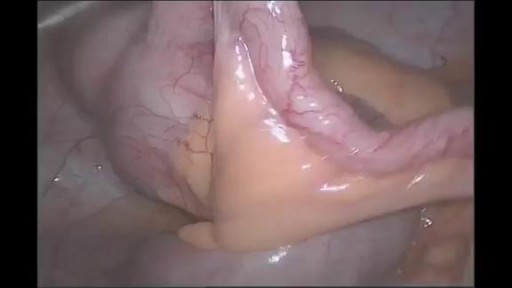
This video presents laparoscopic cholecystectomy, the laparoscopic removal of the gallbladder. It covers how the procedure became the procedure of choice for routine gallbladder removal, a 1992 National Institutes of Health consensus statement describing it as a safe and effective treatment for most patients with symptomatic gallstones, and how patient demand drove its rapid development.
Key points
- Presents laparoscopic cholecystectomy for routine gallbladder removal
- Covers its role in ushering in the laparoscopic era as described
- Covers the 1992 NIH consensus statement on symptomatic gallstones as described
- Notes patient demand as the initial driving force behind its rapid development as described
Video Overview
This video presents “Laparoscopic Cholecystectomy Video” — Whereas it is true that no operation has been profoundly affected by the advent of laparoscopy than cholecystectomy has, it is equally true that no procedure has been more instrumental in ushering in the laparoscopic age than laparoscopic. Whether you are preparing for a procedure, studying the technique, or learning how a condition is assessed, the recording shows the process as it is performed in practice.
From our Surgery Videos collection: Surgery videos: watch real operations step by step — general, laparoscopic and specialist surgery performed in the OR, explained for students and surgeons. Browse all Surgery Videos videos →
Educational content only — not a substitute for professional medical advice.
SORT BY-
Top Comentarios
-
Últimos comentarios