Pneumonia or Bronchitis? How to Tell the Difference
Bronchitis is inflammation of the large airways (bronchi), usually caused by a virus after a cold, producing a cough that can linger for weeks but in someone who otherwise feels reasonably well. Pneumonia is infection of the lung tissue itself — the tiny air sacs fill with fluid and pus — which interferes with oxygen uptake and makes people properly ill. They are confused because both follow winter viruses and both cause cough, phlegm, and chest discomfort. The clearest differences: pneumonia usually brings fever, breathlessness, rapid breathing, and sometimes sharp chest pain when breathing in, while bronchitis is dominated by the cough itself, with little or no fever and normal breathing between coughing bouts.
✓ Medically reviewed by Mohamed Magdy Ibrahim, MD, PhD — Assistant Professor of Medicine, Transplant Nephrology, University of Maryland School of Medicine · Board certified in Internal Medicine (ABIM) · Last reviewed: November 2026
In short: A hacking cough after a cold, with little fever and normal breathing in between, points to bronchitis — unpleasant but usually self-limiting. Fever, breathlessness, fast breathing, sharp pain on breathing in, or feeling seriously unwell points to pneumonia, which needs medical assessment and usually antibiotics. A chest X-ray is the test that separates them when it matters.
At a glance: pneumonia vs bronchitis
| Pneumonia | Bronchitis | |
|---|---|---|
| What it is | Infection of the lung tissue itself: the air sacs fill with fluid and inflammatory cells | Inflammation of the large breathing tubes (bronchi), usually viral, without infection of the lung tissue |
| Usual cause | Bacteria most often in adults, though viruses and other organisms can cause it | Viruses — the same ones that cause colds and flu — in the great majority of cases |
| Fever | Common and often high, with shivering and sweats | Absent or low-grade; a high fever argues against simple bronchitis |
| Breathing | Breathlessness and rapid breathing are typical; oxygen levels may fall | Breathing is usually normal between coughs; wheeze can occur but breathlessness is mild |
| Chest pain | Sharp pain on breathing in or coughing, over the affected area, is a classic sign | A raw, sore feeling behind the breastbone from coughing itself; sharp localised pain is unusual |
| Cough & phlegm | Cough with phlegm that may be yellow, green, or rusty-coloured; occasionally blood-streaked | The dominant symptom: a hacking cough, first dry then productive, that can linger for several weeks |
| How ill you feel | Properly ill: exhausted, aching, sometimes confused — especially in older people, where confusion may be the main sign | Miserable but usually functioning; energy returns as the cough slowly fades |
| What the doctor hears | Crackles and other abnormal sounds over the affected part of the lung | Harsh or wheezy sounds spread across both sides, without one focal area |
| Who it affects most | Older adults, young children, smokers, and people with lung disease, weak immunity, or difficulty swallowing | Anyone after a cold or flu; more frequent and slower to clear in smokers and people with asthma or COPD |
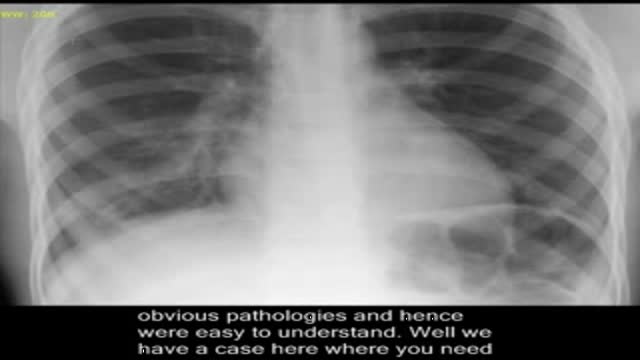
| How it is confirmed | Examination plus a chest X-ray, which shows shadowing in the affected lung; blood tests and oxygen checks guide treatment | Usually diagnosed from the story and examination alone; a normal chest X-ray (if done) confirms the lung tissue is clear |
| Usual treatment | Antibiotics, fluids, rest, and hospital care when severe; recovery takes weeks and tiredness lingers | Usually no antibiotics (it is viral): fluids, rest, honey and simple cough remedies, and time; inhalers if wheezy |
| How urgent | Needs prompt assessment — same day, and emergency care if breathing is difficult or lips look blue | Managed routinely; worsening breathlessness, fever, or blood in the phlegm means it needs reassessment |
The two conditions in brief
Pneumonia in brief
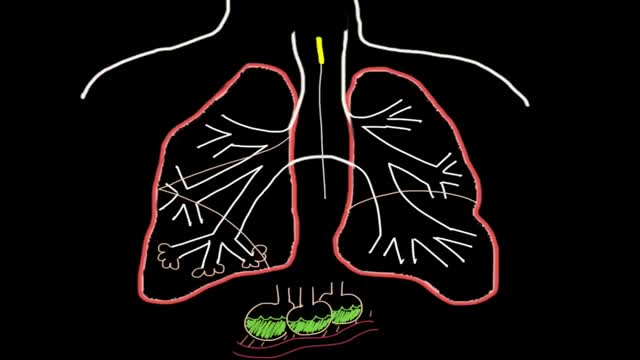
Pneumonia is infection deep in the lung, where oxygen passes into the blood. The air sacs fill with fluid and pus, so the affected area cannot do its job — which is why pneumonia causes breathlessness, fever, and exhaustion rather than just a cough.
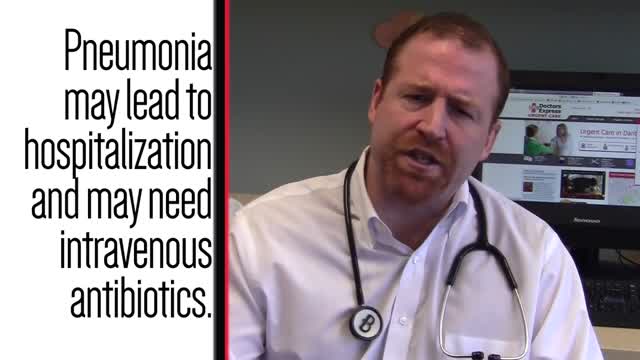
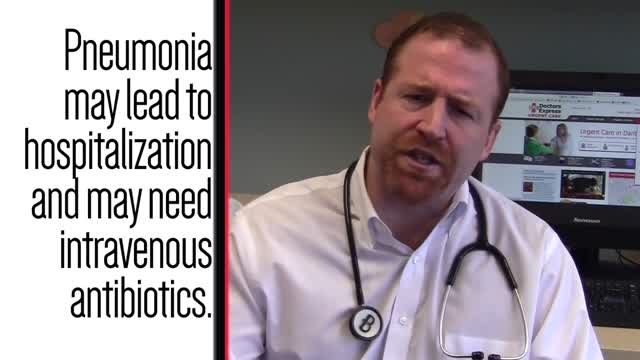
Most pneumonia is treated with antibiotics, at home when mild and in hospital when oxygen, fluids, or monitoring are needed. Vaccination against pneumococcus and flu protects those at highest risk. Read the full pneumonia guide →
Bronchitis in brief
Acute bronchitis is inflammation of the large airways, almost always viral, typically following a cold. The swollen, sensitive airways produce the hacking cough that defines it — a cough that commonly takes two to three weeks, sometimes longer, to fully settle.
Because viruses cause it, antibiotics do not help straightforward bronchitis. Treatment is supportive — fluids, rest, and simple remedies — while watching for the signs that would suggest pneumonia instead. Read the full bronchitis guide →
When to worry — get care the same day
- Breathlessness at rest, rapid breathing, or difficulty finishing sentences
- Lips, tongue, or face looking blue or grey
- Sharp chest pain when breathing in, or coughing up blood
- High fever with shivering that is not settling, or a cough that is getting worse after initially improving
- Confusion or unusual drowsiness — a key pneumonia sign in older people
- A cough in someone with a weakened immune system, or a baby or frail older person who is struggling to feed or drink
Pneumonia can worsen quickly, particularly in older people and those with other illnesses. Breathlessness, blue lips, or confusion means emergency care, not another day of waiting.
Watch: pneumonia and bronchitis videos
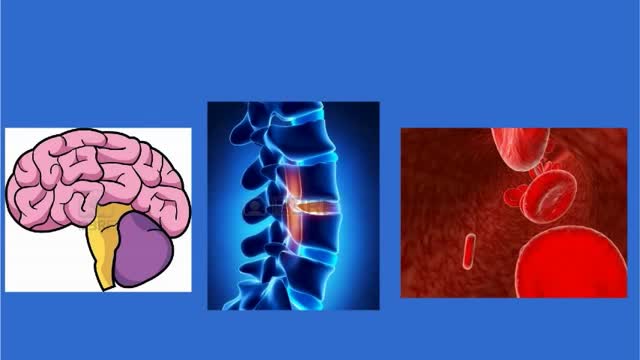
Watch: pneumonia
Watch: bronchitis

Read the full guides
Pneumonia: the full guide How lung infection develops, the X-ray picture, antibiotics and hospital care, recovery, and vaccination. Read the guide → Bronchitis: the full guide Why the cough lingers, why antibiotics usually do not help, and the signs that mean reassessment. Read the guide →Frequently asked questions
Does green phlegm mean I need antibiotics?
No. Phlegm colour alone does not separate viral from bacterial infection — viral bronchitis commonly produces yellow or green phlegm as white blood cells collect in the airways. The decision about antibiotics rests on the whole picture: fever, breathing, examination findings, and whether pneumonia is suspected.
Can bronchitis turn into pneumonia?
Bronchitis does not usually 'turn into' pneumonia, but the same virus that inflames the airways can occasionally be followed by bacterial infection of the lung, and pneumonia can also be misjudged as bronchitis at the start. That is why worsening breathlessness, new fever, or chest pain after a few days should always trigger a fresh assessment.
How long should a bronchitis cough last?
The cough of acute bronchitis commonly lasts two to three weeks and can linger longer even as everything else improves, because the airways stay sensitive while they heal. A cough persisting beyond about eight weeks, or one that keeps returning, deserves investigation for other causes such as asthma, reflux, or COPD.
Why do doctors sometimes not do a chest X-ray?
When the story and examination fit bronchitis clearly — cough, little or no fever, normal breathing and oxygen, and no focal chest signs — an X-ray rarely changes management. It is used when pneumonia is suspected, when the person is frail or has other lung disease, or when symptoms are not following the expected course.
Who should be more careful with a chesty cough?
Older adults, babies and young children, smokers, and people with asthma, COPD, heart failure, diabetes, or a weakened immune system should seek assessment earlier. In these groups pneumonia is both more likely and more dangerous, and its signs — especially confusion in older people — can be subtle.
More comparisons
Related topics on MedicalVideos.com
Sources & further reading
Authoritative references for readers who want to go deeper:
Ibrahim MM. Pneumonia vs Bronchitis: How to Tell the Difference. MedicalVideos.com; 2026 Nov 26 [cited 2026 Nov 26]. Available from: https://www.medicalvideos.com/conditions/vs/pneumonia-vs-bronchitis.html
This page is for general education only and is not medical advice. It cannot tell you which condition you have — only an examination and tests can do that. Breathlessness at rest, blue lips, coughing blood, or confusion with a chest infection needs emergency care the same day.