Asthma or COPD? How to Tell the Difference
Asthma is a long-term condition in which the airways are inflamed and twitchy, narrowing in response to triggers such as pollen, cold air, exercise, or infections. COPD — chronic obstructive pulmonary disease — is progressive lung damage, usually from years of smoking or dust exposure, in which the airways and air sacs are permanently harmed and airflow is limited. Both cause breathlessness, wheeze, cough, and chest tightness, and they can even occur together. The clearest differences: asthma usually begins in childhood or young adult life and varies a lot — good days and bad days, often worse at night — while COPD usually begins after the age of forty in people with a smoking history and worsens slowly and steadily, with symptoms present every day.
✓ Medically reviewed by Mohamed Magdy Ibrahim, MD, PhD — Assistant Professor of Medicine, Transplant Nephrology, University of Maryland School of Medicine · Board certified in Internal Medicine (ABIM) · Last reviewed: November 2026
In short: Breathlessness that comes and goes, starts young, and flares with triggers or at night points to asthma. Breathlessness that starts after forty in a smoker or ex-smoker, is there every day, and slowly worsens year by year points to COPD. A breathing test (spirometry) is what separates them — and some people have features of both.
At a glance: asthma vs COPD
| Asthma | COPD | |
|---|---|---|
| What it is | Inflamed, twitchy airways that narrow reversibly in response to triggers | Permanent damage to the airways and air sacs (chronic bronchitis and emphysema) that limits airflow |
| Main cause | Allergy and airway sensitivity, often running in families alongside eczema and hay fever | Long-term exposure to cigarette smoke most often; also occupational dusts, fumes, and air pollution |
| Who it affects most | Children and young adults most often; can start at any age | Adults usually over forty, most with a current or past smoking history |
| Symptom pattern | Variable: episodes of wheeze, tightness, and breathlessness with symptom-free gaps | Persistent: symptoms most days, slowly worsening over years |
| Time of day | Often worse at night and in the early morning | Steadier through the day; breathlessness on exertion is the dominant feature |
| Cough | Often dry, worse at night, with colds, exercise, or allergens | Often productive — a daily smoker's cough bringing up phlegm, especially in the mornings |
| Triggers | Pollen, dust mites, animals, cold air, exercise, viral infections, smoke, and strong smells | Symptoms are constant; chest infections and cold weather cause flare-ups (exacerbations) |
| Between episodes | Breathing often returns completely to normal | Breathing never fully returns to normal; activity becomes gradually more limited |
| How it is confirmed | Spirometry showing airflow limitation that improves with a reliever inhaler, plus the symptom pattern | Spirometry showing airflow limitation that does not fully reverse with a reliever inhaler, plus exposure history |
| Usual treatment | Daily preventer inhaler plus a reliever inhaler for symptoms; trigger avoidance and an asthma action plan | Stopping smoking is the single most important step; inhalers, pulmonary rehabilitation, vaccinations, and oxygen for advanced disease |
| How urgent | A severe attack that does not respond to the reliever inhaler is an emergency | A flare-up with worsening breathlessness, more phlegm, or drowsiness needs same-day assessment; severe flare-ups are emergencies |
The two conditions in brief
Asthma in brief
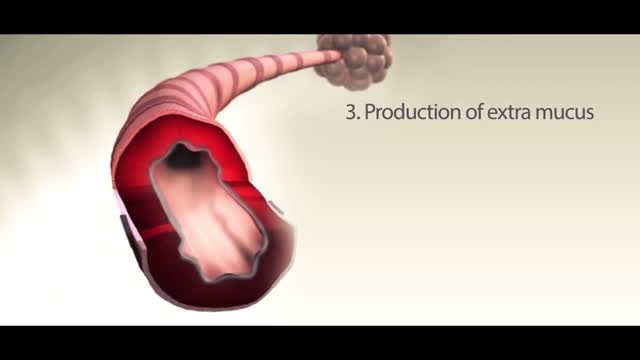
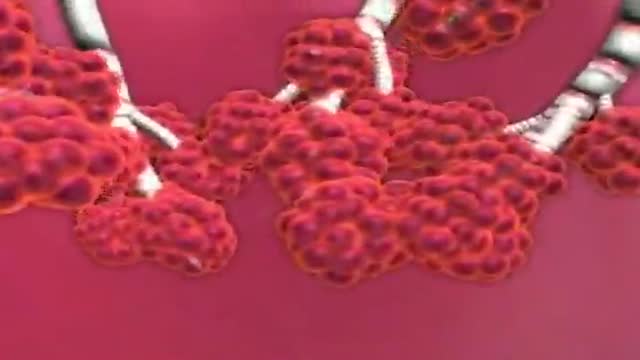
In asthma the airway lining is inflamed and over-reactive. Triggers make the airway muscles squeeze, the lining swell, and mucus increase, so air moves with difficulty and a wheeze. Between attacks the airways can return to normal, which is why asthma varies so much.
Control comes from a daily preventer inhaler that calms the inflammation, a reliever inhaler for symptoms, and a written action plan for worsening days. Read the full asthma guide →
COPD in brief
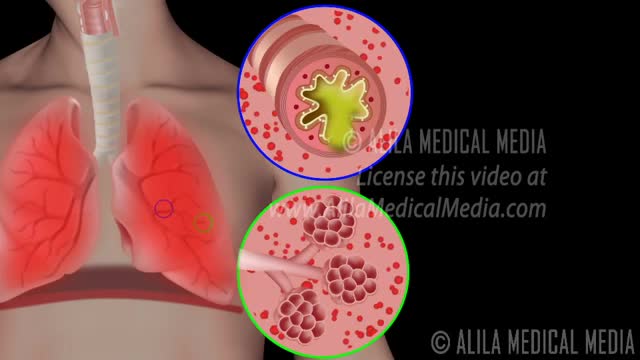
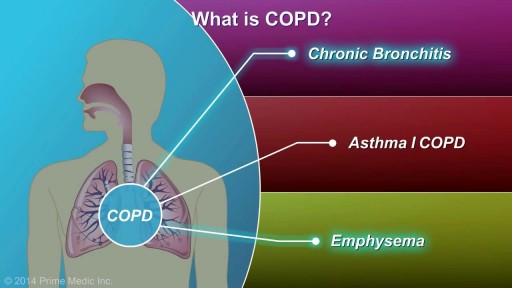
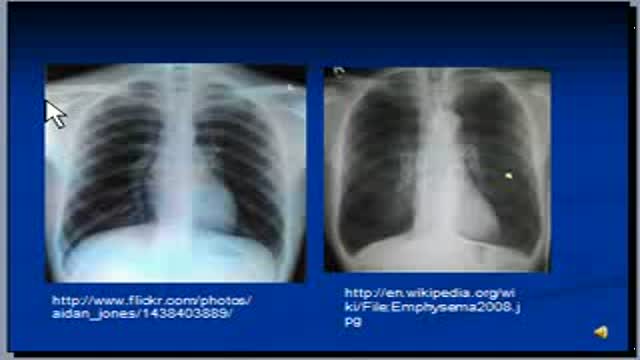
COPD combines chronic bronchitis — long-term inflammation and mucus in the airways — with emphysema, in which the tiny air sacs where oxygen enters the blood are gradually destroyed. Air becomes trapped in the lungs and breathlessness creeps up over years.
The damage cannot be undone, but stopping smoking slows it more than any medicine. Inhalers ease breathlessness, rehabilitation rebuilds fitness, and vaccinations reduce dangerous flare-ups. Read the full COPD guide →
When to worry — get care the same day
- Breathlessness so severe that speaking in full sentences is difficult
- A reliever inhaler that is not helping, or is needed more and more often
- Lips, tongue, or fingers looking blue or grey
- Drowsiness, confusion, or a severe headache during a flare-up
- Coughing up blood, or chest pain with breathlessness
- A flare-up with much more phlegm, or phlegm that has changed colour and thickened, with worsening breathlessness
Severe breathlessness is an emergency in both conditions. Sit upright, use the reliever inhaler as your plan advises, and call emergency services if it is not easing quickly.
Watch: asthma and COPD videos
Watch: asthma
 What is Asthma
45,294 views
 Asthma Mechanism 3D
34,290 views
 How to exercise if you have asthma?
11,208 views
Watch: COPD
Read the full guides
Asthma: the full guide What happens in the airways, preventer and reliever inhalers, triggers, exercise, and action plans. Read the guide → COPD: the full guide Chronic bronchitis and emphysema explained, inhalers, rehabilitation, and living with breathlessness. Read the guide →Frequently asked questions
Can you have asthma and COPD at the same time?
Yes. Some people have features of both — long-standing asthma can develop fixed airflow limitation, and people with COPD can have twitchy, asthma-like airways. Doctors sometimes call this asthma–COPD overlap, and treatment is tailored to cover both patterns.
What test actually tells asthma from COPD?
Spirometry — blowing into a machine that measures how much air you can force out and how fast — is the key test. In asthma the narrowing typically improves a lot after a reliever inhaler; in COPD it does not fully reverse. The age of onset, symptom pattern, and smoking history complete the picture.
Does asthma turn into COPD?
Asthma does not simply turn into COPD, but years of poorly controlled asthma can remodel the airways and leave some permanent narrowing, and smoking with asthma greatly increases the risk of COPD. Good asthma control and not smoking protect the lungs.
Why does it matter which one it is?
Because the mainstay of treatment differs. In asthma, a daily anti-inflammatory preventer inhaler is essential and using a reliever alone is risky. In COPD, bronchodilator inhalers, rehabilitation, and stopping smoking take centre stage. Getting the label right changes the inhalers you are offered.
I have never smoked — can I still have COPD?
Yes, though smoking is the commonest cause. Long-term exposure to occupational dusts and fumes, heavy air pollution, and a rare inherited condition called alpha-1 antitrypsin deficiency can also cause COPD in people who have never smoked.
More comparisons
Related topics on MedicalVideos.com
Sources & further reading
Authoritative references for readers who want to go deeper:
- MedlinePlus: COPD
- CDC: COPD Basics
- NHS: Chronic Obstructive Pulmonary Disease (COPD)
- MedlinePlus: Asthma (link to be verified at build)
- NHS: Asthma (link to be verified at build)
Ibrahim MM. Asthma vs COPD: How to Tell the Difference. MedicalVideos.com; 2026 Nov 26 [cited 2026 Nov 26]. Available from: https://www.medicalvideos.com/conditions/vs/asthma-vs-copd.html
This page is for general education only and is not medical advice. It cannot tell you which condition you have — only an examination and tests can do that. Severe breathlessness, inability to speak in full sentences, blue lips, or drowsiness needs emergency care immediately.