IBS or IBD? How to Tell the Difference
IBS — irritable bowel syndrome — is a disorder of how the gut works: the bowel is sensitive and its movement is disordered, causing pain, bloating, and changed bowel habit, but the bowel lining is not damaged. IBD — inflammatory bowel disease, mainly Crohn's disease and ulcerative colitis — is inflammation that physically damages the bowel wall, causing ulcers and bleeding. They are confused because both cause abdominal pain and diarrhoea, often starting in young adults. The clearest differences: IBD can cause blood in the stool, weight loss, fever, and symptoms that wake you at night — features that point away from IBS — while IBS pain is typically crampy, related to meals and stress, and eases after opening the bowels.
✓ Medically reviewed by Mohamed Magdy Ibrahim, MD, PhD — Assistant Professor of Medicine, Transplant Nephrology, University of Maryland School of Medicine · Board certified in Internal Medicine (ABIM) · Last reviewed: November 2026
In short: Crampy pain with bloating and alternating constipation and diarrhoea, without blood, weight loss, or night-time symptoms, points to IBS. Blood in the stool, unintentional weight loss, fever, or diarrhoea that wakes you from sleep points to IBD — inflammation that needs investigation and specialist treatment. Stool and blood tests, not symptoms alone, separate them.
At a glance: IBS vs IBD
| Irritable bowel syndrome (IBS) | Inflammatory bowel disease (IBD) | |
|---|---|---|
| What it is | A functional disorder: the gut is oversensitive and its rhythm is disturbed, but the bowel wall is healthy | Autoimmune inflammation that damages the bowel wall — Crohn's disease and ulcerative colitis |
| Where it acts | The large bowel's function; no ulcers or structural damage | Ulcerative colitis affects the large bowel lining; Crohn's can affect any part of the gut from mouth to anus, through the full wall thickness |
| Pain pattern | Crampy tummy pain, often before or during a bowel movement, typically easing afterwards | Pain varies by site and activity of inflammation; may be constant during flares and can wake you at night |
| Bowel habit | Diarrhoea, constipation, or alternating between the two; urgency is common | Frequent diarrhoea during flares, often with blood and mucus; urgency can be severe |
| Blood in the stool | Not a feature of IBS — blood always needs another explanation | Common, especially in ulcerative colitis and Crohn's affecting the large bowel |
| Night symptoms | Symptoms typically settle at night and do not wake you | Diarrhoea or pain waking you from sleep is a classic IBD pointer |
| Whole-body effects | Bloating and discomfort, but no fever, weight loss, or anaemia from the condition itself | Weight loss, fever, tiredness, and anaemia during active disease; can also affect joints, skin, eyes, and liver |
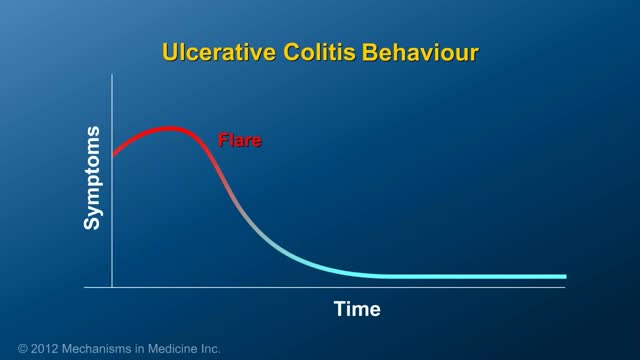
| Triggers & course | Symptoms wax and wane with stress, foods, hormones, and gut infections; long-term and recurrent | Runs in flares and remissions; inflammation can cause strictures, fistulas, and abscesses in Crohn's disease |
| Who it affects most | Very common; often begins in teens and young adults, more often diagnosed in women | Often begins in teens and young adults; runs in families and is linked to immune-system factors |
| How it is confirmed | Diagnosed from the symptom pattern after basic tests exclude other causes; a stool calprotectin test helps rule out inflammation | Blood and stool tests (including calprotectin), then colonoscopy with biopsies to see and sample the inflammation |
| Usual treatment | Dietary adjustments, fibre management, antispasmodics, and treatments for the gut–brain connection; no cure, but symptoms can be well controlled | Medicines that suppress the inflammation — including steroids for flares and long-term immune and biologic therapies — and surgery when needed |
| How urgent | Managed routinely; new blood in the stool, weight loss, or symptoms starting later in life always need assessment | Flares with heavy bleeding, severe pain, fever, or dehydration need same-day care; ongoing disease needs specialist follow-up |
The two conditions in brief
IBS in brief
IBS is a disorder of gut–brain interaction: the bowel is more sensitive than usual and its muscular rhythm is disturbed, so normal amounts of gas and stool produce pain, bloating, and urgency. The bowel itself is structurally normal, and IBS does not turn into bowel cancer or IBD.
Management is about control, not cure: identifying food triggers, adjusting fibre, treating constipation or diarrhoea, and calming the gut–brain connection with medicines or psychological therapies when needed. Read the full IBS guide →
IBD in brief
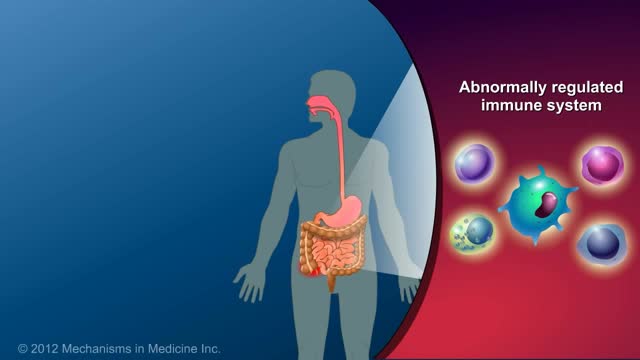
IBD is physical inflammation of the bowel. In ulcerative colitis the inflammation is continuous in the lining of the large bowel; in Crohn's disease it can appear in patches anywhere in the gut and burrow through the wall, causing strictures and fistulas.
Treatment suppresses the immune attack: steroids settle flares, and long-term immune-modifying and biologic medicines keep the inflammation off and let the bowel heal. Some complications need surgery. Read the full Crohn's disease guide → and the ulcerative colitis guide →
When to worry — get care the same day
- Blood in the stool, or black stools — always needs assessment, whatever the suspected cause
- Unintentional weight loss, or a child or teenager not growing as expected
- Diarrhoea or pain that regularly wakes you from sleep
- Severe or worsening abdominal pain, a swollen tummy, or vomiting
- Fever, dehydration, or feeling faint during a bowel flare
- New bowel symptoms starting after the age of fifty
Blood in the stool is never put down to IBS without investigation. During a severe IBD flare — heavy bleeding, severe pain, fever, or inability to keep fluids down — get care the same day.
Watch: IBS and IBD videos
Watch: IBS

Watch: IBD (Crohn's & ulcerative colitis)

Read the full guides
IBS: the full guide How the sensitive gut works, food triggers, fibre, and the treatments that calm symptoms. Read the guide → Crohn's Disease: the full guide Inflammation anywhere in the gut — symptoms, medicines, strictures and fistulas, and surgery. Read the guide → Ulcerative Colitis: the full guide Inflammation of the large bowel lining — flares, medicines, surveillance, and surgery. Read the guide →Frequently asked questions
Can IBS turn into IBD?
No. IBS and IBD are different conditions with different mechanisms, and IBS does not develop into inflammatory bowel disease or bowel cancer. They can, however, exist in the same person — people with IBD in remission often have IBS-type symptoms from a sensitised gut even when the inflammation is controlled.
What is the calprotectin test and why does it matter?
Calprotectin is a protein released by white blood cells in inflamed bowel, measured in a stool sample. A normal result makes active IBD unlikely and supports IBS; a raised result points to inflammation and leads to colonoscopy. It is the standard first step for separating the two without a camera test.
Does IBS ever cause blood in the stool?
No — blood is not a symptom of IBS. Small amounts of bright red blood are often from haemorrhoids or a small tear, but any rectal bleeding needs medical assessment to find its cause, and it should never be attributed to IBS without investigation.
Can stress cause IBD flares?
Stress does not cause IBD, which is an immune-mediated disease, but stress, infections, and some medicines can coincide with flares, and stress strongly amplifies IBS symptoms through the gut–brain connection. Managing stress helps symptoms in both conditions but does not replace anti-inflammatory treatment in IBD.
Which one needs a colonoscopy?
IBD is diagnosed and monitored with colonoscopy and biopsies, because the inflammation must be seen and sampled. In straightforward IBS with typical symptoms and normal blood and stool tests, colonoscopy is usually not needed — it is reserved for alarm features such as bleeding, weight loss, anaemia, or later age at onset.
More comparisons
Related topics on MedicalVideos.com
Sources & further reading
Authoritative references for readers who want to go deeper:
Ibrahim MM. IBS vs IBD: How to Tell the Difference. MedicalVideos.com; 2026 Nov 26 [cited 2026 Nov 26]. Available from: https://www.medicalvideos.com/conditions/vs/ibs-vs-ibd.html
This page is for general education only and is not medical advice. It cannot tell you which condition you have — only an examination and tests can do that. Blood in the stool, unintentional weight loss, or bowel symptoms that wake you at night always need medical assessment, whatever the suspected cause.