Hypothyroidism or Hyperthyroidism? How to Tell the Difference
Hypothyroidism is an underactive thyroid: the thyroid gland in the neck makes too little thyroid hormone, and the body's processes slow down. Hyperthyroidism is an overactive thyroid: the gland makes too much hormone, and the body's processes speed up. They are confused because they share a gland, near-identical names, and some vague symptoms such as tiredness and changes in mood. The clearest differences: underactivity brings weight gain, feeling cold, a slow pulse, and sluggishness, while overactivity brings weight loss despite a good appetite, feeling hot and shaky, and a racing or irregular pulse. A simple blood test settles which one it is.
✓ Medically reviewed by Mohamed Magdy Ibrahim, MD, PhD — Assistant Professor of Medicine, Transplant Nephrology, University of Maryland School of Medicine · Board certified in Internal Medicine (ABIM) · Last reviewed: November 2026
In short: Slowed down — tired, cold, constipated, gaining weight, with a slow pulse — points to an underactive thyroid. Speeded up — shaky, hot, sweating, losing weight despite eating more, with a racing pulse — points to an overactive thyroid. Both are confirmed by the same blood tests, and both are treatable.
At a glance: hypothyroidism vs hyperthyroidism
| Hypothyroidism (underactive) | Hyperthyroidism (overactive) | |
|---|---|---|
| What it is | The thyroid gland makes too little thyroid hormone, so body processes slow down | The thyroid gland makes too much thyroid hormone, so body processes speed up |
| Commonest cause | Hashimoto's thyroiditis, an autoimmune attack on the gland; also after thyroid surgery or radioiodine treatment | Graves' disease, an autoimmune condition that switches the gland on; also inflamed thyroid or overactive nodules |
| Energy & mood | Tiredness, slowness, low mood, poor concentration and memory ('brain fog') | Restlessness, anxiety, irritability, and difficulty sleeping, though tiredness also occurs |
| Weight & appetite | Weight gain or difficulty losing weight, with a normal or reduced appetite | Weight loss despite an increased appetite |
| Temperature | Feeling the cold more than others; cold hands and feet | Feeling hot and sweating more than usual; preferring cool rooms |
| Heart & pulse | Slow pulse; in severe cases fluid can collect around the heart | Fast or pounding heartbeat; may trigger an irregular rhythm (atrial fibrillation) |
| Bowel habit | Constipation | Frequent bowel movements or diarrhoea |
| Skin, hair & body | Dry skin, thinning hair, puffy face, hoarse voice, muscle aches, and heavy or irregular periods | Warm, moist skin, fine or thinning hair, shaky hands, muscle weakness, and lighter or less frequent periods; Graves' disease can affect the eyes |
| Who it affects most | More common in women and with increasing age; also after pregnancy and with other autoimmune conditions | More common in women, often younger adults; Graves' disease can run in families |
| How it is confirmed | Blood tests: TSH is high and thyroxine (T4) is low when the gland itself is underactive | Blood tests: TSH is low and thyroxine (T4) and/or T3 are high when the gland is overactive |
| Usual treatment | Daily levothyroxine tablets replacing the missing hormone, with blood tests to fine-tune the dose | Antithyroid medicines to slow the gland, radioiodine treatment, or surgery; beta-blockers can calm the shakes and racing heart meanwhile |
| How urgent | Usually managed routinely; develops slowly over months to years | Usually managed promptly rather than emergently, but a racing irregular pulse or severe symptoms need same-day care |
The two conditions in brief
Hypothyroidism in brief
Thyroid hormone sets the body's metabolic pace. When the gland underproduces — most often because the immune system is damaging it (Hashimoto's thyroiditis) — everything slows: energy, gut, heart rate, temperature control, and thinking.
Treatment is replacement: a daily levothyroxine tablet, adjusted by blood tests until levels are back in range. Most people feel steadily better over weeks once the dose is right. Read the full hypothyroidism guide →
Hyperthyroidism in brief
When the gland overproduces hormone — most often in Graves' disease, where antibodies switch the gland permanently on — the body's pace races: heart, gut, temperature, and nerves all run too fast, and weight falls despite eating well.
Treatment slows or removes the overactivity: antithyroid tablets, a radioiodine drink that quiets the gland, or surgery. Graves' disease can also inflame the tissues behind the eyes, which needs its own care. Read the full hyperthyroidism guide →
When to worry — get care the same day
- A racing, pounding, or irregular heartbeat — especially with chest pain or breathlessness
- Confusion, extreme drowsiness, or collapse
- High fever with agitation and a racing heart during illness (a rare thyroid emergency)
- Swelling of the neck that interferes with breathing or swallowing
- Eye pain, double vision, or eyes that are bulging or cannot close fully
Thyroid problems usually evolve slowly and are managed in clinic, but heart-rhythm symptoms and confusion are exceptions — those need same-day or emergency assessment.
Watch: underactive and overactive thyroid videos
Watch: underactive thyroid

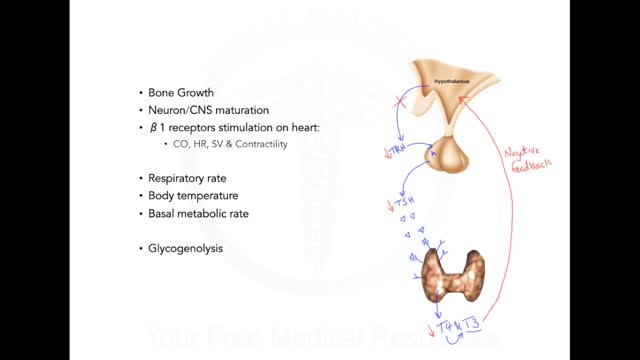
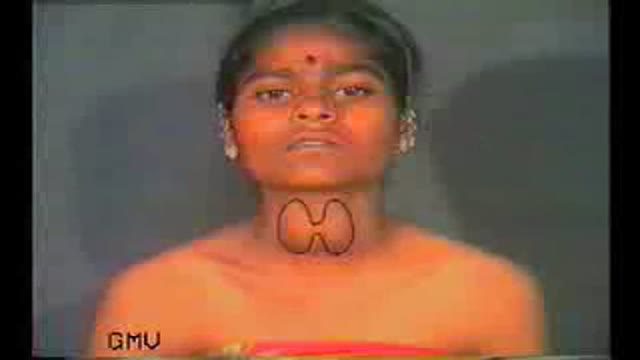
Watch: overactive thyroid
Read the full guides
Hypothyroidism: the full guide Causes of an underactive thyroid, symptoms in detail, levothyroxine treatment, and monitoring blood tests. Read the guide → Hyperthyroidism: the full guide Graves' disease and other causes, antithyroid medicines, radioiodine, surgery, and eye problems. Read the guide →Frequently asked questions
Can you have symptoms of both at the same time?
Some symptoms overlap — tiredness, mood change, hair thinning, and period changes can occur in both — which is exactly why symptoms alone cannot separate them. The direction of weight change, temperature preference, bowel habit, and pulse usually point one way, and the blood test decides.
What do TSH and T4 actually show?
TSH is the pituitary gland's signal telling the thyroid to work harder. When the thyroid underproduces (hypothyroidism), TSH rises as the pituitary shouts louder, and T4 is low. When the thyroid overproduces (hyperthyroidism), TSH is suppressed to very low levels and T4 is high. The pair of results together shows both the direction and the severity.
Can hyperthyroidism turn into hypothyroidism?
Yes. Treatments for overactivity — radioiodine or surgery — often leave the gland underactive afterwards, deliberately, because hypothyroidism is simpler and safer to manage long term. Graves' disease itself can also burn out into underactivity over years. Blood tests are therefore monitored for life after treatment.
Is tiredness alone a reason to test the thyroid?
Tiredness has many causes, and thyroid disease is only one of them — but it is cheap and simple to check. If tiredness comes with weight change, temperature intolerance, bowel change, or a changed pulse, a thyroid blood test is a standard part of working it out.
Do thyroid problems affect pregnancy?
Yes, both directions matter in pregnancy: untreated thyroid imbalance can affect fertility, the pregnancy, and the baby's development. Anyone pregnant or planning pregnancy who has thyroid symptoms or a known thyroid condition should have their levels checked and reviewed, because dose needs often change.
More comparisons
Related topics on MedicalVideos.com
Sources & further reading
Authoritative references for readers who want to go deeper:
Ibrahim MM. Hypothyroidism vs Hyperthyroidism: How to Tell the Difference. MedicalVideos.com; 2026 Nov 26 [cited 2026 Nov 26]. Available from: https://www.medicalvideos.com/conditions/vs/hypothyroidism-vs-hyperthyroidism.html
This page is for general education only and is not medical advice. It cannot tell you which condition you have — only an examination and tests can do that. A racing or irregular heartbeat with chest pain or breathlessness, or confusion or extreme drowsiness, needs same-day or emergency care.