Osteoarthritis or Rheumatoid Arthritis? How to Tell the Difference
Osteoarthritis is a condition in which the cartilage cushioning a joint gradually wears thin and the bone underneath changes, causing pain and stiffness — most often in the knees, hips, hands, and spine. Rheumatoid arthritis is an autoimmune condition in which the immune system attacks the lining of the joints, causing inflamed, swollen joints and, without treatment, progressive joint damage. Both are called 'arthritis' and both cause joint pain, which is why they are confused. The clearest differences: osteoarthritis is a wear-and-repair problem that usually affects a few weight-bearing joints unevenly and eases with rest, while rheumatoid arthritis is whole-body inflammation that typically affects the same joints on both sides at once, with prolonged morning stiffness and tiredness.
✓ Medically reviewed by Mohamed Magdy Ibrahim, MD, PhD — Assistant Professor of Medicine, Transplant Nephrology, University of Maryland School of Medicine · Board certified in Internal Medicine (ABIM) · Last reviewed: November 2026
In short: Pain in one knee or hip that worsens with use and eases with rest, starting later in life, points to osteoarthritis. Symmetrical swelling of the small joints of the hands and feet, morning stiffness lasting well beyond half an hour, and general tiredness point to rheumatoid arthritis — which needs early specialist treatment to protect the joints.
At a glance: osteoarthritis vs rheumatoid arthritis
| Osteoarthritis | Rheumatoid arthritis | |
|---|---|---|
| What it is | Cartilage wears thin and joint structures change — a mechanical, wear-and-repair condition | The immune system attacks the joint lining — an inflammatory, autoimmune condition |
| Which joints | Knees, hips, spine, and the finger joints nearest the nails and at the base of the thumb | Small joints of the hands and feet first — the knuckles and finger joints nearest the hand — plus wrists, knees, and shoulders |
| One side or both | Often one joint or one side worse than the other | Typically symmetrical — the same joints on both sides together |
| Morning stiffness | Brief — usually eases within minutes of getting moving | Prolonged — often lasts an hour or more and is a hallmark of the condition |
| Effect of activity | Pain worsens with use and eases with rest; brief stiffness after sitting ('gelling') | Pain and stiffness often ease with gentle movement and worsen with rest |
| Swelling & warmth | Bony enlargement of the joint; swelling is usually mild and the joint is not hot | Soft, warm, tender swelling of the joint lining during active inflammation |
| Whole-body symptoms | Usually none — the problem stays in the affected joints | Tiredness, low fever, appetite and weight loss during flares; can also affect eyes, lungs, and skin |
| Who it affects most | Older adults; risk rises with age, previous joint injury, and extra weight on load-bearing joints | Often starts in middle age; more common in women; smoking and family history raise the risk |
| How it is confirmed | Examination and the symptom pattern; X-rays show narrowed joint space and bony changes; blood tests are usually normal | Blood tests for inflammation and rheumatoid antibodies, plus examination and imaging of the inflamed joints |
| Usual treatment | Exercise and muscle strengthening, weight management, pain relief, walking aids, and joint replacement for advanced disease | Disease-modifying medicines (DMARDs) started early to switch off inflammation, plus steroids for flares and pain relief |
| How urgent | Managed routinely; a single hot, swollen joint with fever is urgent (see below) | Early referral matters: treatment in the first months protects joints from permanent damage |
The two conditions in brief
Osteoarthritis in brief
Osteoarthritis develops when cartilage — the smooth surface that lets joints glide — thins and frays, and the bone beneath thickens and forms spurs. The joint becomes painful and stiff, most often the knees, hips, hands, and spine.
There is no medicine that regrows cartilage, so treatment centres on strengthening the muscles around the joint, managing weight, staying active, and pain relief; a worn-out joint can be replaced surgically. Read the full osteoarthritis guide →
Rheumatoid arthritis in brief
In rheumatoid arthritis the immune system mistakenly attacks the synovium, the lining that nourishes the joint. The lining thickens and inflames, and over time it can erode cartilage and bone and loosen tendons, deforming the joint.
Modern disease-modifying medicines can switch the inflammation off and prevent most damage — but they work best when started early, which is why new symmetrical joint swelling should never be watched for months. Read the full rheumatoid arthritis guide →
When to worry — get care the same day
- A single joint that is suddenly hot, red, very painful, and swollen — especially with fever (possible joint infection)
- New swelling of several small joints on both sides that does not settle within a few weeks
- A joint that gives way, locks, or cannot bear weight after an injury
- Joint pain with a rash, fever, or feeling generally unwell
- Rapid loss of hand function — dropping things, being unable to grip or turn keys
A hot, swollen joint with fever can be an infected joint, which is an emergency for the joint itself. New persistent symmetrical swelling needs prompt — not emergency — assessment so that rheumatoid treatment can start early if that is the cause.
Watch: osteoarthritis and rheumatoid arthritis videos
Watch: osteoarthritis
 Osteoarthritis
20,171 views
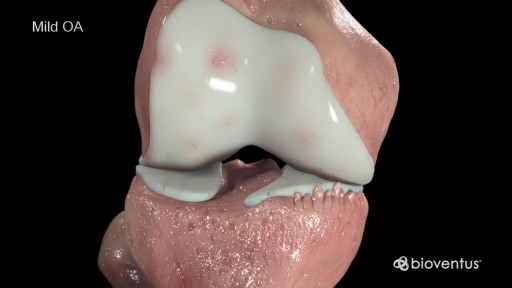 Stages of Knee Osteoarthritis
17,375 views
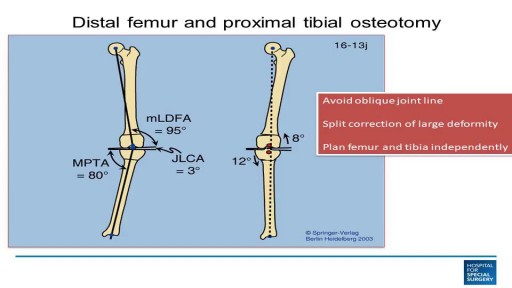 Knee Arthritis Treatment Options
1,170 views
Watch: rheumatoid arthritis


Read the full guides
Osteoarthritis: the full guide How cartilage wears, which joints are affected, exercise and weight strategies, and joint replacement. Read the guide → Rheumatoid Arthritis: the full guide The autoimmune cause, early signs, DMARDs and biologic medicines, and protecting joints long term. Read the guide →Frequently asked questions
How can I tell which arthritis I have from the stiffness?
The morning pattern is a strong clue. Osteoarthritis stiffness is brief — a few minutes of loosen-up time. Rheumatoid stiffness is prolonged, often an hour or more, and the joints feel better once you get moving. Combined with which joints are involved and whether both sides match, it points the doctor in the right direction before any tests.
Can blood tests prove rheumatoid arthritis?
Blood tests support the diagnosis — markers of inflammation and antibodies such as rheumatoid factor and anti-CCP — but no single test proves it. Some people with rheumatoid arthritis have normal antibody tests, and some healthy people have positive ones, so the diagnosis rests on the whole picture: symptoms, examination, tests, and imaging together.
Can you have both osteoarthritis and rheumatoid arthritis?
Yes. They are different diseases and can coexist in the same person, even in the same joint. Long-standing rheumatoid inflammation can also damage a joint enough to cause secondary osteoarthritis on top of it.
Does weather really make arthritis worse?
Many people with both conditions report more pain in cold, damp weather. The effect appears real for symptoms — possibly through pressure changes and reduced activity — but weather does not change the underlying joint damage, and it does not separate one type from the other.
Why is early treatment so important in rheumatoid arthritis?
Joint damage from rheumatoid inflammation happens fastest in the first months. Disease-modifying medicines started in that early window can prevent erosions and deformity that cannot be undone later — which is why new, persistent, symmetrical joint swelling deserves prompt referral rather than a wait-and-see approach.
More comparisons
Related topics on MedicalVideos.com
Sources & further reading
Authoritative references for readers who want to go deeper:
Ibrahim MM. Osteoarthritis vs Rheumatoid Arthritis: How to Tell the Difference. MedicalVideos.com; 2026 Nov 26 [cited 2026 Nov 26]. Available from: https://www.medicalvideos.com/conditions/vs/osteoarthritis-vs-rheumatoid-arthritis.html
This page is for general education only and is not medical advice. It cannot tell you which condition you have — only an examination and tests can do that. A single joint that becomes suddenly hot, red, and very painful — especially with fever — needs same-day care, as it may be infected.