
Giving medication by injection is one of the most common nursing skills, and good technique protects both the patient and the nurse. This cluster collects our clearest demonstrations of intramuscular and subcutaneous injection technique and drawing up medication from an ampoule — each video page carries a Key Steps checklist that follows the demonstration in order, so you can review the sequence before a skills check or a clinical shift.
 <![CDATA[Intramuscular (IM) Injection in the Gluteal Muscle: Correct Technique]]>
264,586 views
 <![CDATA[IM Injection]]>
83,718 views
 <![CDATA[Female IM Injection]]>
72,204 views
 <![CDATA[intramuscular injection video]]>
62,454 views
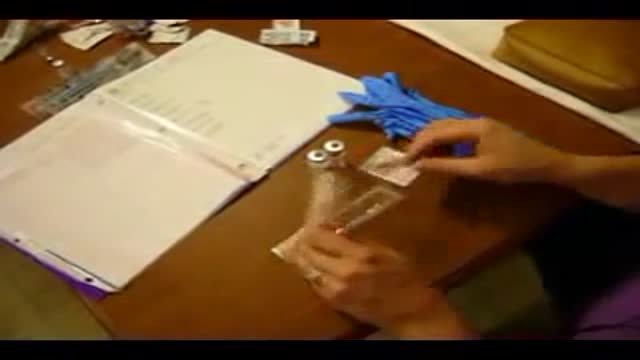 <![CDATA[Administering a Subcutaneous Injection]]>
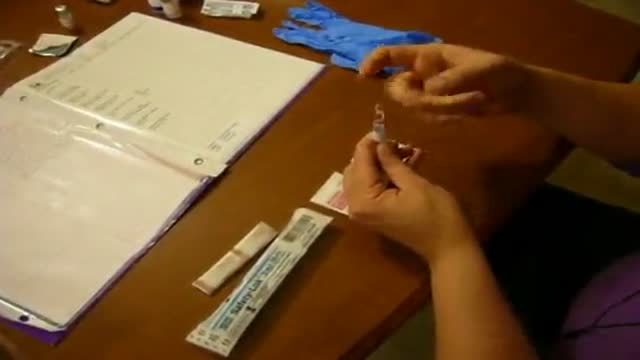 <![CDATA[Drawing from an Ampoule]]>
Before any injection, nurses work through the checks taught in every nursing program: confirm the right patient, the right medication, the right dose, the right route and the right time, and check allergies and the expiry date. The videos below show the hands-on technique that follows those checks — site selection, preparation, administration and safe sharps disposal.
What are the rights of medication administration?
The classic teaching framework lists five rights: the right patient, the right medication, the right dose, the right route and the right time. Many programs add further checks, such as the right documentation and checking allergies before anything is given. The rights are a final safety check at the bedside, on top of the prescription check that happens earlier.
What is the difference between intramuscular and subcutaneous injections?
An intramuscular (IM) injection delivers medication into a muscle, where a rich blood supply absorbs it relatively quickly. A subcutaneous injection delivers a smaller volume into the fatty tissue just under the skin, where absorption is slower and steadier. The route is chosen by the prescriber based on the medication, its volume and how it is absorbed.
What should be checked before drawing up medication from an ampoule?
Check the medication name, strength and expiry date against the prescription, and inspect the ampoule for cracks and the liquid for particles or discoloration. The neck is cleaned before it is snapped open, and the dose is drawn up and checked before the needle is changed or the medication is taken to the patient, following local protocol.
This page is for general education only and is not medical advice. Procedures should be performed only by trained staff following their institution's protocols.