
- Physical Examination
- Surgical Examination
- Ophthalmology
- Clinical Skills
- Orthopedics
- Surgery Videos
- Laparoscopy
- Pediatrics
- Funny Videos
- Cardiothoracic Surgery
- Nursing Videos
- Plastic Surgery
- Otorhinolaryngology
- Histology and Histopathology
- Neurosurgery
- Dermatology
- Pediatric Surgery
- Urology
- Dentistry
- Oncology and Cancers
- Anatomy Videos
- Health and Fitness
- Radiology
- Anaesthesia
- Physical Therapy
- Pharmacology
- Interventional Radiology
- Cardiology
- Endocrinology
- Gynecology
- Emergency Medicine
- Psychiatry and Psychology
- Childbirth Videos
- General Medical Videos
- Nephrology
- Physiology
- Diet and Food Health
- Diabetes Mellitus
- Neurology
- Women Health
- Osteoporosis
- Gastroenterology
- Pulmonology
- Hematology
- Rheumatology
- Toxicology
- Nuclear Medicine
- Infectious Diseases
- Vascular Disease
- Reproductive Health
- Burns and Wound Healing
- Kidney Zone Podcast
- Other
Nursing Skills & Procedures
Step-by-step nursing procedure videos, organised the way nurses actually work: eight skill clusters covering medication administration, IV therapy, wound care, catheters, respiratory care, assessment, mobility and emergency basics. Every video page carries a Key Steps checklist that follows the demonstration in order, and the section includes the nursing calculators — drip rates, dosage, GCS, Braden and Morse — that turn orders into numbers you can check.
The Pocket Version: Nursing Cheat-Sheet Pack
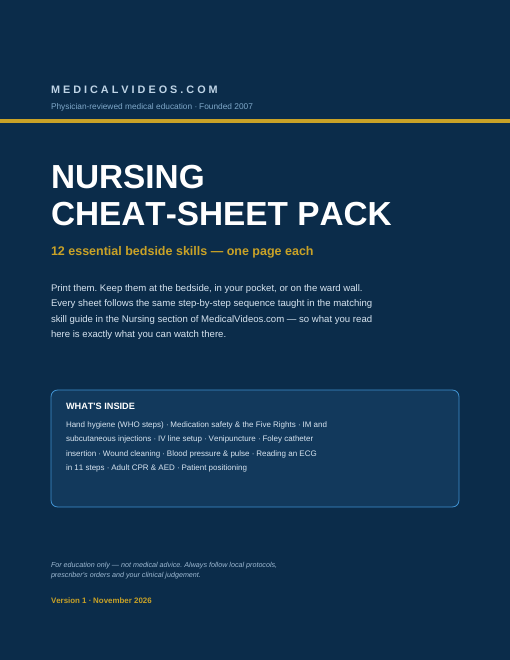
All 12 core skills as printable one-page cheat sheets — injections (IM & subcutaneous), IV setup and cannula insertion, venipuncture, Foley catheter, wound cleaning, blood pressure & pulse, ECG, CPR & AED, patient positioning and medication safety. Print the pack, keep it at the bedside, and check any skill in seconds.
Get the pack — $9 launch price
Not ready yet? Start with the free Hand Hygiene cheat sheet — one of the 12 sheets, free when you join the newsletter.
Instant PDF download right after checkout (ZIP: combined 14-page PDF + each sheet separately). Regular price $14. For education only — not medical advice.
Browse the eight skill clusters
 Medication Administration
IM and subcutaneous injection technique, drawing up from an ampoule, and the checks that come before every dose.
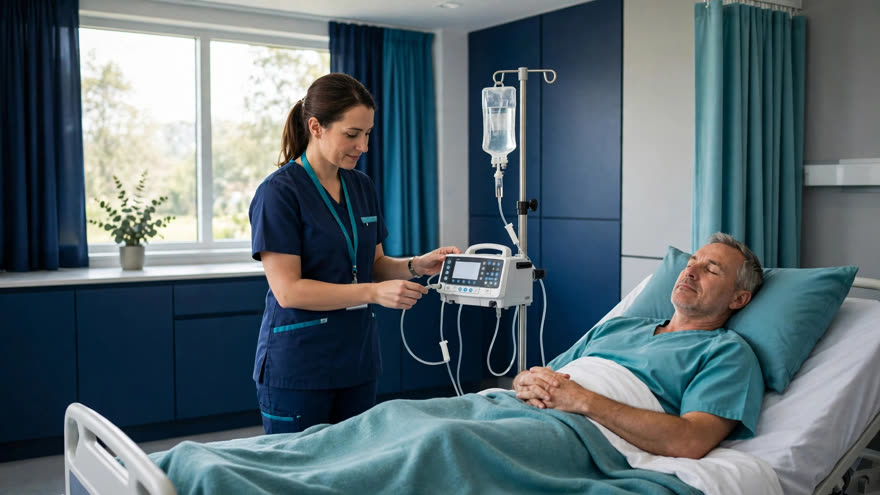 IV Therapy & Vascular Access
Cannula insertion, IV injection, blood draw and transfusion, and central line placement.
 Wound Care & Dressings
Wound cleaning, sterile dressing changes, bandaging, suturing basics and debridement.
 Catheters, Tubes & Elimination
Foley catheter insertion in men and women with sterile technique, and enema administration.
 Respiratory Care
Chest tube insertion and drainage systems, tracheostomy, CPAP and incentive spirometry.
 Monitoring & Assessment
Vital signs, heart sounds and auscultation, ECG reading and head-to-toe assessment.
 Patient Care & Mobility
Safe transfers, positioning, occupied bed making and crutch gait patterns.
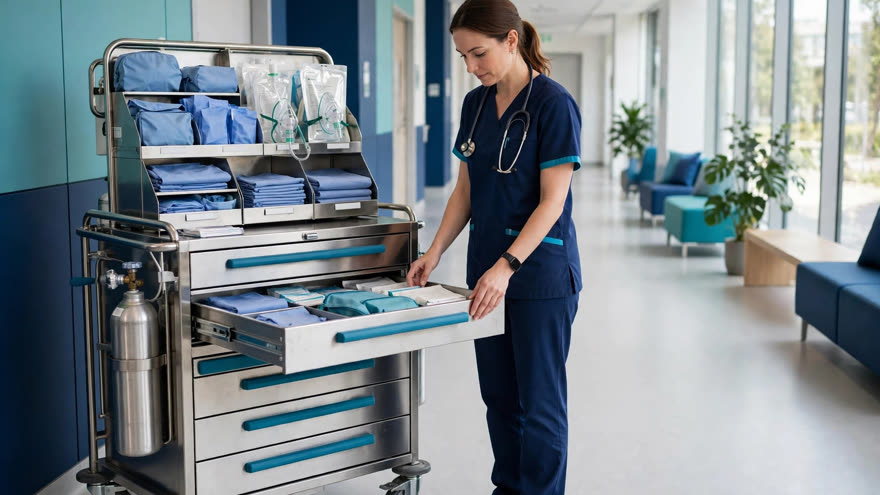 Safety & Emergency Basics
Bleeding control, adult CPR, AED use, choking first aid and recognising anaphylaxis.
Nursing calculators
 IV Drip Rate CalculatorDrops per minute from volume, time and drop factor.
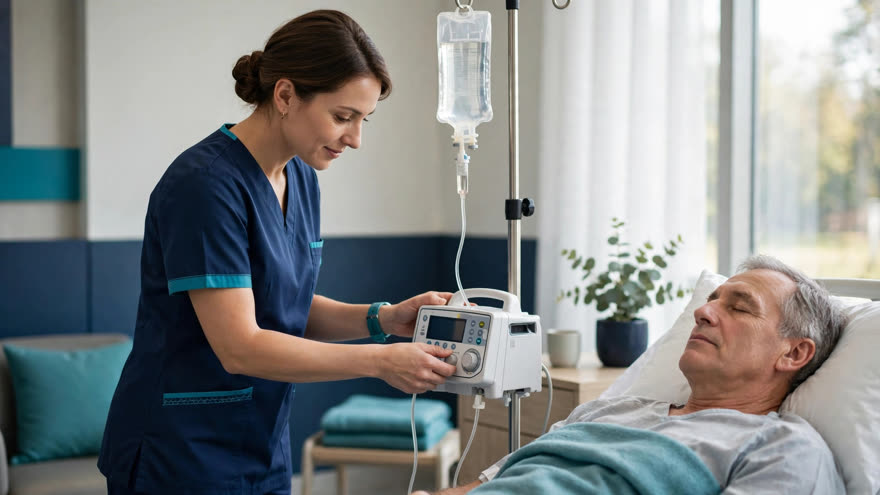 IV Flow Rate CalculatorMillilitres per hour from volume and time.
 Medication Dosage CalculatorDesired-over-have and weight-based mg/kg dosing.
 Glasgow Coma ScaleScore eye, verbal and motor responses, 3–15.
 Braden ScalePressure-injury risk across six subscales.
 Morse Fall ScaleFall risk across the six Morse items.
 Intake & Output ConverterFluid ounces ↔ millilitres for I&O charting.
 Body Surface AreaMosteller formula, in square metres.
How this section works
Each cluster page collects the clearest demonstrations of that skill from the MedicalVideos.com catalog, with gaps filled by official embeds from credentialed nursing educators and institutions. On every video page you will find the same learning wrapper: a Key Steps checklist, a written summary of the procedure, and links back to the cluster and its calculators. The section grows as new procedures are added and is reviewed as guidelines change.
Frequently asked questions
What is the Nursing Skills & Procedures section?
It is a dedicated area of MedicalVideos.com that organises our nursing procedure videos into eight skill clusters — from medication administration and IV therapy to mobility and emergency basics — and pairs every video with a written Key Steps checklist, a plain-language summary and the nursing calculators nurses use every day.
Who is this section for?
Nursing students preparing for skills checks, practising nurses revising a procedure, and caregivers who want to understand the techniques used in a patient's care. It is an education resource: it supports, and never replaces, supervised clinical training and your institution's own protocols.
How are the videos and Key Steps chosen?
Videos come first from the MedicalVideos.com catalog, and gaps are filled with official embeds from credentialed nursing educators and institutions. Each Key Steps checklist is written from the procedure as demonstrated and standard nursing practice; where a video and a local protocol differ, the local protocol wins.
Are the calculators a substitute for clinical judgement?
No. The calculators perform the arithmetic in the standard published formulas and scales — IV drip rates, dosage calculations, GCS, Braden and Morse scores — so you can check your own working. Every result should be verified against the prescription, the patient and your local protocol before it is used.
Related areas on MedicalVideos.com
Gear Nurses Ask Us About
Littmann Classic III Stethoscope — a durable everyday stethoscope for clinicals and the floor. See it on Amazon →
Davis's Drug Guide for Nurses — a quick-look drug reference sized for the clinical floor. See it on Amazon →
More books & gear we recommend →
As an Amazon Associate, MedicalVideos.com earns from qualifying purchases.
This section is for general education only and is not medical advice or a substitute for clinical training. Always follow your institution's protocols and current guidelines.