
- Physical Examination
- Surgical Examination
- Ophthalmology
- Clinical Skills
- Orthopedics
- Surgery Videos
- Laparoscopy
- Pediatrics
- Funny Videos
- Cardiothoracic Surgery
- Nursing Videos
- Plastic Surgery
- Otorhinolaryngology
- Histology and Histopathology
- Neurosurgery
- Dermatology
- Pediatric Surgery
- Urology
- Dentistry
- Oncology and Cancers
- Anatomy Videos
- Health and Fitness
- Radiology
- Anaesthesia
- Physical Therapy
- Pharmacology
- Interventional Radiology
- Cardiology
- Endocrinology
- Gynecology
- Emergency Medicine
- Psychiatry and Psychology
- Childbirth Videos
- General Medical Videos
- Nephrology
- Physiology
- Diet and Food Health
- Diabetes Mellitus
- Neurology
- Women Health
- Osteoporosis
- Gastroenterology
- Pulmonology
- Hematology
- Rheumatology
- Toxicology
- Nuclear Medicine
- Infectious Diseases
- Vascular Disease
- Reproductive Health
- Burns and Wound Healing
- Kidney Zone Podcast
- Other










Aortoiliac Occlusive Disease

Educational only: videos on MedicalVideos.com are for general information and are not medical advice. Always consult your own doctor about your health.
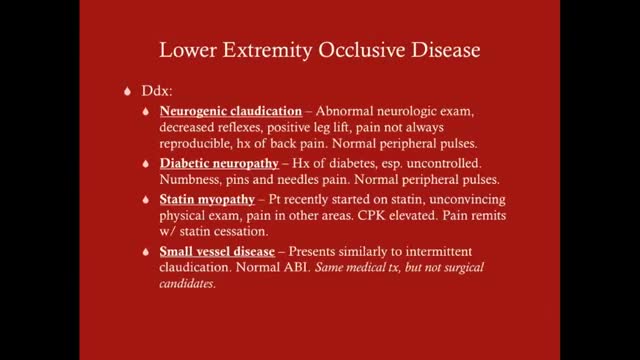
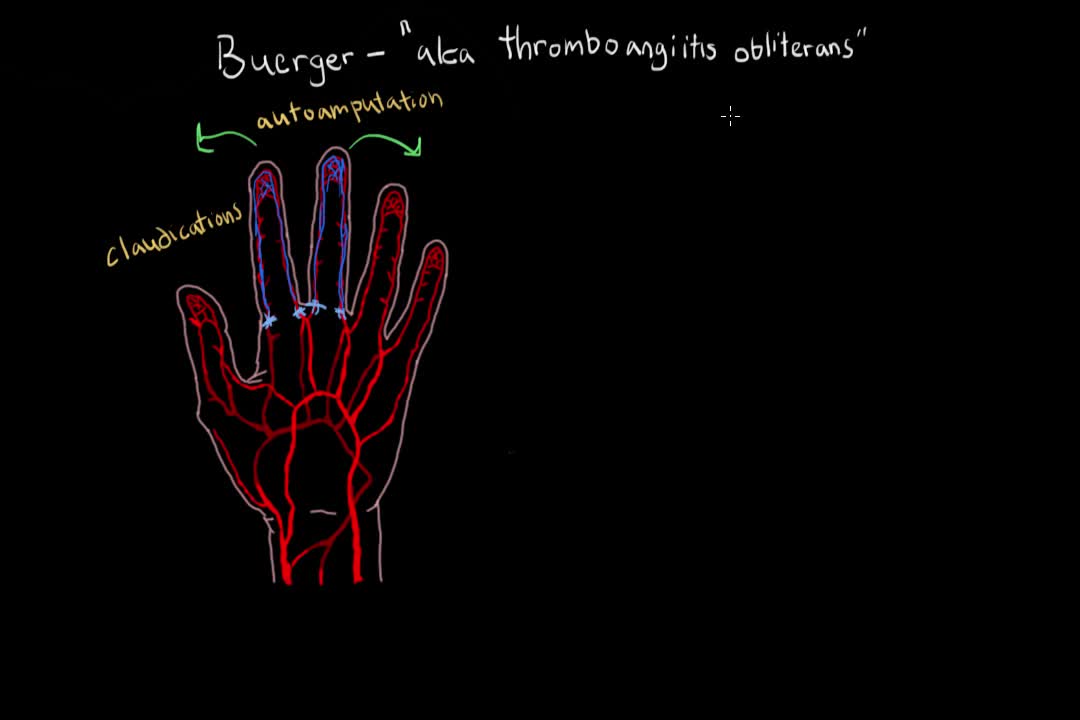
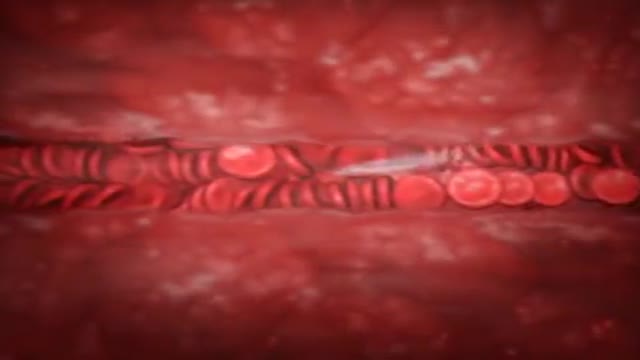
Aortoiliac occlusive disease (AIOD) occurs commonly in patients with PAD. Significant lesions in the aortoiliac arterial segment are exposed easily by palpation of the femoral pulses. Any diminution of the palpable femoral pulse indicates that a more proximal obstruction exists. Obstructive lesions may be present in the infrarenal aorta, common iliac, internal iliac (hypogastric), external iliac, or combinations of any or all of these vessels. Occasionally, degenerated nonstenotic atheromatous disease exists in these vessels and may manifest by atheroembolism to the foot, the "blue toe" or "trash foot" syndrome. Generally, patients with aortoiliac PAD have a poorer general prognosis than those with more distal PAD.
This video in 30 seconds
This video covers aortoiliac occlusive disease (AIOD), described as occurring commonly in patients with peripheral arterial disease. It explains that diminution of a palpable femoral pulse indicates a more proximal obstruction, lists possible lesion sites from the infrarenal aorta through the common, internal and external iliac vessels, describes atheroembolism to the foot as blue toe or trash foot syndrome, and notes a poorer general prognosis than more distal PAD in the description.
Key points
- Aortoiliac occlusive disease in PAD is covered
- Femoral pulse diminution indicating proximal obstruction is explained
- Lesion sites in the aorta and iliac vessels are listed
- Atheroembolism as blue toe or trash foot syndrome is described
- Poorer general prognosis than distal PAD is noted in the description
Video Overview
This video presents “Aortoiliac Occlusive Disease” — Aortoiliac occlusive disease (AIOD) occurs commonly in patients with PAD. Significant lesions in the aortoiliac arterial segment are exposed easily by palpation of the femoral pulses. Any diminution of the palpable femoral pulse indicates. Whether you are preparing for a procedure, studying the technique, or learning how a condition is assessed, the recording shows the process as it is performed in practice.
From our Vascular Disease collection: Varicose veins, aneurysms, DVT and arterial disease — diagnosis and surgical treatment explained step by step. Browse all Vascular Disease videos →
Educational content only — not a substitute for professional medical advice.
SORT BY-
Top Comments
-
Latest comments