
- Physical Examination
- Surgical Examination
- Ophthalmology
- Clinical Skills
- Orthopedics
- Surgery Videos
- Laparoscopy
- Pediatrics
- Funny Videos
- Cardiothoracic Surgery
- Nursing Videos
- Plastic Surgery
- Otorhinolaryngology
- Histology and Histopathology
- Neurosurgery
- Dermatology
- Pediatric Surgery
- Urology
- Dentistry
- Oncology and Cancers
- Anatomy Videos
- Health and Fitness
- Radiology
- Anaesthesia
- Physical Therapy
- Pharmacology
- Interventional Radiology
- Cardiology
- Endocrinology
- Gynecology
- Emergency Medicine
- Psychiatry and Psychology
- Childbirth Videos
- General Medical Videos
- Nephrology
- Physiology
- Diet and Food Health
- Diabetes Mellitus
- Neurology
- Women Health
- Osteoporosis
- Gastroenterology
- Pulmonology
- Hematology
- Rheumatology
- Toxicology
- Nuclear Medicine
- Infectious Diseases
- Vascular Disease
- Reproductive Health
- Burns and Wound Healing
- Kidney Zone Podcast
- Other
CVA Tenderness USMLE

Educational only: videos on MedicalVideos.com are for general information and are not medical advice. Always consult your own doctor about your health.
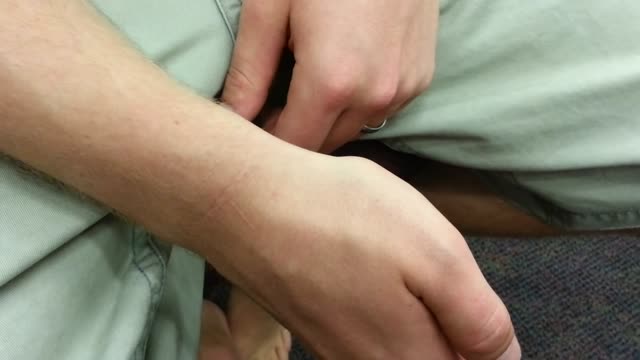
Costo Vertebral Angle tenderness exam from the USMLE collection
This video in 30 seconds
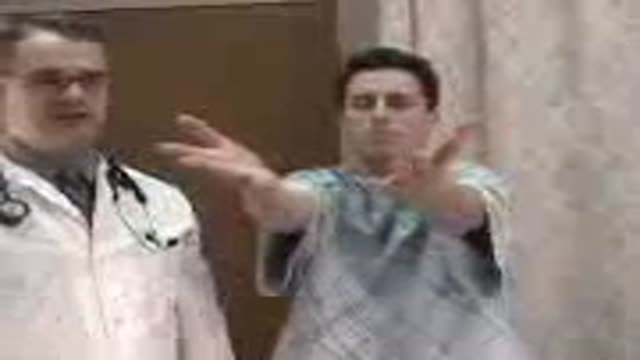
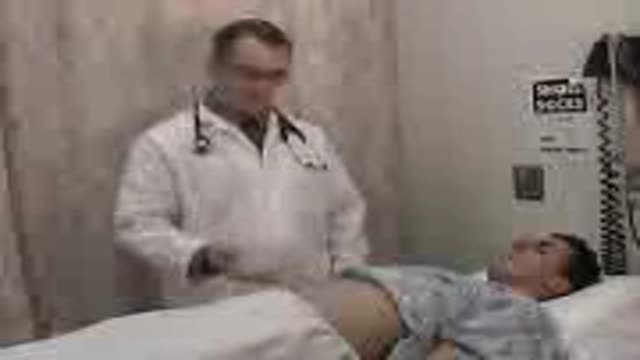
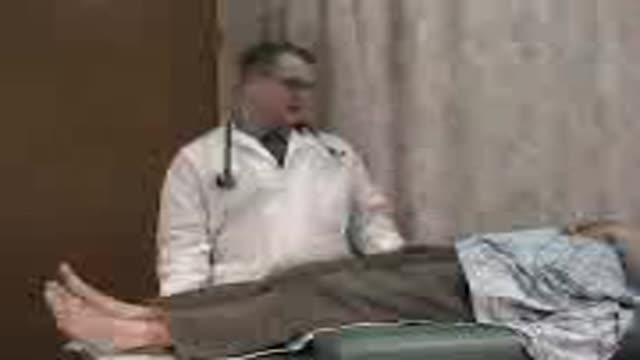
A USMLE-style examination clip demonstrating costovertebral angle tenderness, used when assessing for pyelonephritis. The examiner places one hand over the kidney area and strikes it with the other fist while asking the patient about pain, and the result on both sides is negative. The recovered audio plays the same demonstration twice.
Key points
- The examiner explains the test is used to help assess for pyelonephritis
- One hand is placed over the location of the kidney and struck with the other fist
- The patient is asked about discomfort on each side in turn
- The patient reports no pain, so the result is described as negative
- The same demonstration is repeated in the second half of the audio
Video Transcript
A USMLE-style examination clip demonstrating costovertebral angle (CVA) tenderness, used to assess for pyelonephritis: one hand is placed over the kidney and struck with the other fist while the patient is asked about pain. The result here is negative — and the recovered audio plays the same demonstration twice.
Read the full transcript
The next examination is called CVA tenorness or cost over Teebril angle tenorness. This examination is performed to help assess for pylonephritis. With a pylonephritis, sometimes the innervation to the capsule of the kidney can become inflamed and irritable. CVA tenorness will help us elicitate this pain and help us assess this. This is done first by placing one hand over the location of the kidneys, then with the other hand, Jason, I'm just going to pound on your back a little bit, pounding up against your hand to the back.
Do you have any discomfort with that? No. Okay. I'm going to do it to the other side now. Any pain with that, sir? No. Okay. This is considered to be negative cost over Teebril angle tenorness. A little bit. Pounding up against your hand to the back. Do you have any discomfort with that? No. Okay. I'm going to do it to the other side now. Any pain with that, sir? No. Okay. This is considered to be negative cost over Teebril angle tenorness.
Transcript auto-generated from the video’s audio for accessibility and study. Educational content only — not medical advice.
Video Overview
Other: part of the MedicalVideos.com library of free educational medical and surgery videos. Browse this category →
SORT BY-
Top Comments
-
Latest comments