
- Physical Examination
- Surgical Examination
- Ophthalmology
- Clinical Skills
- Orthopedics
- Surgery Videos
- Laparoscopy
- Pediatrics
- Funny Videos
- Cardiothoracic Surgery
- Nursing Videos
- Plastic Surgery
- Otorhinolaryngology
- Histology and Histopathology
- Neurosurgery
- Dermatology
- Pediatric Surgery
- Urology
- Dentistry
- Oncology and Cancers
- Anatomy Videos
- Health and Fitness
- Radiology
- Anaesthesia
- Physical Therapy
- Pharmacology
- Interventional Radiology
- Cardiology
- Endocrinology
- Gynecology
- Emergency Medicine
- Psychiatry and Psychology
- Childbirth Videos
- General Medical Videos
- Nephrology
- Physiology
- Diet and Food Health
- Diabetes Mellitus
- Neurology
- Women Health
- Osteoporosis
- Gastroenterology
- Pulmonology
- Hematology
- Rheumatology
- Toxicology
- Nuclear Medicine
- Infectious Diseases
- Vascular Disease
- Reproductive Health
- Burns and Wound Healing
- Kidney Zone Podcast
- Other




Pediatric sensations,gait and meningeal signs

Meningitis is a common life-threatening medical emergency caused by infectious and non-infectious agents. Rapid and accurate evaluation by history and clinical examination is helpful to guide further specific investigation and treatment. Kernig's sign, Brudzinski's sign, and nuchal rigidity are bedside diagnostic signs used to evaluate suspected cases of meningitis. The presence of meningeal irritation, however, is not pathognomonic for meningitis.
This video in 30 seconds
A pediatric neurology examination demonstration covering sensation and gait testing in a young child, including heel and toe walking. It then demonstrates the meningeal signs associated with meningitis: neck rigidity, Lasegue's sign, Kernig's sign and Brudzinski's sign, and shows what a positive result looks like.
Key points
- Sensation is tested by touch and pain while observing the child's reaction
- Gait is assessed for limping and coordination, including walking on heels and tiptoe, with developmental limits noted
- Neck rigidity is tested by attempting to flex the child's chin toward the chest
- Lasegue's and Kernig's signs are demonstrated with leg raising and knee extension
- Brudzinski's sign is shown as the legs flexing when the head is raised
Chapters
- 0:07 — Testing sensation in small children
- 0:17 — Examining gait heel and toe walking
- 1:06 — Introduction to meningeal signs
- 1:30 — Testing neck rigidity
- 1:47 — Lasegue sign demonstration
- 2:26 — Kernig sign demonstration
- 2:47 — Brudzinski sign demonstration
Video Transcript
A pediatric neurology examination: testing sensation and gait in a young child (including heel and toe walking), then the meningeal signs of meningitis — neck rigidity, Lasègue's and Kernig's signs, and Brudzinski's sign — and what a positive result looks like.
Read the full transcript
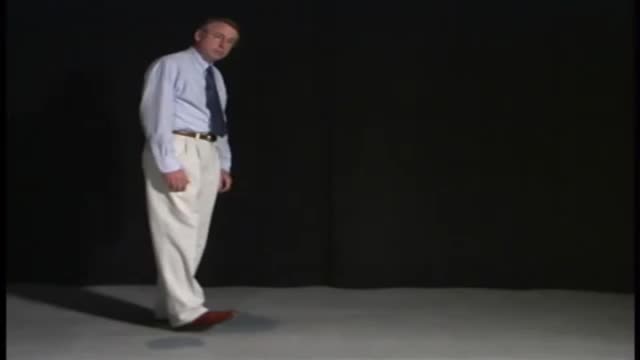
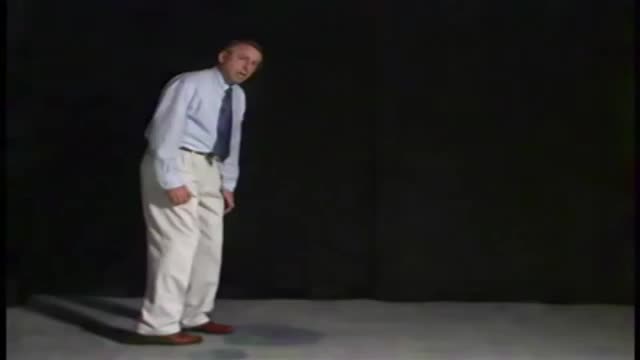
Even in small children, the sense of touch and pain can be tested. We observe the child's reaction. Sensation deficits are very rare in children. A child's walking posture is examined as in adults. We note whether the child limps and whether its movements are coordinated. If some pathology is suspected, the child may also be asked to run. Walking on the heels and on tiptoe are also tested. During assessment, the child's age and stage of development must also be borne in mind. This one-year-old child is still unsure and his walk is broad-based.
Standing on one leg is not possible for a child until age five. Because of the seriousness of meningitis, we shall also cover the meningial signs. The signs of meningitis comprise Nucle-rigidity, a positive laseg, a positive kerning, and a positive Brudzinski sign. When testing for Nucle-rigidity, the examiner tries to flex the child's chin down to the sternum, which is normally readily accomplished. As our little actress shows, the flexion can be carried out only incompletely, or not at all in meningitis because of the pain. For the laseg sign, the examiner takes the stretched leg of the supine child
and flexes it at the hip joint. Normally a flexion of 70 to 90 degrees is quite possible. The laseg sign is positive if the hip flexion is restricted and painful. In order to exclude compensatory movements, the pelvis should be held down. The kerning sign is based on a similar mechanism. The leg is first flexed 90 degrees at the hip, then is stretched at the knee. If there is meningitis, the leg can no longer be straightened. A further indication of meningitis is the Brudzinski sign. If the meninges are stimulated, raising the head will cause the legs to flex.
Another indication is seen if the child has to support itself in a sitting position by placing its hands behind it and by drawing up its legs.
Transcript auto-generated from the video’s audio for accessibility and study. Educational content only — not medical advice.
Video Overview
From our Pediatrics collection: Pediatric videos: child health, newborn care, common childhood illnesses and pediatric procedures explained for parents, students and clinicians. Browse all Pediatrics videos →
SORT BY-
Top Comments
-
Latest comments