
- Physical Examination
- Surgical Examination
- Ophthalmology
- Clinical Skills
- Orthopedics
- Surgery Videos
- Laparoscopy
- Pediatrics
- Funny Videos
- Cardiothoracic Surgery
- Nursing Videos
- Plastic Surgery
- Otorhinolaryngology
- Histology and Histopathology
- Neurosurgery
- Dermatology
- Pediatric Surgery
- Urology
- Dentistry
- Oncology and Cancers
- Anatomy Videos
- Health and Fitness
- Radiology
- Anaesthesia
- Physical Therapy
- Pharmacology
- Interventional Radiology
- Cardiology
- Endocrinology
- Gynecology
- Emergency Medicine
- Psychiatry and Psychology
- Childbirth Videos
- General Medical Videos
- Nephrology
- Physiology
- Diet and Food Health
- Diabetes Mellitus
- Neurology
- Women Health
- Osteoporosis
- Gastroenterology
- Pulmonology
- Hematology
- Rheumatology
- Toxicology
- Nuclear Medicine
- Infectious Diseases
- Vascular Disease
- Reproductive Health
- Burns and Wound Healing
- Other
Gynecology


According to a Danish study , frequent sex may help prevent pre-eclampsia. Researchers believe it's because of a protein found in sperm that can regulate the body's immune system. Yet because the cause of preeclampsia is unknown, it's important to keep your prenatal visits and talk to your doctor about your risk.
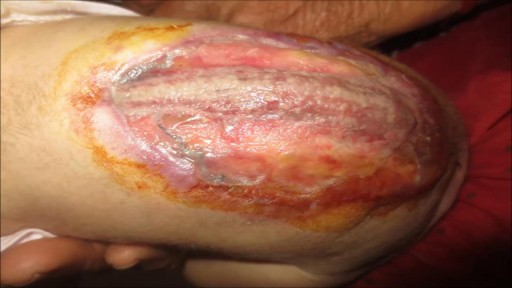
If you're pregnant or might become pregnant, it's critically important to get enough folic acid, the synthetic form of vitamin B9, also known as folate. Folic acid helps prevent neural tube defects (NTDs) – serious birth defects of the spinal cord (such as spina bifida) and the brain (such as anencephaly).

Is Air Travel During Pregnancy Safe? Traveling by air is considered safe for women while they are pregnant; however, the following ideas might make your trip safer and more comfortable. Most airlines allow pregnant women to travel through their eighth month.
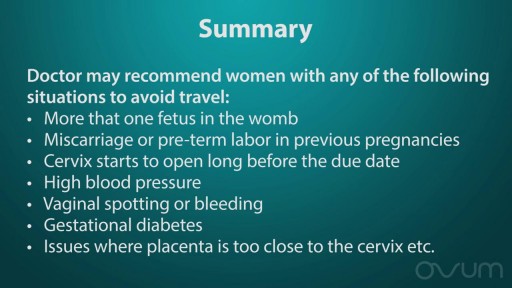
Airline travel. When you're pregnant, the safest time to travel is during your second trimester (18 to 24 weeks), when your risks for miscarriage and preterm labor are lowest. During your third trimester, it's best to stay within 300 miles of home, in case of sudden changes that need medical attention.

Start out with a visit to a doctor called a urologist. He'll give you a physical exam and ask you questions about your lifestyle and medical history, such as: Surgeries you've had Medications you take Your exercise habits Whether you smoke or take recreational drugs He may also have a frank discussion with you about your sex life, including any problems you've had or whether you have or ever had any STDs (sexually transmitted diseases). You'll probably be asked to give a sample of semen for analysis.

Most of the time, you won't know the exact day you got pregnant. Your doctor will count the start of your pregnancy from the first day of your last menstrual period. That's about 2 weeks ahead of when conception happens.

9 Months In The Womb: A Remarkable Look At Fetal Development Through Ultrasound

Pregnancy first Trimester

With so many antibiotics available, it isn't possible to list all of them here. But common antibiotics that are generally considered safe during pregnancy include penicillins (such as amoxicillin and ampicillin), cephalosporins (such as cephalexin), and erythromycin.

Therapeutic anticoagulation is recommended for all women with acute VTE; prophylactic anticoagulation is recommended for women at risk, such as those with a past history of thrombosis or thrombophilia or with a mechanical heart valve. The preferred anticoagulants during pregnancy are the heparin compounds.

Womens Issues and Blood Clotting

Oral sex can be an enjoyable, healthy part of an adult relationship. But there are some things that many people don't know about oral sex. Here are four facts that might surprise you. 1. Oral sex is linked to throat cancer. Cancer? Yes, you can get throat cancer from oral sex, says American Cancer Society Chief Medical Officer Otis Brawley, MD. It's not oral sex, per se, that causes cancer, but the human papillomavirus (HPV), which can be passed from person to person during sex, including oral sex.

Mysterious things happen in nature, and extraordinary birth delivery facts amaze and astound us. And "The baby who didn't know he was born" is one of them; the reason was because his mother didn't break water, so the little one thought was still in the womb. Of course, the amniotic sac was later broken by the doctor, and as soon as this happened the baby began to breath and cry.

Baby Born Still Inside The Amniotic Sac
Formerly called toxemia, preeclampsia is a condition that pregnant women develop. It is marked by high blood pressure in women who have previously not experienced high blood pressure before. Preeclamptic women will have a high level of protein in their urine and often also have swelling in the feet, legs, and hands. This condition usually appears late in pregnancy, generally after the 20 week mark, although it can occur earlier
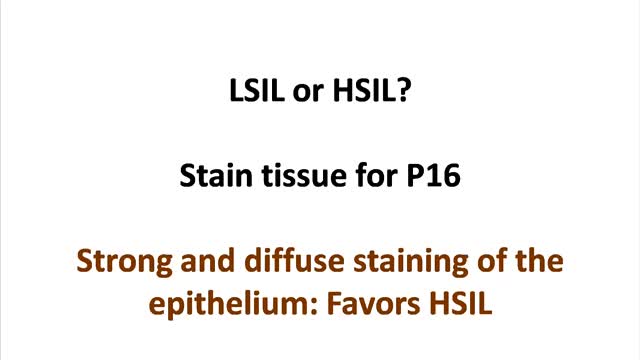
Cervical cancer occurs when abnormal cells on the cervix camera.gif grow out of control. The cervix is the lower part of the uterus that opens into the vagina. Cervical cancer can often be successfully treated when it's found early. It is usually found at a very early stage through a Pap test.

Twins in the Womb - Human Development

In the Womb - Identical Twins

Of the many factors that affect your compatibility with a man, one of the biggest (or smallest) is in his pants. As with humour, interests or habits, the wrong fit can leave you cold. Or traumatised. In a study of 1,661 penises, Dr Debby Herbenick, author of Sex Made Easy, found an almost nine-inch difference in erection size: from 1.6 inches to 10.2. And since absolutely nothing outside the package tells you what to expect with the package, you have to test compatibility the hard way. Sometimes you hit your jackpot, sometimes it's just fine, and sometimes he's the guy on either end of that erection spectrum. These writers have been there, so here's what they learned - and how you can deal (without the gasp reflex).

Erectile dysfunction (ED) is the inability to get or keep an erection firm enough for sexual function. It’s a common sexual problem, affecting as many as 30 million men in the United States. Most cases of ED have a physical cause, such as heart disease, diabetes, and obesity. Lifestyle choices like smoking and drinking excessive amounts of alcohol can also lead to ED. But for some men, psychological issues are the root of the problem.
