
- Procedures & Tests
- Symptoms A-Z
- Symptom Checker
- Kidney Diet
- First Aid
- Anatomy Atlas
- Ask MedicalVideos
- Drug Guide
- Lab Values
- Vital Signs
- Muscles A–Z
- Clinical Signs
- Medical Abbreviations
- Medical Terminology
- Physical Examination
- Surgical Examination
- Ophthalmology
- Clinical Skills
- Orthopedics
- Surgery Videos
- Laparoscopy
- Pediatrics
- Funny Videos
- Cardiothoracic Surgery
- Nursing Videos
- Plastic Surgery
- Otorhinolaryngology
- Histology and Histopathology
- Neurosurgery
- Dermatology
- Pediatric Surgery
- Urology
- Dentistry
- Oncology and Cancers
- Anatomy Videos
- Health and Fitness
- Radiology
- Anaesthesia
- Physical Therapy
- Pharmacology
- Interventional Radiology
- Cardiology
- Endocrinology
- Gynecology
- Emergency Medicine
- Psychiatry and Psychology
- Childbirth Videos
- General Medical Videos
- Nephrology
- Physiology
- Diet and Food Health
- Diabetes Mellitus
- Neurology
- Women Health
- Osteoporosis
- Gastroenterology
- Pulmonology
- Hematology
- Rheumatology
- Toxicology
- Nuclear Medicine
- Infectious Diseases
- Vascular Disease
- Reproductive Health
- Burns and Wound Healing
- Kidney Zone Podcast
- Other







Loyola Full Neurological Exam Part 4

Educational only: videos on MedicalVideos.com are for general information and are not medical advice. Always consult your own doctor about your health.
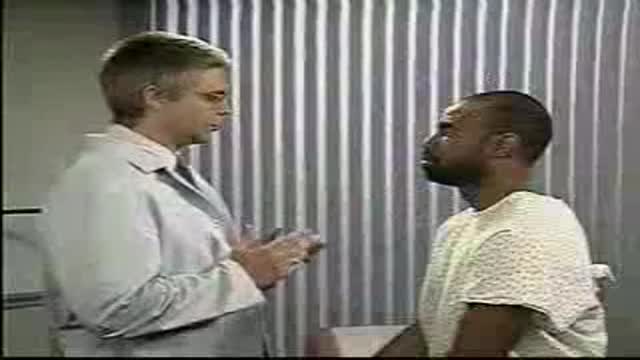
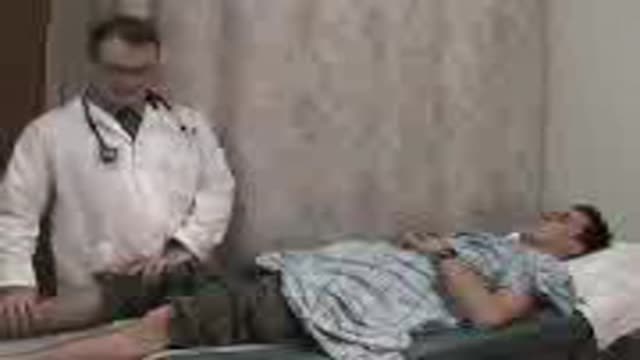
Part 4 of a Loyola neurological examination series screens leg muscle strength. The examiner tests hip flexion, knee flexion and extension, and ankle movements against resistance on both sides, and explains the strength grading scale, including movement with gravity eliminated. It is a study clip for the neurological examination.
Video Transcript
This Loyola teaching video, Part 4 of a full neurological examination, screens muscle strength in the legs. The examiner tests hip flexion, knee flexion and extension, and ankle movements against resistance on both sides. It also explains strength grading, including grade 2 movement with gravity eliminated.
Read the full transcript
And again, let's try and think of some muscles at each joint that we should screen. So what I'm going to do, if you could bend up at your hip for me and keep your leg up in the air like that, don't let me push your thigh down now. So that's hip flexion. She does that very well. Let's rest your leg. Let's check on the left side. Hold it up there for me. Don't let me push it down. And that's strong. Now could you keep your knee bent again?
Don't let me pull out at your knee. This is knee flexion. Okay, put it down. And we'll bend your knee here. Check knee flexion here. Very strong. Now let's push out, straighten out your leg, push out against me, kick. And that's knee extension. And same thing with this leg. Bend it for a minute. And now kick it out straight for me. And the knee extension there's strong. Now we're going to look at the ankle joints. And what I'd like you to do, can you just bend your foot up at the ankle here?
Don't let me push you down. Okay, relax. And bend up this guy. Don't let me push you down. And coming back here, I want you to push down like you're stepping on the gas. Very strong. And same thing here. Very good. Okay. In the motor examination, muscle strength or power is graded on a scale of 0 to 5. Power is the worst, meaning no visible muscle contraction or movement at all. Next is one where, for example, we're testing strength in the right deltoid muscle. And I asked the patient to abduct at the shoulder as I'm looking with a grade one.
I might see a little twitch or flicker in the deltoid muscle, but I really don't see any gross movement on the limb. That would be only a grade one at best. A grade two would be if the patient can move the muscle with the effect of gravity eliminated. In other words, they're weak, they could move the limb without having to lift the limb up against gravity. So when lying supine in this horizontal plane, a best response of grade two would be for the deltoid if the patient can just AB duct at the shoulder in the plane of the exam
table and not against gravity. That would be a grade two with the effect of gravity eliminated. And now we're going to sit up to show the other muscle grades. You sit up for me? So again, we're checking the right deltoid.
Transcript auto-generated from the video’s audio for accessibility and study. Educational content only — not medical advice.
Medical Videos
Free medical and surgery videos for patients, students and professionals — trusted since 2007.
Founded by Dr. Mohamed Ibrahim, MD, PhD — physician-scientist.
Follow us on Facebook · Instagram
SORT BY-
Top Comments
-
Latest comments