Anatomy Videos

Microsoft HoloLens.
Microsoft HoloLens. samer kareem 10,627 Views • 2 years ago

Microsoft HoloLens. Medical Education

Microsoft HoloLens Anatomy
Microsoft HoloLens Anatomy samer kareem 2,298 Views • 2 years ago

For education, Microsoft HoloLens will help make incredible leaps forward in productivity, collaboration, and innovation. See how Microsoft HoloLens transforms the way we teach anatomy and our understanding of the human body as we help to prepare the next generation of doctors.

Spinal Cord
Spinal Cord samer kareem 18,953 Views • 2 years ago

The spinal cord is a long, thin, tubular bundle of nervous tissue and support cells that extends from the medulla oblongata in the brainstem to the lumbar region of the vertebral column. The brain and spinal cord together make up the central nervous system (CNS).

Brain
Brain samer kareem 39,751 Views • 2 years ago

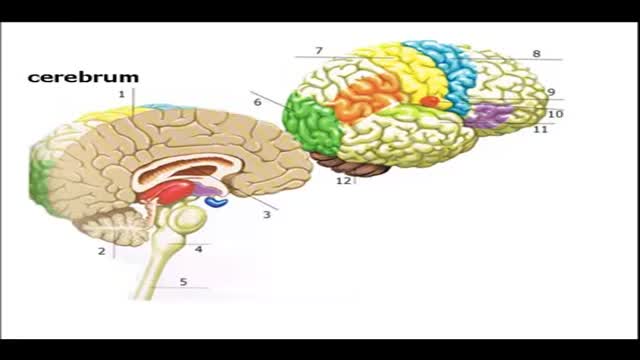
The human brain is the command center for the human nervous system. It receives input from the sensory organs and sends output to the muscles. The human brain has the same basic structure as other mammal brains, but is larger in relation to body size than any other brains.

Male Reproductive System
Male Reproductive System samer kareem 7,896 Views • 2 years ago

The male reproductive system includes the scrotum, testes, spermatic ducts, sex glands, and penis. These organs work together to produce sperm, the male gamete, and the other components of semen.

Hand Anatomy
Hand Anatomy samer kareem 9,951 Views • 2 years ago

Hand Anatomy

Anatomy of the Human Abdominal Wall
Anatomy of the Human Abdominal Wall samer kareem 3,354 Views • 2 years ago

Clinical Anatomy Lecture Illustrate The Anatomy Of The Abdominal Wall

Cranial Nerves Mnemonic
Cranial Nerves Mnemonic samer kareem 18,781 Views • 2 years ago

Cranial Nerves Mnemonic

Cranial Nerves Anatomy
Cranial Nerves Anatomy samer kareem 40,681 Views • 2 years ago

There are twelve cranial nerves in total. The olfactory nerve (CN I) and optic nerve (CN II) originate from the cerebrum. Cranial nerves III – XII arise from the brain stem (Figure 1). They can arise from a specific part of the brain stem (midbrain, pons or medulla), or from a junction between two parts: Midbrain – the trochlear nerve (IV) comes from the posterior side of the midbrain. It has the longest intracranial length of all the cranial nerves. Midbrain-pontine junction – oculomotor (III). Pons – trigeminal (V). Pontine-medulla junction – abducens, facial, vestibulocochlear (VI-VIII). Medulla Oblongata – posterior to the olive: glossopharyngeal, vagus, accessory (IX-XI). Anterior to the olive: hypoglossal (XII). The cranial nerves are numbered by their loca

Dural venous sinuses
Dural venous sinuses samer kareem 6,574 Views • 2 years ago

The dural venous sinuses are spaces between the endosteal and meningeal layers of the dura. They contain venous blood that originates for the most part from the brain or cranial cavity. The sinuses contain an endothelial lining that is continuous into the veins that are connected to them.

Superior sagittal sinus
Superior sagittal sinus samer kareem 4,762 Views • 2 years ago

The superior sagittal sinus (also known as the superior longitudinal sinus), within the human head, is an unpaired area along the attached margin of falx cerebri. It allows blood to drain from the lateral aspects of anterior cerebral hemispheres to the confluence of sinuses.

How Respiratory Pump Affects Venous Return
How Respiratory Pump Affects Venous Return samer kareem 31,411 Views • 2 years ago

How Respiratory Pump Affects Venous Return

Cell Structure
Cell Structure samer kareem 10,379 Views • 2 years ago

Cytoplasmic organelles are "little organs" that are suspended in the cytoplasm of the cell. Each type of organelle has a definite structure and a specific role in the function of the cell. Examples of cytoplasmic organelles are mitochondrion, ribosomes, endoplasmic reticulum, golgi apparatus, and lysosomes.

Development of Cardiovascular System
Development of Cardiovascular System samer kareem 4,185 Views • 2 years ago

Embryonic cardiovascular system. ... The human arterial and venous systems develop from different embryonic areas. Aortic Arches. The aortic arches—or pharyngeal arch arteries—are a series of six, paired, embryological vascular structures that give rise to several major arteries .

Liver
Liver samer kareem 40,423 Views • 2 years ago

liver also detoxifies chemicals and metabolizes drugs. As it does so, the liver secretes bile that ends up back in the intestines. The liver also makes proteins important for blood clotting and other functions.

Muscles and Nerves of Lower Limb
Muscles and Nerves of Lower Limb samer kareem 15,920 Views • 2 years ago

Muscles and Nerves of Lower Limb

Nerve Anatomy
Nerve Anatomy samer kareem 12,839 Views • 2 years ago

Nerves are the organs that make up the peripheral nervous system (PNS). They serve as information pipelines that allow the brain and spinal cord to communicate with other tissues and organs. Inside the nerves are the axon processes of sensory and motor neurons (nerve cells).

PANCREAS
PANCREAS samer kareem 19,297 Views • 2 years ago

Enzymes, or digestive juices, produced by the pancreas are secreted into the small intestine to further break down food after it has left the stomach. The gland also produces the hormone insulin and secretes it into the bloodstream in order to regulate the body's glucose or sugar level.

The Brain and Cranial Nerves
The Brain and Cranial Nerves samer kareem 21,583 Views • 2 years ago

The brain is that part of the CNS contained within the cranial cavity (figure 13.1). It is the control center for many of the body's functions. The brain is much like a complex central computer but with additional functions that no computer can as yet match. Indeed, one goal in computer technology is to make computers that can function more like the human brain. The brain consists of the brainstem, the cerebellum, the diencephalon, and the cerebrum (table 13.1). The brainstem includes the medulla oblongata, pons, midbrain, and reticular formation. The structure of the brain is described in this chapter. Its functions are primarily discussed in chapter 14. Twelve pairs of cranial nerves, which are part of the PNS, arise directly from the brain. Two pairs arise from the cerebrum, nine pairs arise from the brainstem, and one pair arises from the spinal cord.

Thyroid
Thyroid samer kareem 18,776 Views • 2 years ago

The thyroid is a butterfly-shaped gland that sits low on the front of the neck. Your thyroid lies below your Adam’s apple, along the front of the windpipe. The thyroid has two side lobes, connected by a bridge (isthmus) in the middle. When the thyroid is its normal size, you can’t feel it.

Showing 4 out of 5