Hiburan

samer kareem
3,260 Tampilan · 2 bertahun-tahun yang lalu

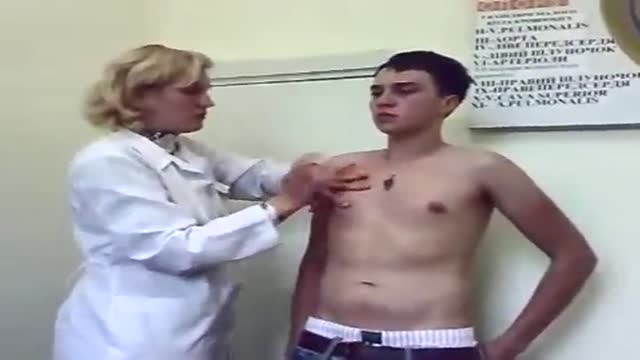
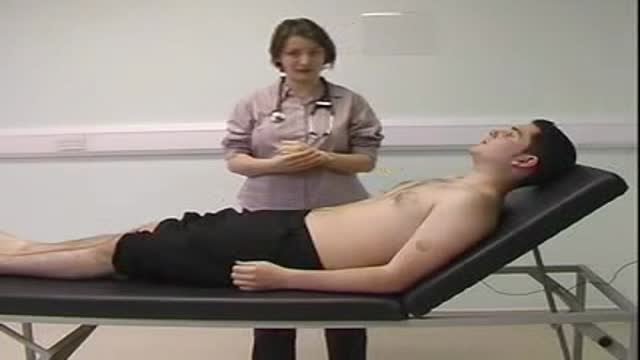
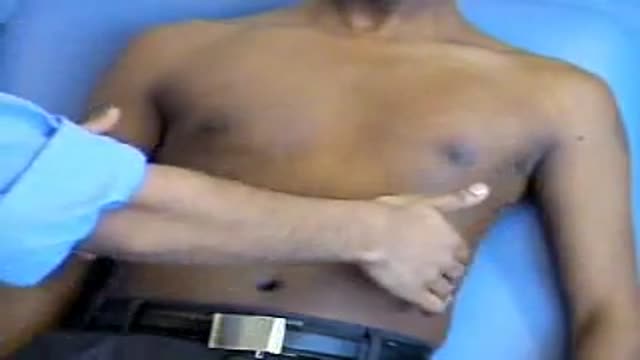
About Us Contact Disclaimer Get Published! Follow Us Epomedicine Medical Students Clinical Discussion Cases Emergencies Blog Medical Mnemonics Clinical Skills Search Subjects Clinical examination Gastrointestinal system Internal medicine Updated on January 31, 2017 Percussion of Spleen Traube’s semilunar space Borders: Superiorly: Left 6th rib superiorly Laterally: Left midaxillary line or Left anterior axillary line Inferiorly: Left costal margin Method: Patient’s position: supine with left arm slightly abducted. Percuss: from medial to lateral Interpretation: Resonance (Normal) and Dullness (Splenomegaly) Also: Pleural effusion or mass in stomach may cause dullness in Traube’s space.

samer kareem
1,713 Tampilan · 2 bertahun-tahun yang lalu

Exam- COPD Patient

samer kareem
3,495 Tampilan · 2 bertahun-tahun yang lalu

This video demonstrates the process for preparing and administering an intramuscular injection (IM)

samer kareem
12,552 Tampilan · 2 bertahun-tahun yang lalu

This video demonstrates a boatload of excellent teaching points on how to perform a peritoneal tap to remove ascites fluid from the peritoneum.

samer kareem
1,977 Tampilan · 2 bertahun-tahun yang lalu

Paracentesis is a procedure to take out fluid that has collected in the belly (peritoneal fluid). This fluid buildup is called ascites . Ascites may be caused by infection, inflammation, an injury, or other conditions, such as cirrhosis or cancer. The fluid is taken out using a long, thin needle put through the belly.

samer kareem
5,551 Tampilan · 2 bertahun-tahun yang lalu

INDICATIONS Administration of agents into the central vasculature Central circulation and intracardiac access Maintenance of venous access Hemodialysis and plasmapheresis

samer kareem
5,673 Tampilan · 2 bertahun-tahun yang lalu

Arterial line placement is a common procedure in various critical care settings. Intra-arterial blood pressure (BP) measurement is more accurate than measurement of BP by noninvasive means, especially in the critically ill. [1] Intra-arterial BP management permits the rapid recognition of BP changes that is vital for patients on continuous infusions of vasoactive drugs. Arterial cannulation also allows repeated arterial blood gas samples to be drawn without injury to the patient.

samer kareem
8,844 Tampilan · 2 bertahun-tahun yang lalu

Biliary Colic Examination

samer kareem
2,651 Tampilan · 2 bertahun-tahun yang lalu

A bone marrow biopsy removes a small amount of bone and a small amount of fluid and cells from inside the bone (bone marrow). A bone marrow aspiration removes only the marrow. These tests are often done to find the reason for many blood disorders and may be used to find out if cancer or infection has spread to the bone marrow. Bone marrow aspiration removes a small amount of bone marrow fluid and cells through a needle put into a bone. The bone marrow fluid and cells are checked for problems with any of the blood cells made in the bone marrow. Cells can be checked for chromosome problems. Cultures can also be done to look for infection. A bone marrow biopsy removes bone with the marrow inside to look at under a microscope. The aspiration (taking fluid) is usually done first, and then the biopsy.

samer kareem
12,051 Tampilan · 2 bertahun-tahun yang lalu

Markle Test (heel jar test) for Peritonitis

samer kareem
12,614 Tampilan · 2 bertahun-tahun yang lalu

The maneuver is commonly used during some activities: Straining to have a bowel movement Blowing a stuffy nose Certain medical tests or exams As a pressure equalization technique by scuba divers, sky divers and airplane passengers The effect of the Valsalva Maneuver is a drastic increase in the pressure within the thoracic cavity.

samer kareem
18,020 Tampilan · 2 bertahun-tahun yang lalu

The Valsalva Maneuver is any attempt to exhale with the mouth and nose closed. Named after the Italian physician and anatomist, Antonio Maria Valsalva (1666-1723), it is also known as Valsalva's Test and Valsalva's Method.

samer kareem
5,551 Tampilan · 2 bertahun-tahun yang lalu

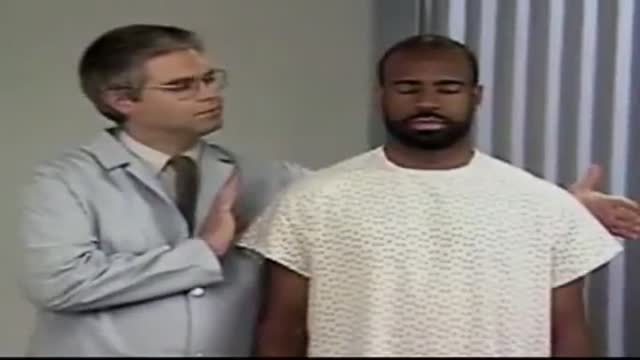
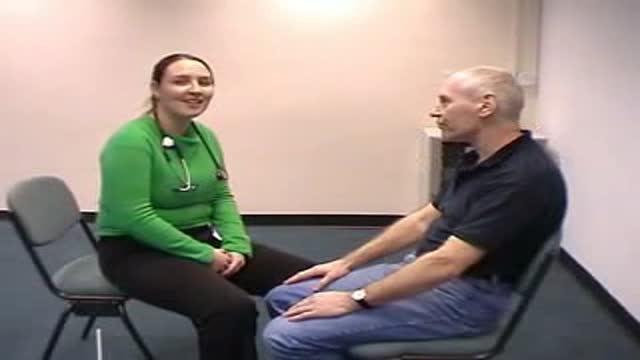
The "Get up and go" test is most commonly used to assess postural stability. In this test, the physician instructs the patient to stand up from a chair without assistance, walk a short distance, turn around, return, and sit down again. If the patient is unsteady or has difficulties during the test, further evaluation is necessary.

samer kareem
4,727 Tampilan · 2 bertahun-tahun yang lalu

This type of gait is most often seen in peripheral nerve disease where the distal lower extremity is most affected. Because the foot dorsiflexors are weak, the patient has a high stepping gait in an attempt to avoid dragging the toe on the ground.

samer kareem
20,154 Tampilan · 2 bertahun-tahun yang lalu

Spine Examination

samer kareem
27,344 Tampilan · 2 bertahun-tahun yang lalu

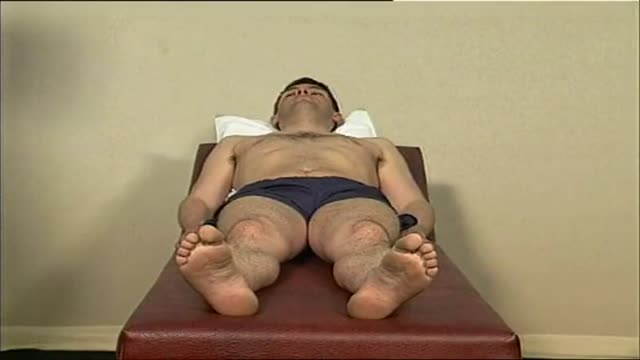
Clinical Examination - Gait, Arms, Legs, Spine

samer kareem
19,317 Tampilan · 2 bertahun-tahun yang lalu

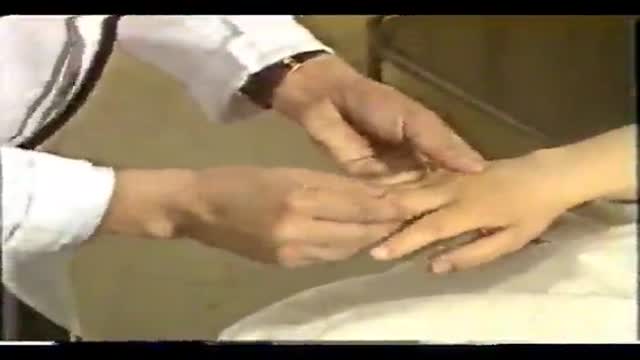
The examination consists of three portions: Inspection, Palpation, and Synthesis of data from these techniques In addition to palpating for size, also note the gland texture, mobility, tenderness and the presence of nodules. Inspection Inspection: Anterior Approach The patient should be seated or standing in a comfortable position with the neck in a neutral or slightly extended position. Cross-lighting increases shadows, improving the detection of masses. To enhance visualization of the thyroid, you can: Extending the neck, which stretches overlying tissues Have the patient swallow a sip of water, watching for the upward movement of the thyroid gland. quicktime video 251KB video demo from Return to the Bedside Inspection: Lateral Approach After completing anterior inspection of the thyroid, observe the neck from the side. Estimate the smooth, straight contour from the cricoid cartilage to the suprasternal notch. Measure any prominence beyond this imagined contour, using a ruler placed in the area of prominence. Palpation Note: There is no data comparing palpation using the anterior approach to the posterior approach so examiners should use the approach that they find most comfortable. Palpation: Anterior Approach placement of hands for palpatation of thyroid in anterior approach The patient is examined in the seated or standing position. Attempt to locate the thyroid isthmus by palpating between the cricoid cartilage and the suprasternal notch. Use one hand to slightly retract the sternocleidomastoid muscle while using the other to palpate the thyroid. Have the patient swallow a sip of water as you palpate, feeling for the upward movement of the thyroid gland. quicktime video 454KB video demo from Return to the Bedside. Palpation: Posterior Approach placement of hands for palpatation of thyroid in posterior approach The patient is examined in the seated or standing position. Standing behind the patient, attempt to locate the thyroid isthmus by palpating between the cricoid cartilage and the suprasternal notch. Move your hands laterally to try to feel under the sternocleidomstoids for the fullness of the thyroid. Have the patient swallow a sip of water as you palpate, feeling for the upward movement of the thyroid gland.

samer kareem
24,579 Tampilan · 2 bertahun-tahun yang lalu

The best way to prepare yourself for your small group exercises is to first watch the cardiac exam video from beginning to end, then proceed through all the explanations of cardiac anatomy and physiology that follow. To go through the material in the recommended sequence, just click the "Next" button in the upper right corner of the screen. But you may also jump to any section using the menu to the left.

samer kareem
28,612 Tampilan · 2 bertahun-tahun yang lalu

Head to Toe Assesment

samer kareem
19,172 Tampilan · 2 bertahun-tahun yang lalu

Physical assessment is taking an educated, systematic look at all aspects of an individual’s health status utilizing knowledge, skills and tools of health history and physical exam. To collect data- information about the client’s health, including physiological, psychological, sociocultural and spiritual aspects To establish actual and potential problems To establish the nurse-client relationship Method: The history is done first, then the physical examination focuses on finding data associated with the history. Health History- obtained through interview and record review. Physical exam- accomplished by tools and techniques ** A complete assessment is not necessarily carried out each time. A comprehensive assessment is part of a health screening examination. On admission, you will do an admission assessment (not necessarily including everything presented here) and document it on the admission form. You will do a daily shift assessment (patient systems review). And, if client has a specific problem, you may assess only that part of the body (focused). Data Collection: Information is organized into objective and subjective data: Subjective: Apparent only to person affected; includes client’s perceptions, feelings, thoughts, and expectations. It cannot be directly observed and can be discovered only asking questions. Objective: Detectable by an observer or can be tested against an acceptable standard; tangible, observable facts; includes observation of client behavior, medical records, lab and diagnostic tests, data collected by physical exam. ** To obtain data for the nursing health history, you must utilize good interview techniques and communications skills. Record accurately. DO NOT ASSUME. D. Frameworks for Health Assessment There are two main frameworks utilized in health assessment: Head to Toe- systematic collection of data starting with the head and working downward. Functional Health Assessment- Gordon’s 11 functional health patterns that address the behaviors a person uses to maintain health. PERSON is the ACC-ADN framework for assessment. It is similar to Gordon's functional health patterns.


Showing 8 out of 9