Top videos

Sinus lift Surgery  Dr.Ali Arar
Sinus lift Surgery Dr.Ali Arar Ali Arar 1,301 Views • 2 years ago

SINUS LIFT SURGERY surgical procedure which aims to increase the amount of bone in the posterior maxilla (upper jaw bone), in the area of the premolar and molar teeth, by lifting the lower Schneiderian membrane (sinus membrane) and placing a bone graft.

Partial Medial Meniscectomy Arthroscopغ
Partial Medial Meniscectomy Arthroscopغ samer kareem 1,300 Views • 2 years ago

An arthroscopic meniscectomy is a procedure to remove some or all of a meniscus from the tibio-femoral joint of the knee using arthroscopic (aka 'keyhole') surgery. In a complete meniscectomy the meniscus including the meniscal rim is removed. A partial meniscectomy involves partial removal of the meniscus. This may vary from minor trimming of a frayed edge to anything short of removing the rim. This is a minimally invasive procedure often done as day suas an outpatient in a one-day clinic [1] This procedure is performed when a meniscal tear is too large to be corrected by a surgical meniscal repair.[1] When non-operative therapy provides some degree of symptom relief over the long-term, these benefits may wane with continued meniscal degeneration. In such patients, arthroscopic partial meniscectomy can be effective in improving patient quality of life.

Gitelman and Bartter  Syndrome
Gitelman and Bartter Syndrome samer kareem 1,300 Views • 2 years ago

Gitelman and Bartter Presentation and Magnesium Supplementation

Blood Viscosity
Blood Viscosity samer kareem 1,299 Views • 2 years ago

When the hematocrit rises to 60 or 70%, which it often does in polycythemia, the blood viscosity can become as great as 10 times that of water, and its flow through blood vessels is greatly retarded because of increased resistance to flow. This will lead to decreased oxygen delivery.

Renal replacement therapy: dialysis
Renal replacement therapy: dialysis samer kareem 1,299 Views • 2 years ago

Renal replacement therapies are a set of interventions and techniques aimed at replacement of the filtering function of the kidneys. These include both dialysis and renal transplant. In this presentation we will talk about the indication and modalities of dialysis. This includes hemodialysis, peritoneal dialysis and continuous renal replacement therapies. The circuit diagram of each modalities along with its procedure and complications are also discussed.

Facial Reconstructive Surgery
Facial Reconstructive Surgery samer kareem 1,298 Views • 2 years ago

After trauma, surgery or illness, the face can be affected both in appearance and in function. Our physicians have the experience and expertise to reconstruct facial structures for a return to full functionality and comfort with one’s outside appearance. Our facial plastic surgeons are board certified in both otolaryngology and facial plastic surgery. This dual training makes their expertise absolutely critical for rebuilding major structures in the face and reshaping them for a return to one’s original appearance.

Syndrome of inappropriate antidiuretic Hormone
Syndrome of inappropriate antidiuretic Hormone samer kareem 1,298 Views • 2 years ago

What is syndrome of inappropriate antidiuretic hormone (SIADH)? Well, SIADH is a condition where too much ADH hormone is released, which causes an increase in blood volume and ultimately leads to a series of complications related to the blood osmolality and osmolarity

Cervical Disc Surgical Technique
Cervical Disc Surgical Technique samer kareem 1,293 Views • 2 years ago

Patients are generally placed in a supine position with the head in an extended position. As noted above, Gardner-Wells tongs can be used for additional cervical traction. The hands can also be tied downward to increase the operative exposure. Once the surgical site is properly prepared with cleansing material, the appropriate surgical level is identified with intraoperative radiographs. A scalpel is used to make a linear longitudinal incision just medial to the body of the sternocleidomastoid muscle. The incision is made long enough to include at least 2 vertebral levels if a 1-level discectomy is being performed. Alternatively, transverse skin incisions over the targeted vertebral level can also be performed. The platysmal muscle is identified and incised. The platysmal incision can be extended if a multilevel decompression is the surgical aim. Extensive subplatysmal dissection is performed to reduce retraction injury.

What Is Phonemic Awareness, Reading Program For Kids, Phonics For Children, Teach Your Baby To Read
What Is Phonemic Awareness, Reading Program For Kids, Phonics For Children, Teach Your Baby To Read marin vinasco 1,292 Views • 2 years ago

What Is Phonemic Awareness, Reading Program For Kids, Phonics For Children, Teach Your Baby To Read---- http://children-learning-reading.good-info.co----- What is Phonemic Awareness, Phonemic Awareness is defined as the ability to identify, hear, and work with the smallest units of sound known as phonemes. It is NOT the same as phonological awareness, instead, it is a sub-category of phonological awareness. For example, phonemic awareness is narrow, and deals only with phonemes and manipulating the individual sounds of words - such as /c/, /a/, and /t/ are the individual sounds that make up to form the word "cat". Phonological awareness on the other hand, includes the phonemic awareness ability, and it also includes the ability to hear, identify, and manipulate larger units of sound such as rimes and onsets. Phonemic awareness can be taught very early on, and will play a critical role in helping children learn to read and spell. While it's not set in stone on when a child can learn to read, however, I do believe that a child that can speak is a child that can learn to read. Children as young as two years old can learn to read by developing phonemic awareness, and they can learn to read fluently. Please see a video of a 2 year old (2yr11months) reading below. Below are several of the most common phonemic awareness skills that are often practiced with students and young children: Phonemic identity - being able to recognize common sounds in different words such as /p/ is the common sound for "pat", "pick", and "play". Phonemic isolation - being able to recognize the individual sounds of words such as /c/ is the beginning sound of "cat" and /t/ is the ending sound of "cat". Phoneme substitution - being able to change one word to another by substituting one phoneme. For example changing the /t/ in "cat" to /p/ now makes "cap". Word Segmenting - the parent says the word "lap", and the child says the individual sounds: /l/, /a/, and /p/. Oral blending - the parent says the individual sounds such as /r/, /e/, and /d/, and the child forms the word from the sounds to say "red". Studies have found that phonemic awareness is the best predictor of reading success in young children. Research has also found that children with a high level of phonemic awareness progress with high reading and spelling achievements; however, some children with low phonemic awareness experience difficulties in learning to read and spell. Therefore, it is important for parents to help their young children develop good phonemic awareness. Being able to oral blend and segment words helps children to read and spell. According to the National Reading Panel, oral blending helps children develop reading skills where printed letters are turned into sounds which combine to form words. Additionally, word segmenting helps children breakdown words into their individual sounds (phonemes), and helps children learn to spell unfamiliar words. As a young child begins to develop and master phonemic awareness skills, they will discover an entirely new world in print and reading. You will open up their world to a whole new dimension of fun and silliness. They will be able to read books that they enjoy, develop a better understanding of the world around them through printed materials, and have a whole lot of fun by making up new nonsense words through phonemic substitutions. For example, we taught our daughter to read at a young age - when she was a little over 2 and a half years old. Before she turned three, she would run around the house saying all types of silly words using phonemic substitution. One of her favorite was substituting the letter sound /d/ in "daddy" with the letter sound /n/. So, she would run around me in circles and repeatedly say "nanny, nanny, come do this" or "nanny, nanny, come play with me" etc... Of course, she only did this when she wanted to be silly and to make me laugh, at other times, she would of course properly refer to me as "daddy", and not "nanny". She is well aware of the differences between these words and is fully capable of using phonemic substitution to change any of the letters in the words to make other words. Give your child a head start, and.. pave the way for a bright, successful future..Click here to learn how to easily and quickly teach your child to read. http://children-learning-reading.good-info.co

What is Alzheimer's disease?
What is Alzheimer's disease? samer kareem 1,291 Views • 2 years ago

Alzheimer’s disease is the most common cause of dementia and also the best understood. It is thought to be caused by the formation of abnormal deposits of protein in the brain.

Tipos De Diabetes, Diabets, Alimentação Para Diabéticos, Diabetes Tipo Ii, Yacon Diabetes
Tipos De Diabetes, Diabets, Alimentação Para Diabéticos, Diabetes Tipo Ii, Yacon Diabetes Marky123 1,290 Views • 2 years ago

http://eliminar-seu-diabetes.good-info.co/ Tipos De Diabetes, Diabets, Alimentação Para Diabéticos, Diabetes Tipo Ii, Yacon Diabetes, https://youtu.be/iDK8jKuR_VQ É provável que se sinta identificado com alguma destas situações. Tem medo de uma complicação a longo prazo, como a perda da visão, a amputação dos dedos dos pés, de extremidades ou inclusive da morte? Quer terminar com as injeções diárias de insulina e as picadas nos dedos? Enfrenta diariamente o fato de que tem 80% de probabilidades de morrer com doenças cardíacas ou derrame cerebral? Sofre de excesso de peso que não pode eliminar, causada por seus medicamentos? Quer deixar de se sentir culpado por ter dietas especiais que complicam a organização da sua família? Está oprimido pelo cuidado e controle que diariamente esta doença precisa? Quer deixar de sofrer os terríveis efeitos secundários que provocam os medicamentos para o Diabetes? Sei o que se sente. pensar que não existe esperança, que não tem cura e que estamos condenados a viver doentes. Mas hoje Tenho Excelentes Notícias para lhe dar e posso garantir que o que você vai ler neste site será o mais importante que tenha lido em toda a sua vida.

Dengue Fever: Clinical features and Management
Dengue Fever: Clinical features and Management samer kareem 1,290 Views • 2 years ago

A brief description of the pathophysiology, clinical features, warning signs, diagnosis and management of Dengue fever. This description is based on the World Health Organisation guidelines of the management of Dengue fever.

Gleevecs mechanism of Action
Gleevecs mechanism of Action Medical_Videos 1,290 Views • 2 years ago

Gleevecs mechanism of Action

Aplastic anemia: causes, diagnosis and managment
Aplastic anemia: causes, diagnosis and managment samer kareem 1,288 Views • 2 years ago

Aplastic anemia is a hematopoietic disorder caused due to T lymphocyte mediated destruction of stem cells resulting in pancytopenia with a cellular bone marrow and normal cell cytogenetics. The causes of aplastic anaemia may be inherited or acquired. The causes and the diagnostic approach, along with spectrum of severity of this disorder is discussed in this presentation. A detailed discussion of the management options, along with pharmacological therapy and supportive therapy in these cases is also discussed. The treatment options include, in addition to a stem cell transplant, anti-thymocyte globulin, cyclosporine, methyprednisolone and eltrombopag (for patients who have failed treatment on combined modality therapy with ATG and cyclosporine)

Remembering Medications & The Body Systems Affected
Remembering Medications & The Body Systems Affected samer kareem 1,288 Views • 2 years ago

Remembering Medications & The Body Systems Affected

腹腔镜十二指肠穿孔修补术2
腹腔镜十二指肠穿孔修补术2 wang bzh 1,285 Views • 2 years ago

腹腔镜十二指肠穿孔修补术2

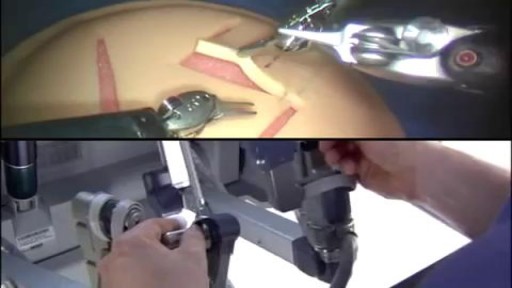
Colorectal Cancer Laparoscopic Surgery 3D Animation
Colorectal Cancer Laparoscopic Surgery 3D Animation Scott 1,285 Views • 2 years ago

Colorectal Cancer Laparoscopic Surgery 3D Animation

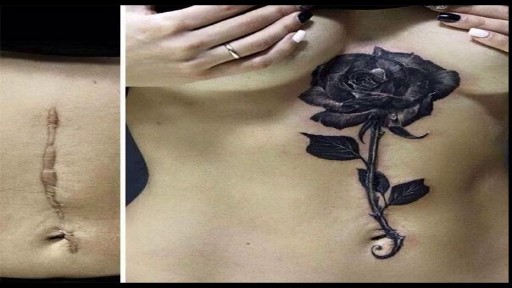
Tummy Tuck ( Classic Method ) : Surgery | 3D Animation
Tummy Tuck ( Classic Method ) : Surgery | 3D Animation Surgeon 1,285 Views • 2 years ago

Tummy Tuck ( Classic Method ) : Surgery | 3D Animation

How long does tummy tuck last?
Tummy tuck results are considered permanent, insofar that the fat cells and skin removed during an abdominoplasty cannot grow back. Likewise, the internal sutures placed to repair abdominal muscles are designed to remain in place indefinitely.

What is tummy tuck surgery?
A tummy tuck — also known as abdominoplasty — is a cosmetic surgical procedure to improve the shape and appearance of the abdomen. During a tummy tuck, excess skin and fat are removed from the abdomen. Connective tissue in the abdomen (fascia) usually is tightened with sutures as well.

How much does tummy tuck cost?
How much does it cost? It can cost from about £5,000 to £10,000 to have an abdominoplasty in the UK, plus the cost of any consultations or follow-up care.

How painful is a tummy tuck?
A tummy tuck requires significant downtime

At the beginning, you will be fatigued, swollen and sore. It is normal to have moderate pain during these first several days, although this will steadily improve. It is vital to allow yourself time to focus on rest and healing.

What is the disadvantage of tummy tuck?
The cons of a tummy tuck include: A full abdominoplasty is a major operation with a considerable recovery. Expect to postpone strenuous activities for at least 6 weeks. Results take time.


Is tummy tuck more painful than C section?
That's something many women want to know. While patients have different experiences, most plastic surgeons would agree that a cesarean section is more painful than most tummy tucks.


- Tummy tuck
- Abdominoplasty
- Abdominal tuck
- Tummy tuck procedure
- Tummy tuck process
- Tummy tuck surgery
- Tummy tuck operation
- Tummy tuck video
- Tummy tuck recovery
- Tummy tuck before and after
- Abdominoplasty surgery
- Abdominal contouring surgery
- Postpartum tummy tuck
- Post pregnancy tummy tuck
- Mini tummy tuck
- Tummy tuck cost
- Tummy tuck risks
- Tummy tuck complications
- How long does a tummy tuck take
- Tummy tuck scarring
- Tummy tuck skin removal
- Tummy tuck muscle tightening


#tummytuck
#abdominoplasty
#plastic_surgery
#cosmetic_surgery
#body_contouring
#tummy_tuck_surgery
#surgery
#cosmetic_procedure
#beauty
#health
#fitness
#medical_animation
#3d_animation
#medical_video
#explainer_video
#education

Exercises can help Tennis Elbow
Exercises can help Tennis Elbow samer kareem 1,284 Views • 2 years ago

You don't have to play tennis to get tennis elbow. These easy exercises can help:

Lower Extremity Occlusive Disease
Lower Extremity Occlusive Disease samer kareem 1,283 Views • 2 years ago

Claudication, which is defined as reproducible ischemic muscle pain, is one of the most common manifestations of peripheral arterial occlusive disease (PAOD) caused by atherosclerosis. Claudication occurs during physical activity and is relieved after a short rest. Pain develops because of inadequate blood flow. Examination of a patient with claudication should include a complete lower-extremity evaluation and pulse examination, including measuring segmental pressures. Attempt to palpate pulses from the abdominal aorta to the foot, with auscultation for bruits in the abdominal and pelvic regions. When palpable pulses are not present, a handheld Doppler device may be used to assess circulation.

Showing 336 out of 337