Top videos

Gallbladder Removal Surgery (Laparoscopic Cholecystectomy)
Gallbladder Removal Surgery (Laparoscopic Cholecystectomy) Surgeon 236 Views • 2 years ago

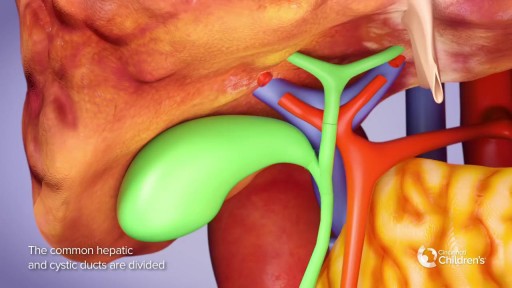
This medical animation shows laparoscopically assisted gallbladder removal surgery, or cholecystectomy. The animation begins by showing the normal anatomy of the liver and gallbladder. Over time, gallstones form within the gallbladder, blocking the cystic duct, and causing the gallbladder to become enlarged and inflamed. The procedure, sometimes called a "lap-chole", begins with the insertion of four trocar devices, which allow the physician to see inside the abdomen without making a large incision. Air is added to the abdominal cavity to make it easier to see the gall bladder. Next, we see a view through the laparascope, showing two surgical instruments grasping the gallbladder while a third severs the cystic duct. After the gallbladder is removed, the camera pans around to show that the cystic artery and vein, have already been clipped to prevent bleeding.

Item #ANIM026

Dr. Jennifer Lawton | Cardiac Surgery
Dr. Jennifer Lawton | Cardiac Surgery Surgeon 309 Views • 2 years ago

Jennifer Lawton, M.D., is professor and chief of the Johns Hopkins Division of Cardiac Surgery, as well as director of the Cardiac Surgery Research Laboratory and program director of the cardiothoracic fellowship training program at Johns Hopkins. Her areas of expertise include valve surgery, including minimally invasive surgery, coronary artery bypass grafting on- and off-pump, all arterial revascularization, as well as surgery for aortic dissection and ascending aneurysm. For more information about Dr. Lawton visit http://www.hopkinsmedicine.org..../heart_vascular_inst

Minimally-Invasive Pediatric Surgery - Dr. Nitsana Spigland
Minimally-Invasive Pediatric Surgery - Dr. Nitsana Spigland hooda 103 Views • 2 years ago

As a pediatric surgeon at NewYork-Presbyterian/Weill Cornell Medical Center, Dr. Nitsana Spigland treats newborns, children, teens, and young adults requiring surgical interventions. She specializes in antenatal counseling and newborn congenital malformations.

Learn more about Dr. Spigland at: https://www.nyp.org/physician/nspigland.

How to Know If You Are Autoimmune
How to Know If You Are Autoimmune samer kareem 4,103 Views • 2 years ago

Learn a simple way to tell if you might be suffering from an undiagnosed autoimmune condition. Examples of autoimmune conditions include: • alopecia areata

Epidedymal Cyst Surgery
Epidedymal Cyst Surgery samer kareem 8,404 Views • 2 years ago

Surgery. A procedure to remove an epididymal cyst is carried out under general anaesthetic and involves removing the cysts through a small incision in your scrotum that is sealed with dissolvable stitches.

How will I feel after heart surgery? – Dr. Joanna Chikwe | Cardiac Surgery at Cedars-Sinai
How will I feel after heart surgery? – Dr. Joanna Chikwe | Cardiac Surgery at Cedars-Sinai Surgeon 80 Views • 2 years ago

Dr. Joanna Chikwe, explains how patients may feel after heart surgery.

Learn more about the Smidt Heart Institute at Cedars-Sinai at https://ceda.rs/3meIA2A​
Learn more about Dr. Joanna Chikwe at https://ceda.rs/3ul6I6t​

Connect with us:

https://twitter.com/CedarsSinai
https://www.facebook.com/CedarsSinai
https://www.instagram.com/CedarsSinai

Cedars-Sinai is a leader in providing high-quality healthcare encompassing primary care, specialized medicine and research. Since 1902, Cedars-Sinai has evolved to meet the needs of one of the most diverse regions in the nation, setting standards in quality and innovative patient care, research, teaching and community service. Today, Cedars- Sinai is known for its national leadership in transforming healthcare for the benefit of patients. Cedars-Sinai impacts the future of healthcare by developing new approaches to treatment and educating tomorrow’s health professionals. Additionally, Cedars-Sinai demonstrates a commitment to the community through programs that improve the health of its most vulnerable residents.

WARNING: Graphic Medical Procedure - Selective Dorsal Rhizotomy Surgery
WARNING: Graphic Medical Procedure - Selective Dorsal Rhizotomy Surgery Surgeon 299 Views • 2 years ago

Dr. Debbie Song at Gillette Children's describes in detail selective rhizotomy surgery.

A selective dorsal rhizotomy is an operation performed to treat spasticity. It is thought that high tone and spasticity arise from abnormal signals that are transmitted through sensory or dorsal nerve roots to the spinal cord. In a selective dorsal rhizotomy we identify and cut portions of the dorsal nerve roots that carry abnormal signals thereby disrupting the mechanisms that lead to spasticity. Potential patients go through a rigorous assessment that includes an in-depth gait and motion analysis as well as a physical therapy evaluation.

They are evaluated by a multidisciplinary team that includes a pediatric rehabilitation doctor, a neurosurgeon, and an orthopedist, Appropriate patient selection is vital. Ideal candidates for selective dorsal rhizotomy are children who are between four and ten years of age, have a history of being born prematurely, and have a diagnosis of diplegia cerebral palsy. These patients usually walk independently or with the assistance of crutches or a walker. They typically function at a level one, two, or three in the gross motor function classification system or gmfcs. A selective dorsal rhizotomy involves the coordinated efforts of the neurosurgery, physiatry, anesthesia and nursing teams. The operation entails making an incision in the lower back that is approximately six to eight inches long. We perform what we call a laminoplasty in which we remove the back part of the spinal elements from the lumbar one or l1 to l5 levels. At the end of the procedure the bone is put back on. We identify and open up the Dural sac that contain the spinal fluid spinal cord and nerve roots. Once the Dural sac is opened ,we expose the lumbar and upper sacral nerve roots that transmit information to and from the muscles of the lower extremities.

At each level we isolate the dorsal nerve root, which in turn is separated into as many as 30 smaller thread light fruitlets.

Each rootlet is then electrically stimulated. Specialized members of the physiatry team look for abnormal responses in the muscles of the legs as each rootless is being stimulated. If an abnormal response is observed then the rootlet is cut.

If a normal response is observed, then the rootlet is not cut. We usually end up cutting approximately 20 to 40 percent of the rootlets. The Dural sac is sutured closed and the l1 through l5 spinal elements are put back into anatomic position, thus restoring normal spinal alignment. The overlying tissues and skin are then closed and the patient is awoken from surgery. The entire operation takes between four and five hours. A crucial component to the success of our rhizotomy program is the extensive rehabilitation course following surgery. With their tone significantly reduced after a rhizotomy, patients relearn how to use their muscles to walk more efficiently through stretching, strengthening, and gait training. Approximately one to two years after a rhizotomy patients undergo repeat gait and motion analysis. The orthopedic surgeons assess the need for interventions to correct bone deformities, muscle contractures, poor motor control, impaired balance, or other problems related to cerebral palsy.

At Gillette we work closely with patients and families to ensure that our selective dorsal rhizotomy program meets their goals for enhancing their function and improving their quality of life.

VISIT https://www.gillettechildrens.org/ to learn more

0:00 Why choose selective dorsal rhizotomy?
0:56 Who is a good candidate for selective dorsal rhizotomy?
1:31 What does a selective dorsal rhizotomy entail?
3:26 What is recovery from selective dorsal rhizotomy like?

NG Suction: Clinical Skills SHORT | @LevelUpRN
NG Suction: Clinical Skills SHORT | @LevelUpRN nurse 326 Views • 2 years ago

Ellis demonstrates how to connect an NG tube to suction.

#NCLEX #ClinicalSkills #HESI #Kaplan #ATI #NursingSchool #NursingStudent⁠ #Nurse #RN #PN #Education #LVN #LPN #NurseEducator

🚨 Reminder: shipping deadlines are looming 👀
🎁 Regular Shipping: Order by Friday, December 15
🚀 Expedited Shipping: Order by Monday, December 18
🔍 Still searching for last-minute gifts? Consider a Level Up RN Gift Card! 💌 It’s not only a thoughtful present but also the perfect way to share treasures like Pharmacology Flashcards OR digital treasures like Flashables Digital Nursing Flashcards & the Level Up RN membership. Give the gift of knowledge this holiday season! 🧠⚡️💖 bit.ly/LevelUpRNGC

🚪 Access our Cram Courses, Quizzes and Videos all in one ad free space with Level Up RN Membership https://bit.ly/LevelUpRNMembership

Want more ways to MASTER Clinical Skills? Check out our flashcards & videos!

👇👇👇👇👇👇👇👇👇👇
👉 https://bit.ly/clinicalnursingskills 👈
☝️👆☝️👆☝️👆☝️👆☝️👆

This is your one-stop-shop for materials to help you LEARN & REVIEW so you can PASS Nursing School.

🤔🤔🤔 DO YOU WANT TO PASS your classes, proctored exams and the NCLEX? 🤔🤔🤔 Our resources are the best you can buy. They are built with a single goal: help you pass with no fluff. Everything you need, and nothing you don’t. Don’t take our word for it, though! Check out our hundreds of ⭐️⭐️⭐️⭐️⭐️ reviews from nurses who passed their exams and the NCLEX with Level Up RN.

🗂️ Our Ultimate Nursing School Survival kit is your number 1 resource to get through nursing school and to pass the NCLEX. Whether you're just starting school or you’re already prepping for the NCLEX, this bundle of flashcards is the best you can buy. It covers all the information you need to know to pass all your exams and it has FREE shipping!
➡️ https://bit.ly/TUNSSK ⬅️

L👀king for EVEN MORE resources to survive Nursing School? Make your Nursing School experience your own! Life’s difficult enough—learning shouldn’t be.
🪅 Games https://nursesquad.com
💻 Digital resources https://bit.ly/NursingStudyCourses
📅 Organizational tools https://bit.ly/OrganizingSchool

✨Want perks? Join our channel!
https://youtube.com/leveluprn/join

🏷 Head to https://leveluprn.com/specials for all our latest deals!🥳️

📧 LOOKING FOR FREE RESOURCES TO HELP WITH YOUR EXAMS? Get exclusive tips, latest video releases and more delivered to your email!
➡️ https://leveluprn.com/signup ⬅️

⚕ 👩 LEVEL UP NURSE SQUAD 👩⚕️
All of the nurses at Level Up RN are here to help! Cathy Parkes started helping her fellow classmates back when she was in nursing school, tutoring so they could pass their exams and graduate. After she got her BSN and started working as an RN at Scripps Encinitas Hospital, she started this YouTube channel to help nursing students around the world. Since then she has built a team of top-notch dedicated nurses and nurse educators who are focused on improving nursing education and supporting career advancement for nurses everywhere. With flashcards, videos, courses, organizational tools and more, we are singularly focused on helping students and nurses Level Up on their exams and nursing careers.

How Does Inversion Therapy or Hanging Upside Down Help Back Pain?
How Does Inversion Therapy or Hanging Upside Down Help Back Pain? samer kareem 2,206 Views • 2 years ago

Many people report that inversion table therapy is a great way to stretch muscles and ligaments, reduce muscle spasms, and improve circulation. Stretching stimulates the lymph glands to increase the flow of lymphatic fluids; part of the body's waste disposal system. Similarly, cellular health depends on good blood circulation to deliver nourishment and remove waste. Inversion table therapy also helps to relieve motion sickness and stress. In addition, the body becomes more aware of its spatial orientation and balance when the inner ear is stimulated during inversion. Plus, it is not necessary for the body to be positioned completely upside down to gain benefits from inversion therapy! Unlike antigravity boots used with an inversion rack, an adjustable inversion table offers the flexibility to choose the most comfortable angle. Dialogue with Your Doctor Like anything that can affect your health, talk to your doctor before you start using an inversion table. This is important because certain medications and health conditions may make using an inversion table unsafe. Your doctor may recommend against inversion table therapy if you have obesity, a detached retina, fracture, glaucoma, heart condition (circulatory problem), hernia, implanted device, middle ear or eye infection, osteoporosis, are pregnant, or have a spinal injury. There may be other medical conditions not listed that your doctor may view as a contraindication.

Tonsil Stone Removal Procedure
Tonsil Stone Removal Procedure Scott 20,716 Views • 2 years ago

A tonsillolith lodged in the tonsillar crypt. Specialty. Otorhinolaryngology. Tonsilloliths, also known as tonsil stones, are clusters of calcified material that form in the tonsillar crypts, the crevices of the tonsils. While they occur most commonly in the palatine tonsils, they may also occur in the lingual tonsils.

Tracheostomy in the ICU
Tracheostomy in the ICU Surgeon 20,756 Views • 2 years ago

Tracheostomy in the ICU

The Perfect Breast Shape
The Perfect Breast Shape samer kareem 27,817 Views • 2 years ago

Shut the front door: Scientists have finally found the perfect breasts. No, they weren't hiding in the Amazon or roving solo across the Sahara (although we have no doubt there are women in both the Amazon and the Sahara who have magnificent mammaries); it turns out these perfect breasts were hiding in a plastic surgeon's office this whole time! Now, before you get all worked up, the American Society of Plastic Surgeons (ASPS) would like you to know that the super-fake looking plastic breasts of yore are not actually what people think are most attractive now. According to a study published in the Journal of Plastic and Reconstructive Surgery—which involved asking over 1,300 people to look at pictures of naked boobies and rank them by hotness (stop laughing, this is serious research!)—people preferred a more "real" and "normal" look from their silicone, with the ideal breast shape having a 45:55 ratio. People said the best chests have 45 percent of the fullness above the nipple line and 55 percent of the fullness below, in a slightly teardrop shape. Researchers noted this preference remained consistent across gender, racial, and ethnic groups with the 45:55 ratio favored by 87 percent of women in their 30s, 90 percent of men, and 94 percent of plastic surgeons.

Types of penile prosthesis
Types of penile prosthesis samer kareem 5,069 Views • 2 years ago

The inflatable penile prosthesis consists of two attached cylinders -- a reservoir and a pump -- which are placed surgically in the body. The two cylinders are inserted in the penis and connected by tubing to a separate reservoir of saline. The reservoir is implanted under the rectus muscles in the lower abdomen. The Coloplast Titan Touch inflatable penile prosthesis is a self-contained, fluid-filled system made from Bioflex and silicone.

Abdomen Examination USMLE
Abdomen Examination USMLE USMLE 24,625 Views • 2 years ago

Examination of the abdomen from the USMLE collection

Labiaplasty Surgery Procedure
Labiaplasty Surgery Procedure samer kareem 25,774 Views • 2 years ago

The term labiaplasty refers to a procedure that reduces the length of the labia minora. It is the most commonly performed female genital plastic surgery procedure and it can relieve symptoms women experience from twisting and tugging of the labia. Women opt for surgery for a variety of reasons, including pain from twisting and tugging of the labia when riding a bike or during intercourse, itching and irritation, and self-consciousness.

ThermiVa vaginal rejuvenation
ThermiVa vaginal rejuvenation samer kareem 19,744 Views • 2 years ago

ThermiVa is a non-surgical vaginal tightening treatment for women who want to reclaim what childbirth or aging may have taken away. Using the same technology that’s used in ThermiTight and ThermiSmooth, radiofrequency energy is sent to the desired area (internally or externally), heating the tissue and stimulating the body’s own collagen. ThermiVa is performed in three treatments over the course of three months.

Acanthamoeba Keratitis
Acanthamoeba Keratitis samer kareem 8,137 Views • 2 years ago

Acanthamoeba keratitis is a rare disease in which amoebae invade the cornea of the eye. It may result in permanent visual impairment or blindness.

Pediatric ERCP
Pediatric ERCP samer kareem 1,939 Views • 2 years ago

Experience with endoscopic retrograde cholangiopancreatography (ERCP) in children has been limited due to multiple factors, including the relatively low incidence of diseases requiring ERCP in this age group, the impression that the procedure is technically difficult in children, and because the indications and safety of ERCP in children have not been well defined. As a result, patients are generally referred to a tertiary care facility or to adult endoscopists who perform a high volume of procedures.

Penile Implants Procedure
Penile Implants Procedure samer kareem 6,896 Views • 2 years ago

Implant comparison: Coloplast vs AMS for Penile Implants

benign positional paroxysmal vertigo
benign positional paroxysmal vertigo samer kareem 1,478 Views • 2 years ago

Benign paroxysmal positional vertigo (BPPV) is one of the most common causes of vertigo — the sudden sensation that you're spinning or that the inside of your head is spinning. Benign paroxysmal positional vertigo causes brief episodes of mild to intense dizziness. Benign paroxysmal positional vertigo is usually triggered by specific changes in the position of your head. This might occur when you tip your head up or down, when you lie down, or when you turn over or sit up in bed. Although benign paroxysmal positional vertigo can be a bothersome problem, it's rarely serious except when it increases the chance of falls. You can receive effective treatment for benign paroxysmal positional vertigo during a doctor's office visit

Showing 45 out of 238