
- Procedures & Tests
- Symptoms A-Z
- Symptom Checker
- Kidney Diet
- First Aid
- Anatomy Atlas
- Ask MedicalVideos
- Drug Guide
- Lab Values
- Vital Signs
- Muscles A–Z
- Clinical Signs
- Medical Abbreviations
- Medical Terminology
- Physical Examination
- Surgical Examination
- Ophthalmology
- Clinical Skills
- Orthopedics
- Surgery Videos
- Laparoscopy
- Pediatrics
- Funny Videos
- Cardiothoracic Surgery
- Nursing Videos
- Plastic Surgery
- Otorhinolaryngology
- Histology and Histopathology
- Neurosurgery
- Dermatology
- Pediatric Surgery
- Urology
- Dentistry
- Oncology and Cancers
- Anatomy Videos
- Health and Fitness
- Radiology
- Anaesthesia
- Physical Therapy
- Pharmacology
- Interventional Radiology
- Cardiology
- Endocrinology
- Gynecology
- Emergency Medicine
- Psychiatry and Psychology
- Childbirth Videos
- General Medical Videos
- Nephrology
- Physiology
- Diet and Food Health
- Diabetes Mellitus
- Neurology
- Women Health
- Osteoporosis
- Gastroenterology
- Pulmonology
- Hematology
- Rheumatology
- Toxicology
- Nuclear Medicine
- Infectious Diseases
- Vascular Disease
- Reproductive Health
- Burns and Wound Healing
- Kidney Zone Podcast
- Other










Infertility Treatment For Men

Educational only: videos on MedicalVideos.com are for general information and are not medical advice. Always consult your own doctor about your health.
In some cases, the doctor will recommend that the couple seek assisted reproductive technologies (ART), such as IVF (in vitro fertilisation). ART do not cure or treat the cause of infertility but they can help couples achieve a pregnancy, even if the man's sperm count is very low.
This video in 30 seconds
This video covers infertility treatment for men in the context of assisted reproductive technologies such as IVF. It explains that these technologies do not cure or treat the cause of infertility, but can help couples achieve a pregnancy even when the man's sperm count is very low.
Key points
- Covers assisted reproductive technologies (ART) such as IVF as an option a doctor may recommend
- Explains ART do not cure or treat the cause of infertility
- Notes ART can help couples achieve a pregnancy even if the man's sperm count is very low
Video Transcript
This narrated explainer presents infertility treatment for men. It reviews how sperm are produced and travel through the reproductive tract, then explains azoospermia, obstructive and non-obstructive, and the procedures used to retrieve sperm from the epididymis or testicle, by needle or through open surgery, so the sperm can be used for injection into an egg or frozen for later use.
Read the full transcript
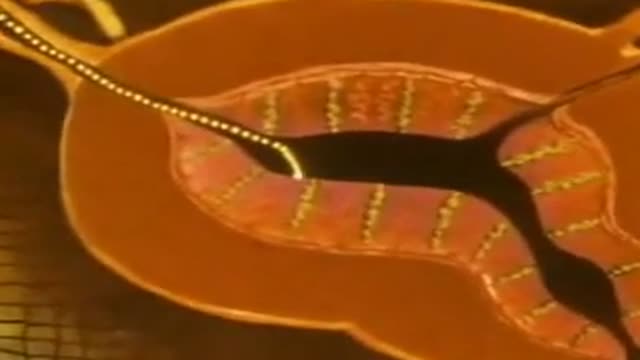
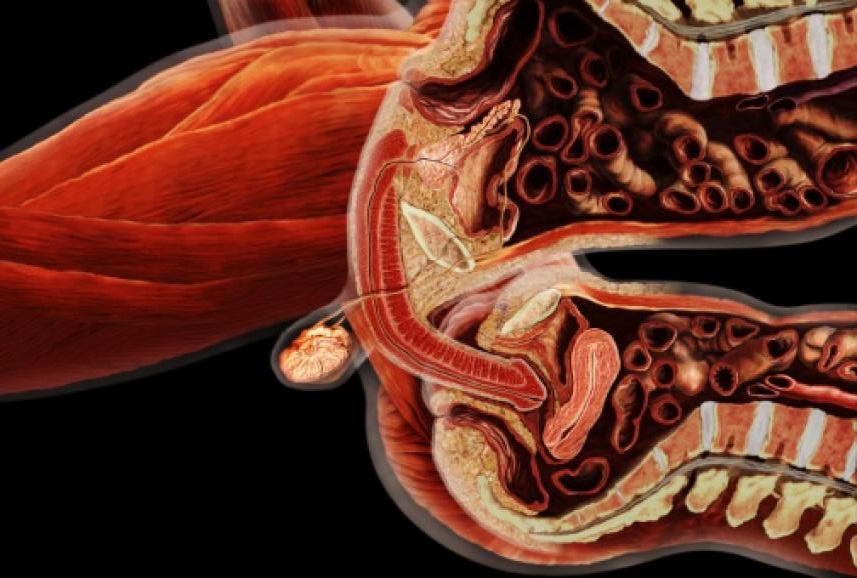
If a man has trouble getting a woman pregnant, he may have a condition known as infertility. His doctor may recommend a procedure to collect his sperm so it can be used to help him father a child. The male reproductive system includes the testicles, also known as testes, which are two glands in a pouch of skin called the scrotum. The testicles normally produce and store reproductive cells, called sperm. The scrotum is outside the body, which keeps the testicles cool enough to make sperm. Connected to each testicle is a mass of coiled tubes, called the epididymis.
Each epididymis stores immature sperm while they continue to develop. During sex, sperm travel through a tube attached to the epididymis, called the vas deferens. To another tube, called the ejaculatory duct. There, sperm mix with fluid from tube glands, called seminal vesicles, as well as the prostate gland. Now called semen, this fluid mixture exits the man's body through the urethra, the tube inside the penis that usually carries urine. If a man has sex with a woman, this process, called ejaculation, deposits semen in her vagina. Semen contain tens of millions of sperm.
From the vagina, the sperm in the semen can travel to and fertilize an egg from the woman's body. Fertilization of the egg marks the beginning of human development during pregnancy. Sperm retrieval and collection are usually performed for a condition called azospermia, where a man has no measurable amounts of sperm in his semen. There are two types of azospermia. The first type, called obstructive azospermia, occurs when the pathway of sperm out of the body is blocked. The second type of azospermia, called non-obstructive azospermia, occurs when the testicles produce little or no sperm.
There are several procedures to remove fluid from a testicle or an epididymis to see if it contains healthy sperm. During percutaneous procedures, sperm are removed through the skin of the scrotum without making an incision. For example, during a percutaneous epididymal sperm aspiration, or PISA, the surgeon will insert a syringe into the epididymus through the skin. Fluid from inside the epididymus will be drawn into the syringe. Or, during a testicular sperm aspiration, or TISA, the doctor will insert a syringe into the testicle through the skin. Fluid from inside the testicle will be drawn into the syringe.
If the fluid contains sperm, it can be saved for a later procedure to fertilize an egg. If the fluid retrieved through a percutaneous procedure doesn't contain any sperm, an open sperm retrieval procedure may be done to find other areas in the epididymus or testicle more likely to contain sperm. In any of the open procedures, the surgeon will begin by making an incision in the scrotum. The testicle and epididymus will be pulled through the skin incision and another incision will be made in the outer tissue covering the epididymus and testicle.
During an open fine needle aspiration, the surgeon will insert a needle into several areas of the epididymus. Each time the needle is inserted, fluid will be removed. During a microsurgical epididymal sperm aspiration, or MESA, the surgeon will use an operating microscope to get a magnified view of the epididymus. The surgeon will make a tiny incision in the thin tissue covering the epididymus to reveal the coiled tubes inside. Then, a tiny hollow tube, called a micropipette, will be used to puncture one or more of the coiled tubes and remove fluid from inside it.
After removing the fluid, the tissue covering the epididymus will be closed with sutures. Another open procedure is called microsurgical testicular sperm extraction, or microtesi. In this procedure, the surgeon will make a small incision in the tissue covering the testicle instead of the epididymus. Next, the surgeon will use an operating microscope to look at the tiny tubes inside the testicle. A tissue sample of the tubes most likely to contain healthy sperm will be removed. The sample will be examined under a microscope to see if it contains healthy sperm.
If no sperm are found, more samples will be removed and examined. Once sperm are found, the tissue sample will be stored for later use. Then, the tissue covering the testicle will be closed with sutures. After all of these open procedures, the surgeon will close the tissue covering the epididymus and testicle with sutures. Finally, the skin incision in the scrotum will also be closed with sutures. The collected sperm will allow a man to father a child through intra-cytoplasmic sperm injection. During this procedure, a sperm cell will be injected directly into a woman's egg to fertilize it.
If the collected sperm are not used right away, they can be frozen for use at a later date.
Transcript auto-generated from the video’s audio for accessibility and study. Educational content only — not medical advice.
Medical Videos
Free medical and surgery videos for patients, students and professionals — trusted since 2007.
Founded by Dr. Mohamed Ibrahim, MD, PhD — physician-scientist.
Follow us on Facebook · Instagram
SORT BY-
Top Comments
-
Latest comments