
- Physical Examination
- Surgical Examination
- Ophthalmology
- Clinical Skills
- Orthopedics
- Surgery Videos
- Laparoscopy
- Pediatrics
- Funny Videos
- Cardiothoracic Surgery
- Nursing Videos
- Plastic Surgery
- Otorhinolaryngology
- Histology and Histopathology
- Neurosurgery
- Dermatology
- Pediatric Surgery
- Urology
- Dentistry
- Oncology and Cancers
- Anatomy Videos
- Health and Fitness
- Radiology
- Anaesthesia
- Physical Therapy
- Pharmacology
- Interventional Radiology
- Cardiology
- Endocrinology
- Gynecology
- Emergency Medicine
- Psychiatry and Psychology
- Childbirth Videos
- General Medical Videos
- Nephrology
- Physiology
- Diet and Food Health
- Diabetes Mellitus
- Neurology
- Women Health
- Osteoporosis
- Gastroenterology
- Pulmonology
- Hematology
- Rheumatology
- Toxicology
- Nuclear Medicine
- Infectious Diseases
- Vascular Disease
- Reproductive Health
- Burns and Wound Healing
- Other
Top videos
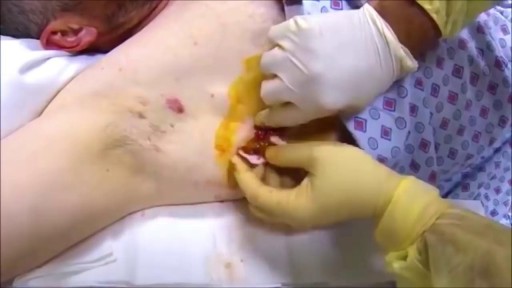

Armpit Abscess Drainage

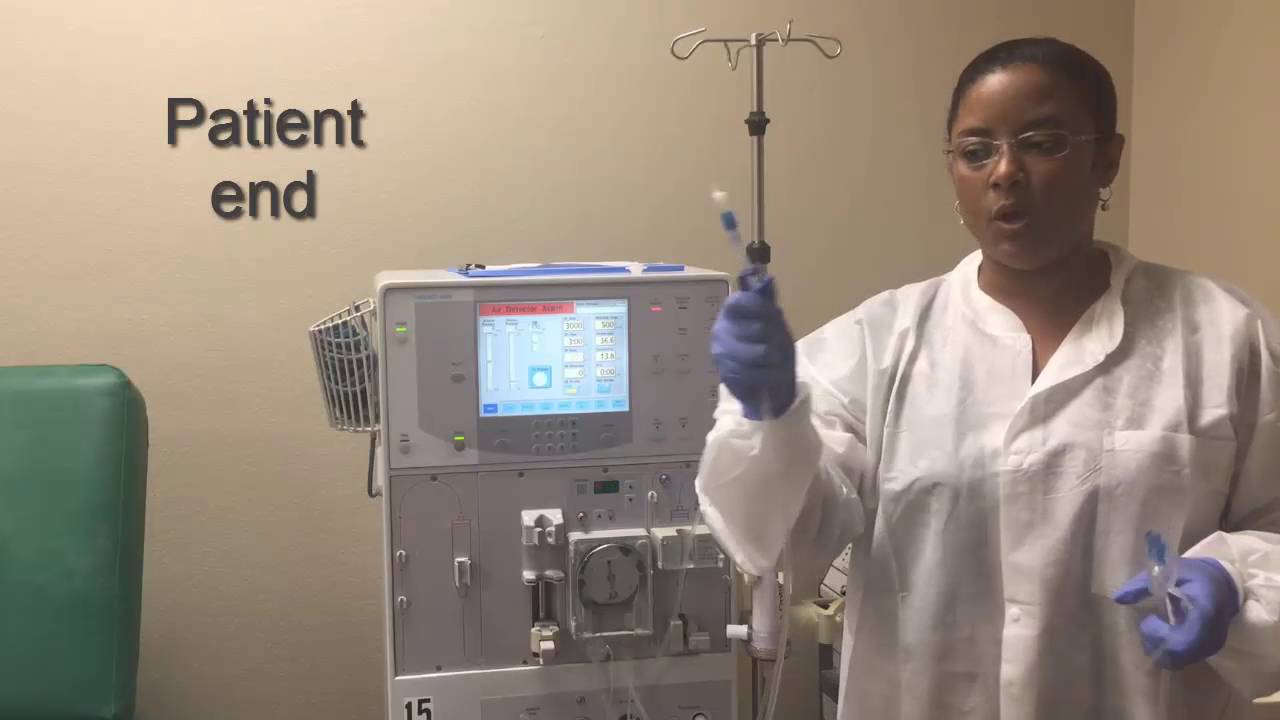
*How to setup a dialysis Machine*
This is part one of two parts of *How to setup a dialysis Machine* Setting up the Fresenius 2008K hemodialysis machine.
________________________________________________________________
Additional Resources:
Technical training | Fresenius Medical Care
https://fmcna.com/faq/technical-training/
The Technical Training team Fresenius Renal Technologies, a division of ... closed room environment, as well as hands-on instruction using current machines. ... 2008® Series Troubleshooting Hemodialysis Systems – Workshop, Level II, 2.4 ...
[PDF]2008K Level I Training Manual - Fresenius Medical Care
https://fmcna.com/wp-content/u....ploads/documents/490
I 2008K TRAINING COURSE AGENDA. II HEMODIALYSIS REVIEW. III HYDRAULIC DESCRIPTION. IV MACHINE OPERATION. V INSTALLATION CHECKLIST ...
Training & education - Fresenius Medical Care
https://www.freseniusmedicalca....re.com/en/healthcare
Fresenius Medical Care — training and education for health care professionals. For patient support, home treatment, regulatory requirements, supporting guides ...
At-Home Hemodialysis Training | Fresenius Kidney Care
https://www.freseniuskidneycare.com › Treatments › At-Home Hemodialysis
Depending on the type of dialysis machine you will use, the training program lasts for about 4 to 8 weeks. You will continue to get your dialysis treatments while ...
Training with Fresenius 2008K - HD For Patients - Home Dialysis ...
forums.homedialysis.org › ... › HD For Patients
Nov 16, 2006 - 6 posts - 5 authors
Stacy and I have been in training with the Fresenius Baby K for the past 4 weeks. ... my doctor about doing home hemodialysis, so a much deserv… ... on giving you a quiet RO and makes the machine as quiet as possible.
The Dialysis Machine — Dialysis Technician's Training
https://dialysistechnicianstra....ining.com/the-dialys
The dialysis machine acts as an artificial replacement for the kidneys, ... Inc. Gambro; Fresenius Medical Care; Wilmed Global – reconditioned machines ...
Training – Renal Dynamics
https://www.renaldynamics.com › Services
Machines: • Fresenius Level I and II training • Introduction to dialysis and machines • Hands on demonstrations • Practical and written exams • Certification upon ...
2008K@home Fresenius Home Hemodialysis Machine
https://fmcna-hd.com/2008kathome.html
Back to 2008K2 Fresenius Dialysis Machine Go to 2008T Fresenius Dialysis ... Same clinical, technical training and same spare parts as 2008k machines

BD Pristine™ Long-Term Hemodialysis Catheter Procedural Animation

360 tour videos are the latest video marketing trend all industries can be taking advantage of! VR and 360 medical videos, like this one, provide patients with a full understanding of the service. Whether you need a medical VR training video and a VR surgery video or medical videos for students to learn, these healthcare and medical videos will instill trust in your company and services.
Get a quote for your project here: https://epicproductionsllc.com/video-production/
Don't forget to follow us...
Like us on Facebook: https://www.facebook.com/epicproductionsllc/
Follow us on Twitter: https://twitter.com/epicprodllc
Connect with us on LinkedIn: https://www.linkedin.com/compa....ny/epic-productions-
Follow us on Instagram: https://www.instagram.com/epicproductionsllc/
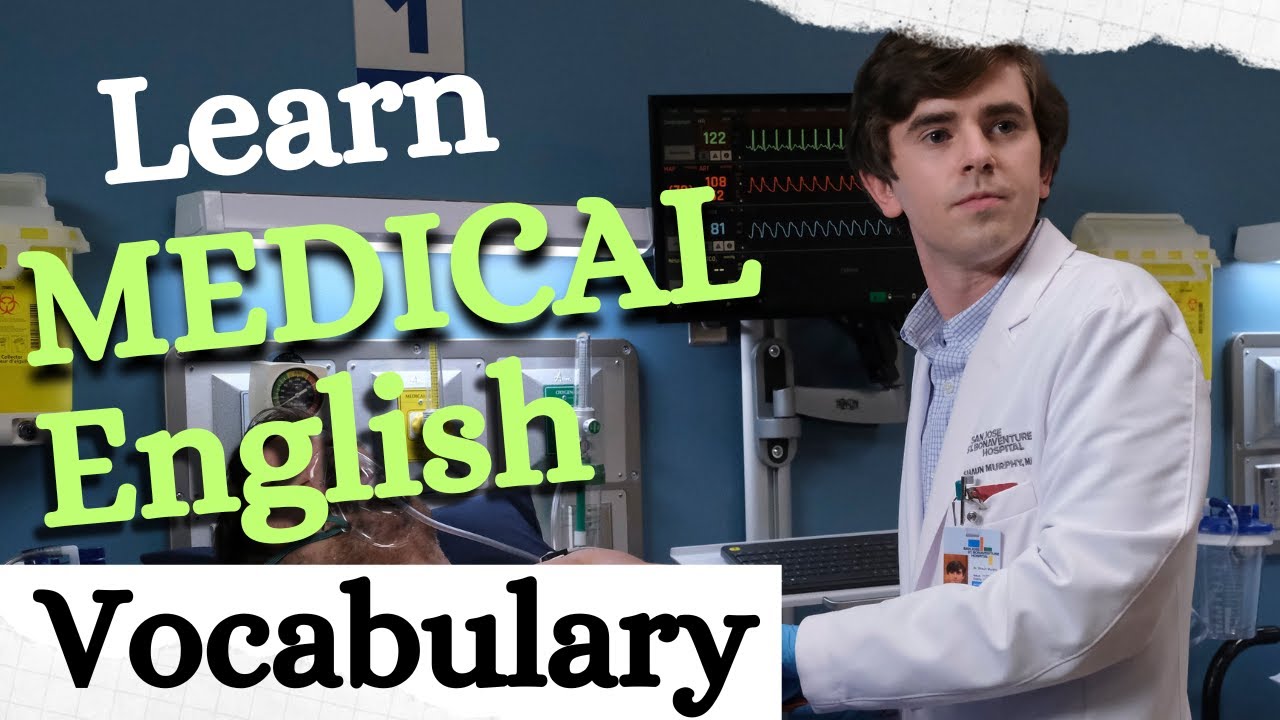
You've come to the perfect YouTube Video if you want to learn hospital and medical English while watching shows of "The Good Doctor." Watch medical English talks from the TV show "the good doctor" to acquire new terminology about ailments that people experience but don't know the names of.
Medical English Lesson 2 with the good doctor - https://youtu.be/gU107Q9Jerw
Hospital English Vocabulary Lesson 3 with Dr. House - https://youtu.be/lE4i1pY53Us
Illness English used in Hospitals Lesson 4 with Chicago Med - https://youtu.be/u3VPRdierKA
So keep learning and watching our video lessons to learn and improve your English to a great level.
Other English lessons through The Big Bang Theory
Learn English through Big Bang Theory Lesson 1 - https://youtu.be/iM-o5EKK5pg
Funny English Lesson through Big Bang Theory Lesson 2 - https://youtu.be/O6CRNi6OJ1k
Enjoy Learning English through Big Bang Theory Lesson 3 - https://youtu.be/-iSDlbReAxk
Want to Learn English through Big Bang Theory Lesson 4 - https://youtu.be/AZSkyjk-Ioo
Learn Romantic English with The Big Bang Theory - Lesson 5 - https://youtu.be/k5EqRArT41w
Visit our Instagram page: https://www.instagram.com/englishfluencymission/
Our Facebook Page: https://www.facebook.com/englishfluencymission/
To be fluent in English, we should have a vocabulary of between 3000 and 4000 important English words. Once we attain this objective, we can be guaranteed to sound like a native speaker.
The links to a few books I've collected for you are listed below; if you truly enjoy, these could be excellent starting points for your quest for greater English fluency.
Oxford Learner's Pocket Word Skills: Pocket-sized, topic-based English vocabulary - https://amzn.to/34LKv7a
Word power made easy - https://amzn.to/38Ht8Fy
Cambridge Grammar for IELTS - https://amzn.to/34OUdWa
Unbroken - The incredible true story of Louis Zamperini, now a major motion picture directed by Angelina Jolie. - https://amzn.to/3rqtyZH
THE INTERNATIONAL NUMBER ONE BESTSELLER -
Other Video Lessons:
Learn English with Wonder Woman - https://youtu.be/6F8oqQWErU0
Learn English with Stuart Little - https://youtu.be/EIeOooR8vas
Learn English with Avengers 2012 - https://youtu.be/u97FZWkd4A8
Learn English with Forrest Gump - https://youtu.be/uH_kTF8QAZc
Learn English with Spider-Man 2 (2004) - https://youtu.be/DHy-2g-N7SQ
Your Queries
learn English with movies
learning English from movies
English vocabulary through Hollywood movies
hospital English conversation
hospital English words
hospital English movie
hospital English video
hospital English vocabulary
hospital English speaking
hospital English sentences
medical English speaking practice
medical English conversation
medical English words
medical English listening practice with the good doctor
learn hospital English with the good doctor
#thegooddoctor #learnenglishwithtvseries

This particular video is intended as a demonstration of Neurologic Examination. This demonstration is intended as an example of a neurologic exam which may be used as part of the initial evaluation of patients with complaints that may have an underlying neurologic origin. This video is solely for educational purposes and intended for use to prepare for OSCEs incorporating standardized patient encounters. It is not intended as a demonstration of a comprehensive neurologic examination and is not intended as medical advice or medical guidelines.
It is not intended as a complete instructional video and should not be considered a source of complete physical examination instruction.
Instead, it should be treated as a supplement to independent learning using primary Osteopathic Clinical Skills instructional resources. Clinical skills are best learned and developed with support from faculty in the context of a complete Osteopathic Medical School Curriculum.
Osteopathic Clinical Skills is a channel dedicated to discussing and exploring Osteopathic Clinical Skills concepts for medical students, residents, and clinicians and presenting them in an easy to understand manner.
Attributions:
Many thanks to the University of North Texas Health Science Center Texas College of Osteopathic Medicine (UNTHSC - TCOM) for permitting use of the Simulation facilities and equipment during the production of this video.
Additional thanks to the UNTHSC-TCOM standardized patient and faculty volunteers who participated in this production and provided permission for the use of their image in this video.

General Examination - Clinical Skills OSCE - Dr Gill
The general examination is one of those early exams, which is essentially used to start medical students off with their clinical skills studies.
In the real world, it's mainly used with regard to gaining an overview of a patient, such as for a medical check up, or a baseline examination, for example, a health report.
They have been a couple of comments about the pulse monitor used in the video. For those who are interested. I’ve reached out to the manufacturer, and they’ve requested that the following code is provided to viewers, in order to get 20% off, if they decide on themselves.
Product model number: Vibeat SP20
Official Website: https://vibeatstore.com/produc....ts/sp20-handheld-pul
Special 20% OFF code: JAMES
--------------
Different medical schools, nursing colleges and other health professional courses will have their own preferred approach to a clinical assessment - you should concentrate on THEIR marks schemes for your assessments.
Some people watching this video may experience an ASMR effect
#DrGill #Asmr #Clinicalskills
#drgill #clinicalskills #asmr

Elbow Exam - Orthopaedic OSCE - Clinical Skills - Dr Gill
The elbow examination is a core skill - in this video, we demonstrate how to perform an elbow EXAM for an Orthopaedic Clinical Skills OSCE, which should be one of the more accessible examination stations for medical students.
For a passing grade in your Clinical Skills OSCE, an elbow assessment should follow the LOOK, FEEL, MOVE approach
Initially looking for erythema, scars, swelling and position
Palpating the elbow - specifically the olecranon, medial and lateral epicondyles, and radial head for heat, oedema and crepitus
Finally assess range of movement with flexion and extension at the elbow, before determining for tennis and golfers' elbows
Watch further orthopaedic examinations for your OSCE revision:
The Elbow - Deep Dive
https://youtu.be/SX5buhtCVDw
The Spine Examination:
https://youtu.be/pJxMHa6SCgU
The Knee examination
https://youtu.be/oyKH4EYfJDM
The Hip examination
https://youtu.be/JC9GKq5nSdQ
The GALS examination
https://youtu.be/5qJaf7gW-B0 - Gait, Arms, Legs, Spine - GALS screen
------------
Please note that there is no ABSOLUTE way to perform a clinical examination. Different institutions and even clinicians will have differing degrees of variations - the aim is the effectively identify medically relevant signs.
However during OSCE assessments. Different medical schools, nursing colleges and other health professional courses will have their own preferred approach to a clinical assessment - you should concentrate on THEIR marks schemes for your assessments.
The examination demonstrated here is derived from Macleods Clinical Examination - a recognised standard textbook for clinical skills.
Some people viewing this medical examination video may experience an ASMR effect
#clinicalskills #Elbow #DrGill

Ear Examination ENT is often a challenging examination, crossing over with the cranial nerve examination of the vestibular cochlear exam as well at other neurological assessments of balance
Here we will review the ear examination, looking both at the use of the otoscope, but also the Dix-Hallpike Manoeuvre, along with HINTS assessment. the Webers and Rinne's test is also included to determine types of hearing loss.
Often these ear examination techniques are performed separately, depending on the patients presenting complaint
#EARExamination #DrGill #ClinicalSkills

Shoulder Clinical Examination - Medical School Clinical Skills - Dr Gill
Personally, I find the shoulder examination the most complex examination possibly as there are so many variations and special tests. Some of which overlap and some will relate specifically to a patients presentation.
Often in a medical school syllabus, only select special tests will be used. In this shoulder exam demonstration, we include the Hawkins-Kennedy Test looking for impingement. This is dovetailed with examination for bicipital tendonitis as this is another possible cause of impingement type symptoms.
This shoulder upper limb exam follows the standard "Look, Feel, Move" orthopaedic exam approach, and overall order as set out in MacLeods Clinical Examination
Watch further orthopaedic examinations for your OSCE revision:
The Spine Examination:
https://youtu.be/pJxMHa6SCgU
Knee Examination
https://youtu.be/oyKH4EYfJDM
Hip Joint Clinical Examination
https://youtu.be/JC9GKq5nSdQ
________
Please note that there is no ABSOLUTE way to perform a clinical examination. Different institutions and even clinicians will have differing degrees of variations - the aim is the effectively identify medically relevant signs.
However during OSCE assessments. Different medical schools, nursing colleges, and other health professional courses will have their own preferred approach to a clinical assessment - you should concentrate on THEIR marks schemes for your assessments.
The examination demonstrated here is derived from Macleods Clinical Examination - a recognized standard textbook for clinical skills.
#ShoulderExamination #ClinicalSkills #DrGill
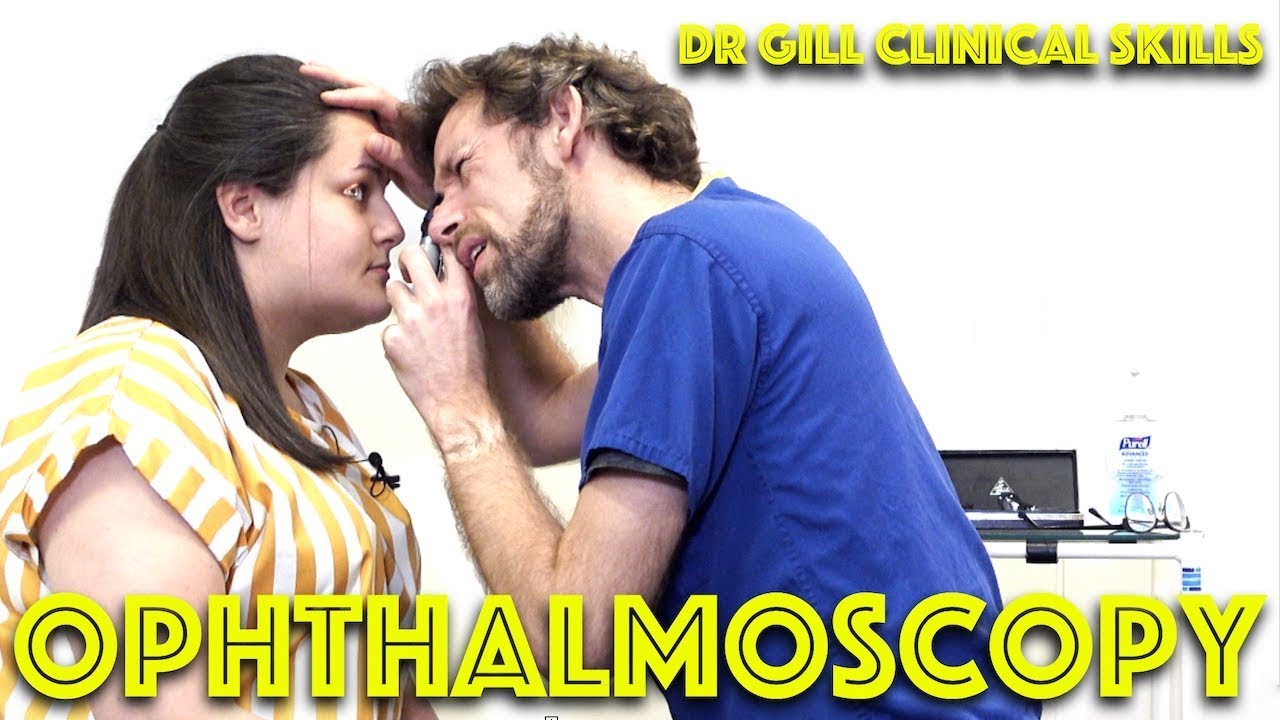
Ophthalmoscopy - Eye Clinical Examination - OSCE - Dr Gill
Direct Ophthalmoscopy use of the eyes is a very challenging clinical skill, incorporating both the examiner's knowledge of the retina, but also understanding the use of the ophthalmoscope
In this clinical skills tutorial, we look at the use of the direct ophthalmoscope as part of an ophthalmic examination
it should be noted that in the ideal circumstances, the room lights will be dimmed during the examination, and dilating eye drops used to improve the visualisation of the fundus
Some people may notice an ASMR effect from this clinical examination
#DrGill #Ophthalmoscopy #ClinicalSkills #EyeExam
جروب الداتا على #تليجرام 👇🏻
https://t.me/IslamKhalaf
أي استفسار 👇🏻
twitter
https://twitter.com/Islamkhalaf0
Insta
https://www.instagram.com/islamkhalaf1
FB
https://www.facebook.com/islamkhalaf.A

This video provides a demonstration of how to assess for transillumination when assessing scrotal swelling.
Read our step-by-step guide here: https://geekymedics.com/testic....ular-examination-osc
Check out our other awesome clinical skills resources, including:
• 🔥 Geeky Medics Bundles (discounted products): https://app.geekymedics.com/purchase/bundles/
• ✨ 1000+ OSCE Stations: https://app.geekymedics.com/pu....rchase/osce-stations
• 🏥 Geeky Medics OSCE Revision Book: https://app.geekymedics.com/purchase/book/
• 📝 150+ PDF OSCE Checklists: https://geekymedics.com/pdf-osce-checklists/
• 🗂️ 3000+ OSCE Flashcards: https://app.geekymedics.com/pu....rchase/flashcard-col
• 📱 Geeky Medics OSCE App: https://geekymedics.com/geeky-medics-app/
• 🩺 Medical Finals SBA Question Pack: https://app.geekymedics.com/pu....rchase/medical-stude
• 💊 PSA Question Pack: https://app.geekymedics.com/pu....rchase/prescribing-s
Subscribe to our newsletter to be the first to know about our latest content: https://geekymedics.com/newsletter/ ✉️
Join the Geeky Medics community: 👩👩👧👧
Twitter: http://www.twitter.com/geekymedics
Instagram: https://instagram.com/geekymedics
Facebook: http://www.facebook.com/geekymedics
Always adhere to your medical school/local hospital guidelines when performing examinations or clinical procedures. DO NOT perform any examination or procedure on patients based purely on the content of these videos. Geeky Medics accepts no liability for loss of any kind incurred as a result of reliance upon the information provided in this video.

Endoscopy in Hiatal Hernia.
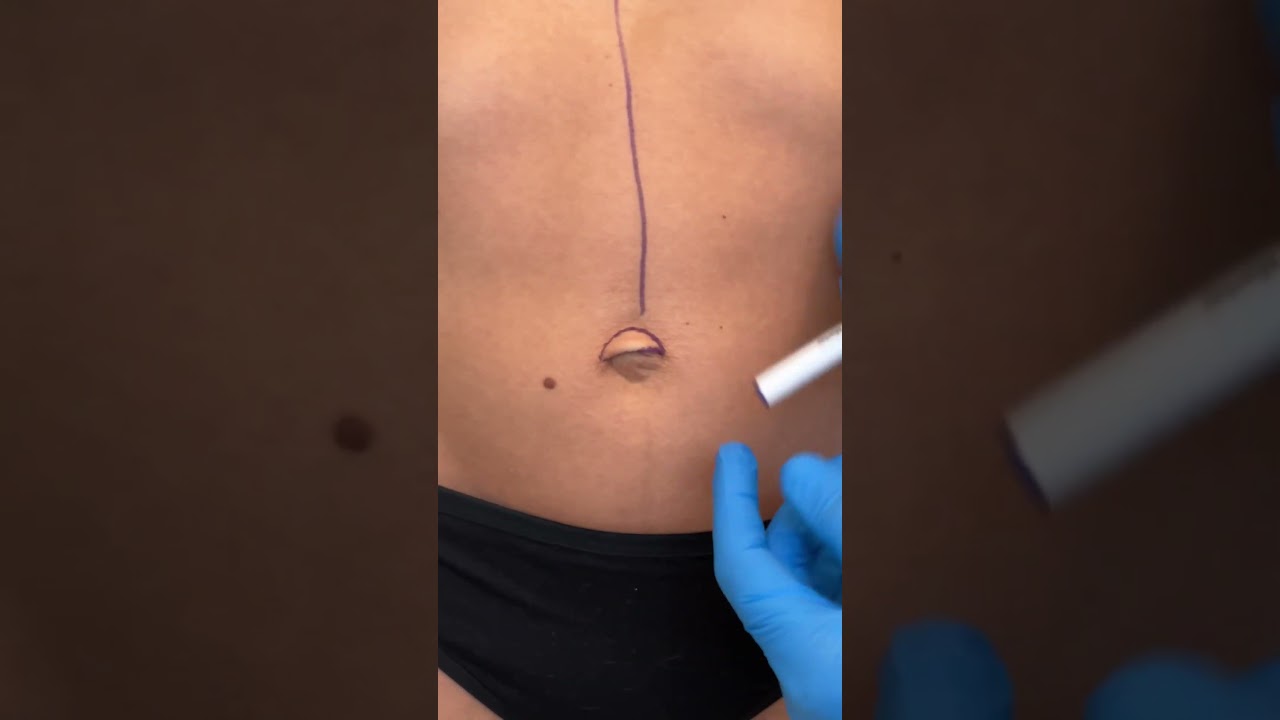
Check out @barrettplasticsurgery on TikTok!
Like and subscribe for more! #shorts #medical #plasticsurgery
More information:
www.drdanielbarrett.com

LIVE SURGERY by Prof. Bellemans - Total Knee Replacement
This live video will show you a Total Knee Replacement Surgery done by Prof. Dr. Bellemans.
#Kneeprosthesis
#Kneearthroplasty
#Journeyknee

TODAY’s Al Roker is back at work, less than two weeks after knee replacement surgery. Al reveals the rigorous course of physical therapy that helped get him back on his feet so quickly. He says the procedure has improved radically since his first knee replacement 15 years ago.
» Subscribe to TODAY: http://on.today.com/SubscribeToTODAY
» Watch the latest from TODAY: http://bit.ly/LatestTODAY
About: TODAY brings you the latest headlines and expert tips on money, health and parenting. We wake up every morning to give you and your family all you need to start your day. If it matters to you, it matters to us. We are in the people business. Subscribe to our channel for exclusive TODAY archival footage & our original web series.
Connect with TODAY Online!
Visit TODAY's Website: http://on.today.com/ReadTODAY
Find TODAY on Facebook: http://on.today.com/LikeTODAY
Follow TODAY on Twitter: http://on.today.com/FollowTODAY
Follow TODAY on Google+: http://on.today.com/PlusTODAY
Follow TODAY on Instagram: http://on.today.com/InstaTODAY
Follow TODAY on Pinterest: http://on.today.com/PinTODAY
Inside Al Roker’s Road To Recovery After Knee Replacement | TODAY

SSFTV is the official YouTube channel of the Seattle Science Foundation. Subscribe now to be updated on the latest videos: tinyurl.com/yt8kt8mg.
The Seattle Science Foundation is a not for profit organization dedicated to advancing the quality of patient care through education, research, innovation and technology. As a physician driven organization, we have created a trusted community of nationally recognized experts from the world’s best medical and academic institutions.
To join our upcoming meeting for CME credit, visit https://www.ssfcme.org.
Get Social With SSF:
On Instagram: https://www.instagram.com/seattlesciencefoundation
On Facebook: https://www.facebook.com/SeattleScienceFoundation
On Twitter: https://twitter.com/seattlescifdtn
On LinkedIn: https://www.linkedin.com/company/756824
On YouTube: http://www.ssfyoutube.org
Learn More at http://www.seattlesciencefoundation.org
Dr. Rod J. Oskouian, is a neurosurgeon who specializes in the diagnosis and treatment of complex spinal disorders. Dr. Oskouian is currently the Chief of Spine at the Swedish Neuroscience Institute and President and CEO of the Seattle Science Foundation. His research and clinical focus is on scoliosis, spinal deformities and anomalies, osteoporosis, spinal cord injury, degenerative disc disease, spinal oncology, stereotactic spinal radiosurgery, and minimally invasive spinal surgery. He has published in numerous medical journals and textbooks, including Neuroscience, Neurosurgery, Neurosurgical Clinics of North America, the Journal of Neurosurgery, Neurosurgical Focus and Spine.

A brain surgery called a craniectomy is performed to remove a part of your skull in order to relieve pressure in an area when your brain swells from a traumatic brain injury. It is also performed to treat medical conditions that cause your brain to swell or bleed that can be caused by an aneurysm, brain tumor or other cancer.
This 3d animation shows how the surgical procedure decreases intracranial pressure (ICP), intracranial hypertension (ICHT), or heavy bleeding (also called hemorrhaging) inside your skull. If left untreated, pressure or bleeding can compress your brain and push it down onto the brain stem. This can be fatal or cause permanent brain damage.
Brain surgery is a very serious procedure under any circumstances, but a craniectomy is done when there is an immediate risk to the brain and neurological function due to severe brain injury or stroke.
For more information about custom 3D animation depicting surgery, please visit https://www.amerra.com/.
Watch additional medical animations:
Accessing an implantable port training - 3D animation: https://youtu.be/xSTpxjyv4O4
Open Suctioning with a Tracheostomy Tube - 3D animation: https://youtu.be/wamB7jpWCiQ
Ventriculostomy Brain Surgery - 3d animation: https://youtu.be/pUy0YDzVNzs
Suctioning the endotracheal tube - medical animation: https://youtu.be/pN6-EYoeh3g
Functional endoscopic sinus surgery (FESS) - 3D animation: https://youtu.be/qKTRyowwaLA
How to insert a nasogastric tube for NG intubation - 3d animation: https://youtu.be/Abf3Gd6AaZQ
Oral airway insertion - oropharyngeal airway technique - 3D animation: https://youtu.be/caxUdNwjt34
Nasotracheal suctioning (NTS) - 3D animation: https://youtu.be/979jWMsF62c
Learn about hemorrhoids with #3d #animation: https://youtu.be/R6NqlMpsiiY
LASIK eye surgery - 3D animation: https://youtu.be/Bb8bnjnEM00
CPR cardiopulmonary resuscitation - 3D animation: https://youtu.be/G87knTZnhks
What are warts (HPV)? - 3D animation: https://youtu.be/guJ1J7rRs1w
How Macular Degeneration Affects Your Vision - 3D animation: https://youtu.be/ozZQIZ_52YY
NeoGraft hair transplant procedure – animation: https://youtu.be/C-eTdH2UPXI
