Top videos
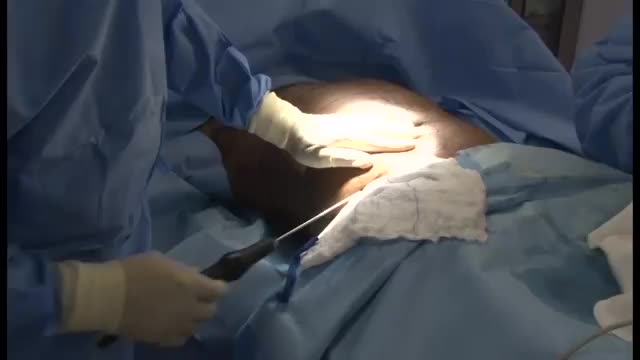
UChicago Medicine organ transplant surgeon Dr. Rolf Barth explains a how the laparoscopic donor nephrectomy – also known as the single-port nephrectomy – procedure works to remove an organ donor’s kidney from their body to be transplanted into a recipient. This minimally invasive kidney donor transplant surgery allows living organ donors the get back to their lives more quickly than the traditional approach and leaves them with a nearly invisible scar in the belly button.
Learn more about living kidney donation: https://www.uchicagomedicine.o....rg/conditions-servic
Watch that video of A man with one inch-wide hole in his face
Polyarteritis nodosa Email this page to a friend Email this page to a friend Facebook Twitter Google+ Polyarteritis nodosa is a serious blood vessel disease. The small and medium-sized arteries become swollen and damaged. Causes Arteries are the blood vessels that carry oxygen-rich blood to organs and tissues. The cause of polyarteritis nodosa is unknown. The condition occurs when certain immune cells attack the affected arteries. More adults than children get this disease. The tissues that are fed by the affected arteries do not get the oxygen and nourishment they need. Damage occurs as a result. People with active hepatitis B or hepatitis C may develop this disease.
Prostate Cancer older man thinking Prostate cancer is the most common cancer among men (after skin cancer), but it can often be treated successfully. More than 2 million men in the US count themselves as prostate cancer survivors.
They are the leaders of the pack when it comes to minimally invasive surgeries. Laparoscopic and robotic. Different techniques with the same benefits.
"There's significantly less blood loss, it's a quicker procedure, quicker recovery, less scarring, less chance for post operative wound complications or infections," says Dr. Darren Miter, laparoscopic surgeon with Lee Memorial Health System.
In a laparoscopic procedure surgeons operate through a series of poke holes, manually inserting thin cutting tools and a camera to provide magnified vision. It's used in a variety of surgical specialties.
"The vast majority of gallbladder surgeries are performed laparoscopically. A single incision in the belly button, one up under the breastbone and either one or two in the right upper side of the belly. Using long skinny instruments and looking up at a TV monitor, remove the gallbladder that way," says Dr. Miter.
While laparoscopic is a hands-on approach, robotic procedures are surgeon-controlled. Working at a console, surgeons direct the robotic arms, which have super-human capabilities and 3D, hi def vision.
"I mean you have to see it to believe it, that's a great tool to have. You got a very good depth perception. Plus the other thing when you're working with your hands it's more intuitive," says Dr. Nagesh Ravipati, colorectal surgeon with Lee Memorial Health System.
The robotic system performs maneuvers the human hand can't.
"Especially if you have to do any suturing, it is so much simpler with the robots because you can just turn around 360 degrees," says Dr. Ravipati.
Robotic surgery is gaining momentum in precise procedures, including the field of cancer.
"The robot is good when you're going to operate on just one field. For rectal surgery you're in one place, it's docked. It gives you the best 3 dimensional vision," says Dr. Ravipati.
Robotic and laparoscopic. Both cutting edge options, with less cutting.
View More Health Matters video segments at leememorial.org/healthmatters/
Lee Memorial Health System in Fort Myers, FL is the largest network of medical care facilities in Southwest Florida and is highly respected for its expertise, innovation and quality of care. For nearly a century, we've been providing our community with everything from primary care treatment to highly specialized care services and robotic assisted surgeries.
Visit leememorial.org
Autologous arteriovenous access is the key to long-term success with hemodialysis and is strongly supported by the National Kidney Foundation's Dialysis Outcomes Quality Initiative guidelines. Basilic vein transposition (BVT) fulfills the need for a durable conduit with high patency and maturation rates. This retrospective review examines a single group's experience with this procedure. All patients undergoing BVT for hemodialysis with available follow-up data were reviewed. Telephone interviews were used to supplement clinical data where needed. Functional assisted patency was used as the end point for this procedure, and if the access was never used for dialysis, then the patency was considered zero. Secondary interventions performed while the access remained patent and in use were not considered detrimental to the patency reported. One hundred seventy BVTs in 162 patients were performed between November 1992 and October 2001. There were 87 women (53.7%) and 112 black patients (69.1%); hypertension was present in 138 patients (85.2%) and diabetes in 89 patients (54.9%). Each year, an increasing incidence of BVT was performed in our dialysis population. The BVT was performed as the first access in that extremity in 73 of the procedures (42.9%). Functional patency (primary assisted) was achieved in 40.0% at 2 years and 15.2% at 5 years. The mean assisted patency was 14.6 months. To maintain BVT patency, 40 percutaneous secondary interventions (69.0%) and 18 surgical revisions (31.0%) occurred in 32 patients (19.0%). Ligation for swelling was necessary in 4 patients (2.5%), and steal syndrome occurred in 3 patients (1.9%). BVT is a useful autologous procedure for hemodialysis and the preferred access alternative in patients without an adequate cephalic vein. Although patencies remain poor relative to other conventional arterial vascular procedures, BVT is our most durable hemodialysis access procedure and is often the only available autologous conduit for hemodialysis.
An eye web is a noncancerous, triangular growth that may occur on one or both eyes. It's more common in people who spend a lot of time in the sun, such as those who work outdoors. The painless growth may be slightly raised and contain obvious blood vessels. It may cause irritation and possibly affect vision. Treatment usually isn't necessary. Eyedrops or surgery may help in severe cases.
Mr. Dan underwent 5 suregries in a single go-Both sided hernias+both sided varicocoele and one hydrocoele.Our web site: http://www.desarda.com “Complete cure from groin hernia is now possible with Dr.Desarda's repair technique.......” Mesh is a foreign body, a simple piece of cloth prepared from the synthetic threads. Therefore, its use in inguinal hernia repairs is known to cause all sorts of complications like pain, recurrence, infection etc. We have developed an innovative new technique of inguinal hernia repair without mesh. It uses your own body muscle for repair and gives virtually complete cure from inguinal hernia problem. An undetached strip of the external oblique aponeurosis is stitched on the weak area between the muscle arch and the inguinal ligament to form a new, strong and physiologically dynamic posterior wall that gives protection and prevents re-herniation. Normally patient goes home in a day after surgery and can drive car and go to office in 3-4 days time. This "Dr.Desarda's hernia repair" is now followed in many countries all over the world. We are surprised to see the enquiries from many patients in the developed countries asking for this repair in their country. This is because this operation does not use any foreign body like mesh for repair and therefore there are no complications that are seen in mesh repairs. A visit to Topix or other hernia forums show thousands of posts showing sufferings of many patients due to mesh repairs. But still why surgeons from developed countries are interested in mesh repairs is a big question for us. Please visit our website for more details: http://www.desarda.com or http://herniasurgery.tripod.com Our cell number: +91 9373322178
Iron deficiency anemia is a common type of anemia — a condition in which blood lacks adequate healthy red blood cells. Red blood cells carry oxygen to the body's tissues. As the name implies, iron deficiency anemia is due to insufficient iron. Without enough iron, your body can't produce enough of a substance in red blood cells that enables them to carry oxygen (hemoglobin). As a result, iron deficiency anemia may leave you tired and short of breath. You can usually correct iron deficiency anemia with iron supplementation. Sometimes additional tests or treatments for iron deficiency anemia are necessary, especially if your doctor suspects that you're bleeding internally.
Atrial fibrillation (also called AFib or AF) is a quivering or irregular heartbeat (arrhythmia) that can lead to blood clots, stroke, heart failure and other heart-related complications. Some people refer to AF as a quivering heart. An estimated 2.7 million Americans are living with AF.
Hernia Repair with Prolene Hernia System
Tips for Doing Fat-Burning Exercises To accomplish your weight loss goals, you must combine some basic principles with the exercises that burn the most fat. These include the following: Do not exercise when you are hungry. ... Always begin with a warm up. ... Begin your workout early. ... Increase intensity gradually.
Insulin is a hormone made by the pancreas that allows your body to use sugar (glucose) from carbohydrates in the food that you eat for energy or to store glucose for future use. Insulin helps keeps your blood sugar level from getting too high (hyperglycemia) or too low (hypoglycemia). The cells in your body need sugar for energy. However, sugar cannot go into most of your cells directly. After you eat food and your blood sugar level rises, cells in your pancreas (known as beta cells) are signaled to release insulin into your bloodstream. Insulin then attaches to and signals cells to absorb sugar from the bloodstream. Insulin is often described as a “key,” which unlocks the cell to allow sugar to enter the cell and be used for energy.
Burns are classified as first-, second-, or third-degree, depending on how deep and severe they penetrate the skin's surface. First-degree burns affect only the epidermis, or outer layer of skin. The burn site is red, painful, dry, and with no blisters. Mild sunburn is an example.
urgical management of proximal humerus fractures may be categorized either according to fracture type (eg, Neer type, anatomic type, greater tuberosity, surgical neck, anatomic neck, articular surface, lesser tuberosity fragments) or according to method of fixation (eg, closed reduction with no fixation, percutaneous fixation, open reduction with internal fixation [ORIF], humeral head replacement associated with tuberosity fixation
Smoking causes: Chronic obstructive pulmonary disease (COPD), a disease that gets worse over time and causes wheezing, shortness of breath, chest tightness, and other symptoms. Emphysema, a condition in which the walls between the air sacs in your lungs lose their ability to stretch and shrink back.
For more information on peritoneal dialysis: https://www.massgeneralbrigham.....org/en/about/newsro
Why does someone need dialysis? What is peritoneal dialysis? How does it work? John Kevin Tucker, M.D., Nephrologist at Brigham and Women's Hospital and Vice President for Education at Mass General Brigham, discusses peritoneal dialysis and its benefits for people who have lost their kidney function.
Subscribe Link: https://www.youtube.com/channe....l/UCYrLjATd88gPwIKnt
0:00 - Intro
0:24 - Why Do I Need Dialysis?
1:42 - Treatment
2:02 - Why Is It Called Peritoneal Dialysis
2:35 - 2 Forms of Peritoneal Dialysis
3:50 - Continuous Cycling Peritoneal Dialysis
4:38 - Myths
5:55 - Preparing For Peritoneal Dialysis
About Mass General Brigham:
Mass General Brigham combines the strength of two world-class academic medical centers, five nationally ranked specialty hospitals, 11 community hospitals, and dozens of health centers. Our doctors and researchers accelerate medical breakthroughs and drive innovations in patient care. They are leaders in medical education, serving as Harvard Medical School faculty and training the next generation of physicians. Mass General Brigham’s mission is to deliver the best, affordable health care to patients everywhere. Together, we transform the health of our communities and beyond.
#MassGeneralBrigham #Peritoneal #Dialysis
Visit Mass General Brigham: https://www.massgeneralbrigham.org/
Find us on social:
Twitter: https://twitter.com/MassGenBrigham
Instagram: https://www.instagram.com/massgeneralbrigham/
Facebook: https://www.facebook.com/MassGeneralBrigham/
LinkedIn: https://www.linkedin.com/compa....ny/mass-general-brig
Mass General Brigham:
https://www.youtube.com/massgeneralbrigham
Peritoneal Dialysis: At Home Treatment for Kidney Failure | Mass General Brigham
https://youtu.be/of1T6hMEN_Q
Pediatric Urine Samples Collection