
- Physical Examination
- Surgical Examination
- Ophthalmology
- Clinical Skills
- Orthopedics
- Surgery Videos
- Laparoscopy
- Pediatrics
- Funny Videos
- Cardiothoracic Surgery
- Nursing Videos
- Plastic Surgery
- Otorhinolaryngology
- Histology and Histopathology
- Neurosurgery
- Dermatology
- Pediatric Surgery
- Urology
- Dentistry
- Oncology and Cancers
- Anatomy Videos
- Health and Fitness
- Radiology
- Anaesthesia
- Physical Therapy
- Pharmacology
- Interventional Radiology
- Cardiology
- Endocrinology
- Gynecology
- Emergency Medicine
- Psychiatry and Psychology
- Childbirth Videos
- General Medical Videos
- Nephrology
- Physiology
- Diet and Food Health
- Diabetes Mellitus
- Neurology
- Women Health
- Osteoporosis
- Gastroenterology
- Pulmonology
- Hematology
- Rheumatology
- Toxicology
- Nuclear Medicine
- Infectious Diseases
- Vascular Disease
- Reproductive Health
- Burns and Wound Healing
- Other
Top videos


The objectives of hemodialysis are to extract toxic nitrogenous substances from the blood and to remove excess water. In hemodialysis, the blood, laden with toxins and nitrogenous wastes, is diverted from the patient to a machine, a dialyzer, in which the blood is cleansed and then returned to the patient. Diffusion, osmosis, and ultrafiltration are the principles on which hemodialysis is based.
The toxins and wastes in the blood are removed by diffusion—that is, they move from an area of higher concentration in the blood to an area of lower concentration in the dialysate. The dialysate is a solution made up of all the important electrolytes in their ideal extracellular concentrations.
The electrolyte level in the patient’s blood can be brought
under control by properly adjusting the dialysate bath. The semipermeable membrane impedes the diffusion of large molecules,
such as red blood cells and proteins.
#hemodialysis #dialysis #viral #urinaryinfection #shorts #medical #animation

Dr. Katherine Scovner from the Division of Nephrology at Massachusetts General Hospital discusses kidney dialysis.

Home dialysis treatment, including for both peritoneal and hemodialysis, has been a slowly developing trend in recent years. Between 2017 and 2018, the number of patients receiving treatment for peritoneal and hemodialysis jumped 7.7% and 8.8%, respectively, according to the United States Renal Data System 2020 Annual Data Report (ADR).
#KidneyPatients #WION #WorldNews
About Channel:
WION -The World is One News, examines global issues with in-depth analysis. We provide much more than the news of the day. Our aim to empower people to explore their world. With our Global headquarters in New Delhi, we bring you news on the hour, by the hour. We deliver information that is not biased. We are journalists who are neutral to the core and non-partisan when it comes to the politics of the world. People are tired of biased reportage and we stand for a globalised united world. So for us the World is truly One.
Please keep discussions on this channel clean and respectful and refrain from using racist or sexist slurs as well as personal insults.
Subscribe to our channel at https://goo.gl/JfY3NI
Check out our website: http://www.wionews.com
Connect with us on our social media handles:
Facebook: https://www.facebook.com/WIONews
Twitter: https://twitter.com/WIONews
Follow us on Google News for latest updates
Zee News:- https://bit.ly/2Ac5G60
Zee Bussiness:- https://bit.ly/36vI2xa
DNA India:- https://bit.ly/2ZDuLRY
WION: https://bit.ly/3gnDb5J
Zee News Apps : https://bit.ly/ZeeNewsApps


In the Dialysis Unit you have an opportunity to provide Dialysis care for a variety of patients, including those with End-Stage Chronic Kidney disease and acutely ill patients requiring dialysis and plasmapheresis.
The Chronic Dialysis Nurse focuses on patients receiving Hemodialysis, Peritoneal Dialysis, or Home Hemodialysis. Our patients range in age from newborns to young adults. The Hemodialysis patient receives their dialysis treatment in the clinic 3-5 times a week. The Peritoneal Dialysis and Home Hemodialysis treatments are provided in the patient’s home once the parent/caregiver is trained to operate the machine. They are followed monthly in clinic. The patient receiving Chronic Dialysis is supported by a multidisciplinary team that consists of a physician, nurses, social worker, nutritionist, pharmacist, child-life therapist, teacher, and counselor. The group works together to meet the medical and emotional needs of the patient and caregiver. Care is specialized to meet the needs of each individual patient.
The Acute Dialysis Nurse focuses on acute dialysis related therapies such as: Continuous Renal Replacement Therapy (CRRT); therapeutic plasmapheresis; or acute peritoneal dialysis. The acute dialysis team works with the multi-disciplinary inpatient nephrology team to provide acute dialysis services to the critically ill ICU patients. The work environment is highly technical and fast-paced.
The Dialysis Unit operates on 12hr shifts 7a – 7p; 7 days a week. Night call is required and shared by the nurses. We provide a detailed orientation plan to the nurse to become proficient in providing hemodialysis, peritoneal dialysis, continuous renal replacement therapy and plasmapheresis. Previous experience in dialysis or pediatrics is not required.
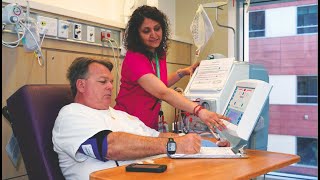
Eric's Home Dialysis

How to Know If You Have a Serious Knee Injury or Problem
Youtube Channel: https://www.youtube.com/user/physicaltherapyvideo
Website: https://bobandbrad.com/
Bob & Brad discuss how to know if you have a serious knee injury. They show you what to look for and what you should do.
This Week's Giveaway:
This month we are giving away a grand prize of a Sleepovation mattress and two pillows!
BONUS: 2 runners-up will receive a Sleepovation pillow!
December Giveaway link: https://shrsl.com/2ob0e
Purchase Mattress: http://shrsl.com/1n2e2
Purchase Pillow: http://shrsl.com/1xch4
Discount: Make sure to use the discount code FAMOUSPT to receive 15% off of your purchase of a mattress or use FAMOUSPTPIL for 25% off of their pillows! This is the biggest discount of the year!
Sleepovation will reimburse winners of the giveaway if they have already purchased, so no need to wait to buy Bob & Brad's favorite mattress and pillow!
Our videos offer the best "get fit , stay healthy, and pain-free" information directed toward people 0 to 101 years old. Physical Therapists Bob Schrupp and Brad Heineck have over 50 years of combined. We try to add a twist of our humor into each video in our quest to be the "Most Famous Physical Therapists on the Internet" In our opinion of course!!! Subscribe to us now and join the fun. Not only will these videos provide outstanding health information on treating yourself at home, we also do product reviews.
For our favorite products on Amazon click on this link: https://www.amazon.com/shop/physicaltherapyvideo
Visit us on our other social media platforms:
Website: https://bobandbrad.com/
Facebook: https://www.facebook.com/BobandBrad/
Instagram: https://www.instagram.com/officialbobandbrad/
Twitter: https://twitter.com/ptfamous
Bob and Brad’s Products:
Grip and Forearm Strengthener: https://store.bobandbrad.com
Wall Anchor: https://store.bobandbrad.com
Booyah Stik: https://store.bobandbrad.com
Knee Glide: https://store.bobandbrad.com
Fit Glide: https://store.bobandbrad.com
Massage Gun: https://amzn.to/36pMekg
Hanging Handles: https://amzn.to/2RXLVFF
Resistance Bands: https://amzn.to/36uqnbr
Pull Up Bands: https://amzn.to/3qmI4Rv
If you order from the Bob and Brad Store Links, you will receive 15% off your purchase.
Check out our shirts, mugs, bags and more in our Bob and Brad merchandise shop here: https://shop.spreadshirt.com/bob-brad
Bob & Brad Amazon Store: https://amzn.to/2RTSLLh
Other Products We Love: https://www.amazon.com/shop/physicaltherapyvideo?listId=3581Z1XUVFAFY
Check out The Bob & Brad Crew on YouTube by clicking here: https://www.youtube.com/c/thebobbradcrew
Want to help translate our videos? We would so love the help! http://www.youtube.com/timedtext_cs_panel?c=UCmTe0LsfEbpkDpgrxKAWbRA&tab=2
Medical Disclaimer All information, content, and material of this website is for informational purposes only and are not intended to serve as a substitute for the consultation, diagnosis, and/or medical treatment of a qualified physician or healthcare provider.
Affiliate disclaimer: Keep in mind that we may receive commissions when you click our links and make purchases. However, this does not impact our reviews and comparisons. We are highly selective in our products and try our best to keep things fair and balanced in order to help you make the best choice for you.

This video shows how to perform the McMurray test, one of the most commonly used clinical assessment tools to assess for meniscal injuries in the knee.
This video clip is part of the FIFA Diploma in Football Medicine and the FIFA Medical Network. To enrol or to find our more click on the following link http://www.fifamedicalnetwork.com
The Diploma is a free online course designed to help clinicians learn how to diagnose and manage common football-related injuries and illnesses. There are a total of 42 modules created by football medicine experts. Visit a single page, complete individual modules or finish the entire course.
The network provides the opportunity for clinicians around the world to meet and share ideas relating to football medicine. Ask about an interesting case, debate current practice and discuss treatment strategies. Create a profile and log on to interact with other health professionals from around the globe.
This is not medical advice. The content is intended as educational content for health care professionals and students. If you are a patient, seek care of a health care professional.
![Kneecap [patella] button loosens after total #kneereplacement #kneeinjury #fracture](https://i.ytimg.com/vi/1pgqwZDgIPs/maxresdefault.jpg)
![Knee Injury Rehabilitation [Early Stage] - (1st Two Weeks After Injury)](https://i.ytimg.com/vi/35zoRRUDVYo/maxresdefault.jpg)
I have shared with you in this video couple of exercises that you can follow immediately after your Knee injury.
As I promised here are 2 protocols to follow in this routine. I have also added my blog on how to strengthen your glutes and why that can help you with your knee pain.
1- Avoid Harm ( https://dublinsportsinjuryclin....ic.com/acute-injury-
2- POLICE PROTOCOL (https://dublinsportsinjuryclin....ic.com/acute-injury-
3- Read my blog and check how to strengthen your glutes (https://dublinsportsinjuryclin....ic.com/knee-injury-r
Please make sure to watch the video until the end since I'm sharing with you a couple of tips at the end of this video.
References:
1- https://www.ncbi.nlm.nih.gov/pmc/arti...
2- https://www.sciencedirect.com/science...
3- https://www.sciencedirect.com/science...
_______________________________
Music: See You
Musician: @iksonofficial
---------------------------------------------------
**MEDICAL DISCLAIMER**
All information, content, and material of this video or website are for informational and demonstration purposes only. It is not intended to serve as a substitute for the consultation, diagnosis, and/or medical treatment of a qualified physician or healthcare provider.
Don’t use this content as a replacement for treatment and advice given by your doctor or health care provider. Consult with your physical therapist or healthcare professional before doing anything contained in this content.
By watching this video, you agree to indemnify and hold harmless Dublin Sports Injury Clinic(and its representatives) for any and all losses, injuries, or damages resulting from any and all claims that arise from your use or misuse of this content. Dublin Sports Injury Clinic makes no representations about the accuracy or suitability of this content.
USE OF THIS VIDEO'S CONTENT IS AT YOUR OWN RISK.
𝐂𝐨𝐧𝐧𝐞𝐜𝐭 𝐰𝐢𝐭𝐡 𝐁𝐨𝐛 𝐚𝐭 𝐃𝐮𝐛𝐥𝐢𝐧 𝐒𝐩𝐨𝐫𝐭𝐬 𝐈𝐧𝐣𝐮𝐫𝐲 𝐂𝐥𝐢𝐧𝐢𝐜
𝐖𝐄𝐁𝐒𝐈𝐓𝐄→ https://www.dublinsportsinjuryclinic.com
𝐄𝐌𝐀𝐈𝐋 → Rehab@dublinsportsinjuryclinic.com
𝐓𝐄𝐋 → 0879276712
𝐅𝐀𝐂𝐄𝐁𝐎𝐎𝐊 → https://www.facebook.com/dublinphysicaltherapy/
𝐈𝐍𝐒𝐓𝐀𝐆𝐑𝐀𝐌 → https://www.instagram.com/dubl....in_sports_injury_cli
Tags:
Knee Injury Rehabilitation [Early Stage] - (1st Two Weeks After Injury)
Knee injury exercises, knee exercises, knee rehabilitation, Sore knee rehabilitation, Twisted knee exercises, sore kneecap exercises, runners knee injury, #kneeinjury #soreknee #runnersknee #Kneerehabilitation #kneeexercices #dublinsportsinjuryclinic
#anteriorkneepain #kneepain #kneephysio #injureknee #exerciseforknee #kneerehab #swollenknee
#runnersknee #kneeminiscus #acl #Mcl #kneeligaments#dublinsportsinjuryclinic #dublinsportsphysio #bobfiro #dulin2phyiso #bobyourphysio #bobonlinecare #Sportsinjurydublinclinic#dublinsportsinjuryclinic #dublinsportsphysio #bobfiro #dulin2phyiso #bobyourphysio #bobonlinecare #Sportsinjurydublinclinic

Get my book on fixing injury here:
https://www.amazon.com/Rebuild....ing-Milo-Foundation-
Get my book 'The Squat Bible' here:
https://www.amazon.com/Squat-B....ible-Ultimate-Master
Get my 13-Week Squat Program? https://marketplace.trainheroi....c.com/workout-plan/p
Get olympic weightlifting programming (part 1):
https://marketplace.trainheroi....c.com/workout-plan/p
Get olympic weightlifting programming (part 2): https://marketplace.trainheroi....c.com/workout-plan/p
______________________
Show Sponsors
- TYR: https://www.tyr.com/?gclid=Cjw....KCAjw9qiTBhBbEiwAp-G
- Bandbell: Check out their amazing bars here: https://www.bandbell.com/?utm_source=youtube.com&utm_medium=web&utm_campaign=squatu
______________________
Subscribe to the channel: https://tinyurl.com/y2eq7kpr
Check out the Eleiko products I use here: https://shop.eleiko.com/en-us/?ref=qg8uBQd3JL7S
Recommended products: https://squatuniversity.com/recommended-products/
FitMap: https://www.fitmaptrainer.com/
Support SquatU & join monthly live Q&A: https://www.patreon.com/SquatUniversity
______________________
Connect with SquatUniversity:
Visit the website: http://www.squatuniversity.com
Like the Facebook page: https://www.facebook.com/SquatUniversity
Follow on Twitter: https://twitter.com/squatuniversity
Follow on TikTok: @SquatUniversity
Follow on Instagram: http://instagram.com/squat_university
Listen to the Podcast on: apple iTunes, Overcast, Pocket Casts, Google Play and the Anchor App
Shout out @Muscle and Motion for the amazing anatomy graphics.
______________________

Joe Ingles suffered a very bad looking injury on Sunday night in the NBA. In this video we'll review what happened and discuss the possibilities.
NBA and Basketball Videos:
https://youtube.com/playlist?l....ist=PLrdpldKEF234R2w
MY MUSIC:
Epidemic Sound - Sign up with this link for a FREE 30 day trial!
https://www.epidemicsound.com/referral/2m1bb5/
Follow Me on Twitter!
https://twitter.com/briansuttererMD
I'm a doctor and a sports fan and this channel is dedicated to exploring the unique medical side of the world of sports, including NBA, MLB, NFL, UFC, and many more! Breaking down the biggest what ifs, historical injuries and stories, and making learning about medicine fun and relevant for all sports fans!
Anatomy images: https://www.biodigital.com
DISCLAIMER: Content not intended to be taken as medical advice. Opinions are my own and do not represent those of my employer. I have not personally treated or evaluated the individual(s) discussed in this video. Content used with educational and transformative intent within Fair Use Guidelines
Content owned and produced by Brian Sutterer LLC 2022
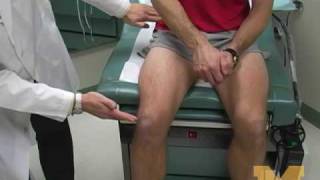
Dr. Yeong Kwok speaks about knee pain and demonstrates a stretch designed to treat tendonitis.

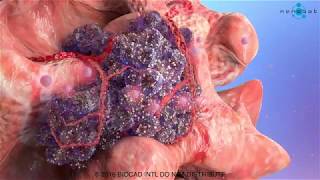
This cancer development medical video is devoted to elaborating the basics of cancer growth. We used advanced medical animation techniques to display such a complicated process.
What is happening in cancer development medical video
The fundamental abnormality described in the cancer development medical video is the nonstop unregulated multiplication of cancer cells. Being uncontrollable by body’s signals that regulate normal cell behavior; cancerous cells divide and grow populating neighboring normal tissues or even spread throughout the body. The overall lack of growth control acquired by cancer cells is due to the accumulated abnormalities in numerous cell regulatory mechanisms and is considered in some aspects of cell behavior that differs them from their healthy counterparts. The interaction of these cells is shown in our previous medical animation video.
Read full article on our webpage http://bit.ly/2LQj9ln
Follow us on Facebook https://www.facebook.com/Nanob....ot.Medical.Animation
Follow us on LinkedIn https://www.linkedin.com/compa....ny/nanobotmodels-med
Follow us on Twitter https://twitter.com/Nanobot_Studio
Follow us on Instagram https://www.instagram.com/nano....bot_medical_animatio
Follow us on Clutch https://clutch.co/profile/nano....bot-medical-animatio
Follow us on Behance https://www.behance.net/NanobotStudio
#cancer #tumor #oncology #metatastic #nanobot #visualscience #scientificcommunication #medicalanimation #animationvideo #animationdesign #animationstudio #animationmovie #nanotechnology #medicine #health #science #education #medschool #medicaleducation #animation_studio #animationstudio

Dr. Nick demonstrates how to numb a toe for a patient who had a subungual hematoma “collection of blood under the nail”. This patient stubbed his toe and needed to have the nail removed.
#satisfying #reaction #amazing
MAKE SURE TO SUBSCRIBE FOR ALL THE NEW SURGICAL AND EDUCATIONAL VIDEOS COMING!!
👉🏻For more information visit :
https://drnickcampi.com
👉🏻Follow me on TikTok!!
https://vm.tiktok.com/ZMeXLbc5F/I’ll
👉🏻Connect with me!!
https://www.instagram.com/drnickcampitelli
👉🏻Check out this video of how we remove an ingrown toenail!
https://youtu.be/JyZo8aZDYds
👉🏻Dr. Nick Campitelli Performs latest Minimally Invasive Bunion Surgery! Watch this video!
https://youtu.be/eRpABMsCbOU
Dr. Nick Campitelli is a podiatrist who specializes in foot and ankle surgery in the Akron and Cleveland Ohio area. He is the Residency Director of the Western Reserve Hospital / University Hospital Podiatric Medicine and Surgery Residency Program.
*** All content found on the this YouTube video including: text, images, audio, or other formats were created for informational purposes only. The Content is not intended to be a substitute for professional medical advice, diagnosis, or treatment. Always seek the advice of your physician or other qualified health provider with any questions you may have regarding a medical condition. Never disregard professional medical advice or delay in seeking it because of something you heard on this video. ***
◦

THIS IS ODLY SATISFYING MEDICAL VIDEOS THAT ARE FOUND IN INTERNET. THIS IS ONLY FOR EDUCATIONAL PURPOSE.

Thought a snake in your boot was bad? That old 19th-century idiom is nothing compared to one in your ear.
Shocking footage captured the alleged moment that a “surgeon” tried to remove a live snake that infiltrated a woman’s ear. Video of the herpetological surgery has racked up more than 125,000 views as viewers speculate whether or not the squirm-inducing footage is authentic.
“The snake has gone in the ear,” reads the caption to the bizarre Facebook clip, which was posted Sept. 1 by an India-based social media star named Chandan Singh to his 20,126 followers. However, it’s unclear where, when or how this unfortunate event transpired, local outlet the Economic Times reported.
In the nearly four-minute clip, an alleged medical practitioner can be seen using tweezers in a desperate attempt to extract a black and yellow serpent that’s peeking its head out from a female patient’s ear.

NEET Motivational Video |Don't Give up 🔥|#neet2023#aiims
#neetmotivation
#aiims
#neet2023
#pw#dontgiveup
#dream
#mbbs
#neet2024
#doctor
#aiimsdelh#medical

Click here to subscribe to Dr. Pimple Popper: https://www.youtube.com/@DrPimplePopper/
Join All Access Memberships here:
https://www.youtube.com/channe....l/UCgrsF4TYwmrV0QsXb
Click here to see my favorite POPS:
Most Popular Pops: https://www.youtube.com/playli....st?list=PLJZ_ok3xiAi
Blackheads: https://www.youtube.com/playli....st?list=PLJZ_ok3xiAi
DPOW’s: https://www.youtube.com/playli....st?list=PLJZ_ok3xiAi
Steatocystomas: https://www.youtube.com/playli....st?list=PLJZ_ok3xiAi
Cysts: https://www.youtube.com/playli....st?list=PLJZ_ok3xiAi
Lipomas: https://www.youtube.com/playli....st?list=PLJZ_ok3xiAi
Soft Pops: https://www.youtube.com/playli....st?list=PLJZ_ok3xiAi
Poppin Off' Show with Dr Pimple Popper: https://youtube.com/playlist?l....ist=PLJZ_ok3xiAi_XPY
__
Connect with Dr. Pimple Popper on Social Media:
Follow Dr. Pimple Popper on Instagram: https://bit.ly/3smTOED
Follow Dr. Pimple Popper on TikTok: https://bit.ly/2MXWDM9
Follow Dr. Pimple Popper on Facebook: https://bit.ly/3oU3Rz7
Follow Dr. Pimple Popper on Twitter: https://bit.ly/2MXWDM9
Follow Dr. Sandra Lee on Instagram: https://bit.ly/2LscBO8
Subscribe to SLMD YouTube to never miss a skincare video:
https://www.youtube.com/@SLMDskincare
More ways to connect with me:
Download the Dr. Pimple Popper All Access App:
https://apps.apple.com/us/app/....dr-pimple-popper/id1
Click here to begin free trial of All-Access: https://allaccess.drpimplepopper.com/
Welcome to the world of Dr. Pimple Popper, the one and only Sandra Lee, MD! As a board certified dermatologist, skin cancer surgeon, and cosmetic surgeon, I am a highly sought-after expert in the field of dermatology.
On this channel, you'll find a treasure trove of videos that offer a window into my world.
Hopefully you'll learn about various skin conditions, hair and nail issues, and cutting-edge cosmetic surgery techniques. Whether you're struggling with blackheads, acne, cysts, warts, or looking for Botox, fillers, or liposuction, you'll find helpful advice and information here.
But this channel isn't just about skin care - it's about the amazing people I encounter every day. You'll get to know some of my incredible patients and their stories, and maybe even fall in love with dermatology just as much as I have!
Disclaimer: This video may contain dermatologic surgical and/or procedural content. The content seen in this video is provided only for medical education purposes and is not intended to be a substitute for professional medical advice, diagnosis, or treatment.
#DrPimplePopper #DrSandraLee #Dermatology #SLMD #Skincare
