
סרטונים מובילים


Pompe disease is a rare multisystem genetic disorder that is characterized by absence or deficiency of the lysosomal enzyme alpha-glucosidase (GAA). This enzyme is required to breakdown (metabolize) the complex carbohydrate glycogen and convert it into the simple sugar glucose.

Signs and symptoms of this condition typically appear around the age of 3 or 4 months, when babies start to sleep through the night and do not eat as frequently as newborns. Affected infants may have low blood sugar (hypoglycemia), which can lead to seizures. They can also have a buildup of lactic acid in the body (lactic acidosis), high blood levels of a waste product called uric acid (hyperuricemia), and excess amounts of fats in the blood (hyperlipidemia). As they get older, children with GSDI have thin arms and legs and short stature. An enlarged liver may give the appearance of a protruding abdomen. The kidneys may also be enlarged. Affected individuals may also have diarrhea and deposits of cholesterol in the skin (xanthomas).
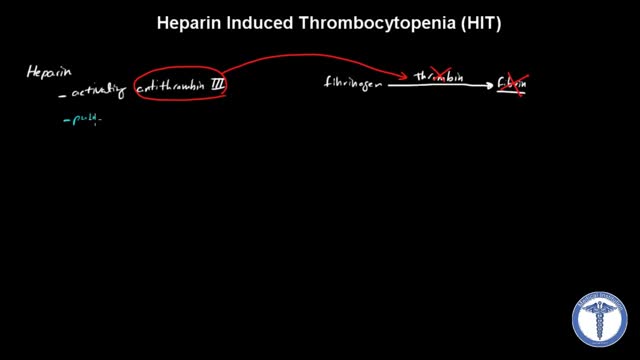
All forms of heparin (including low-molecular-weight heparin such as enoxaparin) must be stopped immediately in patients with suspected heparin-induced thrombocytopenia (HIT) while awaiting diagnostic confirmation. Patients with HIT remain at high risk of thrombosis even after discontinuation of heparin. Therefore, an alternate, rapidly acting, non-heparin anticoagulant such as direct thrombin inhibitor (eg, argatroban, bivalirudin) must be started immediately.
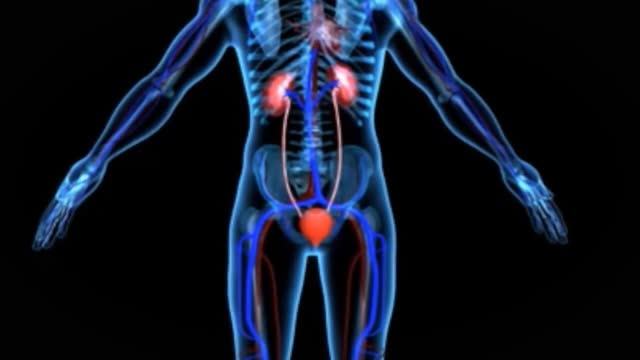
Lithium, a mood stabilizer used in bipolar disorder, has a narrow therapeutic index (small difference between therapeutic and toxic levels}. This patient's gradual onset of neurologic symptoms (slurred speech, confusion, tremors, and ataxia) is consistent with chronic lithium toxicity. Therapeutic lithium levels are 0.8- 1.2 mEq/L. Serum lithium levels >1.5 mEq/L confirm toxicity, and levels ;::2 .5 mEq/L require emergency management.
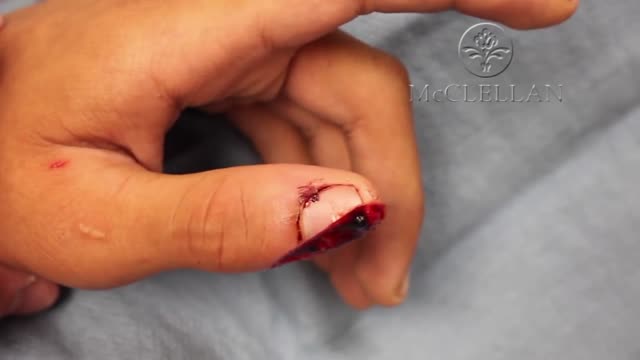
Thumb Tip Regeneration! IV3000 Wound Dressing for Thumb / Finger Trauma

Miracle baby's heart beats outside her chest
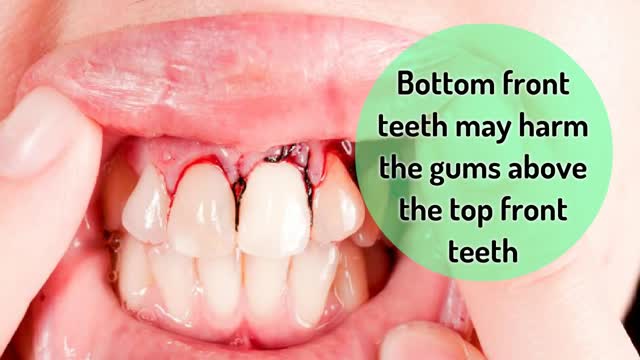
Overbite is a type or malocclusion or an overjet. A lot of people don’t realize that they have an overbite, as they believe their condition is not serious enough to obtain dental attention. This could also for the reason that other cases of overbites are so minor to be noticeable. However, others have serious overbite condition that can make the person’s top jaw look much larger or the bottom jaw significantly smaller. But one thing to remember, overbite can actually cause some dental problems. This condition can change the structure of your face and affect the way you talk. The most popular form of overbite correction is orthodontic treatment. Your dentist will fix the overbite with the help of rubber bands and dental braces to pull the upper teeth back. Tooth extraction may be suggested if overcrowding complicates the overbite so as to provide room for your front teeth. In extreme conditions, overbite surgery may be needed to place your jaw backwards or forwards. Furthermore, if severe overbite is not corrected during adulthood, the teeth may continue to shift and trigger dental issues such as gum disease.

How a woman's body changes during Pregnancy
This animation describes surgery for patients with inflammatory bowel disease (IBD) -- IPAA, removal of colon, intestinal resection, & stricturoplasty.
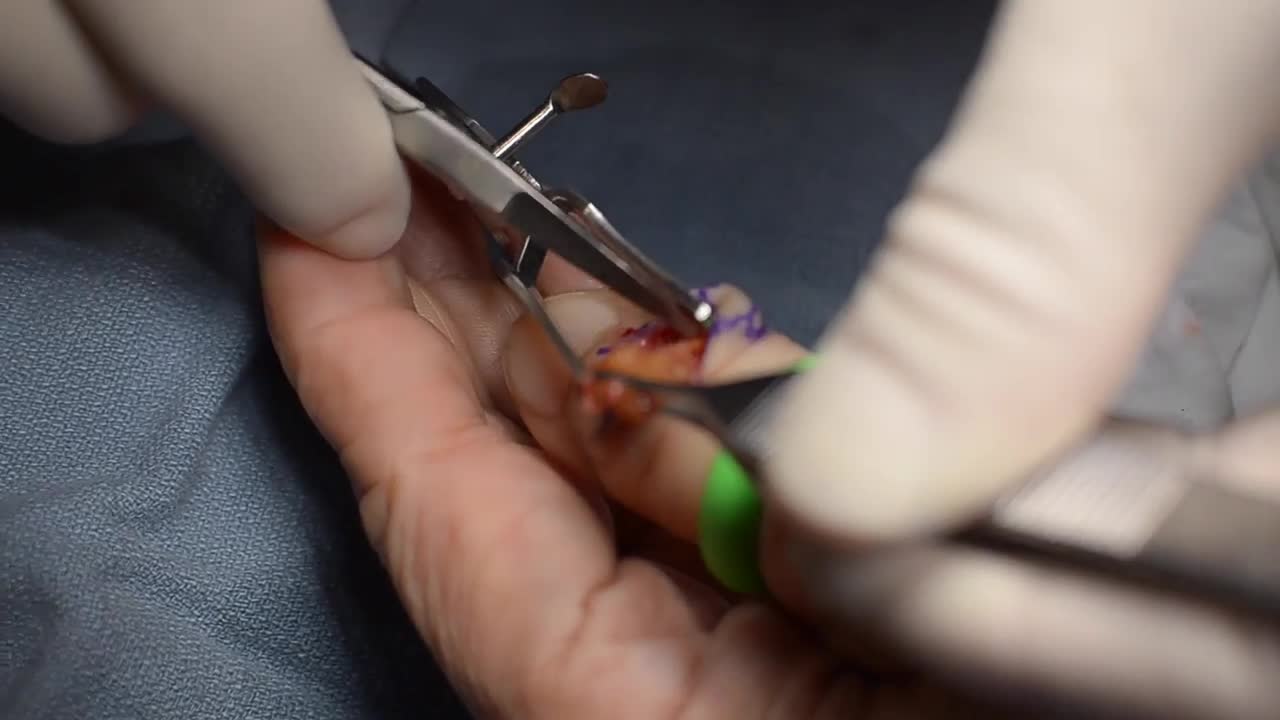
GIANT CELL TUMOR REMOVAL Plastic, Cosmetic and Reconstructive

Trying to survive medical school funny video

Therapeutic anticoagulation is recommended for all women with acute VTE; prophylactic anticoagulation is recommended for women at risk, such as those with a past history of thrombosis or thrombophilia or with a mechanical heart valve. The preferred anticoagulants during pregnancy are the heparin compounds.

A leaking mitral valve allows blood to flow in two directions during the contraction. Some blood flows from the ventricle through the aortic valve – as it should – and some blood flows back into the atrium. A leaking (or regurgitant) aortic valve allows blood to flow in two directions. Oxygen-rich blood either flows out through the aorta to the body – as it should – or it flows backwards from the aorta into the left ventricle when the ventricle relaxes. Leaking valves can cause the heart to work harder to pump the same amount of blood.
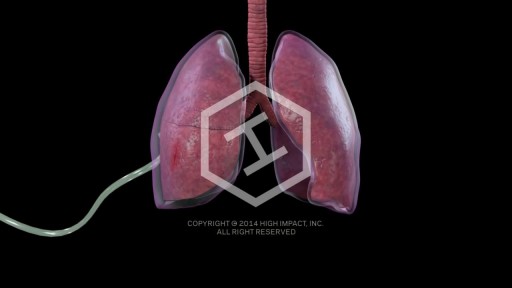
A small spontaneous pneumothorax may resolve without treatment; a pneumothorax arising as a result of lung disease or injury requires immediate treatment. Treatment may include insertion of a chest tube or aspiration of the free air in the chest cavity.
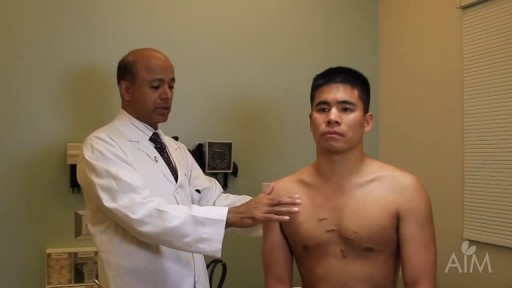
Chronic obstructive pulmonary disease (COPD) is defined as progressive, chronic airflow obstruction due to chronic bronchitis, emphysema, or both. The majority of patients have components of both, although one of these entities will frequently dominate the clinical picture. Emphysema�airspace enlargement distal to the terminal bronchioles due to destruction of alveolar septa. Chronic bronchitis�chronic airway inflammation and bronchospasm. Clinically defined as productive cough lasting for at least 3 mo over 2 consecutive years. Although COPD is irreversible, patients with acute exacerbations do have reversible bronchospastic and inflammatory components.
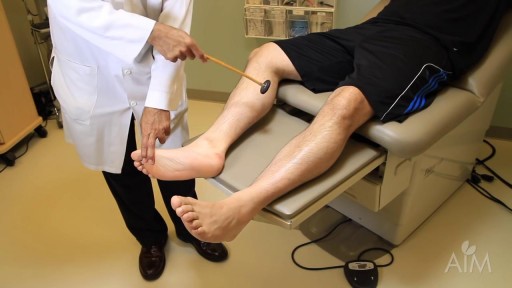
In a normal person, when a muscle tendon is tapped briskly, the muscle immediately contracts due to a two-neuron reflex arc involving the spinal or brainstem segment that innervates the muscle. The afferent neuron whose cell body lies in a dorsal root ganglion innervates the muscle or Golgi tendon organ associated with the muscles; the efferent neuron is an alpha motoneuron in the anterior horn of the cord. The cerebral cortex and a number of brainstem nuclei exert influence over the sensory input of the muscle spindles by means of the gamma motoneurons that are located in the anterior horn; these neurons supply a set of muscle fibers that control the length of the muscle spindle itself.
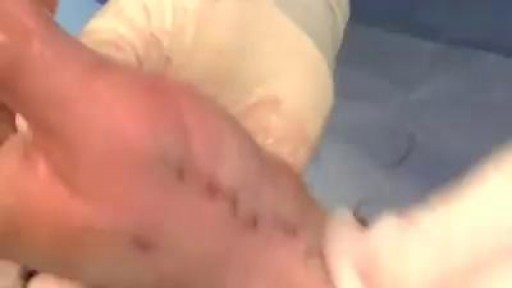
Intraarticular Fracture Base of Thumb Metacarpal Surgery
Patent ductus arteriosus (PDA), in which there is a persistent communication between the descending thoracic aorta and the pulmonary artery that results from failure of normal physiologic closure of the fetal ductus (see image below), is one of the more common congenital heart defects.

Acanthamoeba keratitis is a rare disease in which amoebae invade the cornea of the eye. It may result in permanent visual impairment or blindness.

Many mothers notice engorgement, or over-filled breasts, at some point or the other while they are breast-feeding their baby and it is especially common to experience when your baby is first born and you are just starting to make milk. So for the first couple of days you make colostrum and then 2-5 days later your milk comes in. And sometimes it comes in with a vengeance and all of the sudden you feel really full and it can be painful and very uncomfortable. Normally your milk supply will even out and start to work well with your babys demand, so it is kind of a supply and demand type of function, but until then, if you feel engorgement, there are a few things you can do to relieve it. If you are nursing your baby on demand this will usually help to self-regulate and most young babies want to eat every 2-3 hours and sometimes even every hour. So, basically, the more often your breasts are emptied the more relief you will feel. But on the same hand, the more you nurse the more milk your body will probably produce. This is why it is good to go off of your babys cues because then you will make what your baby needs and hopefully not much more. But if you are making more than your baby needs and you find that you are still full after feedings you will probably have to either manually express some milk or pump it off, so have a good pump available in case you need to, and if you don't, you can manually express the milk by gently massaging from the armpit down towards the nipple. And you can also try using heat prior to nursing your baby or pumping milk off and this will also help to relax things and help you to get the milk out. Take a warm shower and then feed your baby or use a warm compress.
