
- Physical Examination
- Surgical Examination
- Ophthalmology
- Clinical Skills
- Orthopedics
- Surgery Videos
- Laparoscopy
- Pediatrics
- Funny Videos
- Cardiothoracic Surgery
- Nursing Videos
- Plastic Surgery
- Otorhinolaryngology
- Histology and Histopathology
- Neurosurgery
- Dermatology
- Pediatric Surgery
- Urology
- Dentistry
- Oncology and Cancers
- Anatomy Videos
- Health and Fitness
- Radiology
- Anaesthesia
- Physical Therapy
- Pharmacology
- Interventional Radiology
- Cardiology
- Endocrinology
- Gynecology
- Emergency Medicine
- Psychiatry and Psychology
- Childbirth Videos
- General Medical Videos
- Nephrology
- Physiology
- Diet and Food Health
- Diabetes Mellitus
- Neurology
- Women Health
- Osteoporosis
- Gastroenterology
- Pulmonology
- Hematology
- Rheumatology
- Toxicology
- Nuclear Medicine
- Infectious Diseases
- Vascular Disease
- Reproductive Health
- Burns and Wound Healing
- Kidney Zone Podcast
- Other

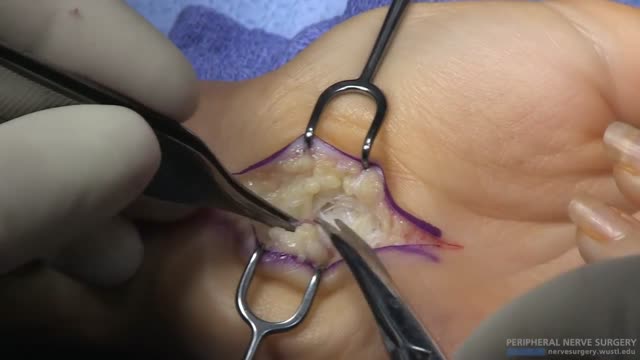
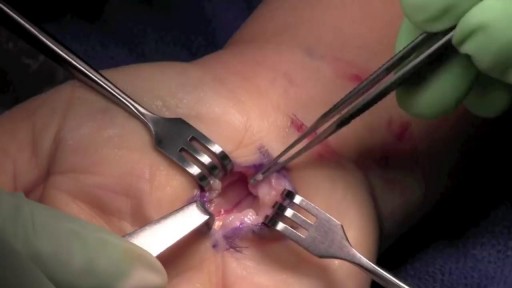
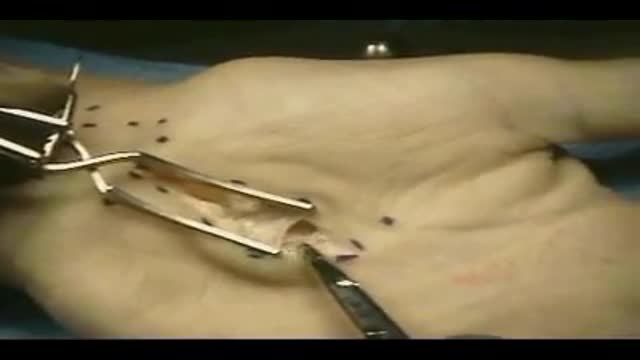
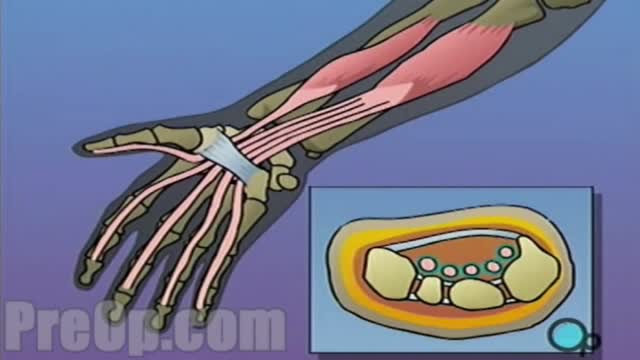
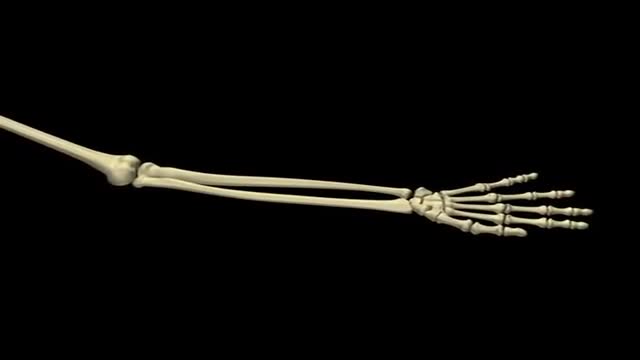
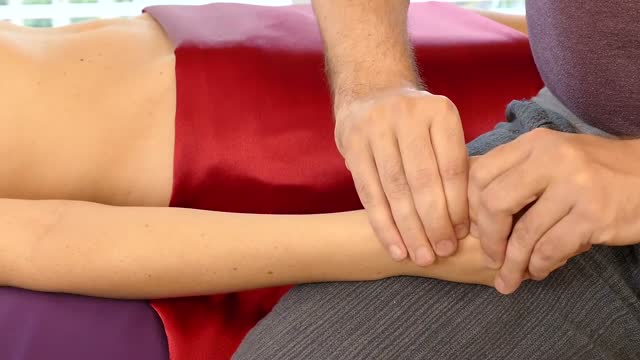
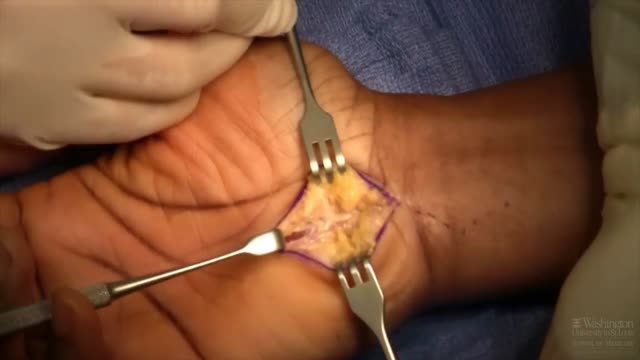
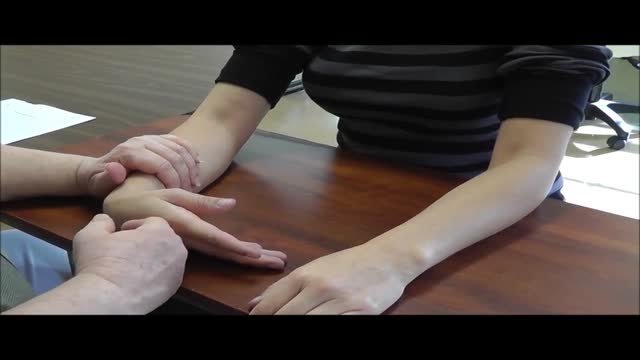

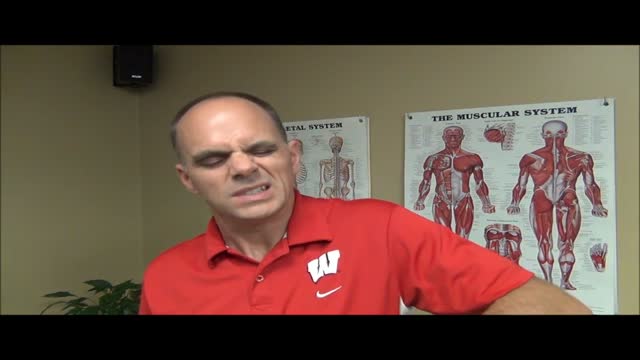
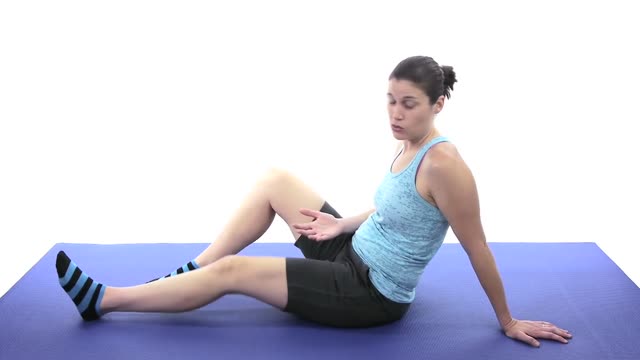
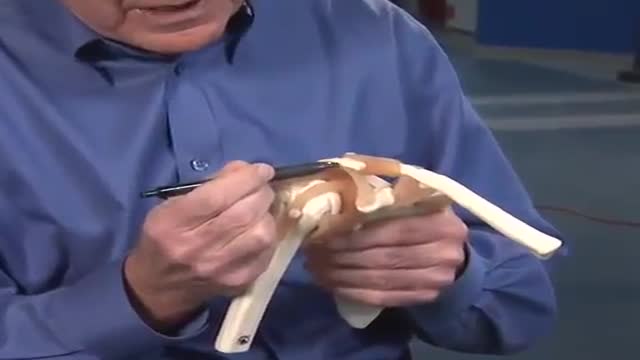
Carpal Tunnel Syndrome exam

Educational only: videos on MedicalVideos.com are for general information and are not medical advice. Always consult your own doctor about your health.
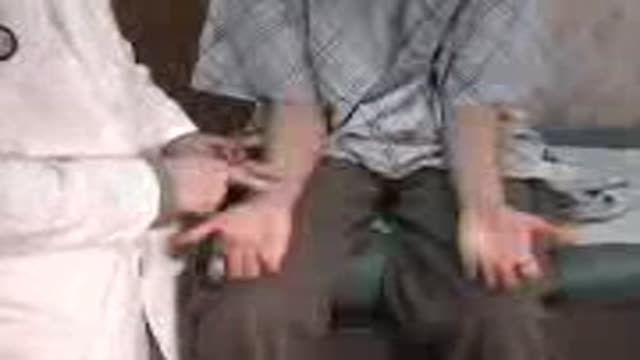
Hold your elbows at shoulder level and place the backs of your hands together with your wrists bent at 90 degrees. This position increases the pressure on the median nerve. If the test reproduces or worsens your symptoms (pain and tingling in your hands), you may have carpal tunnel syndrome.
This video in 30 seconds
A physical-therapy style examination for carpal tunnel syndrome that is openly critical of the standard tests. The examiner argues that Phalen's and Tinel's tests have poor sensitivity and specificity, demonstrates performing them more carefully one hand at a time, and adds sensory comparison between digits and nerves, thenar wasting checks, grip and pinch testing, and Tinel's testing along the median, ulnar and radial nerves in the forearm.
Key points
- The examiner states the classic Phalen's and Tinel's tests are poor in sensitivity and specificity and criticizes the classic two-handed Phalen's position
- A modified Phalen's test is demonstrated one hand at a time, with the client pointing to where symptoms occur
- Sensory comparison is performed between digits and between median and ulnar supplied areas
- Thenar wasting, grip strength and pinch testing are included in the examination
- Tinel's testing is extended to the ulnar and radial nerves and surveyed up the forearm
Chapters
- 0:01 — Critique of standard carpal tunnel tests
- 0:23 — Classic Phalen test demonstrated and criticized
- 1:04 — Modified Phalen test one hand at a time
- 1:35 — Tinel test at the wrist
- 2:01 — Sensory comparison between digits
- 3:25 — Surveying other nerves in forearm
Video Transcript
A physical-therapy style examination for carpal tunnel syndrome that is openly critical of the standard tests. The examiner argues Phalen's and Tinel's tests have poor sensitivity and specificity, demonstrates how to perform them more carefully one hand at a time, and adds sensory comparison between digits and nerves, thenar-wasting checks, and Tinel's testing along the median, ulnar and radial nerves in the forearm.
Read the full transcript
We're going to survey for carpal tunnel symptoms as though we got a referral from our doc asking us to examine for carpal tunnel. What we know now is that the typical tests that we use, the phalance tests and the tunnels at the rest of the median nerve are really quite poor tests. They are not good in terms of sensitivity or specificity. So the classic phalance tests that most of us learned in school and most of the family practice docs still use looks like this. So they will have the client in the office do this and ask if they are experiencing any
symptoms, presumably the numbness and tingling in the radial digits. If they do, then they attribute it to pathology at the rest of the carpal tunnel. As you can see, we've got a lot of stuff going on here. We've got elbows at full flexion. We've got this forward posture here, which will be like a postural positional thoracic outlet. This would be putting quite a bit of pressure on the older nerve. It's really not a good test. So if we're going to do a phalance test, the better way to do it would be with the elbow
almost straight and bring the wrist down. And I usually would do this one hand at a time because I'm not just going to say, do you feel numbness and tingling and have my client tell me yes, no, I'm going to have her use the other hand and just show me where, if at all, she feels any symptoms. So do one at a time. You do the one side and have the client point and show you their feeling symptoms and exactly where they might feel numbness or tingling or any other symptoms.
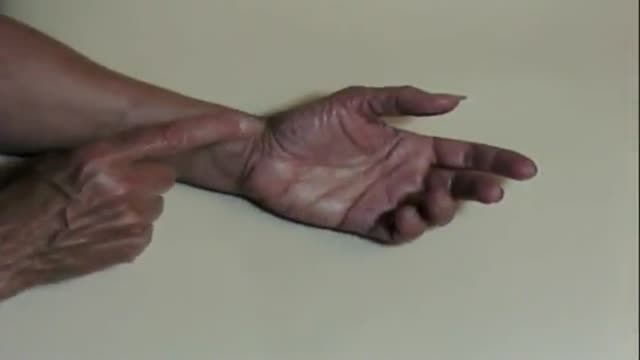
Then we can do our tunnels at the wrist for median nerve. Can also do like an overpressure. One of my docs, orthopedic docs, he liked to put pressure right here in the center and he would hold it for like 20 or 30 seconds and kind of looking for the same thing if we would have any numbness or tingling in the radial three, three and a half digits here. Okay. And I like to do, I call it a simple sensory test. And I'm just going to compare. Now I'm going to use my fingernails and I'm just going to press into the thumb on each side
and then index finger on each side. And then just have the client tell me if they could tell a difference if one side felt dull compared to the other one. And I believe you said this side does feel dull compared to this one. The next thing that I would do is check and see if there's any difference between the median inner, inner vated digits versus the ulnar. So I would do thumb and small finger and then index finger and this ulnar side here of the ring finger and just see if there's a difference between right versus left and then median versus ulnar.
And then finally, you can look, well not final, a couple more things. You look for thinner wasting. I don't really see that very often and really don't remember the last time I saw it. But in really advanced cases of pathology to the median nerve, you might see really flattening or wasting here. And so always a good idea if you're testing for distal nerve compression to do a strength test. Do your dynamometer, your grip strength testing as well as your pinch testing. So now finally, the things I would say do, even though we got a referral for carpal tunnel,
which typically we'd be looking at median nerve, we need to really rule out all the nerve distributions. And so if I'm going to do my tenels at the wrist, I'm not going to just do it for median nerve here in the center. I'm going to do it for ulnar nerve and radial nerve as well. And I'm going to survey those nerves in the forearm. So just a tenels, kind of an inch or so above and below the wrist crease in the middle for median nerve. Can do it over here for ulnar nerve.
And then I'll talk to the thumb here for the sensory branch of the radial nerve. Then I'm going to go on up the forearm. I'm going to kind of rotate the arm and then you kind of feel that gap between the muscles. And so here you're going to have pretty good access to the median nerve here in the forearm. Then you can do ulnar nerve all the way down. That ulnar nerve lies right beneath the flexor corpial nervous all the way down. And then we can, I would usually palpate more for the radial nerve,
but you could do tenels through here as well. And then finally you can do your tenels at the funny bone.
Transcript auto-generated from the video’s audio for accessibility and study. Educational content only — not medical advice.
Video Overview
From our Nephrology collection: Kidney disease, dialysis, transplants and electrolyte disorders explained by kidney specialists. Browse all Nephrology videos →
Medical Videos
Free medical and surgery videos for patients, students and professionals — trusted since 2007.
Founded by Dr. Mohamed Ibrahim, MD, PhD — physician-scientist.
Follow us on Facebook · Instagram
SORT BY-
Top Comments
-
Latest comments