
- Physical Examination
- Surgical Examination
- Ophthalmology
- Clinical Skills
- Orthopedics
- Surgery Videos
- Laparoscopy
- Pediatrics
- Funny Videos
- Cardiothoracic Surgery
- Nursing Videos
- Plastic Surgery
- Otorhinolaryngology
- Histology and Histopathology
- Neurosurgery
- Dermatology
- Pediatric Surgery
- Urology
- Dentistry
- Oncology and Cancers
- Anatomy Videos
- Health and Fitness
- Radiology
- Anaesthesia
- Physical Therapy
- Pharmacology
- Interventional Radiology
- Cardiology
- Endocrinology
- Gynecology
- Emergency Medicine
- Psychiatry and Psychology
- Childbirth Videos
- General Medical Videos
- Nephrology
- Physiology
- Diet and Food Health
- Diabetes Mellitus
- Neurology
- Women Health
- Osteoporosis
- Gastroenterology
- Pulmonology
- Hematology
- Rheumatology
- Toxicology
- Nuclear Medicine
- Infectious Diseases
- Vascular Disease
- Reproductive Health
- Burns and Wound Healing
- Kidney Zone Podcast
- Other




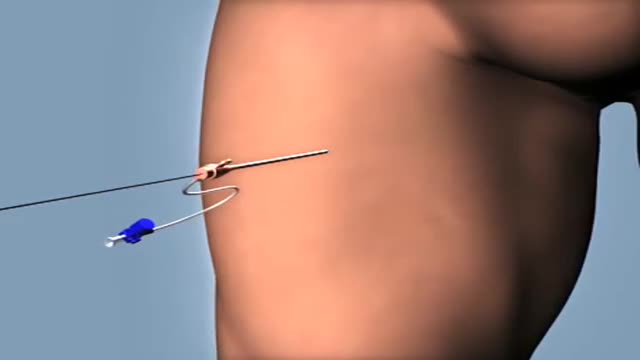




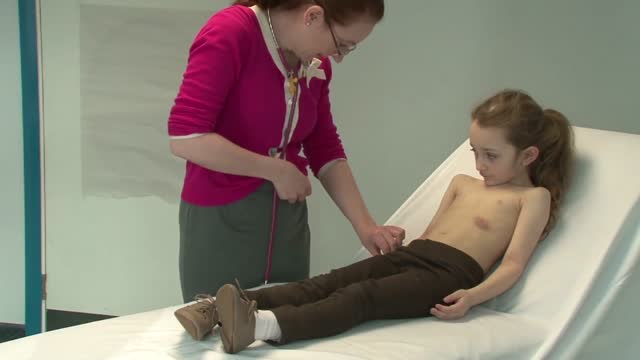











Child: CVS examination

Educational only: videos on MedicalVideos.com are for general information and are not medical advice. Always consult your own doctor about your health.
A cardiovascular examination in a child patient is demonstrated in this pediatrics video, covering pulse, blood pressure, and capillary refill time. These bedside checks are core parts of the pediatric physical assessment. A clinical-skills resource for medical students. Educational only — not medical advice.
This video in 30 seconds
A teaching narration covers cardiovascular examination in children and infants. It describes palpating pulses in all four limbs, using capillary refill as a circulation check, and measuring infant blood pressure with attention to cuff size and the way values change with age.
Key points
- The narration describes palpating radial and inguinal pulses in infants
- Capillary refill of the skin and nail bed is described as a circulation check
- The narration explains that cuff size must be matched to the child arm
- An incorrectly sized cuff is described as giving a misleading blood pressure value
- Blood pressure is described as age-dependent in newborns and children
Chapters
- 0:09 — Palpating pulses in four limbs
- 0:25 — Capillary refill circulation check
- 0:56 — Measuring infant blood pressure
- 1:46 — Blood pressure changes with age
Video Transcript
A teaching narration on cardiovascular examination in children and infants. It covers palpating pulses in all four limbs, capillary refill of two to three seconds as a circulation check, and measuring infant blood pressure — cuff sized to two-thirds of the upper arm, a slow release rate, and average values rising from about 70 over 50 in newborns to 110 over 70 by age ten.
Read the full transcript
The pulse must be measured on all four extremities. Usually the two radial pulses and the two inguinal pulses are palpated. It is very important that an infant's inguinal pulses are palpated during examination. In babies the recapitulation time of the skin tests the adequacy of the peripheral circulation. It is examined by pressing the blood out of the skin with the finger for a few seconds. When the pressure is released, the area should return to its normal rosy pink hue within two to three seconds. The nail bed is also suitable for this test.
Any delay in recapitulation points to a centralized circulation. This can be one of the early signs of infection in young babies. If blood pressure is to be measured according to the classical Riva Rochi method, the size of the cuff must be adapted to the child's arm length. We normally choose a cuff equal to two-thirds of the length of the child's upper arm. The pressure release rate should be slow, about three millimeters per second. Blood pressure values and cuff size are related in the following way. A cuff which is too small will give a value which is too high.
A cuff which is too big shows too low a blood pressure. Measuring the blood pressure of newborn infants and babies is difficult. It's best to use an electro-oscillographic apparatus. Blood pressure is age-dependent. In newborn babies, it averages 70 over 50. It rises in the course of development until at the age of 10, it averages 110 over 70.
Transcript auto-generated from the video’s audio for accessibility and study. Educational content only — not medical advice.
Video Overview
From our Pediatrics collection: Pediatric videos: child health, newborn care, common childhood illnesses and pediatric procedures explained for parents, students and clinicians. Browse all Pediatrics videos →
Medical Videos
Free medical and surgery videos for patients, students and professionals — trusted since 2007.
Founded by Dr. Mohamed Ibrahim, MD, PhD — physician-scientist.
Follow us on Facebook · Instagram
SORT BY-
Top Comments
-
Latest comments