
- Physical Examination
- Surgical Examination
- Ophthalmology
- Clinical Skills
- Orthopedics
- Surgery Videos
- Laparoscopy
- Pediatrics
- Funny Videos
- Cardiothoracic Surgery
- Nursing Videos
- Plastic Surgery
- Otorhinolaryngology
- Histology and Histopathology
- Neurosurgery
- Dermatology
- Pediatric Surgery
- Urology
- Dentistry
- Oncology and Cancers
- Anatomy Videos
- Health and Fitness
- Radiology
- Anaesthesia
- Physical Therapy
- Pharmacology
- Interventional Radiology
- Cardiology
- Endocrinology
- Gynecology
- Emergency Medicine
- Psychiatry and Psychology
- Childbirth Videos
- General Medical Videos
- Nephrology
- Physiology
- Diet and Food Health
- Diabetes Mellitus
- Neurology
- Women Health
- Osteoporosis
- Gastroenterology
- Pulmonology
- Hematology
- Rheumatology
- Toxicology
- Nuclear Medicine
- Infectious Diseases
- Vascular Disease
- Reproductive Health
- Burns and Wound Healing
- Kidney Zone Podcast
- Other












Female Pelvic Floor Part 2

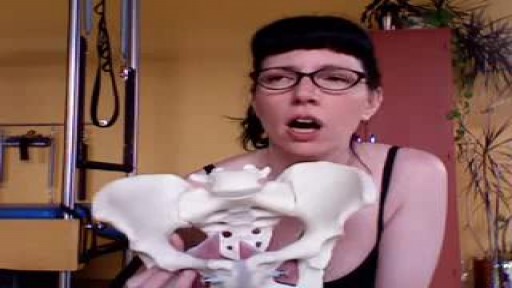
The pelvic diaphragm is composed of muscle fibers of the levator ani, the coccygeus, and associated connective tissue which span the area underneath the pelvis. The pelvic diaphragm is a muscular partition formed by the levatores ani and coccygei, with which may be included the parietal pelvic fascia on their upper and lower aspects. The pelvic floor separates the pelvic cavity above from the perineal region (including perineum) below.
The right and left levator ani lie almost horizontally in the floor of the pelvis, separated by a narrow gap that transmits the urethra, vagina, and anal canal. The levator ani is usually considered in three parts: pubococcygeus, puborectalis, and iliococcygeus. The pubococcygeus, the main part of the levator, runs backward from the body of the pubis toward the coccyx and may be damaged during parturition. Some fibers are inserted into the prostate, urethra, and vagina. The right and left puborectalis unite behind the anorectal junction to form a muscular sling . Some regard them as a part of the sphincter ani externus. The iliococcygeus, the most posterior part of the levator ani, is often poorly developed.
The coccygeus, situated behind the levator ani and frequently tendinous as much as muscular, extends from the ischial spine to the lateral margin of the sacrum and coccyx.
The pelvic cavity of the true pelvis has the pelvic floor as its inferior border (and the pelvic brim as its superior border.) The perineum has the pelvic floor as its superior border.
Some sources do not consider “pelvic floor” and “pelvic diaphragm” to be identical, with the “diaphragm” consisting of only the levator ani and coccygeus, while the “floor” also includes the perineal membrane and deep perineal pouch.
This video in 30 seconds
An anatomy lecture on the pelvic floor is taught with a physical model by a movement and bodywork instructor. She explains the layers of the pelvic diaphragm, its links to posture, the hip muscles and the breathing diaphragm, and presents training the whole system as more important than isolated exercises alone.
Key points
- The instructor uses a model to show pelvic floor layers and support
- Connections to the tailbone, pubic bone and sitting bones are described
- Links between the pelvic floor, hip muscles and core muscles are discussed
- Activation of the deep pelvic floor and transverse muscle is walked through
- The breathing diaphragm is described as working with the pelvic floor
Chapters
- 0:05 — Pelvic floor support system overview
- 1:45 — Pelvic diaphragm model and layers
- 3:59 — Hip muscles and pelvic floor links
- 5:24 — Activating deep pelvic floor
- 6:31 — Other muscles affecting pelvic floor
Video Transcript
An anatomy lecture on the pelvic floor, taught with a physical model by a movement and bodywork instructor. She explains the layers of the pelvic diaphragm, its links to posture, the hip muscles and the breathing diaphragm, and argues that training the whole system matters more than isolated Kegel exercises. The delivery is informal and holistic rather than a surgical lecture.
Read the full transcript
So this is this cross-system of support, right? Very important to know that. There's a lot of, the DOWAS study, they really love the anus. They consider the anus really in five parts. It's very interesting to study the pelvic floorwork. They would say that the center of the anus is one part, the back is one part, each side is one part, and the front is one part. Now, I tend to teach the anus cut in two pieces. That sounds terrible, doesn't it? But the back of the anus has a lot to do with posture and tucking the tail under.
And the front half of the anus through the rest of the pelvic floor is really a... I mean, it's doing posture work too, different kind though, more of a support system. But it's also a real pleasure center. There's spongy material in here, you know, stuff like that. So what I can do is pull up this layer of pelvic floor. And I will say that because I've studied body movement for many years, and I've tried all sorts of pelvic floor engagement to do abdominal work, some of the teachers I've had have told you to tighten the whole vagina.
If you tighten this part of your vagina, and then you try to do abdominal work, you won't be able to breathe and your movement will not be fluid at all, because this is not the system that needs to be engaged to get the deep core center of yourself stabilized. The part that you need to engage for that is this deeper pelvic bowl. You see it sits right inside of there. And this is a grouping of muscles in here, and their job is to lift up the rectum as well as support the body, the insides of the body.
And it, you can see it's got a hole right here in the front so we could birth babies. And that creates a lot of opportunity for prolapse. Men often get abdominal hernias. Men often get vaginal prolapse of one sort or another. So this part of the pelvic floor also has the internal anal sphincter, and this is a more involuntary sphincter, you know? You have to be really careful with this tissue. So you can see the tailbone is connected to that part of the pelvic floor, right? I'm going to put this back on to show you the bony connections of this pelvic floor.
Let's see if I can get it in there. Okay, so we, this is really not being exact. Okay, this is really, I'm going to set this up. To be really general, I could say that the pelvic floor connects to four different bones. The pubic bone, I went to last with the vagina. We're just going to leave it like this. No, we need it back to do this. Okay, let's hope it stays together this time. Okay, so you could kind of say that, like when I teach somebody who's really new to the pelvic floor,
I might say, do you know where your pubic bone is? Do you know where your cips bone is? You can imagine the pelvic floor is connected between those four places. That's really not just it. But you can see, tailbone, cips bone, pubic bone, and all the signs in there. So what do I mean by that's not really it? I mean, that is it, but it's not. Well, you don't see this in here. Where are all the muscles that belong in here? Well, there's the iliacus that lays inside of this hip bone.
It has everything to do with how you pelvic floor moves. For sure. If you haven't had a baby, it might be too tight. If you haven't had a baby, maybe the hips might be flopping out. There's also the iliozoas. It's really that the soas connects to the lower back, the bottom rib of the rib cage through the lower back except for L5 and comes in here and grabs on to the inside of the femur and lifts the leg forward. And it has everything to do with how well your pelvic floor works.
Also, this bowl of the pelvic floor does what we call interdigitating with the transversus of dominance. So if anybody knows anything about Pilates, they're always trying to activate your transverse. That's a corset muscle. I'm a little burnt out on that sort of thing, navel design and all that. But what happens, this is the important part to understand. The transverse is not the queen of everything. But it is absolutely necessary. But what you have to do to get the transverse is get the deep pelvic floor. The deep pelvic floor, this bowl interdigitates,
weaves together with the transverse. And if you can get a lift, an activation of the deep pelvic floor, then what you get is the transverse turns on automatically. So I'm going to go ahead and walk us through that activation. So if you're a girl, and you're sitting here watching this, and you imagine if you make love with a man, if the man is inside of you all the way and the head of his penis is right against your cervix and he's staying still. So you know where your cervix is.
Then imagine that you could just hug the head of him and then lift it up inside of you. So you hug gently and lift. And what you should feel, I'm going to show, if you put your hands right here inside these hip bones and you do that, you should feel a tightening through there. And that's your transverse that's turning on. That's a good deal. When the transverse turns on, you can get the multitude. And if you don't take this with it, then your breathing diaphragm gets to work
and the whole system gets to be trained and supported. Making the front and the back and the spine and the pelvic floor and the breathing diaphragm all helpfully work together. What else applies to the pelvic floor? The obturator internus affects the pelvic floor, the muscle that does that. So that means if your hips are really tight or really loose, that affects your pelvic floor, right? Also your upper inner thigh muscles, the upper adductors, that's the ADDectors, they affect the pelvic floor. Your breathing diaphragm, if it's not working,
affects your pelvic floor. Okay? Everything's interconnected in your body. So if you just say, I'm just going to do kegels that work my pelvic floor that way, the whole system isn't being holistically worked with.
Transcript auto-generated from the video’s audio for accessibility and study. Educational content only — not medical advice.
Video Overview
From our Gynecology collection: Pelvic exams, Pap smears, IUD insertion, hysteroscopy and women's health procedures explained step by step. Browse all Gynecology videos →
SORT BY-
Top Comments
-
Latest comments