
- Physical Examination
- Surgical Examination
- Ophthalmology
- Clinical Skills
- Orthopedics
- Surgery Videos
- Laparoscopy
- Pediatrics
- Funny Videos
- Cardiothoracic Surgery
- Nursing Videos
- Plastic Surgery
- Otorhinolaryngology
- Histology and Histopathology
- Neurosurgery
- Dermatology
- Pediatric Surgery
- Urology
- Dentistry
- Oncology and Cancers
- Anatomy Videos
- Health and Fitness
- Radiology
- Anaesthesia
- Physical Therapy
- Pharmacology
- Interventional Radiology
- Cardiology
- Endocrinology
- Gynecology
- Emergency Medicine
- Psychiatry and Psychology
- Childbirth Videos
- General Medical Videos
- Nephrology
- Physiology
- Diet and Food Health
- Diabetes Mellitus
- Neurology
- Women Health
- Osteoporosis
- Gastroenterology
- Pulmonology
- Hematology
- Rheumatology
- Toxicology
- Nuclear Medicine
- Infectious Diseases
- Vascular Disease
- Reproductive Health
- Burns and Wound Healing
- Kidney Zone Podcast
- Other
Top videos


#tummytucksurgery #tummytuckcost #tummytuckresult #drprashantyadav #dezireclinicindia #cosmeticsurgery #plasticsurgery #weightloss #tummytuck #abdominoplasty
Tummy tuck surgery | Weight Loss
Tummy Tuck Marking before surgery
Tummy Tuck Surgery , Tummy Tuck Surgery Cost, Weight Loss with Tummy tuck surgery, tummy tuck surgery result , tummy tuck cost, Abdominoplasty
📞 Delhi - +91 8956880644 | Pune - +91 9222122122 | Bangalore- 8971224700 | Gurugram - 9272007896 | Ahmedabad - 9711162746
Subscribe to our Channel https://www.youtube.com/dezireclinic
💸Cost: call for free consultation | Zero % interest finance options
Subscribe on YouTube : https://youtube.com/dezireplas....ticsurgerycenter?sub
Subscribe on YouTube https://youtube.com/dezireclin....ic?sub_confirmation=
📸 https://www.instagram.com/drprashantdezireclinic/
🌐 http://dezireclinic.in/
Facebook: https://www.facebook.com/drprashantmch/
Twitter: https://twitter.com/drprashantmch
Email: dezireclinicindia@gmail.com
WHY choose Dezire plastic surgery center?
We are leading cosmetic surgery centre in India leading by Dr Prashant Yadav . See hundreds of various cosmetic surgery and real feedback videos. Watch live surgery to gain confidence before deciding surgery
Dr. Prashant Yadav
M.S., M.Ch. (Plastic & Cosmetic Surgery)
#plasticsurgery #cosmeticsurgery #dezireclinicindia #drprashantyadav #dezireplasticsurgerycenter

This animation shows you how a tummy tuck is performed at Boerhaave Medical Centre. Curious? Watch the video!
Boerhaave Medical Centre sets itself the goal of providing the highest quality care. Quality not just in terms of treatment, but also in terms of our staff and the before and after care given. By providing thorough information and clear advice in advance, carefully supporting our patients through the procedure and caring for them afterwards, we believe this quality is assured.
Although we are one of the largest clinics in the Netherlands and have built up many years of experience, we continuously strive to improve. After all, the Boerhaave Medical Centre intends to remain a pioneer in the healthcare sector, by working in accordance with the latest medical findings and techniques both now and in the future.
We offer the highest standard of plastic surgery in our cosmetic care department. For 365 days a year, you can also come to us for non-surgical treatments, such as injectables, permanent hair removal and gastric balloons.
We have been awarded the ZKN quality mark and are certified to ISO 9001-2008 for giving advice and carrying out plastic surgery, including after care.
Visit our website for more information: https://www.boerhaave.com/all-....treatments/upperbody
Follow us:
Facebook: https://www.facebook.com/boerhaavemc
Google+: https://plus.google.com/+BoerhaaveNl-Kliniek
Pinterest: https://nl.pinterest.com/BoerhaaveMC/
Instagram: https://www.instagram.com/BoerhaaveMC/


► Sign up here and try our FREE content: http://lectur.io/freecontentyt
► If you’re an medical educator or faculty member, visit: http://lectur.io/medytb2u
This video “Epithelium” is part of the Lecturio course “Histology” ► WATCH the complete course on http://lectur.io/epithelium
► LEARN ABOUT:
- Introduction: Epithelial Tissue
- Summary of structure and function
- Epithelium
- Three characteristics of any Epithelium
- Epithelium: Classification
- Epithelium: Epithelial Cells Exhibit Polarity
- Epithelium: How Are Epithelial Cells Joined Together?
- Epithelium: Surfaces of Epithelial Cells
- Epithelium: Basement Membrane
► THE PROF: Your lecturer is Professor Geoff Meyer. He is currently teaching at the School of Anatomy, Physiology and Human Biology at the University of Western Australia (UWA). As a leading anatomy and histology expert he is also coordinating the Federative International Program for Anatomical Terminologies (FIPAT) of the International Federation of Associations of Anatomists (IFAA). Besides medical research on the ovarian function, steroidogenesis, corpus luteum, angiogenesis, and microcirculation, Geoff Meyer’s research activities also focus on developing innovative, computer-aided learning and teaching tools. For his inventiveness, Geoff Meyer has received a number of awards, including the Australian University Teaching Award.
► LECTURIO is your single-point resource for medical school:
Study for your classes, USMLE Step 1, USMLE Step 2, MCAT or MBBS with video lectures by world-class professors, recall & USMLE-style questions and textbook articles. Create your free account now: http://lectur.io/epithelium
► INSTALL our free Lecturio app
iTunes Store: https://app.adjust.com/z21zrf
Play Store: https://app.adjust.com/b01fak
► READ TEXTBOOK ARTICLES related to this video:
Epithelium — Functions and Types of Epithelial Tissue
http://lectur.io/epitheliumarticle
► SUBSCRIBE to our YouTube channel: http://lectur.io/subscribe
► WATCH MORE ON YOUTUBE: http://lectur.io/playlists
► LET’S CONNECT:
• Facebook: https://www.facebook.com/lectu....rio.medical.educatio
• Instagram: https://www.instagram.com/lecturio_medical_videos
• Pinterest: https://www.pinterest.de/lecturiomedical
• LinkedIn: https://www.linkedin.com/company/lecturio-medical/
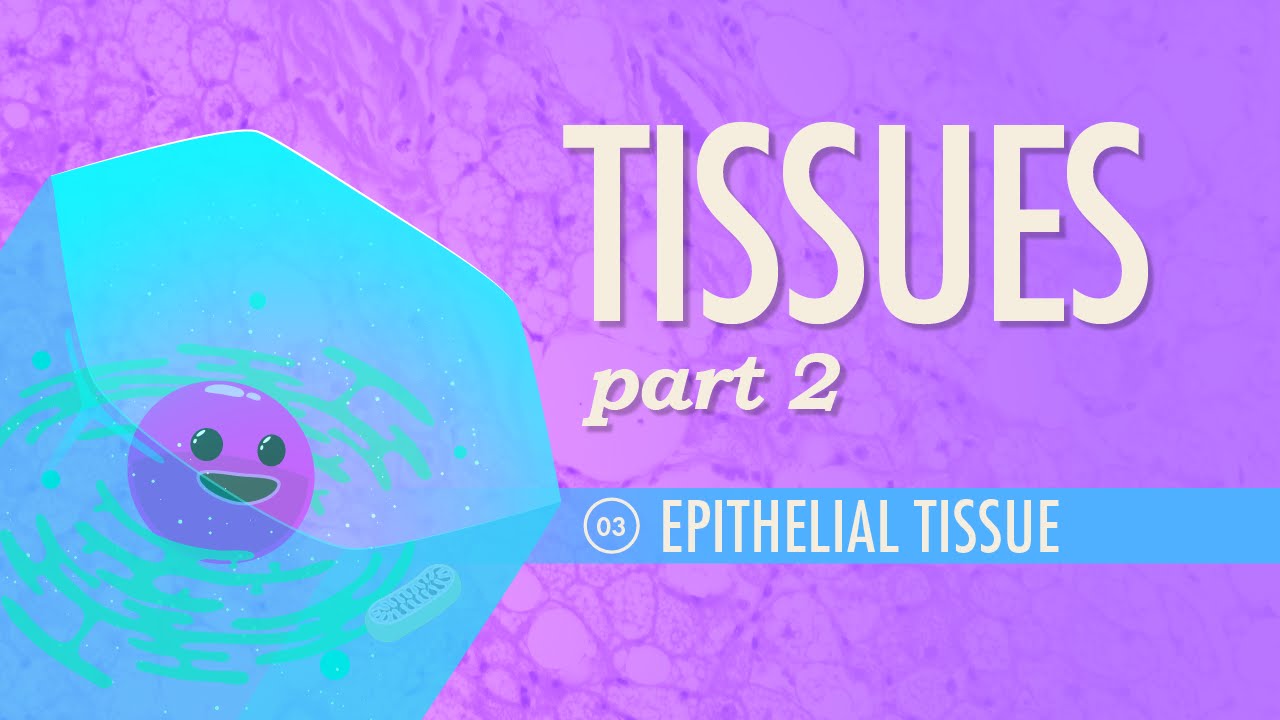
Today on Crash Course Anatomy & Physiology, Hank breaks down the parts and functions of one of your body's unsung heroes: your epithelial tissue.
Pssst... we made flashcards to help you review the content in this episode! Find them on the free Crash Course App!
Download it here for Apple Devices: https://apple.co/3d4eyZo
Download it here for Android Devices: https://bit.ly/2SrDulJ
Chapters:
Introduction 00:00
Proper Epithelium & Glandular Epithelium 1:38
We're All Just Tubes! 2:12
Cell Shapes: Squamous, Cuboidal, or Columnar 3:34
How Form Relates to Function 4:15
Layering: Simple or Stratified 5:26
Epithelial Cells: Apical & Basal Sides 7:06
Glandular Epithelial Tissue Forms Endocrine & Exocrine Glands 8:20
Review 9:16
Credits 9:54
***
Crash Course is on Patreon! You can support us directly by signing up at http://www.patreon.com/crashcourse
Want to find Crash Course elsewhere on the internet?
Facebook - http://www.facebook.com/YouTubeCrashCourse
Twitter - http://www.twitter.com/TheCrashCourse
Instagram - https://www.instagram.com/thecrashcourse/
CC Kids: http://www.youtube.com/crashcoursekids
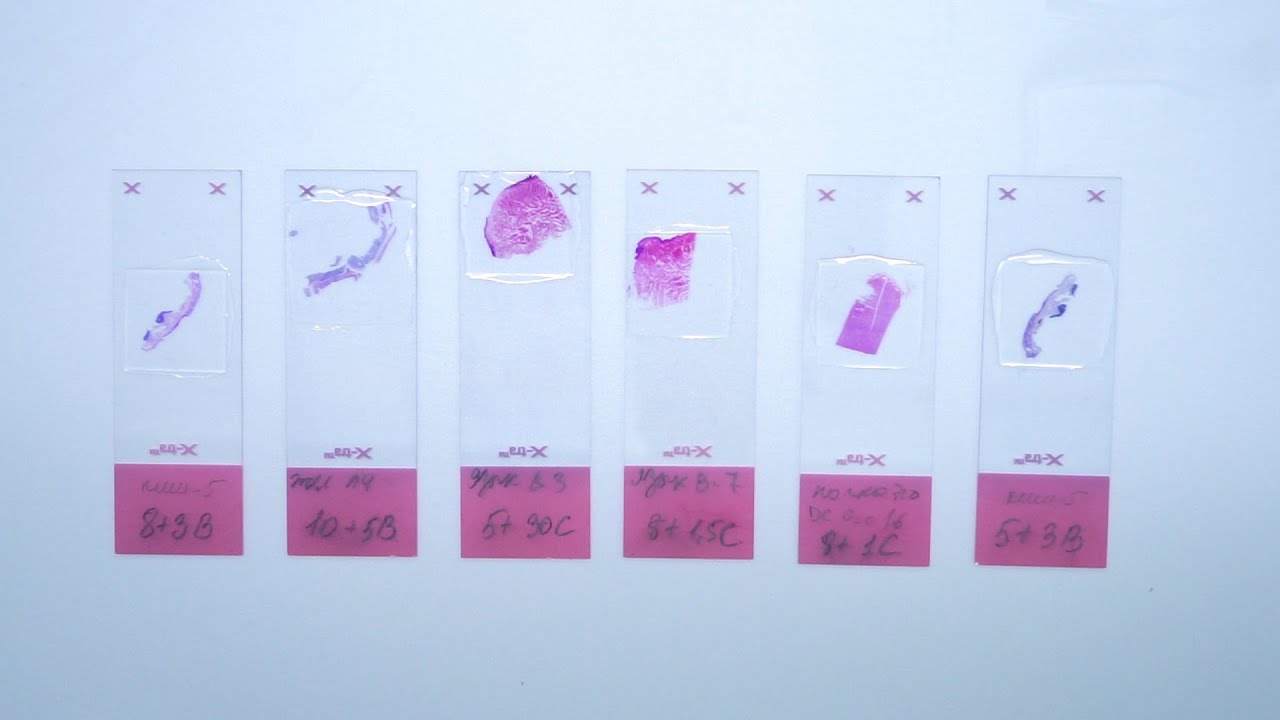
The most popular and one of the principal stains in histology is hematoxylin and eosin stain. It gives us an overview of the tissue and its structure. Hematoxylin binds with basophilic structures – for example DNA and RNA. So we can observe nuclei stained in blue or purple color. Eosin binds to acidophilic substances such as positively charged amino acid side chains. So as the result cytoplasm is pink or orange. All samples in laboratory are stained with H&E. There are several different types of hematoxylins and eosins used in histology which will give us different results.
In this video you will see, how we stain slides with different types of hematoxylins and eosins. Finally, we will compare the results.
• Subscribe to our channel: https://www.youtube.com/c/BioVitrumEN
• Watch other videos about histological process: https://www.youtube.com/playli....st?list=PLw4LQHit0MU
• Our website: http://en.biovitrum.ru/

The dentin is a hard tissue that forms the bulk of the tooth. It is similar to bone but is slightly harder, although softer than enamel. The dentin has numerous dentinal tubules that run across its length. Each dentinal tubule houses the cytoplasmic process of an odontoblast (odontoblastic process).
📄Notes for the video: https://www.hackdentistry.com/....bundles/revision-nin
💻Website: https://www.hackdentistry.com/
📰Blog: https://hackdentistry.substack.com/
Study resources on our website-
📖Oral pathology Revision Ninja (Notes, Videos & MCQs): https://www.hackdentistry.com/bundles/oral-pathology-revision-ninja
📖Oral Histology Revision Ninja (Notes, Videos & MCQs): https://www.hackdentistry.com/....bundles/revision-nin
📖Periodontics Revision Ninja (Notes & MCQs): https://www.hackdentistry.com/bundles/perio-rn
📖Question Bank: https://www.hackdentistry.com/bundles/question-bank
📖Access all content: https://www.hackdentistry.com/bundles/all-access-premium
References and further reading:
💡Berkovitz BKB, Hollan GR, Moxham BJ. Oral Anatomy, Histology and Embryology. 4th ed. Mosby Elsevier; 2009.
💡Nanci A. Tencate’s Oral Histology. Development, Structure and Function. 8th ed. Elsevier; 2013.
💡Kumar GS. Orban’s Oral Histology and Embryology.13th ed. Elsevier; 2011.
💡Avery JK. Oral development and Histology. 3rd ed. Thieme Medical Publishers; 2002.
Log in to https://www.hackdentistry.com and get access to:
I) Numerous Notes/Cheatsheets and Videos II) Thousands of quiz questions from our vast Question Bank!
HackDentistry is an edtech company that aims make learning dentistry fun,engaging and light hearted.
1) It focuses on helping students understand and retain core concepts in dentistry through highly visual sketch/whiteboard style video animations.
2) The platform helps improve exam performance by providing Revision Bundles and allowing students to test themselves using thousands of Practice Questions from a vast Question Bank. (multiple choice format).
3) It also provides for a community platform where students can come together, and engage with fellow dental students and dentists across the globe!
Facebook:
https://www.facebook.com/hackdentistry
Instagram:
https://www.instagram.com/hack.dentistry/
Twitter:
https://twitter.com/hckdentistry
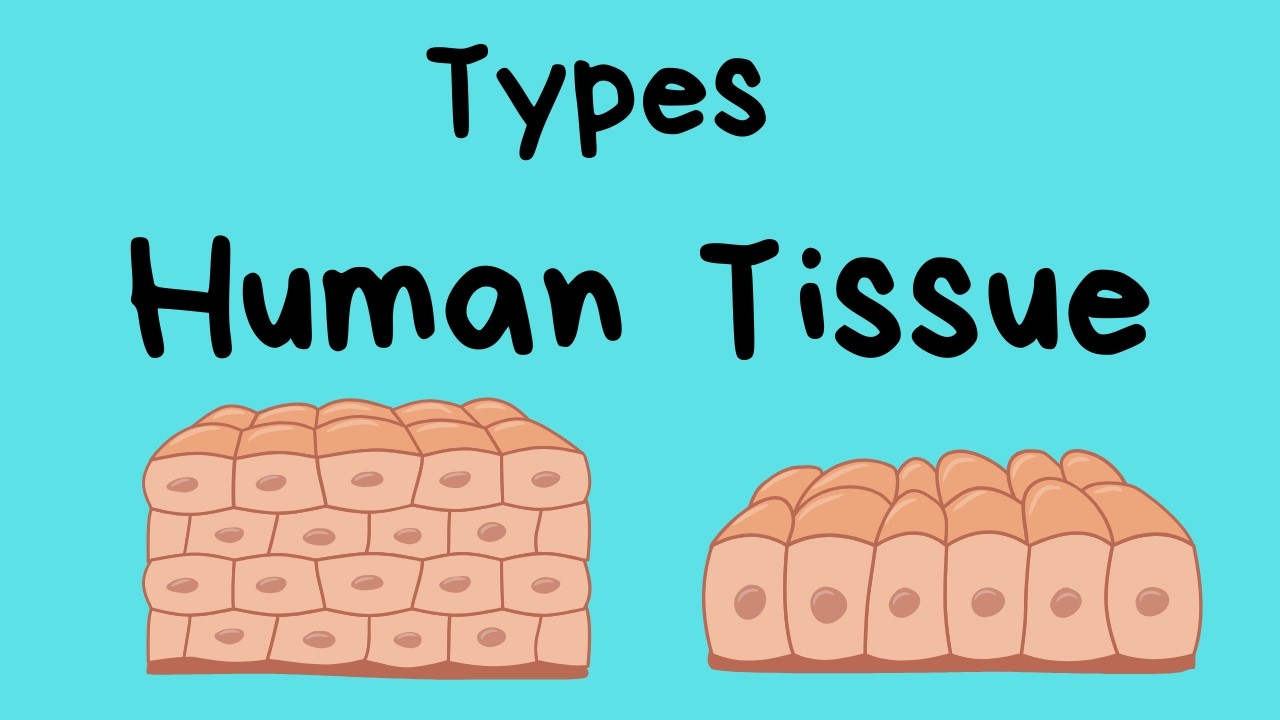
Types of Human Body Tissue
In this video, I review four types of tissue.
Connective tissue, epithelial tissue, muscle tissue, and nerve tissue.
Tissues are made up of cells working together.
*
*
For more Life Science videos and summaries see,
http://www.moomoomath.com/Midd....le-School-Science-an

Brain tumor survivor Robert Alvarez and neurosurgeon Sujit Prabhu, M.D., explain why and how Robert played the guitar during his surgery for a grade II astrocytoma. It was the first time a brain tumor patient played a musical instrument during an awake craniotomy at MD Anderson.
Read Robert Alvarez's story: https://www.mdanderson.org/pub....lications/cancerwise
Learn about awake craniotomy for brain tumors: https://www.mdanderson.org/pub....lications/cancerwise
Request an appointment at MD Anderson by calling 1-877-632-6789 or online at: https://my.mdanderson.org/Requ....estAppointment?cmpid

http://www.highimpact.com - This brain surgery animation was used to demonstrate a young girl's craniotomy, cranioplasty, and reconstructive skull surgery after her vehicle was struck by a tractor-trailer. The procedures included the evacuation of a large epidural hematoma, the draining of the epidural space, and the reassembly of bone fragments to repair the skull.
More Brain Surgery Animations: https://tinyurl.com/y6m4lkdf
WHAT HAPPENED
A teenage girl was riding home with her parents and boyfriend from a Wednesday night church service when a tractor-trailer struck the back driver’s side of their car as they were traveling through an intersection. The impact sent the car spinning into oncoming traffic where it struck another vehicle. When paramedics arrived, the 17-year-old was unresponsive with bleeding from her left ear and a laceration from behind her left ear.
She was rushed to the hospital where she underwent a series of CT scans that showed a severely comminuted open skull fracture with an underlying 1.1 cm subdural hematoma. She was taken to the operating room where an emergency craniotomy was performed to evacuate the hematoma and reassemble the skull fragments. The patient gradually began to wake up and was discharged six days later, after she showed she could maneuver up and down the hallway.
The biggest challenge in a traumatic brain injury case like this - where most of the damages are deeply underlying and undetectable on the surface - is that the only visual evidence is in the form of 2D black-and-white radiographic films. This can look ambiguous to the typical juror because it’s often difficult to discern where these snapshots are located inside the person’s skull. Tony Seaton, Esq., and Robert Bates, Esq., needed to reinforce this 2D radiographic evidence with maximum 3D context.
We equipped them with a custom Diagnostic Slice Chooser: an interactive presentation that presents radiographic slides within a three-dimensional model of the patient’s head. We also designed the model accurately to the patient’s likeness and colorized the films to highlight key areas of damage. The attorneys could show the complete depth and magnitude of his client’s injuries at every level both before and after the surgery. After establishing the full extent of damages, we also created an animation to walk viewers through the surgical experience the patient would undergo as a result of her injuries.
The visual presentation helped jurors understand the destructive impact this collision had on this young teenager’s life, and Mr. Seaton and Mr. Bates, Esq., were able to acquire a $4.5M settlement for his client.
Read the Full Case Study: https://tinyurl.com/yy4v2dyh

This 3D animation of brain surgery, shows how a ventriculostomy is performed, which is a neurosurgical procedure of creating a hole within a cerebral ventricle for drainage. It is most commonly performed on those with hydrocephalus, an abnormal buildup of fluid in the ventricles (cavities) deep within the brain. It's done by surgically penetrating the skull, dura mater, and brain such that the ventricular system ventricle of the brain is accessed.
When catheter drainage is temporary, it is commonly referred to as an external ventricular drain (EVD). When catheter drainage is permanent, it is usually referred to as a shunt.
There are many catheter-based ventricular shunts that are named for where they terminate, for example, a ventriculi-peritoneal shunt terminates in the peritoneal cavity, a ventriculoarterial shunt terminates within the atrium of the heart, etc. The most common entry point on the skull is called Kocher's point. An EVD ventriculostomy is done primarily to monitor the intracranial pressure as well as to drain cerebrospinal fluid (CSF), primarily, or blood to relieve pressure from the central nervous system (CNS).
For more information about custom medical animation, please visit https://www.amerra.com/.
Watch additional medical animations:
Craniectomy brain surgery - 3D animation: https://youtu.be/1RkseDeYS9g
Accessing an implantable port training - 3D animation: https://youtu.be/xSTpxjyv4O4
Open Suctioning with a Tracheostomy Tube - 3D animation: https://youtu.be/wamB7jpWCiQ
Suctioning the endotracheal tube - medical animation: https://youtu.be/pN6-EYoeh3g
Functional endoscopic sinus surgery (FESS) - 3D animation: https://youtu.be/qKTRyowwaLA
How to insert a nasogastric tube for NG intubation - 3d animation: https://youtu.be/Abf3Gd6AaZQ
Oral airway insertion - oropharyngeal airway technique - 3D animation: https://youtu.be/caxUdNwjt34
Nasotracheal suctioning (NTS) - 3D animation: https://youtu.be/979jWMsF62c
Learn about hemorrhoids with #3d #animation: https://youtu.be/R6NqlMpsiiY
LASIK eye surgery - 3D animation: https://youtu.be/Bb8bnjnEM00
CPR cardiopulmonary resuscitation - 3D animation: https://youtu.be/G87knTZnhks
What are warts (HPV)? - 3D animation: https://youtu.be/guJ1J7rRs1w
How Macular Degeneration Affects Your Vision - 3D animation: https://youtu.be/ozZQIZ_52YY
NeoGraft hair transplant procedure – animation: https://youtu.be/C-eTdH2UPXI

A patient at a British hospital played Mahler and Gershwin on the violin while surgeons removed a tumor from her brain, so doctors could preserve her ability to play music.
She left the hospital 3 days later and hopes to return to the symphony soon. https://abcn.ws/2SGY9mp
SUBSCRIBE to ABC NEWS: https://www.youtube.com/ABCNews/
Watch More on http://abcnews.go.com/
LIKE ABC News on FACEBOOK
https://www.facebook.com/abcnews
FOLLOW ABC News on TWITTER:
https://twitter.com/abc
GOOD MORNING AMERICA'S HOMEPAGE:
https://www.goodmorningamerica.com/
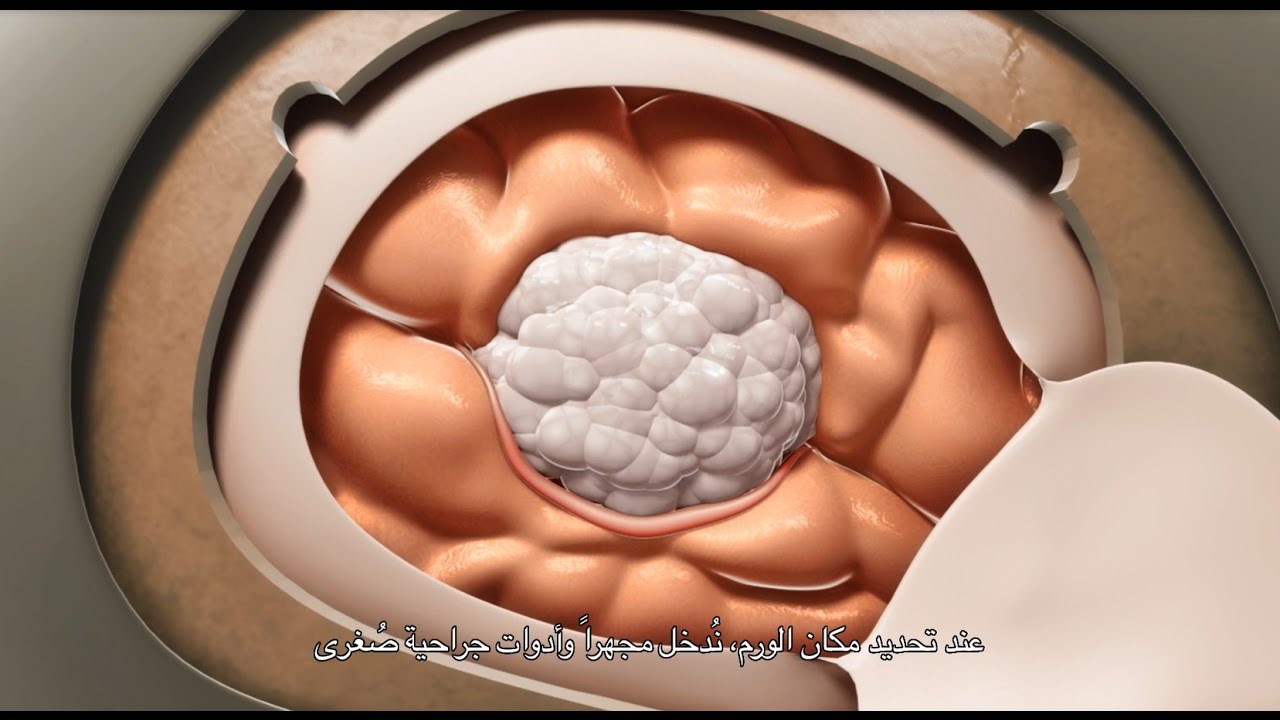
A craniotomy may be performed to treat brain tumors, blood clots, aneurysms, skull fractures, foreign objects, swelling of the brain, stroke or infection.

This innovative minimally invasive technique can remove large tumors located deep in the brain
To learn more, please visit http://brainsurgery.upmc.com

It’s called gamma knife surgery, but there’s no cutting involved.
It’s been used at Mayo Clinic for 30 years as an alternative to open brain surgery.
The patient’s head is held still during the procedure with a headframe, which also serves as a map for the radiation. Using 3D imaging — typically an MRI — as a guide, the gamma knife is targeted directly at the tumor.
And with no hospital stay and minimal side effects, it’s a procedure that is efficient and can be lifesaving.
More health and medical news on the Mayo Clinic News Network. https://newsnetwork.mayoclinic.org/
Journalists: Clean and nat sound versions of this pkg available for download at https://newsnetwork.mayoclinic.org/
Register (free) at https://newsnetwork.mayoclinic.org/request-account/

Patient Greg Grindley communicates with host Bryant Gumbel and his wife for the first time while undergoing deep brain stimulation surgery at University Hospital's Case Medical Center in Cleveland, Ohio.
➡ Subscribe: http://bit.ly/NatGeoSubscribe
About National Geographic:
National Geographic is the world's premium destination for science, exploration, and adventure. Through their world-class scientists, photographers, journalists, and filmmakers, Nat Geo gets you closer to the stories that matter and past the edge of what's possible.
Get More National Geographic:
Official Site: http://bit.ly/NatGeoOfficialSite
Facebook: http://bit.ly/FBNatGeo
Twitter: http://bit.ly/NatGeoTwitter
Instagram: http://bit.ly/NatGeoInsta
Greg's First In-Surgery Conversation | Brain Surgery Live
https://youtu.be/zvqV_2zncNU
National Geographic
https://www.youtube.com/natgeo

Do detox diets really help your kidneys, or are they just another health trend?
Today we’re going to tackle a popular and often misunderstood topic: "The Truth About Detox Diets and Kidney Health." With so many detox plans and cleanses out there promising to rid your body of toxins and improve kidney health, it can be hard to separate fact from fiction. Do detox diets really help your kidneys, or are they just another health trend? In this video, we’ll uncover the truth about detox diets, how your kidneys actually function, and what you can do to support kidney health the right way.
---
The Kidney Zone Podcast with Dr. Mo
Welcome to the Kidney Zone, where we will dive deep into the fascinating world of our body's remarkable filters. Get ready to unlock the secrets of the kidneys and transplantation as we travel through their pathways, uncovering vital tips, insightful knowledge, and practical advice to keep our kidneys healthy. Whether you're a patient with kidney disease, a medical professional, or simply curious about the kidneys, this is the place for you.
_
Follow Along on Social Media:
Facebook: https://www.facebook.com/Dr.Mo.Page
Instagram: https://www.instagram.com/dr.mo.ibrahim/
Twitter: https://twitter.com/drmoibrahim
TikTok: https://www.tiktok.com/@dr.mo.ibrahim
_
Dr. Mo Ibrahim is an assistant professor of kidney transplantation at the University of Maryland, Baltimore. He completed his clinical transplant nephrology fellowship at Washington University in 2022. Originally from Cairo, he pursued a physician/scientist career, conducting research at Duke University from 2012 to 2019. He has authored 70+ journal articles, given a TEDx talk, and holds 5 patents. Currently finishing his PhD at Erasmus University, he drives international collaborations to advance medical technology and improve medical monitoring.
_
DISCLAIMER
The content of this episode is intended for informational purposes only and is not to be considered medical advice. The information presented here is not meant to diagnose, treat, cure, or prevent any disease or medical condition.
Always consult with a qualified healthcare professional or your doctor before making any healthcare decisions or starting any treatment regimen. Individual medical situations can vary, and only a licensed healthcare provider can offer personalized advice tailored to your specific needs.
The creators of this episode are not responsible for any actions taken based on the information provided herein. Any reliance on the content of this episode is at your own risk. If you have any medical concerns or questions, please seek guidance from a medical professional promptly.
Remember that medical knowledge and practices can evolve over time, and new information may become available after the creation of this episode. Therefore, it is essential to stay up-to-date with the latest medical research and consult with your healthcare provider to ensure the best possible care for your health.
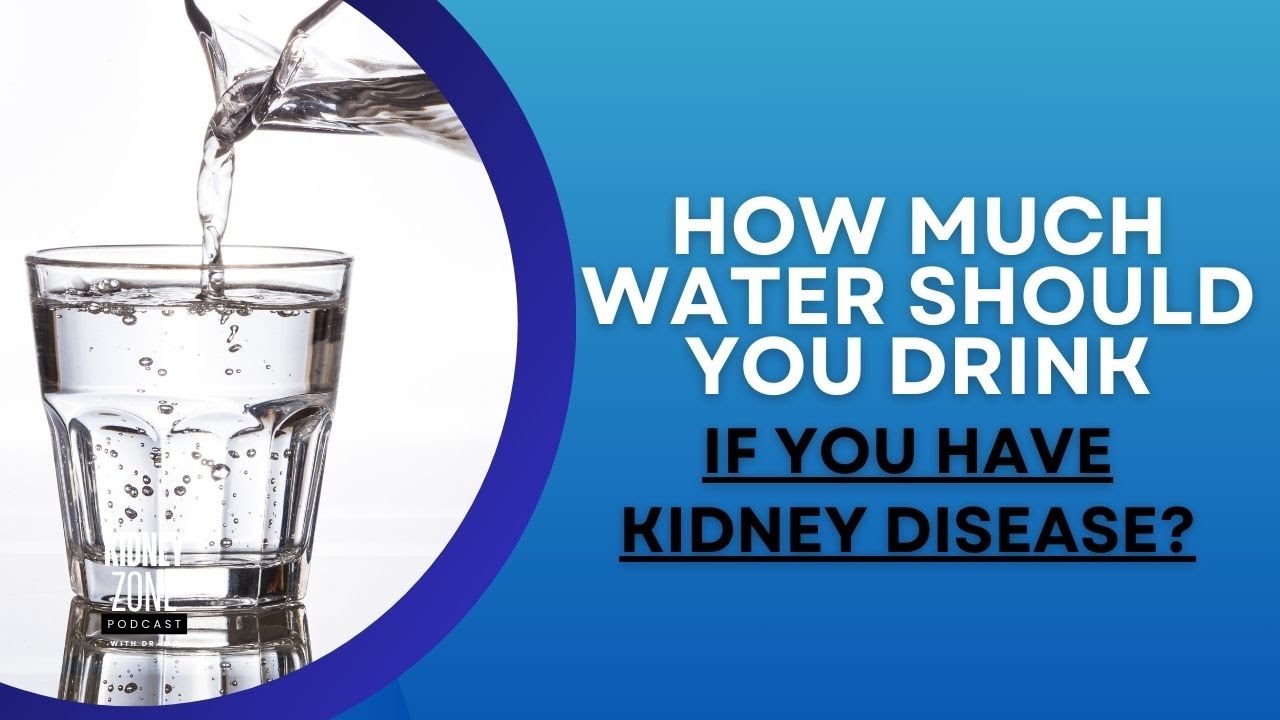
Understanding how much water you should drink is an essential topic for those living with kidney disease. In this episode we'll dive into this important aspect of kidney disease management.
Related and Recommended Episodes:
7 What Foods Can Detox and Repair Your Kidneys?
8 What foods to avoid if you have kidney disease or are on dialysis?T
-
The Kidney Zone Podcast with Dr. Mo
Welcome to the Kidney Zone, where we will dive deep into the fascinating world of our body's remarkable filters. Get ready to unlock the secrets of the kidneys and transplantation as we travel through their pathways, uncovering vital tips, insightful knowledge, and practical advice to keep our kidneys healthy. Whether you're a patient with kidney disease, a medical professional, or simply curious about the kidneys, this is the place for you.
_
Follow Along on Social Media:
Facebook: https://www.facebook.com/Dr.Mo.Page
Instagram: https://www.instagram.com/dr.mo.ibrahim/
Twitter: https://twitter.com/drmoibrahim
TikTok: https://www.tiktok.com/@dr.mo.ibrahim
_
About Dr. Mo Ibrahim
Dr. Mo is an assistant professor of kidney transplantation at the University of Maryland, Baltimore. He completed his clinical transplant nephrology fellowship at Washington University in 2022. Originally from Cairo, he pursued a physician/scientist career, conducting research at Duke University from 2012 to 2019. He has authored 70+ journal articles, given a TEDx talk, and holds 5 patents. Currently finishing his PhD at Erasmus University, he drives international collaborations to advance medical technology and improve medical monitoring.
_
DISCLAIMER
The content of this episode is intended for informational purposes only and is not to be considered medical advice. The information presented here is not meant to diagnose, treat, cure, or prevent any disease or medical condition.
Always consult with a qualified healthcare professional or your doctor before making any healthcare decisions or starting any treatment regimen. Individual medical situations can vary, and only a licensed healthcare provider can offer personalized advice tailored to your specific needs.
The creators of this episode are not responsible for any actions taken based on the information provided herein. Any reliance on the content of this episode is at your own risk. If you have any medical concerns or questions, please seek guidance from a medical professional promptly.
Remember that medical knowledge and practices can evolve over time, and new information may become available after the creation of this episode. Therefore, it is essential to stay up-to-date with the latest medical research and consult with your healthcare provider to ensure the best possible care for your health.

In this episode, we'll explore the fascinating world of kidney transplantation, understanding the factors that influence the number of transplants a person can undergo and the implications for long-term kidney health.
__
The Kidney Zone Podcast with Dr. Mo
Welcome to the Kidney Zone, where we will dive deep into the fascinating world of our body's remarkable filters. Get ready to unlock the secrets of the kidneys and transplantation as we travel through their pathways, uncovering vital tips, insightful knowledge, and practical advice to keep our kidneys healthy. Whether you're a patient with kidney disease, a medical professional, or simply curious about the kidneys, this is the place for you.
_
Follow Along on Social Media:
Facebook: https://www.facebook.com/Dr.Mo.Page
Instagram: https://www.instagram.com/dr.mo.ibrahim/
Twitter: https://twitter.com/drmoibrahim
TikTok: https://www.tiktok.com/@dr.mo.ibrahim
_
Dr. Mo Ibrahim is an assistant professor of kidney transplantation at the University of Maryland, Baltimore. He completed his clinical transplant nephrology fellowship at Washington University in 2022. Originally from Cairo, he pursued a physician/scientist career, conducting research at Duke University from 2012 to 2019. He has authored 70+ journal articles, given a TEDx talk, and holds 5 patents. Currently finishing his PhD at Erasmus University, he drives international collaborations to advance medical technology and improve medical monitoring.
_
DISCLAIMER
The content of this episode is intended for informational purposes only and is not to be considered medical advice. The information presented here is not meant to diagnose, treat, cure, or prevent any disease or medical condition.
Always consult with a qualified healthcare professional or your doctor before making any healthcare decisions or starting any treatment regimen. Individual medical situations can vary, and only a licensed healthcare provider can offer personalized advice tailored to your specific needs.
The creators of this episode are not responsible for any actions taken based on the information provided herein. Any reliance on the content of this episode is at your own risk. If you have any medical concerns or questions, please seek guidance from a medical professional promptly.
Remember that medical knowledge and practices can evolve over time, and new information may become available after the creation of this episode. Therefore, it is essential to stay up-to-date with the latest medical research and consult with your healthcare provider to ensure the best possible care for your health.

Today, we embark on an intriguing journey into the world of kidney health, specifically delving into the technology that plays a pivotal role in dialysis treatments. We'll explore the fascinating realm of dialysis machines and technology, understanding how these advancements enhance the treatment process for individuals with kidney failure.
_
The Kidney Zone Podcast with Dr. Mo
Welcome to the Kidney Zone, where we will dive deep into the fascinating world of our body's remarkable filters. Get ready to unlock the secrets of the kidneys and transplantation as we travel through their pathways, uncovering vital tips, insightful knowledge, and practical advice to keep our kidneys healthy. Whether you're a patient with kidney disease, a medical professional, or simply curious about the kidneys, this is the place for you.
_
Follow Along on Social Media:
Facebook: https://www.facebook.com/Dr.Mo.Page
Instagram: https://www.instagram.com/dr.mo.ibrahim/
Twitter: https://twitter.com/drmoibrahim
TikTok: https://www.tiktok.com/@dr.mo.ibrahim
_
Dr. Mo Ibrahim is an assistant professor of kidney transplantation at the University of Maryland, Baltimore. He completed his clinical transplant nephrology fellowship at Washington University in 2022. Originally from Cairo, he pursued a physician/scientist career, conducting research at Duke University from 2012 to 2019. He has authored 70+ journal articles, given a TEDx talk, and holds 5 patents. Currently finishing his PhD at Erasmus University, he drives international collaborations to advance medical technology and improve medical monitoring.
_
DISCLAIMER
The content of this episode is intended for informational purposes only and is not to be considered medical advice. The information presented here is not meant to diagnose, treat, cure, or prevent any disease or medical condition.
Always consult with a qualified healthcare professional or your doctor before making any healthcare decisions or starting any treatment regimen. Individual medical situations can vary, and only a licensed healthcare provider can offer personalized advice tailored to your specific needs.
The creators of this episode are not responsible for any actions taken based on the information provided herein. Any reliance on the content of this episode is at your own risk. If you have any medical concerns or questions, please seek guidance from a medical professional promptly.
Remember that medical knowledge and practices can evolve over time, and new information may become available after the creation of this episode. Therefore, it is essential to stay up-to-date with the latest medical research and consult with your healthcare provider to ensure the best possible care for your health.