
- Physical Examination
- Surgical Examination
- Ophthalmology
- Clinical Skills
- Orthopedics
- Surgery Videos
- Laparoscopy
- Pediatrics
- Funny Videos
- Cardiothoracic Surgery
- Nursing Videos
- Plastic Surgery
- Otorhinolaryngology
- Histology and Histopathology
- Neurosurgery
- Dermatology
- Pediatric Surgery
- Urology
- Dentistry
- Oncology and Cancers
- Anatomy Videos
- Health and Fitness
- Radiology
- Anaesthesia
- Physical Therapy
- Pharmacology
- Interventional Radiology
- Cardiology
- Endocrinology
- Gynecology
- Emergency Medicine
- Psychiatry and Psychology
- Childbirth Videos
- General Medical Videos
- Nephrology
- Physiology
- Diet and Food Health
- Diabetes Mellitus
- Neurology
- Women Health
- Osteoporosis
- Gastroenterology
- Pulmonology
- Hematology
- Rheumatology
- Toxicology
- Nuclear Medicine
- Infectious Diseases
- Vascular Disease
- Reproductive Health
- Burns and Wound Healing
- Other
Top videos


Mohs surgery is a procedure used to remove skin cancers (most commonly basal and squamous cell carcinoma and melanoma) in a way that preserves a maximum amount of healthy tissue. It is useful for skin cancers when:
(1) the location of the cancer is near sensitive areas, like the fingers or face;
(2) earlier treatments have not worked;
(3) a skin cancer is large; and
(4) regular surgery is less likely to remove the cancer.
This procedure video illustrates the procedure on 2 patients with basal cell carcinoma. Click https://ja.ma/3b4scuY to learn more.
0:00 Disclaimer
0:07 Introduction
0:28 What this video will cover
0:43 Mohs "stage" steps
1:09 Marking surgical sites
1:27 Stage 1: skin layer resection (patient 1)
1:59 Maintaining skin layer orientation
2:55 Stage 1: processing layer onto slides (patient 1)
3:53 Stage 1: histology review for cancer (patient 1)
4:31 Discussion on wound closure
5:10 Wound closure (patient 1)
5:47 Stage 1: histology review for cancer (patient 2)
6:24 Stage 2: skin layer resection (patient 2)
6:38 Stage 2: histology review for cancer (patient 2)
6:56 Stage 3: skin layer resection (patient 2)
7:07 Stage 3: histology review for cancer (patient 2)
7:20 Wound closure (patient 2)
7:57 1-week follow-up before-and-after wound healing

Dr. Matthew Slater talks about why cardiac surgery may be necessary if medications aren't an effective treatment option.

Runners Knee Overview:
Welcome to our Patello-Femoral Rehab video. The goal of this video is to minimize pain around the kneecap and maximize recovery. This video should not be used as a substitute for regular physical therapy visits and guidance from your physician
Visit http://www.matthewboesmd.com/p....atello-femoral-rehab for more information

Dr. Carlos Benitez guides us through ultrasound images of the knee and how to identify knee injuries.

Laser-assisted in situ keratomileusis (LASIK) eye surgery can correct or improve your sight by using a laser to change the shape of the cornea. Find out more here: https://www.bupa.co.uk/health-....information/eyes-sig and https://www.bupa.co.uk/health-....information/eyes-sig/laser-eye-surgery
The content is intended for general information only and does not replace the need for personal advice from a qualified health professional.

Marcus Greatens, M.D., an orthopedic surgeon at Mayo Clinic Health System provides insight into a few of the things patients can expect to experience during knee replacement surgery.
LIKE, SUBSCRIBE & HIT THE 🔔 http://bit.ly/2VW2yV1
Mayo Clinic Health System offers outstanding care close to home. Part of Mayo Clinic, we meet most of your health care needs locally.
#mayoclinichealthcare #mayoclinicexperience #mayoclinichealthsystem #mayoclinic
Follow Mayo Clinic Health System on
Facebook:
http://bit.ly/2VXSYRv
On Instagram at:
http://bit.ly/30obB03
And also on Twitter:
http://bit.ly/2JgsHI5
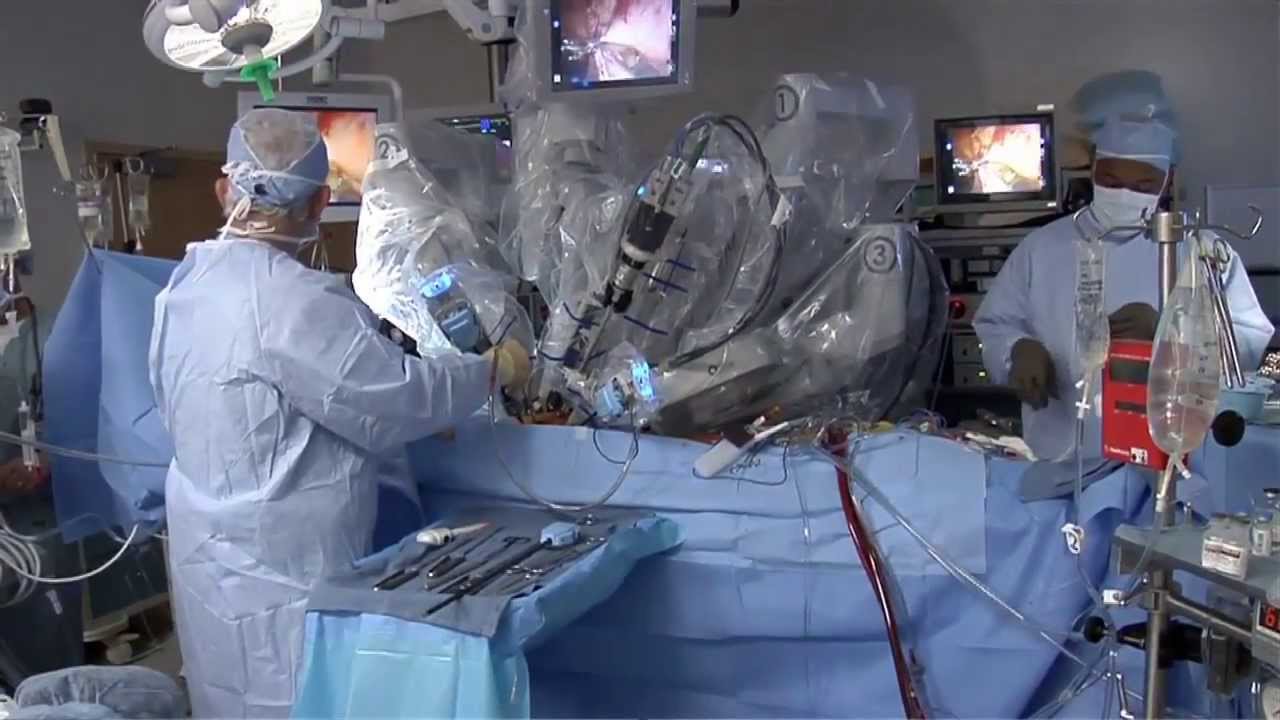
They are the leaders of the pack when it comes to minimally invasive surgeries. Laparoscopic and robotic. Different techniques with the same benefits.
"There's significantly less blood loss, it's a quicker procedure, quicker recovery, less scarring, less chance for post operative wound complications or infections," says Dr. Darren Miter, laparoscopic surgeon with Lee Memorial Health System.
In a laparoscopic procedure surgeons operate through a series of poke holes, manually inserting thin cutting tools and a camera to provide magnified vision. It's used in a variety of surgical specialties.
"The vast majority of gallbladder surgeries are performed laparoscopically. A single incision in the belly button, one up under the breastbone and either one or two in the right upper side of the belly. Using long skinny instruments and looking up at a TV monitor, remove the gallbladder that way," says Dr. Miter.
While laparoscopic is a hands-on approach, robotic procedures are surgeon-controlled. Working at a console, surgeons direct the robotic arms, which have super-human capabilities and 3D, hi def vision.
"I mean you have to see it to believe it, that's a great tool to have. You got a very good depth perception. Plus the other thing when you're working with your hands it's more intuitive," says Dr. Nagesh Ravipati, colorectal surgeon with Lee Memorial Health System.
The robotic system performs maneuvers the human hand can't.
"Especially if you have to do any suturing, it is so much simpler with the robots because you can just turn around 360 degrees," says Dr. Ravipati.
Robotic surgery is gaining momentum in precise procedures, including the field of cancer.
"The robot is good when you're going to operate on just one field. For rectal surgery you're in one place, it's docked. It gives you the best 3 dimensional vision," says Dr. Ravipati.
Robotic and laparoscopic. Both cutting edge options, with less cutting.
View More Health Matters video segments at leememorial.org/healthmatters/
Lee Memorial Health System in Fort Myers, FL is the largest network of medical care facilities in Southwest Florida and is highly respected for its expertise, innovation and quality of care. For nearly a century, we've been providing our community with everything from primary care treatment to highly specialized care services and robotic assisted surgeries.
Visit leememorial.org

TUMMY TUCK 🤩 Immediate OR Results
This patient wanted to get her abs back, but unfortunately NO diet or workout can tighten muscles that have been stretched apart from carrying a baby 👀 But we can fix that at Lemmon Avenue Plastic Surgery & Laser Center!
To learn more about the #tummytuck click here: https://drdeuber.com/procedures/tummy-tuck/
For #mommymakeover, click here: https://drdeuber.com/procedures/mommy-makeover/
👙
#MarkDeuberMD

An estimated 20 million LASIK procedures have been performed since 1998. The FDA website is filled with stories of complications, including pain, dizziness and detached retinas. CBS2's Chris Wragge reports.

Mitra Nejad, MD
Associate Physician Diplomate
UCLA Stein Eye Institute, Cataract and Refractive Surgery Division

1. What is hemodialysis?
2. Why do you do hemodialysis?
3. How does hemodialysis remove body waste?
4. What are the symptoms and side effects of hemodialysis?
5. How should I eat food when I do hemodialysis?
6. What are some precautions for patients during hemodialysis?
► If you have any health issues contact us anytime, we here to help at CloudHospital – https://icloudhospital.com/
► Subscribe: https://www.youtube.com/channel/UCmk5... to learn more about various health and beauty topics.
► Find us on Facebook: https://www.facebook.com/icloudhospital/
► On Instagram: https://www.instagram.com/cloudhospit...
► On LinkedIn: https://www.linkedin.com/company/clou...
► On Twitter: https://twitter.com/CloudhospitalI
#hemodialysis #cloudhospital #koreahospital

Common causes of the knee pain
Knee pain is very common and in this video we will present the most common problems that can cause pain in the knee. (Patella) itself, which is in front of the knee, or from the tendons that are attached to the kneecap (patellar tendon and quadricep tendon). One of the most common problems is patellar chondromalacia which is chronic pain due to the softening of the cartilage beneath the kneecap. The cartilage of the kneecap will have some erosions, defects, or holes from mild to complete inside the joint (exactly in the back of the kneecap).
• Pain in the front of the knee
• Occurs more in young people
• Becomes worse from climbing up stairs and going downstairs
Treatment is usually nonsteroidal anti-inflammatory medication, physical therapy, and surgery is very rare. Also in front of the kneecap, the patient may get pain due to prepatellar bursitis.
When there is prepatellar bursitis, the patient will see that the swelling, the inflammation, and the pain is located over the front of the kneecap. The bursa becomes inflamed and fills with fluid at the top of the knee, causing pain, swelling, tenderness and a lump in that area on top of the kneecap. If the pain is in front of the knee but below or above the patella, this may indicate that the patient has tendonitis. Patellar tendonitis is an overuse condition that often occurs in athletes who perform repetitive jumping activities. Patellar tendonitis is a knee pain that is associated with focal patellar tendon tenderness and it is usually activity related. It is located below the kneecap and is called "jumper's knee". Patellar tendonitis affects approximately 20% of jumping athletes. There will be tenderness to palpation at the distal pole of the patella in extension and not in flexion. Quadriceps inflexibility, atrophy and hamstring tightness are predisposing factors for this condition. Treatment is rest, anti-inflammatory medication, stretching and strengthening of the hamstrings and quadriceps. Use an eccentric exercise program. The early stages of patellar tendonitis will respond well to nonoperative treatment. Another important cause of knee pain is a meniscal tear. The meniscus is the cushion that protects the cartilage in the knee. Injury will cause pain on the medial or the lateral side of the knee exactly at the level of the joint. The patient will complain of a history of locking, instability and swelling of the knee. McMurray test will be positive. A painful pop or click is obtained as the knee is brought from flexion to extension with either internal or external rotation of the knee. Arthritis of the knee Knee arthritis is very common. The cartilage cells die with age and its repair response decreases in the joint collapses with increased breakdown of the framework of the cartilage. The patient will have progressive blurring away of the cartilage of the joint with decreased joint space as seen on x-rays. Another source of pain is the Baker's cyst. The cyst is in the back of the knee between the semimembranosus yes and the medial gastrocnemius muscles. Another important source of knee pain is a ligament injury. Here is a normal knee without a ligament injury. Here you can see from the front, you can see the lateral and medial collateral ligament. You can see the ACL and PCL from the side view. These ligaments are usually injured as a result of a sports activity. Here is an example of a sports knee injury. Here is an example of the medial collateral ligament injury. This is the most commonly injury knee ligament injury to this ligament is on the inner part of the knee. Here is an example of an injury of the anterior cruciate ligament. It involves a valgus stress to the knee. Lachman test is usually positive, and MRI is diagnostic. Another important cause of knee pain is iliotibial band syndrome of the knee. Inflammation of the thickening of the iliotibial band results from excessive friction as the iliotibial band slides over the lateral femoral condyle. The iliotibial band is a thick band of fascia that extends along the lateral thigh from the iliac crest to the knee. And as the knee moves, the IT band was repeatedly shifted forwards and backwards across the lateral femoral condyle. The patient will complain of swelling, tenderness, and crepitus over the lateral femoral condyle. The condition occurs in the ITB S occurs in runners, cyclist and athletes that require repeated knee flexion and extension. The pain may be reproduced by doing a single-leg squat. The Ober's test is used to at assess tightness of the iliotibial band. MRI may show edema in the area of the ITB. Treatment is usually nonoperative with rest and ice, physical therapy, with stretching, proprioception, and improvement in neuromuscular coordination. Training modification and injections may be helpful. Surgery is a last resort. Surgical excision of the scarred inflamed part of the iliotibial band.

360 tour videos are the latest video marketing trend all industries can be taking advantage of! VR and 360 medical videos, like this one, provide patients with a full understanding of the service. Whether you need a medical VR training video and a VR surgery video or medical videos for students to learn, these healthcare and medical videos will instill trust in your company and services.
Get a quote for your project here: https://epicproductionsllc.com/video-production/
Don't forget to follow us...
Like us on Facebook: https://www.facebook.com/epicproductionsllc/
Follow us on Twitter: https://twitter.com/epicprodllc
Connect with us on LinkedIn: https://www.linkedin.com/compa....ny/epic-productions-
Follow us on Instagram: https://www.instagram.com/epicproductionsllc/


Common Medicines For General Medical Practice / Medicine Name and Uses
This Video Is For Medical Students,
In This Video We Are Talking About Most Commonly Used Medicine,
If You Like The Video, Be Sure To Subscribe To The Channel
More videos links.
How To Give Injection in Cannula Easily at Home
https://youtu.be/_KcpmGpE-dM
IV Drip Procedures in Hindi || IV Fluid Management
https://youtu.be/uz0Mecd4_3U
47 Basic Orthopedic Instruments Name And uses
https://youtu.be/i8i_B5XpmqQ
Common Medical Terms
https://youtu.be/2FsH61ZYTFE
Iv cannula,IV Cannula Colour Size external diameter and flow rate https://youtu.be/ijMlJ1KOgcU
38 Obstretice & Gynecology Instruments With Names And Their Uses https://youtu.be/xkx6wIFqmP0
C- Section All Instruments With Names And Uses
https://youtu.be/dwo2fXhKhW8
Appendectomy All Instruments With Names And Uses
https://youtu.be/B-J-0MQ4jZk
41 Basic Hospital Equipment with names and uses
https://youtu.be/U8tKeMLl5p4
42 Surgical instruments With Names And Uses
https://youtu.be/U8tKeMLl5p4
Abdominal surgery instruments With Names And Uses
https://youtu.be/sw__xDN0CQc
37 Basic Medical Equipments With Names And Uses
https://youtu.be/sw__xDN0CQ
________________________________________
#medicine
#medicines
#medicineinformation
#emergencyin
#emergency
#injection
#injection_video
#medical
#medicalstudent
#nursing
#nursingexam
#mbbs
#doctor
#doctors
#medicalstudentsmotivationvideo

To learn more about licensing this video for content marketing or patient education purposes, visit: http://www.nucleushealth.com/?utm_source=youtube&utm_medium=video-description&utm_campaign=hiv-112513
This video, created by Nucleus Medical Media, shows the function of white blood cells in normal immunity. It also portrays how the human immunodeficiency virus (HIV) affects the immune system and causes acquired immunodeficiency syndrome (AIDS). Common types of antiretroviral medications used to treat HIV and AIDS are also shown.
#HIV #AIDS #HumanImmunodeficiencyVirus
ANH13111
One man is speaking out about the potential risks of laser eye surgery, after he says the procedure left his vision permanently impaired.
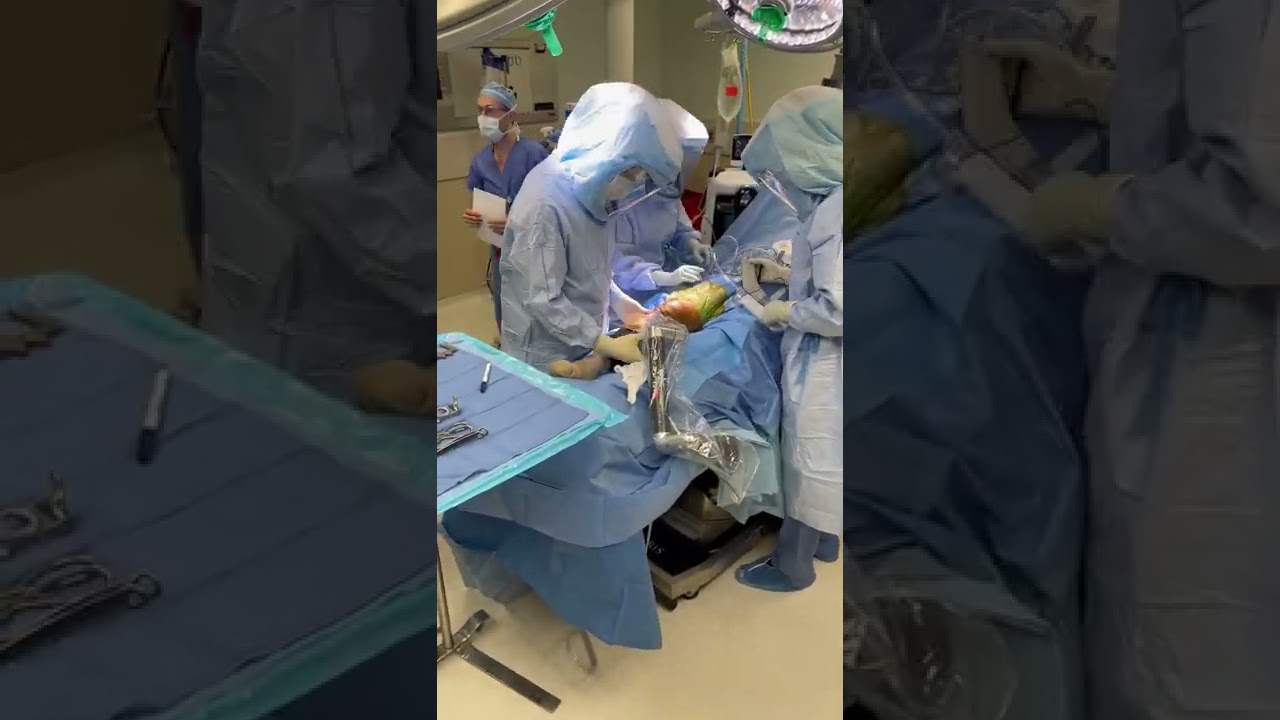
#surgical #arthritis #surgery #medical #ortho #health #orthopaedic #medicine #ortopedia #medstudent #physicaltherapy #medschool #medicalstudent #medlife #sports
✍️Dr. Matthew Harb talks about knee replacement surgery
https://www.MatthewHarbMD.com/links
👨⚕️Orthopedic Hip and Knee Surgeon
📍Located in Washington DC, and Maryland
📚Education and Insight
🛠Minimally invasive, outpatient, hip and knee replacement surgery
👉Visit me Online: https://www.MatthewHarbMD.com
☎️Schedule a virtual or in office appointment: https://www.MatthewHarbMD.com/links
📲Follow me on Social Media:
💥TIKTOK: https://www.tiktok.com/@matthewharbmd
💥INSTAGRAM: https://www.instagram.com/thebonesurgeon
📲Please SUBSCRIBE for new #shorts #doctor videos!
https://www.youtube.com/channel/UCbte-7tl7kaAm1xfWgz6xvQ?app=desktop&sub_confirmation=1
✍️QUESTION — Have a question or comment about medicine, orthopedic surgery, or musculoskeletal conditions. Post in the comment sections and let me know!
Dr. Matthew Harb specializes in minimally invasive, muscle sparing, hip and knee replacement surgery. Minimally invasive surgery allows patients to recover faster and have less pain post operatively. Implants are tailored and custom fit to each patient to allow for improved performance. Dr. Harb’s expertise in rapid recovery protocols allow for quick recovery after surgery and excellent outcomes in patients with hip and knee arthritis. With minimally invasive, muscle sparing surgery patients can return to their lifestyles and get back to doing the things they love sooner. Dr. Harb performs outpatient joint replacement surgery with many of his patients walking independently and going home the day of surgery.
“My focus is excellence in patient care, expedited recovery after surgery, and getting people back to the normal activities they love. Our team focused approach is committed to superb outcomes, improving lives, and returning patients to living pain free.”

Learn how the experienced providers at MMP - Orthopedics & Sports Medicine, and the MMC Joint Replacement Center create better outcomes for patients through pre-surgery physical therapy.
Chapters
0:00 Introduction
0:35 Ankle Pumps
1:38 Quad Setting
2:21 Heel Slides
3:04 Hip Abduction
3:49 Short Arc Quad
5:34 Seated Heel Slide
6:13 Seated Straight Leg Raise

Michigan Medicine’s Cardiac Surgery Simplified series highlights a multitude of surgical procedures in order to educate patients, healthcare providers, and trainees interested in learning about cardiac surgery performed at the Frankel Cardiovascular Center.
Like and subscribe to our channel to learn more about our pioneering procedures including minimally invasive valve surgery and safer methods to repair aortic aneurysms and dissections.
To learn more about cardiac surgery at Michigan Medicine, visit: https://medicine.umich.edu/dept/cardiac-surgery
To learn more about Frankel Cardiovascular Center, visit: https://www.umcvc.org/
To watch the full playlist, visit: https://www.youtube.com/playli....st?list=PLNxqP-XbH8B
-------------------------------------------------------
Subscribe to Michigan Medicine’s YouTube channel for upcoming videos and future live streams featuring our experts answering your questions.
-------------------------------------------------------
Follow Michigan Medicine on Social:
Twitter: https://twitter.com/umichmedicine
Instagram: https://www.instagram.com/umichmedicine/
Facebook: https://www.facebook.com/MichiganMedi...
Follow the U-M Frankel Cardiovascular Center on Social:
Twitter: https://twitter.com/umichcvc
Facebook: https://www.facebook.com/Universityof...
#MichiganMedicine #MedEd #CardiacSurgery #UniversityOfMichiganHealth #FrankelCardiovascularCenter #Cardiology
