
- Physical Examination
- Surgical Examination
- Ophthalmology
- Clinical Skills
- Orthopedics
- Surgery Videos
- Laparoscopy
- Pediatrics
- Funny Videos
- Cardiothoracic Surgery
- Nursing Videos
- Plastic Surgery
- Otorhinolaryngology
- Histology and Histopathology
- Neurosurgery
- Dermatology
- Pediatric Surgery
- Urology
- Dentistry
- Oncology and Cancers
- Anatomy Videos
- Health and Fitness
- Radiology
- Anaesthesia
- Physical Therapy
- Pharmacology
- Interventional Radiology
- Cardiology
- Endocrinology
- Gynecology
- Emergency Medicine
- Psychiatry and Psychology
- Childbirth Videos
- General Medical Videos
- Nephrology
- Physiology
- Diet and Food Health
- Diabetes Mellitus
- Neurology
- Women Health
- Osteoporosis
- Gastroenterology
- Pulmonology
- Hematology
- Rheumatology
- Toxicology
- Nuclear Medicine
- Infectious Diseases
- Vascular Disease
- Reproductive Health
- Burns and Wound Healing
- Kidney Zone Podcast
- Other


Examination of Functional Integrity

Educational only: videos on MedicalVideos.com are for general information and are not medical advice. Always consult your own doctor about your health.
Level of consciousness, cranial nerves, muscle strength and tone, reflexes, cerebellar functions, gait, sensations...
This video in 30 seconds
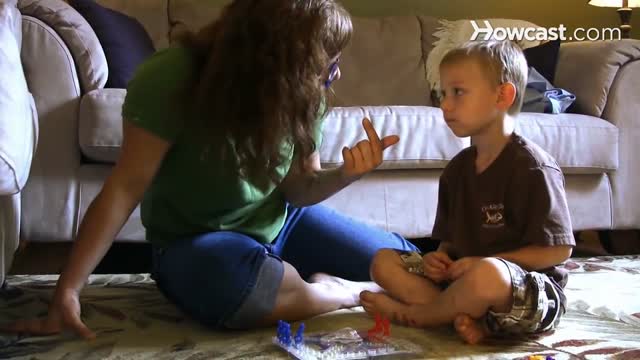
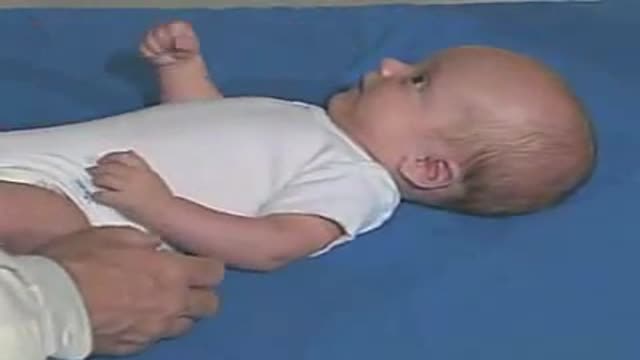
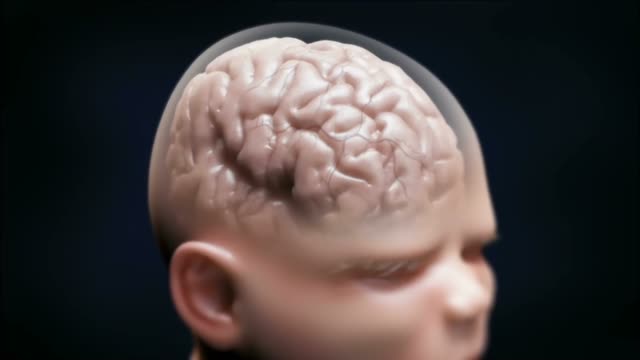
A teaching film on the neurological examination of children, covering level of consciousness, cranial nerve testing adapted to babies and school-age children, muscle strength and tone, reflexes, cerebellar function, sensation, gait and meningeal signs. Practical differences from the adult examination are emphasised throughout, such as assessing visual fields in infants and leaving unpopular tests until last.
Key points
- Consciousness in young children is judged from social contact and reaction to surroundings
- Cranial nerve function in babies is assessed mainly by observation
- Visual field and visual acuity checks adapted for children are demonstrated
- Hearing is tested with sounds and whispered instructions outside the child view
- Balance, eye movements and the gag reflex are covered, with some tests saved for the end
Chapters
- 0:02 — Scope of functional integrity examination
- 0:33 — Assessing level of consciousness
- 1:01 — Cranial nerves in young children
- 1:24 — Visual fields and acuity checks
- 3:45 — Assessing hearing in children
- 4:40 — Balance testing and gag reflex
Video Transcript
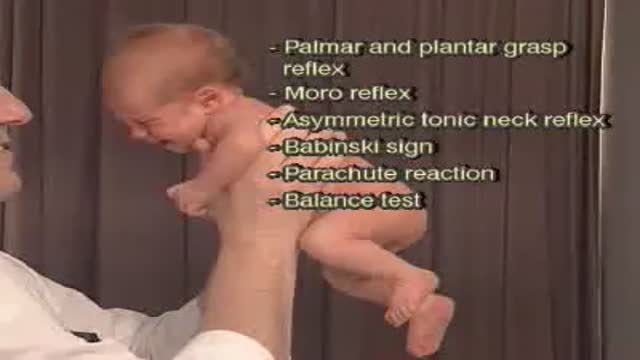
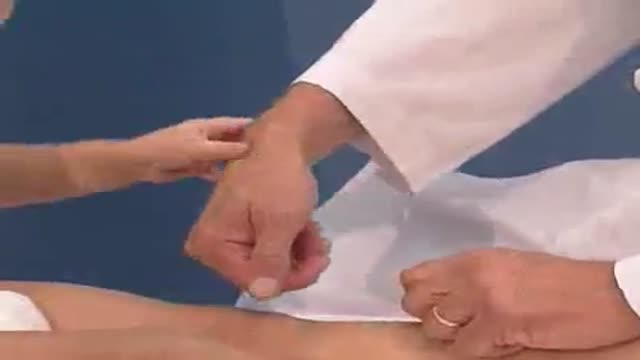
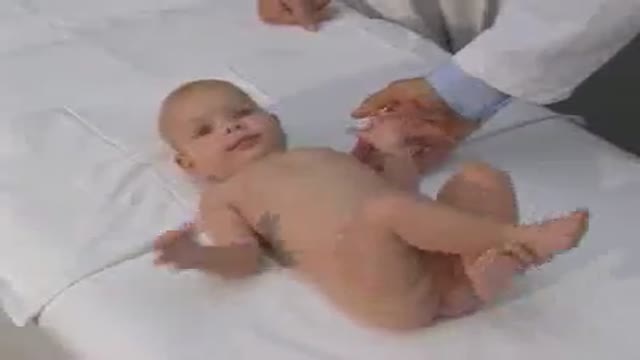
A teaching film on the neurological examination of children — the 'examination of functional integrity'. It covers level of consciousness, cranial-nerve testing adapted to babies and school-age children, muscle strength and tone, developmental and deep tendon reflexes, cerebellar function, sensation, gait and meningeal signs, with practical notes on how the methods differ from the adult examination, such as checking visual fields in infants and saving the fundus examination and gag reflex for last.
Read the full transcript
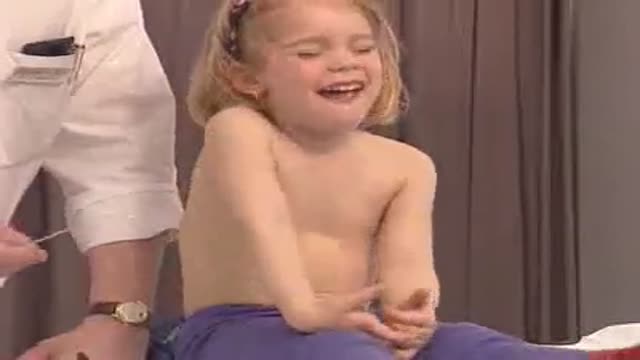
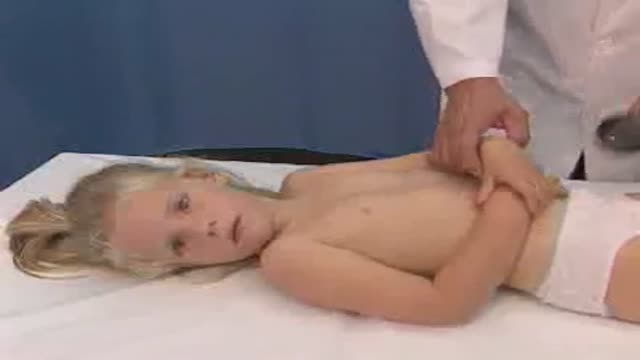
The examination of functional integrity covers the following aspects level of consciousness, cranial nerves, muscle strength and tone, developmental reflexes, deep tendon reflexes, cerebellar function, sensation, gait, and meningeal signs. In the following examples particular attention is paid to methods which differ from those used for adults. Determining the level of consciousness can be difficult, especially in very young children. A first clue is provided by their social contact, such as smiling or playing. In other words the extent of their reaction to their surroundings. Older children are able to carry out orders and ought to be capable of answering questions that are appropriate for their age concerning orientation to person, time and place.
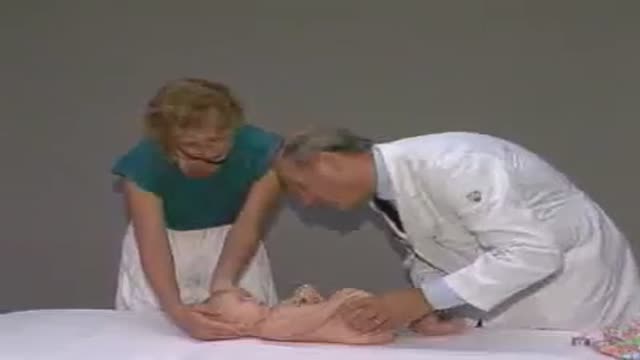
In babies and small children cranial nerve function is mainly assessed by observation. In school children the tests are the same as for adults. We will now show the tests for the main cranial nerves. A quick check of the visual fields to exclude a homonymous or by temporal haemia andopsia can be performed in babies as young as six months. While the tester draws the child's attention to the front, an assistant moves a dangling object from the back into the child's field of vision. We note when the child moves the eyes to the object and fixes on it.
For a rough test of visual acuity we can try placing objects the size of a P in front of the child, while watching whether they want to grasp the object. But this excludes only major visual defects. From about four years we can use the E table to check far visual acuity. It should be borne in mind that many children find it difficult to distinguish between an E which points to the left and one that points to the right. Cooperation is better if the table is placed at a distance of only four meters instead of the usual six.
Tables with pictures of well-known objects can also be used to detect major visual defects. But visual acuity cannot be tested accurately in this way. Unfortunately defective eyesight cannot be definitively assessed until the child starts school. Examination of the fundus of the eye is performed similarly in children as in adults. Time must be taken and the child's freedom of movement should be restricted as little as possible. It is not a popular examination and should be kept for the end. In order to test a baby's eye movements, the examiner approaches the baby to a distance of approximately 30 centimeters.
Once eye contact has been achieved, the examiner slowly moves his head in various directions, which normally causes the eyes to follow the examiner. Restricted movements and possible nystagmus should be noted. Small children can be interested in the light of a torch which they like to follow with their eyes. Nerves 5 and 7 can be assessed by observing the spontaneous facial expressions the baby makes. The corneal reflex on the other hand can be tested reliably in young babies. When assessing a child's hearing, we make noises from the left and the right.
It is important that neither the hand nor the sound instrument come into the baby's field of vision. Producing shadows, vibrations or drafts must also be avoided. A major hearing disorder can be excluded if the baby turns to follow the sound. For a small child, one can whisper orders which it has to carry out. If there is the slightest suspicion of a hearing disorder, a detailed audiological test should be ordered. A congenital hearing disorder ought to be diagnosed before the six months. Examining a child's sense of balance is complex.
Balance can be tested roughly if the child stands on a soft surface with closed eyes. In order to stand securely, an intact deep pressure sense in the soles of the feet is necessary. Balance can also be tested by having the child stand on one leg, walk in tandem and hop around on one foot. As in the whole examination, the stage of psychomotor development must also be taken into account. Vegas and glossopharyngeal nerve peresis is reflected in an absence of gag and palatal reflexes on the affected side.
This test must be performed at the end of the examination.
Transcript auto-generated from the video’s audio for accessibility and study. Educational content only — not medical advice.
Video Overview
From our Pediatrics collection: Pediatric videos: child health, newborn care, common childhood illnesses and pediatric procedures explained for parents, students and clinicians. Browse all Pediatrics videos →
Medical Videos
Free medical and surgery videos for patients, students and professionals — trusted since 2007.
Founded by Dr. Mohamed Ibrahim, MD, PhD — physician-scientist.
Follow us on Facebook · Instagram
SORT BY-
Top Comments
-
Latest comments