
- Physical Examination
- Surgical Examination
- Ophthalmology
- Clinical Skills
- Orthopedics
- Surgery Videos
- Laparoscopy
- Pediatrics
- Funny Videos
- Cardiothoracic Surgery
- Nursing Videos
- Plastic Surgery
- Otorhinolaryngology
- Histology and Histopathology
- Neurosurgery
- Dermatology
- Pediatric Surgery
- Urology
- Dentistry
- Oncology and Cancers
- Anatomy Videos
- Health and Fitness
- Radiology
- Anaesthesia
- Physical Therapy
- Pharmacology
- Interventional Radiology
- Cardiology
- Endocrinology
- Gynecology
- Emergency Medicine
- Psychiatry and Psychology
- Childbirth Videos
- General Medical Videos
- Nephrology
- Physiology
- Diet and Food Health
- Diabetes Mellitus
- Neurology
- Women Health
- Osteoporosis
- Gastroenterology
- Pulmonology
- Hematology
- Rheumatology
- Toxicology
- Nuclear Medicine
- Infectious Diseases
- Vascular Disease
- Reproductive Health
- Burns and Wound Healing
- Kidney Zone Podcast
- Other
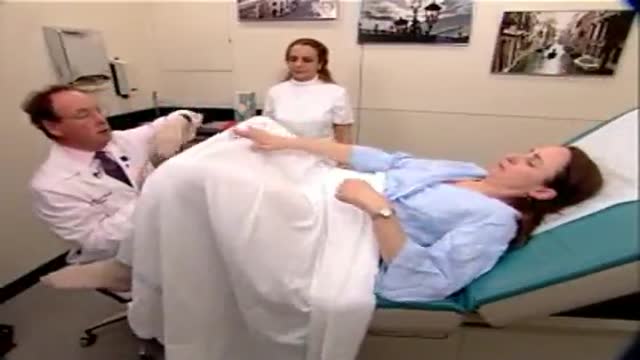
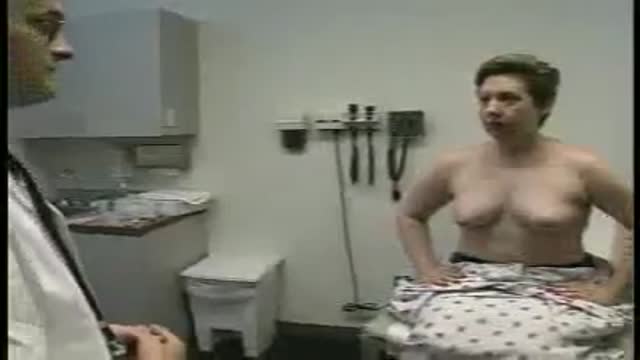



Loyola Breast Examination part 2

Educational only: videos on MedicalVideos.com are for general information and are not medical advice. Always consult your own doctor about your health.
Loyola Breast Examination part 2 Medical breast examination of a female from Loyola University,Chicago
This video in 30 seconds
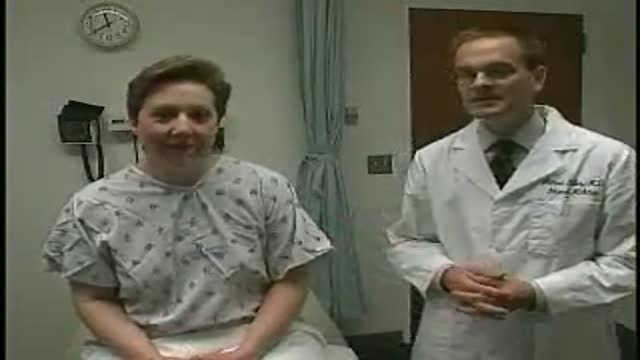
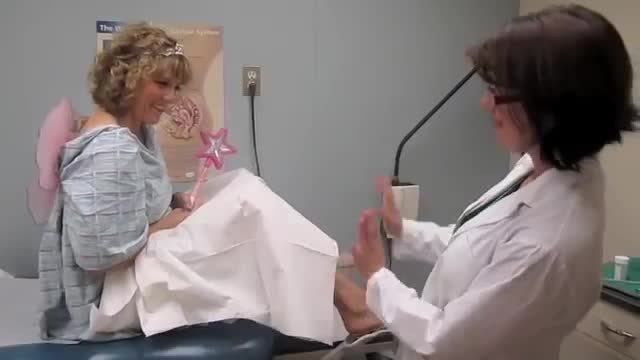
Part two of Loyola's breast examination teaching, continuing with the same standardized patient. It covers checking the supraclavicular lymph nodes, then palpation lying down using the vertical-strip method, emphasising systematic coverage of the whole breast and using the visit to ask about screening.
Key points
- Supraclavicular lymph nodes are checked above the clavicles
- Palpation is performed with the patient lying down
- The vertical-strip method is demonstrated for systematic coverage
- Breast boundaries for a thorough examination are defined
- Screening history questions are asked during the examination
Chapters
- 0:00 — Supraclavicular lymph node check
- 0:50 — Palpation setup with patient supine
- 2:25 — Vertical strip palpation method
- 2:55 — Breast boundaries for examination
- 4:09 — Screening history questions
Video Transcript
Part two of Loyola's breast examination teaching, continuing with the same standardized patient. It covers checking the supraclavicular lymph nodes, then palpation lying down using the vertical-strip method — with emphasis on taking time, covering the whole breast systematically, and using the visit to ask about screening such as mammograms and Pap smears.
Read the full transcript
The other part of a focused breast exam is to check for superclavicular lymph nodes. It's really like there's a lesion more centrally in the breast. It could drain superiorly into the superclavicular lymph nodes, and that's why you need to include that examination as part of a focused screening breast exam. It means if you lower your gown just a little bit, again we're going to reach just above the clavicles and make some circular sweeping motions. I don't feel any lump. Sometimes it helps have the patient raise their shoulders to feel deeper.
You can either examine from the front or you can come around behind the patient, put your fingers in the superclavicular faucet and make your circles to see if you find any superclavicular lymph nodes and I don't. You can go ahead and raise your gown and see. Now we're through two parts of the breast exam. We've done an inspection. We palpated for lymph nodes again with the patient sitting at the end of the table. The next part of the exam we're going to do is the palpation of the breast tissue.
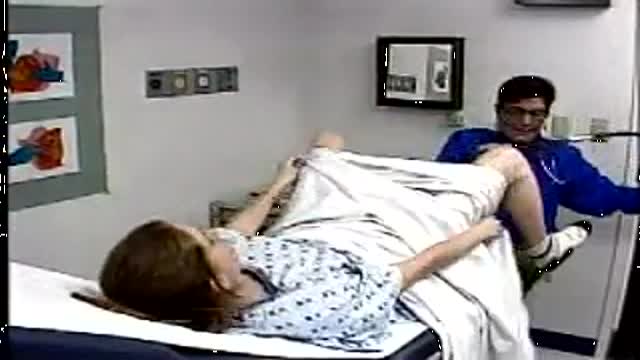
For the purpose of this training video, you'll notice I only examined one armpit and I also only examined one breast. But of course, when you examine a real patient, you're going to examine both axilla and both breasts. So to do the palpation, you have the patient lay back. So I'm going to lay back and again make sure you pull out the ledge of the table for the patient and make sure that the head of the exam table is completely flat so you can do an adequate breast examination.
I'm going to come to the other side of the patient at this point. So now that the patient is supine, we're ready to do the palpation of the breast examination. Nancy, I'm going to ask you to lower your gown on your left side and expose your left breast. And again, we don't need to have the patient lower gown all the way to her waist because we've already inspected both breasts earlier on. The important part of the palpation is make sure you have the patient put their arm above their head.
It's one of the things that students particularly forget to remind the patient to do. That helps to flatten out the breast tissue so they can do a better palpation. Probably one of the most important things to remember is that a thorough breast exam really takes time. The average physician probably only spends about one and a half to two minutes doing an entire breast exam on both the right and left breasts. And some days they've shown that a physician is much more likely to find a lump or abnormality
if they spend roughly three minutes examining each breast. That doesn't mean you have to get out your watch and time yourself. But again, just pay attention to the fact that you're thorough and systematic in your search for abnormalities. The other thing I want to mention when you're doing the vertical strip method, you know, going from down, moving over, move up, overlap, move over, move down, you're doing that method. You do the same technique when you go over the areola and the breast. You don't need to do any different technique when examining the nipple or areola.
And finally, you also don't need to do any sort of examination for nipple discharge where you specifically try to express discharge from the nipple. Again, this is a screening breast exam. Remember too that the breast is really more of a rectangle. You might think of it as a circular shape, but in fact think of it more as a rectangle with the medial border being the midline of the sturdum, the lower border being the inframammary fold. Laterally, you should be approximately the mid-axillary line, and then superiorly, of course, is the clavicle.
That's the entire area of the boundaries that you need to examine to do a thorough breast examination. So let's go ahead and do the palpation on the left breast using the vertical strip method. I place my finger pads against the chest wall of the skin, and I'm going to make circular motions about the size of, as if I'm circling around a dime. Since I'm at this level here, there's not much breast tissue, just using one level of pressure is probably adequate. You probably also don't want to lift your fingers too far off the breast
because you don't want to lose your position and forget to examine part of the breast. As you go up another strip, overlap with the prior vertical strip that you've done before. Again, because this takes a little bit of time to do, this is an ideal time to ask the patient about some of their screening health exams. So Nancy, since you're 40 years old, have you ever had a mammogram? Yes. And did you ever have any problems with that in the MMLT? No. Of course, the other screening exam that every woman should get on a routine basis is a pap smear.
So have you had a pap smear recently, Nancy? Look in the last year. Good. Have you ever had an abnormal pap smear? No. Good. Now, for patients who are under 25 years of age, you might want to ask them about had they had a chlamydia test to screen for sexual transmitted disease. That's recommended for all sexually active women under the age of 25 on a yearly basis. For an older woman, of course, you're going to ask about different screening maneuvers. If the patient's over 50, you're going to ask them about if they had a colon cancer screening,
if they had any stool cards once a year for colon cancer screening, or had they had a colonoscopy or a flexible sigmoidoscope. Also, after age 52, you're going to ask about if they have a yearly influenza shot every fall and early winter. As a woman gets over 65, it's important to ask about bone density screening for osteoporosis, and also if they've had a pneumovac vaccine yet. You can ask about calcium intake, too. That's another important thing that's relevant for a woman of any age.
Transcript auto-generated from the video’s audio for accessibility and study. Educational content only — not medical advice.
Video Overview
From our Gynecology collection: Pelvic exams, Pap smears, IUD insertion, hysteroscopy and women's health procedures explained step by step. Browse all Gynecology videos →
Medical Videos
Free medical and surgery videos for patients, students and professionals — trusted since 2007.
Founded by Dr. Mohamed Ibrahim, MD, PhD — physician-scientist.
Follow us on Facebook · Instagram
SORT BY-
Top Comments
-
Latest comments