शीर्ष वीडियो
Infant jaundice is a yellow discoloration in a newborn baby's skin and eyes. Infant jaundice occurs because the baby's blood contains an excess of bilirubin (bil-ih-ROO-bin), a yellow-colored pigment of red blood cells. Infant jaundice is a common condition, particularly in babies born before 38 weeks gestation (preterm babies) and some breast-fed babies. Infant jaundice usually occurs because a baby's liver isn't mature enough to get rid of bilirubin in the bloodstream. In some cases, an underlying disease may cause jaundice. Treatment of infant jaundice often isn't necessary, and most cases that need treatment respond well to noninvasive therapy. Although complications are rare, a high bilirubin level associated with severe infant jaundice or inadequately treated jaundice may cause brain damage.
I have shared with you in this video couple of exercises that you can follow immediately after your Knee injury.
As I promised here are 2 protocols to follow in this routine. I have also added my blog on how to strengthen your glutes and why that can help you with your knee pain.
1- Avoid Harm ( https://dublinsportsinjuryclin....ic.com/acute-injury-
2- POLICE PROTOCOL (https://dublinsportsinjuryclin....ic.com/acute-injury-
3- Read my blog and check how to strengthen your glutes (https://dublinsportsinjuryclin....ic.com/knee-injury-r
Please make sure to watch the video until the end since I'm sharing with you a couple of tips at the end of this video.
References:
1- https://www.ncbi.nlm.nih.gov/pmc/arti...
2- https://www.sciencedirect.com/science...
3- https://www.sciencedirect.com/science...
_______________________________
Music: See You
Musician: @iksonofficial
---------------------------------------------------
**MEDICAL DISCLAIMER**
All information, content, and material of this video or website are for informational and demonstration purposes only. It is not intended to serve as a substitute for the consultation, diagnosis, and/or medical treatment of a qualified physician or healthcare provider.
Don’t use this content as a replacement for treatment and advice given by your doctor or health care provider. Consult with your physical therapist or healthcare professional before doing anything contained in this content.
By watching this video, you agree to indemnify and hold harmless Dublin Sports Injury Clinic(and its representatives) for any and all losses, injuries, or damages resulting from any and all claims that arise from your use or misuse of this content. Dublin Sports Injury Clinic makes no representations about the accuracy or suitability of this content.
USE OF THIS VIDEO'S CONTENT IS AT YOUR OWN RISK.
𝐂𝐨𝐧𝐧𝐞𝐜𝐭 𝐰𝐢𝐭𝐡 𝐁𝐨𝐛 𝐚𝐭 𝐃𝐮𝐛𝐥𝐢𝐧 𝐒𝐩𝐨𝐫𝐭𝐬 𝐈𝐧𝐣𝐮𝐫𝐲 𝐂𝐥𝐢𝐧𝐢𝐜
𝐖𝐄𝐁𝐒𝐈𝐓𝐄→ https://www.dublinsportsinjuryclinic.com
𝐄𝐌𝐀𝐈𝐋 → Rehab@dublinsportsinjuryclinic.com
𝐓𝐄𝐋 → 0879276712
𝐅𝐀𝐂𝐄𝐁𝐎𝐎𝐊 → https://www.facebook.com/dublinphysicaltherapy/
𝐈𝐍𝐒𝐓𝐀𝐆𝐑𝐀𝐌 → https://www.instagram.com/dubl....in_sports_injury_cli
Tags:
Knee Injury Rehabilitation [Early Stage] - (1st Two Weeks After Injury)
Knee injury exercises, knee exercises, knee rehabilitation, Sore knee rehabilitation, Twisted knee exercises, sore kneecap exercises, runners knee injury, #kneeinjury #soreknee #runnersknee #Kneerehabilitation #kneeexercices #dublinsportsinjuryclinic
#anteriorkneepain #kneepain #kneephysio #injureknee #exerciseforknee #kneerehab #swollenknee
#runnersknee #kneeminiscus #acl #Mcl #kneeligaments#dublinsportsinjuryclinic #dublinsportsphysio #bobfiro #dulin2phyiso #bobyourphysio #bobonlinecare #Sportsinjurydublinclinic#dublinsportsinjuryclinic #dublinsportsphysio #bobfiro #dulin2phyiso #bobyourphysio #bobonlinecare #Sportsinjurydublinclinic
The most frequent incision utilized to open the abdomen for liver surgery is called a chevron incision. In this incision a cut is made on the abdomen below the rib cage. The cut starts under the armpit below the ribs on the right side of the abdomen and continues all the way across the abdomen to the opposite arm pit thereby the whole width of the abdomen is cut to provide access to the liver. The average length of the incision is approximately 24 to 30 inches. This is one of the longest incisions is utilized in abdominal surgery. The incision is frequently associated with significant discomfort after the surgery and in some patients the discomfort can continue for many months, particularly when some of the nerves in the abdominal wall have been cut during the surgery. Laparoscopic surgery provides advantages over open surgery for the liver since the chevron incision is completely avoided and the surgery is performed through tiny incisions. As a consequence the duration of stay in hospital, the amount and duration of post operative discomfort, and the length of recovery is much shorter after the laparoscopic procedure compared to open surgery
Interventional Nephrology is a new and emerging subspecialty of Nephrology that mainly deals with ultrasonography of kidneys and ultrasound-guided renal biopsy, insertion of peritoneal dialysis catheters, tunneled dialysis catheters as a vascular access for patients undergoing hemodialysis as well as percutaneous ...
Indications for intervention in patients with a renal artery aneurysm (RAA) include the following [20, 8, 13, 14] : Rupture Symptomatic RAA - Hypertension (from associated renal artery stenosis, refractory to medical management), pain, renal ischemia or infarction secondary to embolization from the aneurysm sac RAAs in females who are pregnant or are contemplating pregnancy Diameter greater than 2 cm Enlarging RAA RAA associated with acute dissection Currently, there is no consensus regarding the size at which an RAA should be repaired in an asymptomatic patient. Experts have recommended RAA repair at diameters ranging from 1.5 to 3 cm, [8] though most suggest 2 cm. Some reports have even suggest that larger asymptomatic saccular aneurysms may be managed expectantly. Note that aneurysm rupture at a diameter of 1.5 cm has been reported. Complete calcification of the wall of the aneurysm sac manifests in about 40% of patients. This was once believed to confer protection against rupture [21] ; however, this belief has since been questioned. [30] Asymptomatic, small (<2 cm in diameter) RAAs do not usually require treatment. One notable exception is an RAA in a woman who is pregnant or contemplating pregnancy. In view of the increased risk of rupture in such cases, even small asymptomatic aneurysms should be repaired in this population. For diagnosis and preinterventional planning, gadolinium-enhanced magnetic resonance angiography (MRA) and computed tomography (CT) angiography (CTA) with three-dimensional (3D) reconstruction have essentially replaced conventional arteriography. Regular follow-up examination with ultrasonography (US) or CT) is recommended in patients who are treated expectantly. Spontaneous cure by thrombosis of small aneurysms has been described. Further refinements in endovascular techniques may allow more RAAs to be treated in this manner. So far, excellent short- and intermediate-term results have been described in the literature [40] ; however, there remains a need for further long-term outcome data.
The best way to prevent hepatitis A is through vaccination with the hepatitis A vaccine. Vaccination is recommended for all children age 12 months or older, for travelers to certain countries, and for people at high risk for infection with the virus. The hepatitis A vaccine is given as two shots, six months apart.
This short course reviews the main features of EKG tracings. A method for analyzing EKGs is also presented. This method includes assessment of rhythm, calculating heart rate, observing P-wave forms, measurement of EKG intervals and segments and the evaluation of other relevant waves.
Stapling is used to treat prolapsed hemorrhoids. A surgical staple fixes the prolapsed hemorrhoid back into place inside your rectum and cuts off the blood supply so that the tissue will shrink and be reabsorbed. Stapling recovery takes less time and is less painful than recovery from a hemorrhoidectomy.
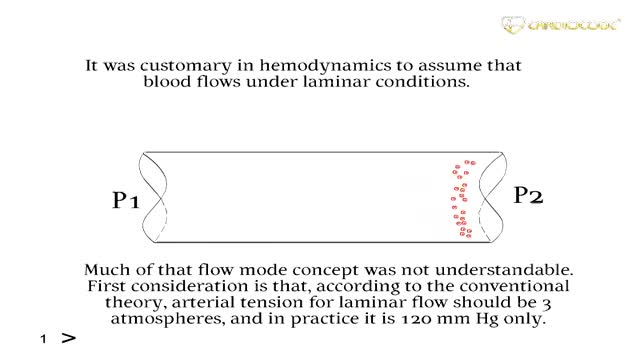
It is a specialized bodily fluid that supplies essential substances and nutrients, such as sugar, oxygen, and hormones to our cells, and carries waste away from those cells, this waste is eventually flushed out of the body in urine, feces, sweat, and lungs (carbon dioxide). Blood also contains clotting agents.
The lumps may be hard or rubbery and can appear as a single breast lump that may be large or small. Fibrocystic changes also can appear as thickening of the breast tissue. Fibrocystic changes can occur in one or both breasts and are the most common cause of benign breast lumps in women age 35 to 50.
Recovery can take 4 to 6 months, depending on the size of the tear and other factors. You may have to wear a sling for 4 to 6 weeks after surgery. Pain is usually managed with medicines. Physical therapy can help you regain the motion and strength of your shoulder.
Marfan syndrome is a genetic disorder that affects the body’s connective tissue. Connective tissue holds all the body’s cells, organs and tissue together. It also plays an important role in helping the body grow and develop properly. marfan_general_2.jpg What is Marfan Syndrome?Connective tissue is made up of proteins. The protein that plays a role in Marfan syndrome is called fibrillin-1. Marfan syndrome is caused by a defect (or mutation) in the gene that tells the body how to make fibrillin-1. This mutation results in an increase in a protein called transforming growth factor beta, or TGF-β. The increase in TGF-β causes problems in connective tissues throughout the body, which in turn creates the features and medical problems associated with Marfan syndrome and some related disorders. Because connective tissue is found throughout the body, Marfan syndrome can affect many different parts of the body, as well. Features of the disorder are most often found in the heart, blood vessels, bones, joints, and eyes. Some Marfan features – for example, aortic enlargement (expansion of the main blood vessel that carries blood away from the heart to the rest of the body) – can be life-threatening. The lungs, skin and nervous system may also be affected. Marfan syndrome does not affect intelligence.
A visual prosthesis, often referred to as a bionic eye, is an experimental visual device intended to restore functional vision in those suffering from partial or total blindness. In 1983 Joao Lobo Antunes, a Portuguese doctor, implanted a bionic eye in a person born blind.