
- Physical Examination
- Surgical Examination
- Ophthalmology
- Clinical Skills
- Orthopedics
- Surgery Videos
- Laparoscopy
- Pediatrics
- Funny Videos
- Cardiothoracic Surgery
- Nursing Videos
- Plastic Surgery
- Otorhinolaryngology
- Histology and Histopathology
- Neurosurgery
- Dermatology
- Pediatric Surgery
- Urology
- Dentistry
- Oncology and Cancers
- Anatomy Videos
- Health and Fitness
- Radiology
- Anaesthesia
- Physical Therapy
- Pharmacology
- Interventional Radiology
- Cardiology
- Endocrinology
- Gynecology
- Emergency Medicine
- Psychiatry and Psychology
- Childbirth Videos
- General Medical Videos
- Nephrology
- Physiology
- Diet and Food Health
- Diabetes Mellitus
- Neurology
- Women Health
- Osteoporosis
- Gastroenterology
- Pulmonology
- Hematology
- Rheumatology
- Toxicology
- Nuclear Medicine
- Infectious Diseases
- Vascular Disease
- Reproductive Health
- Burns and Wound Healing
- Kidney Zone Podcast
- Other




Breast Examination Video

Educational only: videos on MedicalVideos.com are for general information and are not medical advice. Always consult your own doctor about your health.
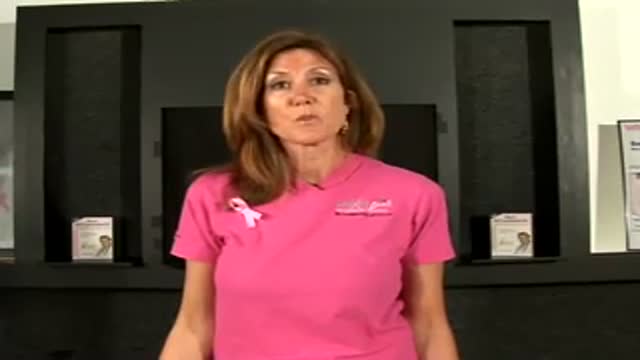
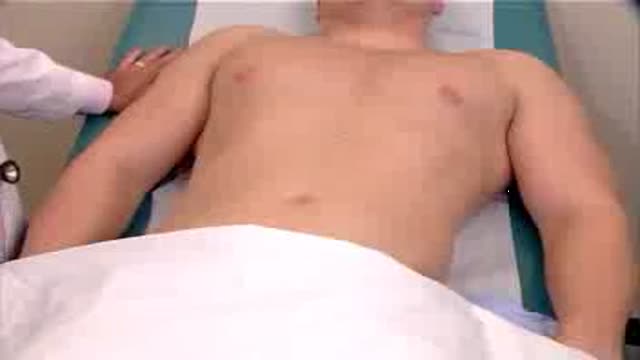
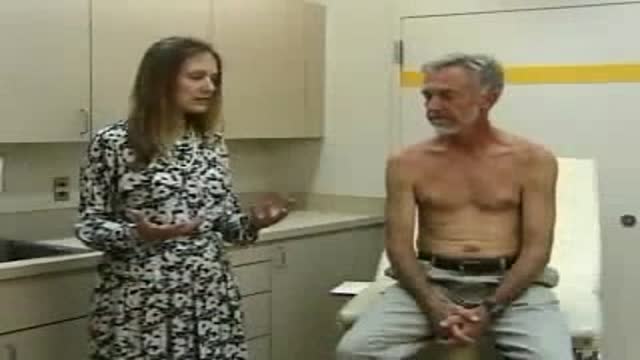
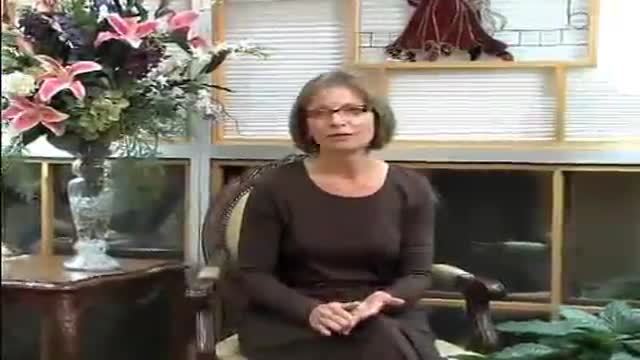
Dr Chris Steele demonstrates a breast examination on a live model. This shows how to check yourself for early signs of tumours, cysts and other symptoms of breast cancer.
This video in 30 seconds
A television doctor demonstrates breast self-examination technique on a volunteer. He teaches inspection in front of a mirror with arms down, arms raised, and leaning forward, looking for changes in shape, puckering, or dimpling, followed by palpation and a final check pressing the breast against the chest wall with the flat of the hand.
Key points
- The presenter explains inspection first, followed by palpation
- Mirror inspection is demonstrated with arms down, raised, and leaning forward
- Changes in shape, outline, puckering, and the nipple are looked for during inspection
- Palpation is demonstrated with the pads of the fingers in circular motions
- The examination finishes by pressing the breast against the chest wall with the flat hand
Chapters
- 0:56 — Examination technique overview
- 1:08 — Mirror inspection standing
- 2:30 — Leaning forward inspection
- 2:46 — Palpation demonstration
- 4:27 — Finishing the palpation
Video Transcript
A television doctor demonstrates breast self-examination technique, in spoken English (our data tags the audio as Welsh, which it is not). He teaches inspection in front of a mirror — arms down, raised, and leaning forward — looking for changes in shape, puckering, or dimpling, then palpation, ideally in a soapy bath, finishing by pressing the whole breast against the chest wall with the flat of the hand.
Read the full transcript
Hwylwch, dyma'r dr Chris Steel, a ddweud i'n gweithio'r gweithwyr, www.thefanVGP.com. Yn y fideo yw'r hynny'n ei ddweud o'r breslwm, ychydig i'r breslwm, ychydig i'r brygwyr, ac ydych chi'n gweithio'r breslwm yn ymweld, ac mae'r breslwm yn ymddangos i'r cychwyn, mae'n gweithio'r breslwm yn ymweld 1 yn 9 gweithwyr yn y UK. Mae'n ddweud o'r 50, beth mae'n bwysig mor dipyethu gyda breslau cynyddu. Ac mae'n cael gwnaeth wirio dros ddweud y breslwm yma, so that every woman should learn the examination technique, because women should actually know the feel of their breasts and the breasts actually do change through the month,
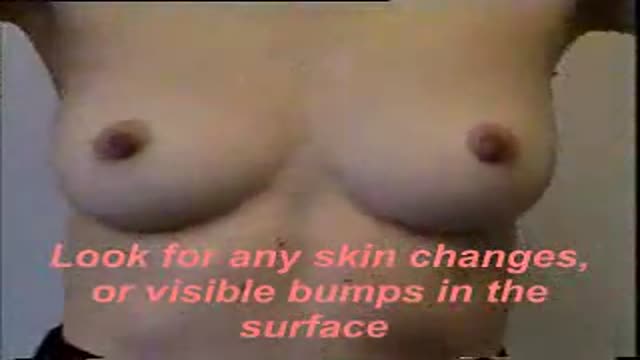
before your periods your breasts may feel more limp-y. Now, the examination technique is this. Imagine you're going to be doing this once a month, First of all, it's inspection, looking, followed by palpation, which is feeling. So what you do is stand in front of a mirror and God has given you two breasts so you can compare one side to the other. When you're looking at the breasts, you're actually looking to see if there's any change in shape, size or outline. You can compare one side to the other. You may find that one of your breasts is slightly different to the other, but that's the way you're made.
But if there's any change that occurs, those changes might be the sign that something's going wrong. Now, we've looked for size and shape, any change in outline. Also looking for any puckering or dimpling of the skin. And then also looking at the nipple, the crispiness on the nipple, any flaky skin. Does it itch? Is it bleeding? Or has the nipple become inverted? Sometimes if the nipple becomes inverted, that can be a sign that something's going wrong inside the breast tissue. Now, that's the initial sort of inspection. The next stage of the inspection is raise your arms up in the air, both arms, please, sir.
And the reason why I'm asking Lisa to do this is because this lifts the breast tissue up and you might see a difference between the breasts with the arms. Looking again for a difference in shape, size, outline, any puckering or dimpling of the skin. And then the final part of this is to lean forward. So bring your hands by your side, Lisa. Just lean forward now. And you're looking at your breasts hanging down in a mirror. They're pendulous. And again, you might be looking for puckering or dimpling of the skin.
So that's the inspection. And then the examination. The best thing to do is to treat yourself to a hot bath once a week and examine your breasts in the bath. You can examine them any time you like. But in the bath water, the water is soapy. And of course, your fingers are wet. They can glide over the breast tissue very easily. So imagine you're in the bath, Lisa, and just put your hand behind your back. You're there relaxing. And with the pads of your fingers, not the fingertips, the flat part of your fingers, what you do is starting at the nipple here and pressing down against the rib cage.
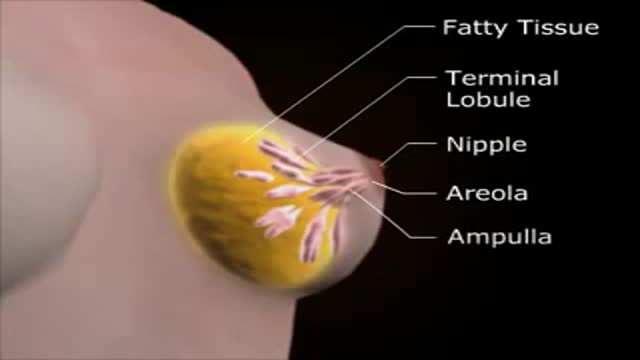
And I'm just doing some circular motion and I can feel the breast tissue underneath. That circular motion start moving out in circles, getting wider and wider. But pressing down quite firmly against the rib cage all the time. See if there's any discrete lumps or swellings there. And having done the whole of the breast itself, then remember to come round and go up into the armpit because breast tissue goes up into the armpit. So your feeling breast tissue appear, pads of the fingers with circular motions, and also into the armpit, your feeling for glands that may be swollen. Any lump in that armpit could be a swollen gland.
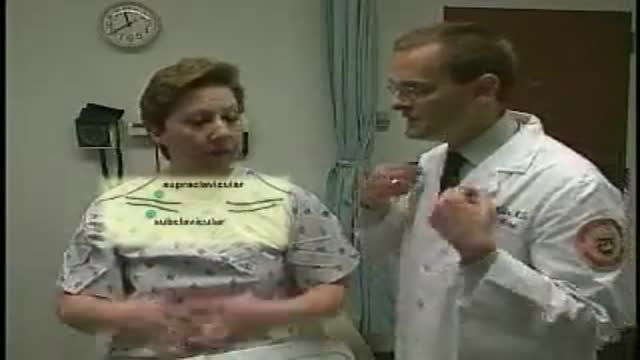
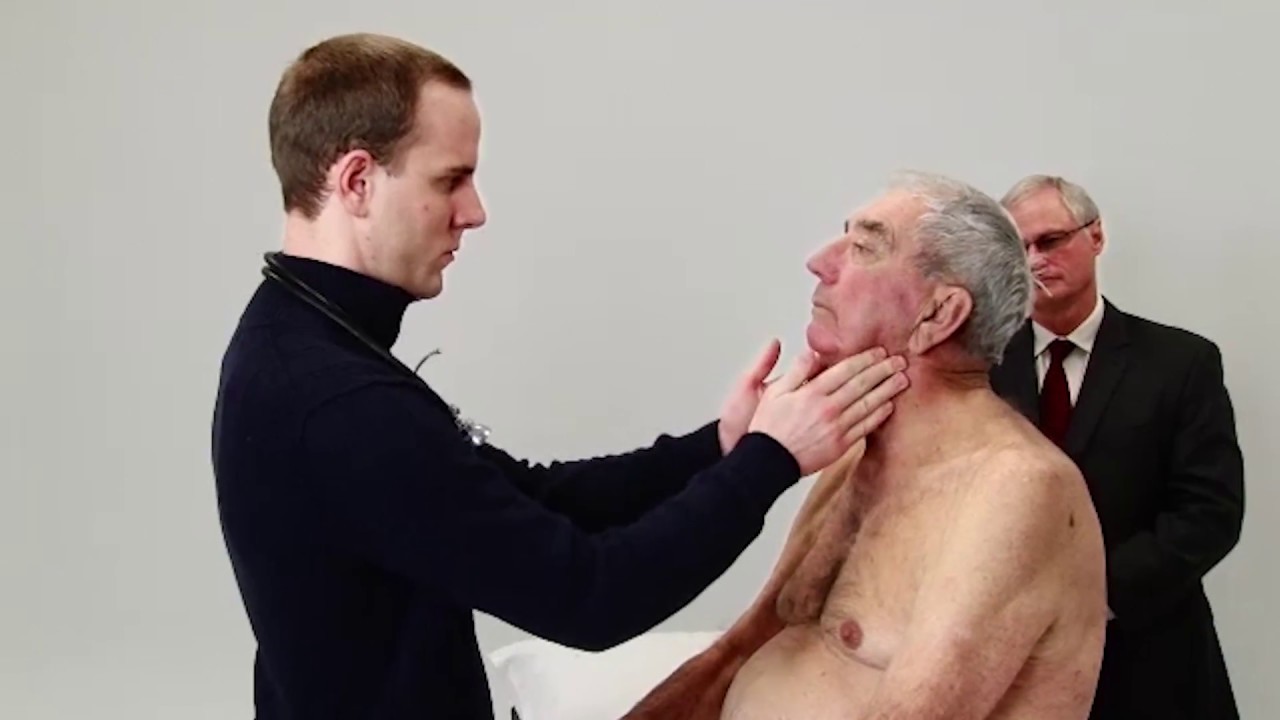
And then you finish off the feeling, the palpation by feeling in this part of the neck, the lower part of the neck, again feeling for any lumps or swellings that could be swollen glands. And then a good way to finish the breast examination, having checked the other one with the same routine, is to then use the flat of your hand just pressing down on the whole breast against the rib cage. And it's remarkable how you can actually detect some lumps with using the whole flat part of your palm. And that's really it. It's as simple as that. It takes you just a few minutes.
But it's very important to do this regularly, and become acquainted with your breasts, know how they feel. What's interesting is that 60% of breast tumours occur in the outer quarter of the breast, 60% of them. 70% of breast cancers are found by the patient herself. And remember the good news is if you find a lump that 90% of lumps in the breast are not cancerous.
Transcript auto-generated from the video’s audio for accessibility and study. Educational content only — not medical advice.
Video Overview
From our Gynecology collection: Pelvic exams, Pap smears, IUD insertion, hysteroscopy and women's health procedures explained step by step. Browse all Gynecology videos →
SORT BY-
Top Comments
-
Latest comments