
- Physical Examination
- Surgical Examination
- Ophthalmology
- Clinical Skills
- Orthopedics
- Surgery Videos
- Laparoscopy
- Pediatrics
- Funny Videos
- Cardiothoracic Surgery
- Nursing Videos
- Plastic Surgery
- Otorhinolaryngology
- Histology and Histopathology
- Neurosurgery
- Dermatology
- Pediatric Surgery
- Urology
- Dentistry
- Oncology and Cancers
- Anatomy Videos
- Health and Fitness
- Radiology
- Anaesthesia
- Physical Therapy
- Pharmacology
- Interventional Radiology
- Cardiology
- Endocrinology
- Gynecology
- Emergency Medicine
- Psychiatry and Psychology
- Childbirth Videos
- General Medical Videos
- Nephrology
- Physiology
- Diet and Food Health
- Diabetes Mellitus
- Neurology
- Women Health
- Osteoporosis
- Gastroenterology
- Pulmonology
- Hematology
- Rheumatology
- Toxicology
- Nuclear Medicine
- Infectious Diseases
- Vascular Disease
- Reproductive Health
- Burns and Wound Healing
- Kidney Zone Podcast
- Other


Breast Self-Examination

Educational only: videos on MedicalVideos.com are for general information and are not medical advice. Always consult your own doctor about your health.
Brought to you by http://nursing-resource.com
This video in 30 seconds
A short instructional narration on breast self-examination describes inspecting the breasts in a mirror for skin changes or dimpling, feeling for lumps with circular movements, and checking for nipple discharge. It also mentions professional examinations and mammograms, and seeing a provider if a lump, skin change or discharge appears.
Key points
- Mirror inspection for skin changes, bumps and dimpling is described
- Feeling for lumps with circular movements is described
- Checking for nipple discharge is described
- Professional breast examinations and mammograms are mentioned
Chapters
- 0:01 — Introduction to self examination
- 0:09 — Mirror inspection for skin changes
- 0:25 — Feeling for lumps
- 0:46 — Checking for nipple discharge
- 0:57 — Professional exams and mammograms
Video Transcript
A short instructional narration on breast self-examination: inspecting the breasts in a mirror for skin changes or dimpling, feeling for lumps with circular movements, checking for nipple discharge, and having professional exams and mammograms — with a reminder to see a provider promptly if a lump, skin change or discharge appears.
Read the full transcript
Self breast exam. Each month right after a period plan to examine your breasts. Start by looking in the mirror. Look for any skin changes or visible bumps on the surface.
Raise your arms above your head and then back to your side.
Watch for any dimpling or retraction of the skin. Use this portion of your hand. It's a good way to feel for lumps. With your arm raised above your head use a circular movement to feel for lumps. Breast tissue is normally a little nodular and bumpy. Some people say it's like feeling for a marble in a bag of rice.
Check for nipple discharge. A few drops of clear milky or green-tinged nipple secretion is normal. Bloody nipple discharge is considered abnormal.
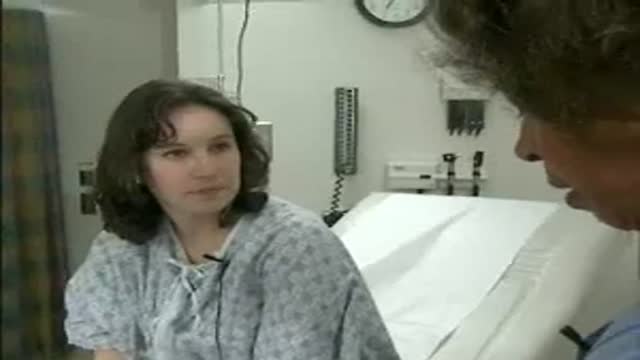
Once a year have a professional breast exam.
Mammograms can be very helpful at early detection of a number of problems. Many doctors recommend mammograms every other year for women between ages 40 and 50, then every year after age 50. If you find a skin change, lump or nipple discharge, see your health care provider right away.
Most of these problems prove to be innocent, but the best chance for treatment of more serious problems comes with early diagnosis.
Transcript auto-generated from the video’s audio for accessibility and study. Educational content only — not medical advice.
Video Overview
From our Clinical Skills collection: Suturing, injections, catheterization, IV insertion and OSCE-style examination techniques demonstrated step by step. Browse all Clinical Skills videos →
Medical Videos
Free medical and surgery videos for patients, students and professionals — trusted since 2007.
Founded by Dr. Mohamed Ibrahim, MD, PhD — physician-scientist.
Follow us on Facebook · Instagram
SORT BY-
Top Comments
-
Latest comments