سرفہرست ویڈیوز
Reconstruction of a shoulder separation or acromio-clavicular dislocation.
Heart failure can be ongoing (chronic), or your condition may start suddenly (acute). Heart failure signs and symptoms may include: Shortness of breath (dyspnea) when you exert yourself or when you lie down Fatigue and weakness Swelling (edema) in your legs, ankles and feet Rapid or irregular heartbeat Reduced ability to exercise Persistent cough or wheezing with white or pink blood-tinged phlegm Increased need to urinate at night Swelling of your abdomen (ascites) Sudden weight gain from fluid retention Lack of appetite and nausea Difficulty concentrating or decreased alertness Sudden, severe shortness of breath and coughing up pink, foamy mucus Chest pain if your heart failure is caused by a heart attack
Symptoms of blood clots in specific body locations are as follows: Symptoms of blood clots in legs (deep vein thrombosis (DVT) are pain, redness, and swelling. Symptoms of an arterial blood clot in a limb (leg or arm) include pain, pale color, and coolness to the touch. and the leg is cool and pale.
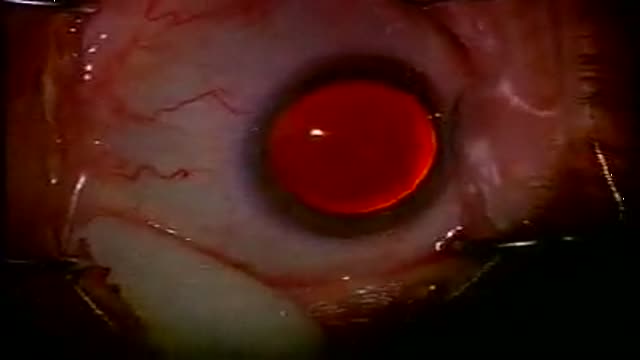
The famous question: Can I get LASIK surgery to correct my vision?
The most common symptoms of pneumoconiosis are cough and shortness of breath. The risk is generally higher when people have been exposed to mineral dusts in high concentrations and/or for long periods of time. Inadequate or inconsistent use of personal protective equipment (PPE) such as respirators (specially fitted protective masks) is another risk factor since preventing dusts from being inhaled will also prevent pneumoconiosis. Pneumoconiosis does not generally occur from environmental (non-workplace) exposures since dust levels in the environment are much lower.
Chronic obstructive pulmonary disease (COPD) is defined as progressive, chronic airflow obstruction due to chronic bronchitis, emphysema, or both. The majority of patients have components of both, although one of these entities will frequently dominate the clinical picture. Emphysema�airspace enlargement distal to the terminal bronchioles due to destruction of alveolar septa. Chronic bronchitis�chronic airway inflammation and bronchospasm. Clinically defined as productive cough lasting for at least 3 mo over 2 consecutive years. Although COPD is irreversible, patients with acute exacerbations do have reversible bronchospastic and inflammatory components.
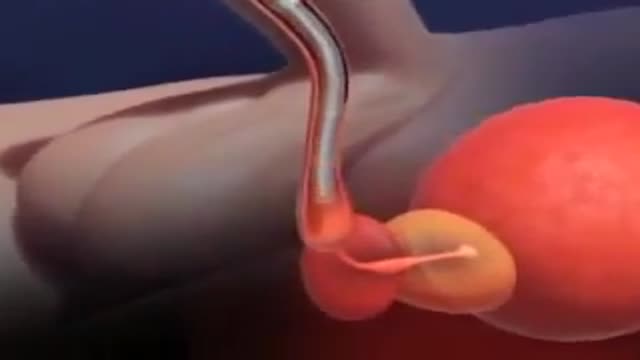
Kidney transplant surgery carries a risk of significant complications, including: Blood clots Bleeding Leaking from or blockage of the tube (ureter) that links the kidney to the bladder Infection Failure of the donated kidney Rejection of the donated kidney An infection or cancer that can be transmitted with the donated kidney Death, heart attack and stroke
Panic attack from Injection:'(
Robotic snakes help surgeons access complex anatomical locations.
Mitosis, a process of cell duplication, or reproduction, during which one cell gives rise to two genetically identical daughter cells. Strictly applied, the term mitosis is used to describe the duplication and distribution of chromosomes, the structures that carry the genetic information.
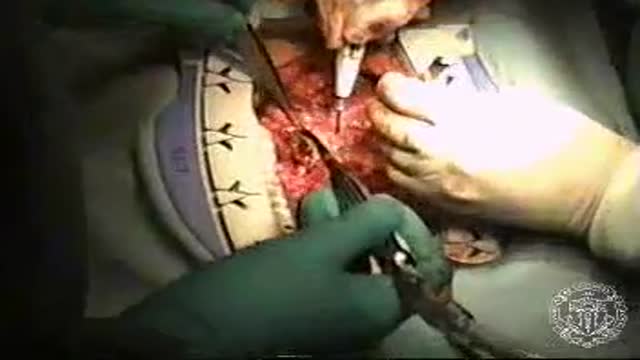
Skin grafting is a surgical procedure that involves removing the skin from one area of the body and moving it, or transplanting it, to a different area of the body. This surgery may be done if a part of your body has lost its protective covering of skin due to burns, injury, or illness. Skin grafts are performed in a hospital. Most skin grafts are done using general anesthesia, which means you’ll be asleep throughout the procedure and won’t feel any pain.
Retro-sigmoid craniotomy (often called "keyhole" craniotomy) is a minimally-invasive surgical procedure performed to remove brain tumors. This procedure allows for the removal of skull base tumors through a small incision behind the ear, providing access to the cerebellum and brainstem. Neurosurgeons may use this approach to reach certain tumors, such as meningiomas and acoustic neuromas (vestibular schwannomas).
The future of education can be found within this AR tablet.
A boxer's fracture is a break through the bones of the hand that form the knuckles. Some doctors use the term "brawler's fracture" rather than "boxer's fracture" because a boxer is not likely to get this injury. The less well-trained brawlers have to learn how to punch without hurting themselves. The metacarpal bones in the hand connect the bones in the finger to the bones in the wrist. There are five metacarpal bones, one to connect each finger to the wrist. All of the metacarpal bones have the same anatomic structure. Each consists of the base, the shaft, the neck, and the head
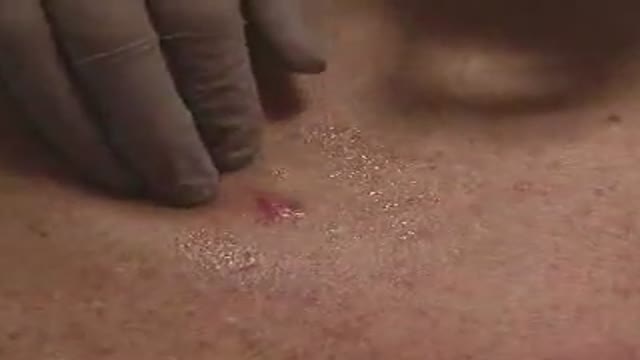
Blackheads are small bumps that appear on your skin due to clogged hair follicles. These bumps are called “blackheads” because the surface looks dark or black. Blackheads are a mild type of acne that usually form on the face, but they can also appear on the back, chest, neck, arms, and shoulders
A sneeze, or sternutation, is a semi-autonomous, convulsive expulsion of air from the lungs through the nose and mouth, usually caused by foreign particles irritating the nasal mucosa
How to use a HIV ORAL rapid test kit for self-diagnosis of HIV (oral swab test). Convenient, Easy to Use, and over 99% Accurate. Test yourself at home with Complete Privacy. Buy online today at: http://www.stdrapidtest.com
How to use a Hepatitis B rapid test kit for self-diagnosis of Hepatitis B (fingerstick blood). Convenient, Easy to Use, and over 98% Accurate. Certified GMP and ISO13485. Test yourself at home with Complete Privacy. Buy online today at: http://www.stdrapidtest.com
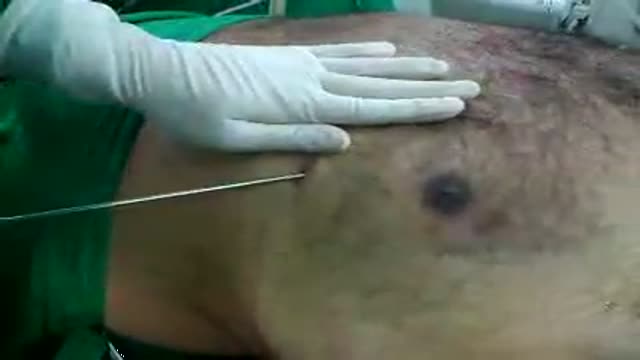
Pericardiocentesis is the aspiration of fluid from the pericardial space that surrounds the heart. This procedure can be life saving in patients with cardiac tamponade, even when it complicates acute type A aortic dissection and when cardiothoracic surgery is not available. [1] Cardiac tamponade is a time sensitive, life-threatening condition that requires prompt diagnosis and management. Historically, the diagnosis of cardiac tamponade has been based on clinical findings. Claude Beck, a cardiovascular surgeon, described 2 triads of clinical findings that he found associated with acute and chronic cardiac tamponade. The first of these triads consisted of hypotension, an increased venous pressure, and a quiet heart. It has come to be recognized as Beck's triad, a collection of findings most commonly produced by acute intrapericardial hemorrhage. Subsequent studies have shown that these classic findings are observed in only a minority of patients with cardiac tamponade. [2] The detection of pericardial fluid has been facilitated by the development and continued improvement of echocardiography. [3] Cardiac ultrasound is now accepted as the criterion standard imaging modality for the assessment of pericardial effusions and the dynamic findings consistent with cardiac tamponade. With echocardiography, the location of the effusion can be identified, the size can be estimated (small, medium, or large), and the hemodynamic effects can be examined by assessing for abnormal septal motion, right atrial or right ventricular inversion, and decreased respiratory variation of the diameter of the inferior vena cava
ECMO is used in infants who are sick due to breathing or heart problems. The purpose of ECMO is to provide enough oxygen to the baby while allowing time for the lungs and heart to rest or heal. The most common conditions that may require ECMO are: Congenital diaphragmatic hernia (CDH) Birth defects of the heart Meconium aspiration syndrome (MAS) Severe pneumonia Severe air leak problems Severe high blood pressure in the arteries of the lungs (PPHN)