
- Physical Examination
- Surgical Examination
- Ophthalmology
- Clinical Skills
- Orthopedics
- Surgery Videos
- Laparoscopy
- Pediatrics
- Funny Videos
- Cardiothoracic Surgery
- Nursing Videos
- Plastic Surgery
- Otorhinolaryngology
- Histology and Histopathology
- Neurosurgery
- Dermatology
- Pediatric Surgery
- Urology
- Dentistry
- Oncology and Cancers
- Anatomy Videos
- Health and Fitness
- Radiology
- Anaesthesia
- Physical Therapy
- Pharmacology
- Interventional Radiology
- Cardiology
- Endocrinology
- Gynecology
- Emergency Medicine
- Psychiatry and Psychology
- Childbirth Videos
- General Medical Videos
- Nephrology
- Physiology
- Diet and Food Health
- Diabetes Mellitus
- Neurology
- Women Health
- Osteoporosis
- Gastroenterology
- Pulmonology
- Hematology
- Rheumatology
- Toxicology
- Nuclear Medicine
- Infectious Diseases
- Vascular Disease
- Reproductive Health
- Burns and Wound Healing
- Kidney Zone Podcast
- Other


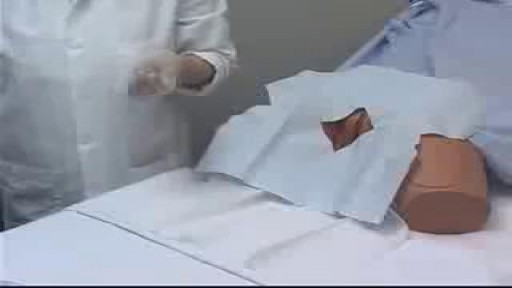
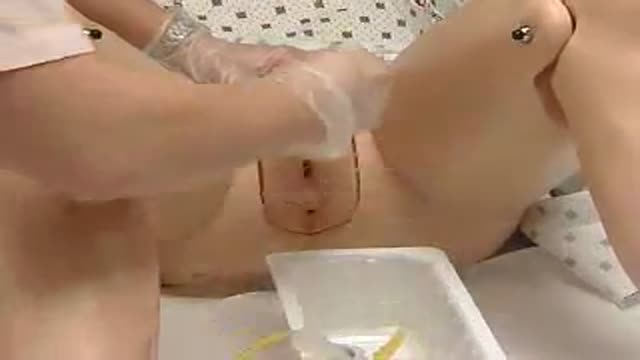
Male Urogenital Examination

Educational only: videos on MedicalVideos.com are for general information and are not medical advice. Always consult your own doctor about your health.
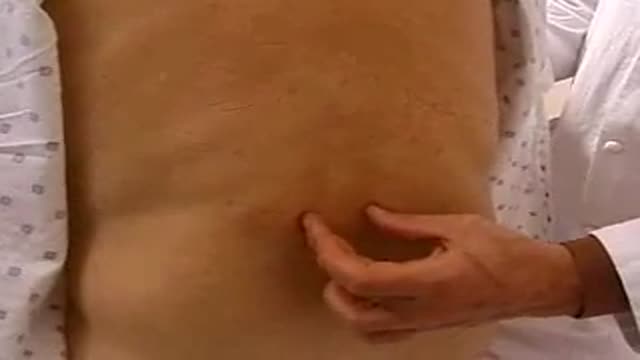
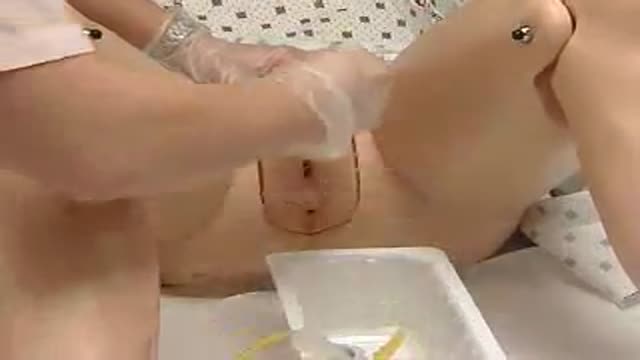
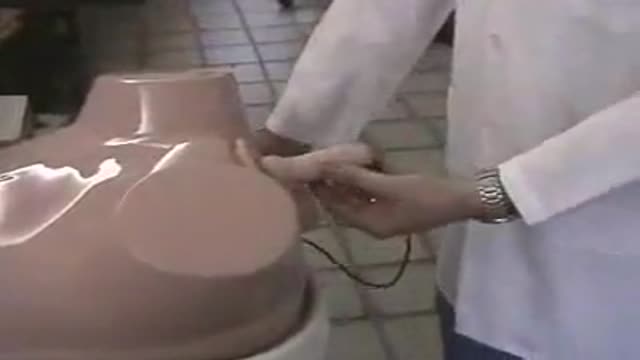
This video demonstrates the male urogenital examination, including the external genital examination and the digital rectal examination. It is presented as a clinical-skills reference for the well-male health assessment taught in medical training. The examination is used to check the prostate and detect abnormalities.
This video in 30 seconds
This teaching video presents the male genitourinary examination step by step, led by Scott George of Clinical Skills USA, who trains students using guide patients. The long narration covers communication and preparation, the standing hernia and scrotal examination, palpation of the penis and testes, and a complete digital rectal examination including prostate palpation and assessment of sphincter tone.
Key points
- The instructor explains training with guide patients and communicating during sensitive examinations
- The standing examination covers hernia checks and inguinal palpation
- Inspection and palpation of the scrotum and testes are demonstrated
- Inspection and palpation of the penis are demonstrated
- A digital rectal examination includes prostate palpation and sphincter tone assessment
Chapters
- 0:01 — Introduction to the examination training
- 8:26 — Exam maneuvers and clinician confidence
- 12:28 — Standing examination setup
- 14:00 — Hernia and groin examination
- 23:59 — Scrotal and testicular examination
- 32:32 — Rectal and prostate examination
Video Transcript
A full step-by-step teaching of the male genitourinary examination by Scott George of Clinical Skills USA, who trains students using guide patients. The 37-minute narration covers the standing hernia and scrotal examination, palpation of the penis and testes, and a complete digital rectal examination, including prostate palpation and assessment of sphincter tone.
Read the full transcript
The male general urinary exam a step-by-step physical examination Hello, my name is Scott George. I work full-time for the National Board of Medical Examiners And I also operate as the executive director of clinical skills USA clinical skills USA provides Assistance in the training of the male general urinary exam as well as the female gynecological exams by providing trained what we call guiding patients to assist the faculty in giving the student a hands-on experience in conducting these sensitive but important exams I've personally been teaching both of these
sensitive exams for approximately seven years and Within the last five years I have been asked by the schools that we've worked with to add a full staff of men and women to Assist in training these exams Presently we work with six medical schools for nursing schools and two physicians assistance programs in the southeast I have a staff of eight men that work with me and a staff of 19 women All of these men and women will share their own bodies in the hands-on instruction of the male general urinary and the female gynecological exams as a
Superior method for instruction in comparison to the traditional forms that would be the use of a mannequin or The hands-on first-time experience with a clinical patient The disadvantage in each of those cases with the mannequin and with the clinical patient is that Neither can tell you if you're performing the exam correctly if you're using Appropriate pressure too much not enough or if you're causing them any pain in many cases the patient themselves will anticipate They should feel pain and hence won't say anything The guiding patient on the other hand will take you through the experience
Tell you when you're performing appropriately and when you're not Take hold of your hand and guide you through the process Not just in terms of the overall mechanics for the exams They will also assist you in developing the appropriate communication As well as the appropriate clinical etiquette associated with the sensitive exams For the purposes of this instruction, I'll be focusing solely on the male genital and rectal exam After which over the next several days You will have an opportunity to try your hand on hands-on skills with an actual guiding patient
The most significant issue that you will generally have When addressing a basic health assessment with men is their overall
Resistance to participating in those exams
Despite our efforts to portray macho image many men I would venture to guess probably most Find the thought of the doctor's office To be very intimidating and anxiety provoking Unlike American women who generally will begin a regular regimen of routine physical exams including a pelvic and breast exam Between the ages of 15 and 21 Men do not generally begin those types of exams those comprehensive exams until they reach their middle ages at the earliest That means that most American men have had 40 50 or 60 years to think about the dreaded
rectal exam and during that very lengthy period of time men have had Plenty of opportunity to develop any number of very creative excuses for not visiting the doctor whether it be for a Routine physical or for addressing a real medical problem that they might be facing at that time The disadvantage that men put themselves in as opposed to women is that because we are not going in to the Clinical setting we're missing out on the type of health promotion that women benefit from when they go in to a doctor's office
That would include health promotion addressing tobacco alcohol drug use safe sex proper exercise and diet as well as testicular self-exams and Of course the most often heard excuse for not going into the doctor's office is I'm not having any problems down there No problems urinating no problems with my sex life and no pain Of course in your role as a clinician whether you're in the clinic or out in the public interfacing with men in general is to remind them that not all Symptoms become evident Until it's too late
so it is important to go in for preventative health care to take advantage of the trained the trained eye and the trained hand of the clinician in Finding these medical problems before they become major issues in addition to the embarrassment that most men anticipate associated with a comprehensive male physical exam is the anticipation that the exam will be painful Because after all they've had many years to look at cartoons similar to the ones that you're seeing in this PowerPoint presentation and many jokes about the dreaded digital rectal exam
The other disadvantage that men face in interacting with the health care system is that many clinicians are Uncomfortable conducting the exam and in some cases lack the confidence to do so That may be because many were not given appropriate training during the time that they were in medical or nursing school And did not have the opportunity as you will have to interact with a trained guiding patient in addition many of these clinicians both female and male have never actually personally experienced the comprehensive male exam involving an examination of their reproductive organs and
their rectum Again kudos to your school for providing you with this important hands-on learning experience Why is it important that we seriously consider getting men into the clinical setting more frequently For preventative health care as well as addressing their medical needs as they arise Is because men in the United States have a lifespan that averages approximately five and a half years less than women Now there's the question. Is that primarily biological or is it cultural? Evidence would suggest that it is probably primarily cultural If you take a look at the lifespan comparisons of men and women in the United States over the past hundred years
We find that in 19 in the early 1900s The lifespan of men and women was approximately the same Prior to that men were actually living longer than women in the United States So what has changed since the early 1900s? Why is it that we have seen this increasing?
Difference in life spans. I suspect it's largely due to the increased focus That began around the late 1920s and early 1930s on women's health and gynecology
A similar level of focus on men's health has yet to develop and I'm hopeful that it will in the near future The next slide lays out some of the important facts underlying our need to give men's health greater focus again kudos to your school for providing you with this focused attention on men's health and with the opportunity to actually practice your male health assessment skills with a trained guiding patient The objectives of the male genital urinary instruction being provided by your school include one Instructing you the clinician in the appropriate physical exam maneuvers for conducting the comprehensive male exam
number two Instructing you the clinician in the effective communication skills associated with the comprehensive male GU exam including history taking easing patient anxiety patient education and counseling Number three instructing you the clinician and interpreting the information gathered through the male GU exam and Finally number four providing you with a hands-on experience in conjunction with a guiding patient Intended to increase your self-confidence in conducting the comprehensive male GU exam this slide depicts the numerous aspects of the communication portion of your exam that are pertinent Unfortunately given the limited time that we have in
Providing this instruction and particularly the hands-on portion of it we're not going to be able to focus as much attention as I would like on The communication portion of the exam That's not to suggest that it is any less important than the mechanical aspects In fact much if not most of the information that you will gather during your physical exam will be derived Not necessarily by what you're able to see or a touch but by in fact what the patient actually tells you You're not necessarily going to know if they've been suffering from sexual problems
or urinary issues simply by inspection and physical examination Reassure the patient that all responses will be kept strictly confidential particularly when talking about the sensitive issues associated with their reproductive system explain the importance of this information for the complete assessment of the patient's health Adapt your questions when you're conducting your history to the age appropriateness of each patient With the younger males testicular health sexual practices and STDs May be a primary focus with middle-aged and older men will have a much greater focus on prostate health In terms of first identifying whether they're in a high-risk category
Secondly encouraging them at the age of 40 or 50 depending on whether they are high-risk or not to begin a regimen of regular prostate exams History questions related to possible urinary or sexual dysfunction will also be a focus for these gentlemen The examination of the male genital urinary system will typically be conducted at the end of a full comprehensive head-to-toe exam the exception would be the patient that comes in for a appropriate prostate screening Where the exam would be limited to an examination of the rectum and the prostate in
Preparing the patient for the exam it's important to explain the reasons for the genital and the rectal exam Asking the patient of course as we've already discussed about past or present urinary rectal prostate or sexual problems And very important reassuring the patient that there should be no pain associated with this exam But just as you had explained at the beginning of the head-to-toe exam and periodically throughout to this point Remind them to let you know if they do feel any pain that that is an important possible
Symptom that you need to be made aware of this exam may be conducted either with the patient on the table or Standing preferably standing near a solid object that will help them to maintain their balance throughout The preferred method taught by most of the schools that we work with is to have the patient standing throughout the Genital frontal part of the exam This will allow you to benefit from gravity and giving you a much better visual inspection of the area While the patient is standing you'll be sitting on a stool in front of them
Throughout the entire portion of the frontal exam remember to periodically make eye contact with the patient to make note of any Expressions of pain and verbally ask them as you go through the exam how they are doing The components of the exam that we are about to discuss include five steps The order of the steps is not Absolutely essential as you see them However, we would highly recommend that you begin by examining the pubic region in order to make your very first physical contact below the waist with this patient
Not directly on the genitals, but around the area to help desensitize them We would also recommend that the last step for some obvious reasons be an examination of the rectum Because at this point your gloves will be of no further use to you the remaining three steps of the exam include an examination of hernias both inguinal and femoral an examination of penis and the scrotum and its contents Throughout this PowerPoint presentation. We've included recommended Verbal segways that you can use as you move from one segment one component of the exam to the next
I hope you'll find them helpful At each step of the exam all five steps you'll begin with a visual inspection and then palpation Now we're ready to begin the actual exam and as I mentioned to you earlier We're going to begin with an examination of the pubic region Look for signs of skin irritation edema masses ulcerations infections warts or lesions Make note of bulges or scars in the inguinal region consistent with past or present hernias Evaluate the amount and distribution of the pubic hair Compared to the standard stages diagrams for adolescent patients between the ages of nine and eighteen
If excoriations are noted in the area Explore the pubic hair for signs of skin irritation Lyser knits have included here a textual and a graphic depiction of the five stages of the tanner stages of male adolescent development Following our visual inspection of the pubic region will begin our physical examination By examining the lymph nodes will begin by asking the patient to abduct their leg or roll their leg to the side Then we'll begin palpating for both the vertical and horizontal chain of inguinal nodes Starting at the iliac crest and moving down the full length of the groin and across the entire area of the super pubic region
Make note of any masses that you might palpate as well as any enlarged tender or immobile nodes A few shoddy nodes in the area are not uncommon and would not necessarily be symptomatic remember to use the pads of the finger with a firm Continuous circular motion as you palpate the area you may elect to check the femoral pulse at this point However, it's recommended that you check the femoral pulse preferably while the patient is lying flat on the exam table earlier in the exam These graphics depict the primary areas you'll be palpating for lymph nodes
The next step of the exam step number two will involve checking for any signs of either Inguinal or femoral hernias Generally an examination for femoral hernias is not part of the routine standard comprehensive male exam It is only included if the patient complains of pain in the groin area or As possibly reported noticing a mass in the area We've included it in this instruction because it's a physical exam maneuver that's easy to perform and Would be appropriate to demonstrate while we're also demonstrating the exam for the inguinal hernia
Which is a standard step in the comprehensive male exam in conducting both the exam for the femoral hernia and the inguinal hernia It is recommended that for efficiency purposes You would use your right hand on the patient's right side and your left hand on the patient's left side in the case of the femoral hernia exam maneuver You would take the flat hand Place it flush against the patient's inner thigh with fingertips against the femoral artery Again the hand the rest of the hand flush against the inner thigh and the side of the hand up
Against the scrotum once the hand is in place then you would ask the patient to turn their head It doesn't matter which direction as long as it's away from you so that they're not coughing on you then ask the patient to cough then make note of any bulging or pulsation against the Palmer side of the fingers or the hand or the side of the hand which is up against the scrotum If the bulging sensation is noted on the Palmer side of the fingers in the hand if it were to be a hernia
it in all likelihood would be a femoral hernia that is a hernia that is
Originating from below the inguinal ligament a bulging sensation that is felt along the side of the hand up against the scrotum If it were a hernia then it could be any number of things including a possible hydrocele But if it were a hernia would more than likely be an inguinal hernia that would be bowel that is originating from above the inguinal ligament and Dropping migrating down into the scrotum The second hernia that we'll examine for will be the inguinal hernia Again while the patient is standing ask them to flex their leg either to the left or to the right
Using this pistol grip hand position will then Invaginate a small amount of the scrotal sac Giving our finger plenty of room to roam up into the inguinal canal without causing the patient any discomfort You'll insert the finger at an angle coinciding with the inguinal canal or the femoral crease To about one to two centimeters If the finger is placed appropriately at that angle at that depth it should be lying directly on top of the inguinal ring Once in that position will ask the patient again to turn their head and cough
We'll make note of any bulging that is felt at that point either Against the fingertip or any other side of the inserted finger if it's felt at the fingertip which might suggest the Bowel or hernia is coming through the inguinal ring We would be more than likely to conclude that if it is a hernia in that case It is a indirect hernia that would be a hernia that is winding its way through the inguinal canal protruding back out of the inguinal ring If on the other hand the pulsation is felt on any portion of the sides of the finger
We might conclude in that case that we have a direct hernia That's bowel that is busting straight through the abdominal fascia not going around much and certainly not winding its way through the inguinal canal Step three of the exam will be examination of the scrotum and its contents As we begin this segment of the exam We will be asking our patients those between the ages of 15 and 40 if they conduct regular testicular self-exams Testicular cancer is the most common cancer in men between the ages of 15 and 35
I didn't say it was a common cancer, but it is the most common cancer And in fact is more common than breast cancer is for women in that same age group however for women we actively promote regular Frequent clinical breast exams in conjunction with breast self exams That is not the case presently for most men Because most men are not participating in regular and routine clinical health assessments during which time they might ideally have been taught The importance of performing self-exams as well as the method for doing so
We would recommend that you begin this segment of the exam by asking the patient in the high-risk age category 15 to 35 if they themselves do conduct regular testicular self-exams Regardless of how they answer that question. We would treat all the same Assuming that if they said yes, they may either be not telling the truth or Conducting the exam incorrectly So what we recommend is that in that case where the patient says yes, they do perform the exam We'd say Fine, let me show you how I conduct the exam and once it's complete
I'll ask you if you conduct the exam using the same technique if not We'll discuss the differences. We'll recommend that our patient conduct their own regular self exams once a month in the shower just after when the Strotum is loose Informing them that the self-exam should take no more than about 10 seconds and if healthy should be completely painless Of course if they note anything unusual including any hard masses on the surface of the otherwise smooth testicle or Anything tender as they are palpating the area. They should let you know
Explaining the actual Mechanical process for conducting the exam is as simple as you're verbalizing What it is you are doing as you are yourself performing the clinical exam For warn them that they may find during the course of their exam that one testicle is actually larger than the other Possibly hanging lower than the other Let them know that is perfectly healthy if that's the case if not that is that both testicles are the same size or hanging equidistantly that as well is nothing out of the ordinary
Typically you'll find that the left testicle is larger and hangs lower than the right We'll also inform the patient that they may find something on the testicle But it should not be either hard or painful That they may in fact find a small tube that contains sperm attached to the top posterior of each testicle Call the epididymis Under any circumstances if they do find anything that's hard or painful they need to let you know Reassure them that anything that is found in all likelihood will be treatable
With the likelihood of success being we'll begin the actual exam by asking the patient to hold their own penis up against the abdomen Out of our way so that we can get a clear view of the scrotum as part of our inspection Expect the scrotum for its size its cemetery look for possible swelling Actually lift the scrotum to view its posterior surface note any dermatological discolorations lesions or warts We'll stretch the scrotal sac opening the rugae To complete our inspection as we simultaneously Pelpaid the sac between our fingers and thumb feeling for any internal nodules
Once the inspection is complete. We'll begin our palpation Take the non-palpating hand and separate the two testicles The palpating hand will then wrap all fingers and thumb around each testicle individually rolling it sufficiently to feel all surfaces This palpation does not require pinching or pressing firmly because anything that you would find Such as a nodule would always be found on the surface never beneath The healthy testicles should feel smooth and glassy The only exception will be the epidinomus which will be a soft pliable tube That will feel much like a soft macaroni noodle
Make certain again that you feel all surfaces leave nothing untouched Before we complete our examination of the scrotal contents We will locate the spermatic cord in the vas deferens by simply pinching the scrotal sac with a firm deep pinch Between the thumb and the finger above each individual testicle will examine each individually Pull the pinched scrotal sac laterally Making note of any vasculature or the cord itself Noting whether it is distinctive Or does it have the feeling of as the textbook would call it a bag of worms?
If it does feel like a bag of worms we may have identified a vericoseal Which is a dilation of the veneration running up the full length of the cord Make note of any tenderness expressed by the patient during your palpation Which may also be an indication of a possible vericoseal diagnosis The fifth step in the male exam will be an examination of the penis The anatomy of the penis includes the shaft The glands at the tip The corona around the outer edge of the glands The sulcus the crease where the shaft meets the corona
And the urethral meatus We'll begin our inspection By identifying if the gentleman is circumcised or not circumcised If in fact they're not circumcised We recommend that you would allow him to roll the prepest back Over the gland so that you can Conduct a visual inspection and palpation is necessary This will reduce the likelihood that you will cause him any discomfort by pulling the foreskin Back too far or leaving it pulled back too long We'll continue our visual inspection by spreading the skin folds of the penis along the entire shaft
Inspect for any discoloration lesions or other signs of STDs We'll begin our palpation of the penis by taking the non palpating hand and a firm grasp of the glands Then using the other hand we will palpate firmly Again, I emphasize firmly Beginning at the proximal end of the penis and moving toward the urethral meatus at the distal end Palpate initially on the dorsal and ventral side Then again on the lateral sides The very last thing that we will do is to roll the meatus between our finger and thumb
Opening it in order to determine if we have during the course of our palpation Been able to draw forth any discharge If any discharge is identified other than urine or seminal fluid that appears to be suspicious We will conduct a urethral swab of the area In some instances it may be necessary to more aggressively attempt to draw forth the discharge By milking the penis that would be Compressing firmly the ventral side of the penis Beginning at the proximal end moving towards the urethral meatus And again we would conclude the examination of the penis by inspecting the glands for any signs of discoloration inflammation
lesions or discharge The last component of our male genital urinary exam will be an examination of the rectum The anus the perineum and the prostate this portion of the exam should generally take no more than 30 to 45 seconds involving both a visual inspection of the area And physical palpation. There are two commonly applied positions for conducting this portion of the exam One is the leaning forward position ideal for simple prostate screening when the patient is not required to otherwise be in a gown And the second position is the sims or left lateral cubitis position
Which allows the patient to remain on the table if they are participating in a full head to toe exam in a hospital gown or a robe For the purposes of this instruction, we will focus on the standing leaning position Which requires the patient to stand with legs spread at shoulder width toes pointed in knees bent slightly Asking the patient to lean forward then onto the exam table on their forearms or elbows Please have your supplies your gloves and your lubricant ready and prepared in advance To minimize the amount of time that your patient is asked to assume this position
We will begin the actual exam by inspecting the area Initially forewarning the patient that will be placing our hand onto their hip Once we have done so we'll spread the buttocks and examine four areas Initially inspecting the sacrocoxidual area looking for any signs of a pilonytal cyst We'll move down to the perianal region looking for any signs of bleeding hemorrhoids fissures warts or other skin irritations Next we will inspect the perineum looking for any skin irritations masses or other lesions And finally we'll inspect the posterior scrotum
We'll have a better view of the area at this point than we would have had when the patient was standing in front of us earlier in the exam During this visual inspection, you may become aware of the anal genital raffy Often called the median raffy the median raffy will run from the tip of the glans penis at the urethra to the anus Despite varying coarseness among males The median raffy would be considered asymptomatic We are now ready to begin the physical portion of the exam We'll begin by reassuring our patient that the exam should not take long
Probably 10 seconds or less and should be painless However, if the patient again Notices any pain or discomfort during the course of this exam. It is essential that they let you know It is important at some point in the exam that you provide your patient with appropriate patient education associated with prostate health For men nearing or over the age of 40, it is important to assess their level of risk For contracting prostate cancer for men in the high risk categories, they should begin a routine of regular
annual or at least Semiannual prostate screenings beginning at the age of 40 Men in the high risk categories would be those with a family history of prostate cancer Those men who have had a previous problem with their prostate of any kind And those men who are african-american Absent any of those risk factors all men beginning at least by the age of 50 should begin a regular routine of annual prostate screenings The physical exam itself will begin by lubricating the tip of the index finger Then forewarning the patient that they may be feeling something cold on their bottom, which will be the lubricant
Once forewarned we will take the Lubricated index finger and place the pad of that finger onto the anus Leaving it there for approximately three seconds as the cold lubricated finger is placed on the anus The sphincter will involuntarily contract immediately Restricting your ability to insert the finger We will allow a minimum three seconds for the sphincter to relax before inserting the finger Once relaxed we will roll the finger in slowly And begin to slide the finger along the anterior rectal wall back as far as the finger will reach
In order to maximize the coverage of that finger on the top of the prostate Since one third of the prostate is up against the bladder The digital rectal exam is an imperfect exam and must be conducted in conjunction With the psa prostate specific antigen blood test The drawing of the blood for the test should be conducted prior to the palpation of the prostate Since that palpation will cause the prostate to release a higher level of the antigen into the bloodstream than it would normally Thus yielding a false antigen level reading during the actual digital rectal exam
We will be evaluating in the prostate for its size shape and symmetry We'll also be using firm pressure as we palpate the prostate in order to identify any Nodularity that might be apparent beneath the actual surface of the prostate
In advance of the exam we should forewarn the patient that though they should feel no pain during the exam They may feel some pressure It is not recommended that the patient be informed that they may feel some discomfort Since doing so may necessarily increase the patient's level of anxiety As well as preempting them from informing you if they actually do feel any discomfort We should also let the patient know that they may feel an urge to urinate or to have a bowel movement But that it is highly unlikely that that would happen before concluding the digital rectal exam
We will perform two final steps First we'll conduct a 360 degree sweep of all sides of the rectal wall By rotating the wrist of the inserted finger by 360 degrees Making contact with as much of the rectal wall as possible noting any masses or nodules And finally we'll conduct our neurological exam by asking the patient to tighten or pinch the inserted finger Assessing the sphincter's tone A weak sphincter tone may indicate a neurological problem Possibly represented by fecal incontinence or erectile dysfunction Once completed we'll remove the inserted finger slowly
Then hand the patient sufficient tissues to properly wipe the excess lubricant away We'll allow the patient to clean themselves unless they are physically unable to While the patient is cleaning themselves we will turn away and examine the adherent material on the glove Looking for any signs of rectal bleeding Once the physical exam is concluded we'll allow the patient to get dressed and then meet with them to discuss The exam findings and during that time we will address other pertinent health issues And health maintenance recommendations And most importantly we will offer the patient praise for their participation in the exam
And encourage them to continue a lifetime of regular physical exams as part of a healthy lifestyle
Transcript auto-generated from the video’s audio for accessibility and study. Educational content only — not medical advice.
Video Overview
Other: part of the MedicalVideos.com library of free educational medical and surgery videos. Browse this category →
Medical Videos
Free medical and surgery videos for patients, students and professionals — trusted since 2007.
Founded by Dr. Mohamed Ibrahim, MD, PhD — physician-scientist.
Follow us on Facebook · Instagram
SORT BY-
Top Comments
-
Latest comments