
- Physical Examination
- Surgical Examination
- Ophthalmology
- Clinical Skills
- Orthopedics
- Surgery Videos
- Laparoscopy
- Pediatrics
- Funny Videos
- Cardiothoracic Surgery
- Nursing Videos
- Plastic Surgery
- Otorhinolaryngology
- Histology and Histopathology
- Neurosurgery
- Dermatology
- Pediatric Surgery
- Urology
- Dentistry
- Oncology and Cancers
- Anatomy Videos
- Health and Fitness
- Radiology
- Anaesthesia
- Physical Therapy
- Pharmacology
- Interventional Radiology
- Cardiology
- Endocrinology
- Gynecology
- Emergency Medicine
- Psychiatry and Psychology
- Childbirth Videos
- General Medical Videos
- Nephrology
- Physiology
- Diet and Food Health
- Diabetes Mellitus
- Neurology
- Women Health
- Osteoporosis
- Gastroenterology
- Pulmonology
- Hematology
- Rheumatology
- Toxicology
- Nuclear Medicine
- Infectious Diseases
- Vascular Disease
- Reproductive Health
- Burns and Wound Healing
- Kidney Zone Podcast
- Other
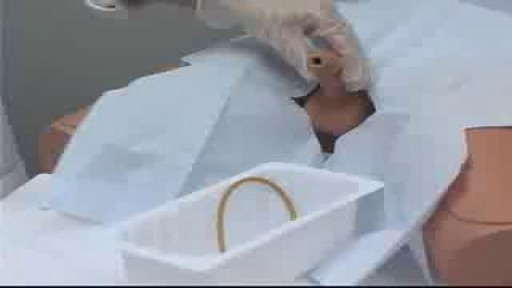
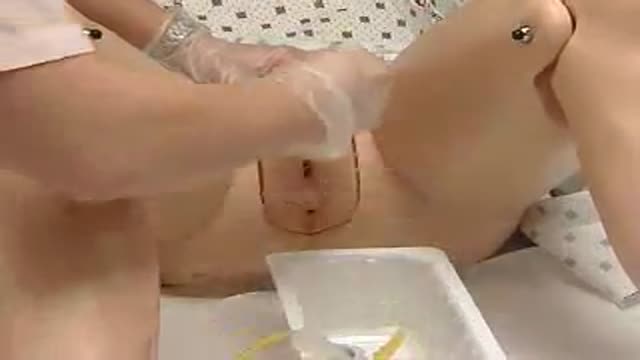

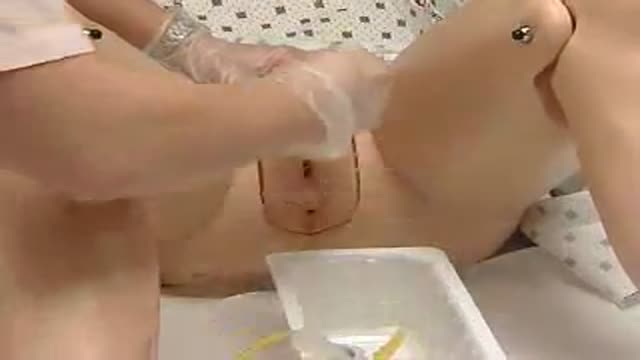
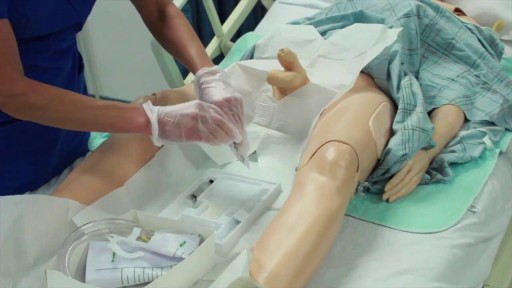

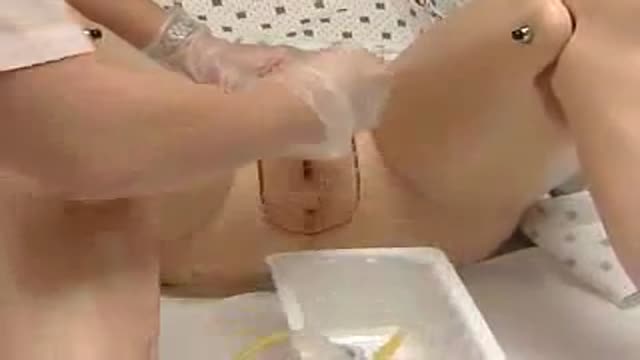
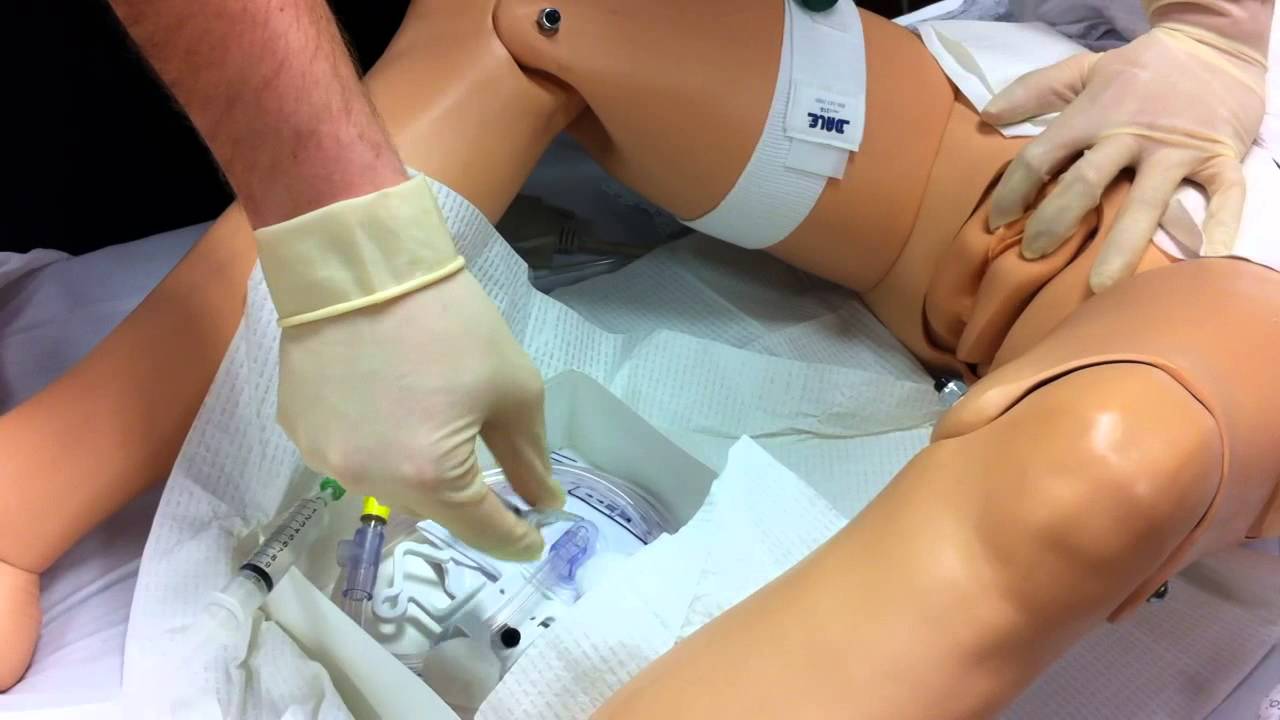

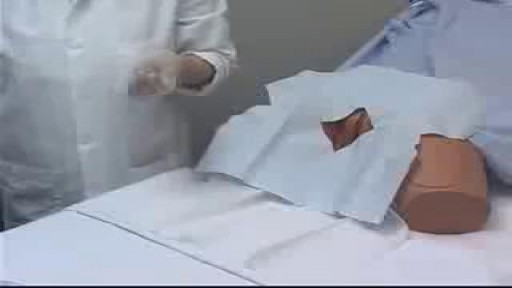
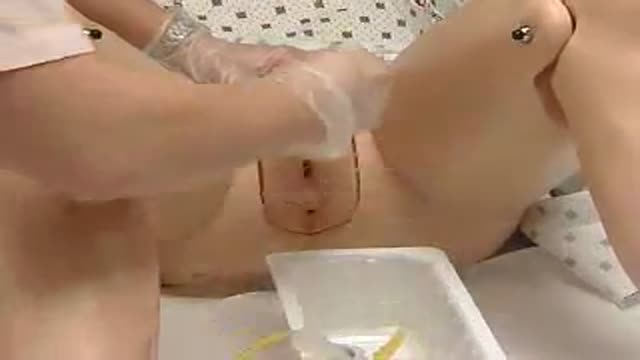
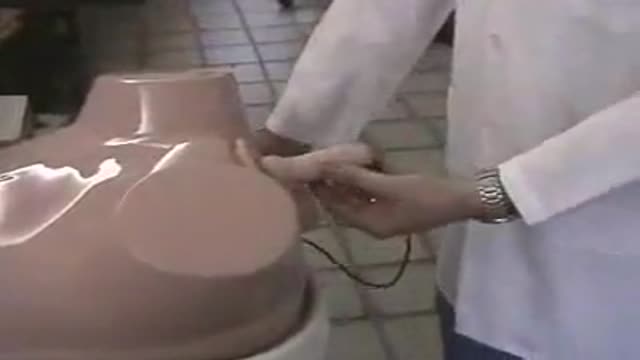



Catheterization of the Male and Female

Educational only: videos on MedicalVideos.com are for general information and are not medical advice. Always consult your own doctor about your health.
Urinary catheterization in both male and female patients is demonstrated in this clinical-skills video, with attention to sterile technique and the anatomical differences between the two procedures. It is a foundational nursing and medical skill. Procedure education only — not personal medical advice.
This video in 30 seconds
A vintage nursing film teaches catheterization of male and female patients from first principles over nearly twenty-five minutes. It distinguishes straight from retention catheters, inventories the sterile kit, demonstrates the procedures, and closes with retention-catheter care including correct depth before balloon inflation, bag position below bladder level, and charting.
Key points
- Straight and retention Foley catheters are distinguished in the narration
- The sterile kit items for catheterization are inventoried
- Patient preparation, privacy, and draping are demonstrated for the male procedure
- Male cleansing and catheter insertion are demonstrated step by step
- Retention catheter depth, drainage bag position, and charting are summarised, and differences in the female procedure are presented near the end
Chapters
- 0:58 — Catheter types and purpose
- 1:39 — Sterile kit inventory
- 3:04 — Preparing the patient
- 5:57 — Male cleansing and insertion
- 11:51 — Retention catheter routine
- 18:43 — Female catheterization differences
- 21:17 — Procedure summary
Video Transcript
A vintage nursing film, nearly twenty-five minutes, teaching catheterization of male and female patients from first principles. It distinguishes straight from retention (Foley) catheters, inventories the sterile kit, and closes with the retention-catheter routine — correct depth before inflating the balloon, bag below bladder level, straight-line drainage, and prompt charting.
Read the full transcript
for males, vary slightly for females. But in each case, the principle is the same. The passage of a catheter through the urethra into the bladder to remove urine. The catheter used may be one of two types. Brief insertions as here, the straight or French type is used. Long periods of insertion, a retention or foley catheter is used. This type has an inflatable neck which when properly inflated keeps the eye of the tip within the bladder and prevents its accidental removal. In addition to the catheter, catheterization requires these materials.
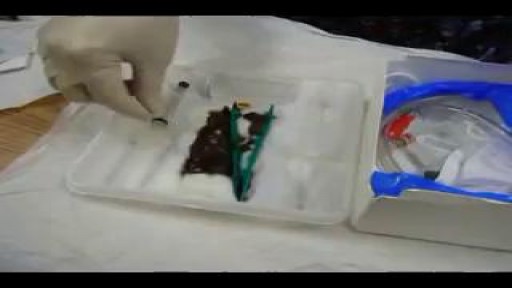
Collecting tray, specimen bottle, pad and perineal drape, a suitable cleansing agent, cotton balls, at least four to five and lubricating jelly. A retention catheter requires several additional items. A drainage set including a collecting bag and tubing and a syringe filled with saline or water. All of these must be sterile and be used aseptically. They may be packaged in sterile disposable kits or in reusable sterile packs prepared by your hospital's central supply. In either case, familiarize yourself with their contents so needed items not supplied in the kits
can be secured from other sources. Here are several other minor items you'll need. The last three are used only for retention catheterization. Before performing any catheterization, which must be done only on doctor's orders, you should tell the patient what you're going to do, how and why. It's advisable to tell him there's usually no pain associated with the procedure. Only a feeling of fullness or pressure as the tube is inserted. Answer his questions so as to minimize his embarrassment and relieve him of his apprehension and doubts. Washing your hands thoroughly with soap and warm water is always a good practice before beginning any procedure.
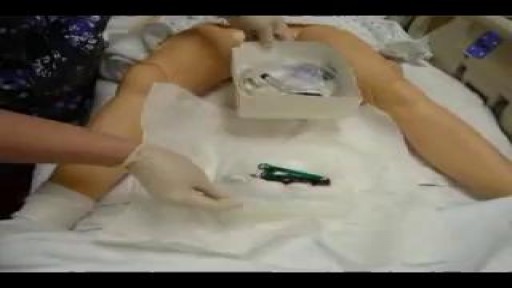
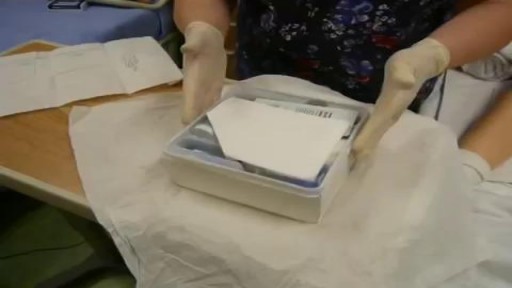
It lessens the likelihood of cross-contamination between patients as well as reducing your own risk of infection. Now let's observe closely how to carry out a catheterization on a male using a straight catheter. Cleaning the bed will help ease embarrassment by assuring the patient that his privacy is not to be violated needlessly. Concern for his privacy includes draping the patient so only his penis is exposed. Note that the patient lies on his back, legs apart, and with a bed horizontal. Place the pack between the patient's lower legs and, as you open it aseptically,
cost him the patient to keep his hands above his waist and his legs apart throughout the procedure. Grasp the underpad at its edges, unfold it so as not to contaminate its absorbent surface, and position it plastic side down over the thighs and scrotum. Now put on one of the sterile gloves, observing proper aseptic technique. Then, with this gloved hand, remove all items from the tray except the cotton balls and place them on the sterile field provided by the tray's cover. Using your ungloved hand, pour the sterile cleansing agent onto the cotton balls until they are saturated.
Paranil drape and place it plastic side down with the cutout over the perineal area. This completes the sterile draping of the patient. Move the tray closer to the perineal area and empty the container of its lubricating jelly onto the sterile field. Lift the penis through the cutout of the perineal drape and arrange the drape for maximum coverage. To avoid introducing contaminants and infective organisms into the bladder, clean the head of the penis carefully. Make a single cleansing downward stroke with each cotton ball. Cleanse the area from the edge of the meatis down.
Avoid touching the genitalia or your other hand, now contaminated, and treat it as such for the remainder of the procedure. Wipe the final two cotton balls over the meatis with a twisting motion. I'll use cotton balls off the sterile field, specimen cup, and its cover alongside the tray. Then, grasp the catheter and position its open end between your third and fourth fingers. Hold the other end between your thumb and forefinger about three inches from the tip. Rotate this section through the lubricating jelly to facilitate its passage through the urethra.
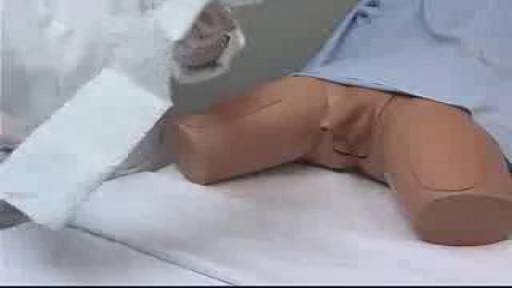
Before inserting the catheter, raise the penis with slight traction so it is almost perpendicular to the body. The reason for this will be apparent from this model. At rest, the urethra assumes an S-curve to the bladder, a pathway difficult to negotiate without causing pain and possible trauma. But when it's held almost perpendicular to the body, the S-curve is eliminated, making passage of the catheter much easier and safer. Some resistance may be encountered at the external sphincter. Steady, gentle pressure will usually overcome this. Never force the catheter to overcome firm resistance.
Normally, the length of catheter needed to place the eye within the bladder is about four inches plus the length of the penis. Hold the penis firmly and correctly as you bring the tip of the catheter from above onto the meatis. Insert it with a steady, gentle pressure. Shift your hold to avoid touching the penis. Continue inserting until urine flows or a length equivalent to the length of the penis plus about four inches is inserted.
Lower the penis and direct the flow into the tray. Allow the flow to continue for a few seconds to clear the catheter of debris picked up in its passage through the urethra before taking a specimen. Pinch the catheter to stop the flow before redirecting it. This avoids contaminating the sterile field. Fill the specimen container about one-third full and catheter as soon as possible to prevent its contamination. Here we see two reasons for catheterization. To obtain an uncontaminated specimen of urine for culture or microscopic examination. And to decompress the bladder by removing urine.
Another reason for catheterization is to measure residual urine. After voiding, a certain amount of urine always remains in the bladder, referred to as residual urine. Through catheterization, this residual can be drained and measured. When enough urine has been removed or the flow stops, pinch the catheter, elevate the penis and gently withdraw the catheter. Now remove the urine tray. Then cover the tray with its wrapper and remove it from the bed. Removing your gloves, discard the drapes. Dry the penis with sterile cotton balls. Cover the exposed genitalia.
Now prepare the specimen label and affix it to the complainer. Be sure to include the patient's full name, his room or ward number, the time and date the urine was collected, and the tests to be performed on the specimen. Finally, make the patient comfortable before leaving. The nurse's patient record all pertinent data on the condition of the urine. And whether any difficulty was encountered in performing the procedure. The action to be taken on the urine specimen. This is how the setup looks for catheterization with a retention catheter.
It's used for continuous decompression of the bladder. It's also used for monitoring urinary output for management of incontinence. A condition in which urine escapes from the bladder involuntarily. Let's pick up the procedure for the retention catheter at a point where it begins to differ from that for the sprate catheter. Since in this instance the basic disposable kit does not include the additional items required for this procedure, they must be obtained from other sources. Preparing them for use. It's essential to observe proper aseptic technique. And to realize that once cleansing of the penis starts,
you'll have the use of only one sterile hand for the remainder of the procedure. This setup, getting things ready for use is rather time consuming. But here, the task is performed more quickly since the disposable kit contains all the sterile articles needed for a foley catheterization. After the underpad is positioned, are gloves. The perineal drape and the filled syringe are removed from the tray and placed on the sterile wrapper. Obricating jelly is prepared. The packet containing the cleansing agent is opened and poured onto the cotton balls.
The perineal drape is applied. The top part of the kit is placed close to the perineal area. While the catheter with its drainage set is removed from the container and placed on the sterile wrapper. As before, the penis is lifted through the cutout and the drape positioned for maximum coverage. In cleansing and uncircumcised penis, retract the foreskin before proceeding to wipe the head. Make only one downward pass with each cotton ball. Be careful not to contaminate your sterile hand. To prevent constriction of the penis, the foreskin must be returned to its normal position after the catheter is inserted.
For the insertion, hold the penis up and correctly with the foreskin retracted. Bring the drainage set closer to the perineal area to avoid drag on the catheter. The catheter is before. Insert the catheter from above gently and steadily to avoid contaminating your sterile hand. Keep inserting until urine flows or a length equivalent to the penis plus four inches is inserted. Then push the catheter in another inch to make sure its inflatable neck is well within the bladder. Since the catheter in this setup comes attached to the drainage bag, let's continue the procedure where this is not the case.
As before, once urine flows, insert the catheter another inch. Use the hand holding the penis also to study the catheter and to hold the bifurcated end for inflating the balloon. Attach the syringe to the inflatable end and inject the HCCs of sterile fluid. Gently withdraw the excess of catheter and check to make sure the tip is anchored to prevent accidental withdrawal. Join the tubing of the drainage set securely to the straight end of the catheter. When carrying out the cleanup for the retention in catheter, it's necessary to tear the perineal drape to remove it.
So for the patient's comfort, use sterile cotton balls to dry the penis and remove lubricant from the catheter. Make sure the tubing to the patient's abdomen to prevent needless tension on the catheter and possible irritation to the bladder and urethra. Hang the collecting bag on the side of the bed closest to the secured catheter. Under no circumstances should the collecting bag be raised above the level of the bladder while the catheter is in dwelling. Make sure the tubing allows for straight line drainage to the bag. No kinks.
Secure it at the edge of the bed to the sheet, not the mattress, so the patient can move about in bed without crushing or pulling on the tubing. With this setup, check at regular intervals for amount of urine output, straight line drainage is being maintained, and that the tubing has not become clogged. A final note. When the time comes to remove and in dwelling catheter, it is most important to wear sterile gloves and to use a sterile syringe. All the fluid injected to inflate the catheter's balloon is 8 cc's.
Once this is accomplished, hold the penis up as you slowly withdraw the catheter. Procedure for catheterizing a female differs from that for the male in only a few details. One difference is positioning. For the female, the legs are flexed and spread wide apart. Most patients need help to get them placed properly. Patients may require pillows to help support their flexed legs. In either case, it is important to limit exposure as much as possible. Another difference is the possible need for additional light. Locating the female urethral meatus requires adequate illumination.
The final difference is in preparing the vulva area. Thumb and forefinger apply outward and upward pressure to hold the labia apart. This is the urethral meatus, found about halfway between the clitoris and the vaginal opening. In cleansing the vulva, single downward wipes are made with each cotton sponge on each side of the meatus. This must be done without contaminating the sterile hand. The final wipes are made over the opening. While the catheter is held exactly the same way for the insertion, the angle of approach is oblique rather than perpendicular.
The reason for this is more obvious from this sagittal view of the pathway to the bladder. Also, because the female urethra is much shorter than the male, about 2 to 2.5 inches, the catheter has to be inserted only a short distance per urine to flow. If any resistance is encountered from the sphincter at the bladder's opening, the short insertion increases the likelihood of accidental withdrawal, possibility easily avoided by holding or stabilizing the catheter. To summarize, catheterization is a simple but often vital procedure that can be carried out with a minimum of discomfort
and very little risk to the patient when you observe the following key points. Prepare your patient emotionally for the procedure. Make sure you have all needed materials, including a size catheter ordered by the doctor. Position your patient correctly, crupulous in observing asepsis to overcome resistance. Ensure the retention catheter is inserted to the proper depth before inflating it. Inject the proper amount of fluid to inflate the balloon before checking to make certain the tip is properly anchored. Ensure the retention catheter to the abdomen to prevent tension on the catheter and possible trauma to the urethra and bladder.
Hang the collecting bag below the level of the bladder and under no circumstances raise it above the bladder while the catheter is in dwelling. Secure the tubing to maintain straight line drainage to the bag and allow for patient movement and comfort. Check the catheterization setup frequently for proper functioning and patient comfort. Finally, record all pertinent information promptly and correctly. All the procedures detailed in this bill and you too.
Transcript auto-generated from the video’s audio for accessibility and study. Educational content only — not medical advice.
Video Overview
From our Clinical Skills collection: Suturing, injections, catheterization, IV insertion and OSCE-style examination techniques demonstrated step by step. Browse all Clinical Skills videos →
Medical Videos
Free medical and surgery videos for patients, students and professionals — trusted since 2007.
Founded by Dr. Mohamed Ibrahim, MD, PhD — physician-scientist.
Follow us on Facebook · Instagram
SORT BY-
Top Comments
-
Latest comments