
- Physical Examination
- Surgical Examination
- Ophthalmology
- Clinical Skills
- Orthopedics
- Surgery Videos
- Laparoscopy
- Pediatrics
- Funny Videos
- Cardiothoracic Surgery
- Nursing Videos
- Plastic Surgery
- Otorhinolaryngology
- Histology and Histopathology
- Neurosurgery
- Dermatology
- Pediatric Surgery
- Urology
- Dentistry
- Oncology and Cancers
- Anatomy Videos
- Health and Fitness
- Radiology
- Anaesthesia
- Physical Therapy
- Pharmacology
- Interventional Radiology
- Cardiology
- Endocrinology
- Gynecology
- Emergency Medicine
- Psychiatry and Psychology
- Childbirth Videos
- General Medical Videos
- Nephrology
- Physiology
- Diet and Food Health
- Diabetes Mellitus
- Neurology
- Women Health
- Osteoporosis
- Gastroenterology
- Pulmonology
- Hematology
- Rheumatology
- Toxicology
- Nuclear Medicine
- Infectious Diseases
- Vascular Disease
- Reproductive Health
- Burns and Wound Healing
- Kidney Zone Podcast
- Other


















Medical Videos - Penises Have Bones?!

Educational only: videos on MedicalVideos.com are for general information and are not medical advice. Always consult your own doctor about your health.
This video in 30 seconds
A presenter explains the baculum, a bone found in the penis of many mammals including primates, rodents, bats and walruses, while noting humans do not have one. She describes a Swiss seed-beetle experiment discussed in the video and presents scientists hypotheses, including reduced mating competition and monogamy, noting the reason in humans is not known for certain, in clinical, neutral terms.
Key points
- The baculum is described in many mammal groups, with the walrus example given
- Human anatomy is contrasted with mammals that have the bone
- A seed-beetle experiment on mating competition is described
- Changes observed over generations without competition are reported
- Hypotheses involving monogamy and mating frequency are presented as unproven
Chapters
- 0:00 — Baculum bone in many mammals
- 1:12 — Why humans lack the bone
- 1:28 — Beetle experiment without competition
- 2:14 — Hypotheses on monogamy and mating
Video Transcript
Presenter Lacey Green explains the baculum, or penis bone, found in many mammals including primates, rodents, bats, and walruses, while noting humans do not have one. She describes a Swiss seed-beetle experiment discussed in the video and presents scientists' hypotheses, including reduced mating competition and monogamy, as possible explanations, noting the reason in humans is not known for sure.
Read the full transcript
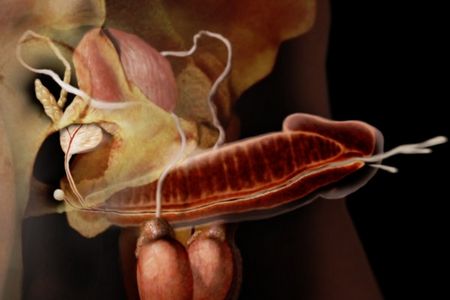
It's called a baculum, but we'll just call it a penis bone because of reasons. Hey friends, Lacey Green here. If you're like me, you probably don't find yourself thinking about animal penises too often. But today, that changes. In humans, the penis is made up of spongy cylinders that have lots of blood vessels. Those blood vessels filled with blood is boom, ready for copulation. This is actually a rarity amongst mammalians though. Most mammals have a penis bone instead. Various primates, rodents, bats, bears, cats, dogs, they all have them.
The largest baculum in the animal kingdom belongs to a walrus and it reaches up to 30 inches long, which doesn't sound too cute if I'm being honest. And the word for the freakiest penis bone goes to the seed beetle because it looks like a torture device from hell. In mammals with a baculum, the bone stays tucked away inside the body until it's sex time. Then it's pushed out with the help of abdominal muscles into a fleshy penis sheath that surrounds the bone. It's pretty efficient if you think about it. Just flex and you're all ready to go.
Kind of makes you wish you had a penis bone, right? Pfft. So jelly. So why don't humans have one? Blame it on natural selection guys. A few years ago, scientists in Switzerland conducted an experiment with those freaky seed beetles. See the reason their penis bone is so spiny is because it helps to scrub away the sperm from the beetle's competitors. So the beetle with the spiniest penis can make the most babies. In the experiment, the beetles were isolated from any sexual competition, just one female and one male.
They observed their monogamous mating and offspring for 21 generations, all the while keeping a close eye on those penises. What they found was that without any competition, the spine got shorter. Without as much competition, they didn't need it anymore. In other species, the shape and size of the baculum may help animals have more opportunities to mate because they can be speedy about it and they can have many mates in a short period. Like the lion, who can copulate 250 times in four days. You know right? Dang.
Some scientists hypothesize that baculum may help the male deliver more sperm and others think it could help get the sperm closer to the egg. All these functions translate into more babies and a better chance of genetic survival. So in humans, we don't actually know for sure why we lost our baculum, but there are a few theories. One is monogamy. Just like those beetles, monogamy makes the mating game less competitive and so we may have grown out of the need. Another similar theory is that we just don't mate as much or as quickly.
We like to pull up a chair, have a glass of wine, get to know each other first. I mean, not animals. Oh wait. Alright peeps, there you got it. Penis bones, important knowledge for your brain. Thanks for joining me. We'll catch you again soon with more denies updates.
Transcript auto-generated from the video’s audio for accessibility and study. Educational content only — not medical advice.
Video Overview
From our Urology collection: Prostate surgery (TURP), cystoscopy, kidney stone treatment, vasectomy and male health procedures explained step by step. Browse all Urology videos →
Medical Videos
Free medical and surgery videos for patients, students and professionals — trusted since 2007.
Founded by Dr. Mohamed Ibrahim, MD, PhD — physician-scientist.
Follow us on Facebook · Instagram
SORT BY-
Top Comments
-
Latest comments