
- Physical Examination
- Surgical Examination
- Ophthalmology
- Clinical Skills
- Orthopedics
- Surgery Videos
- Laparoscopy
- Pediatrics
- Funny Videos
- Cardiothoracic Surgery
- Nursing Videos
- Plastic Surgery
- Otorhinolaryngology
- Histology and Histopathology
- Neurosurgery
- Dermatology
- Pediatric Surgery
- Urology
- Dentistry
- Oncology and Cancers
- Anatomy Videos
- Health and Fitness
- Radiology
- Anaesthesia
- Physical Therapy
- Pharmacology
- Interventional Radiology
- Cardiology
- Endocrinology
- Gynecology
- Emergency Medicine
- Psychiatry and Psychology
- Childbirth Videos
- General Medical Videos
- Nephrology
- Physiology
- Diet and Food Health
- Diabetes Mellitus
- Neurology
- Women Health
- Osteoporosis
- Gastroenterology
- Pulmonology
- Hematology
- Rheumatology
- Toxicology
- Nuclear Medicine
- Infectious Diseases
- Vascular Disease
- Reproductive Health
- Burns and Wound Healing
- Kidney Zone Podcast
- Other




Self Breast Exam

Educational only: videos on MedicalVideos.com are for general information and are not medical advice. Always consult your own doctor about your health.
It is very important to instruct your patients about how to self exam their breasts for any abnormalities or masses for early detection of any changes
This video in 30 seconds
A presenter-led guide to breast self-examination, framed as one of three parts of early detection alongside mammography and a clinician examination. The presenter covers visual inspection, examination in the bath or shower and while lying down, comparing one breast with the other, and the skin and nipple changes that are described as worth reporting.
Key points
- The presenter describes mammography, a clinician exam, and self-exam as three detection components
- Visual inspection is shown with hands relaxed, raised, and pressing to change position
- The bath or shower section compares one breast with the other in the same position
- The lying-down section covers examination from the collarbone across the breast area
- Skin dimpling, orange-peel skin, redness, and nipple crusting are discussed as changes to report
Chapters
- 0:01 — Breast self-exam and early detection
- 1:42 — Visual inspection and position changes
- 3:11 — Exam in bath or shower
- 4:42 — Exam while lying down
- 6:37 — Skin and nipple changes
Video Transcript
A presenter-led guide to breast self-examination, framed as one of three parts of early detection alongside mammography and a clinician's exam. She covers when in the month to examine, comparing one breast with the other in the bath or shower, and the skin and nipple changes worth reporting — dimpling, orange-peel skin, and crusting that does not respond to lotion — and advises asking a provider to walk through the technique if unsure.
Read the full transcript
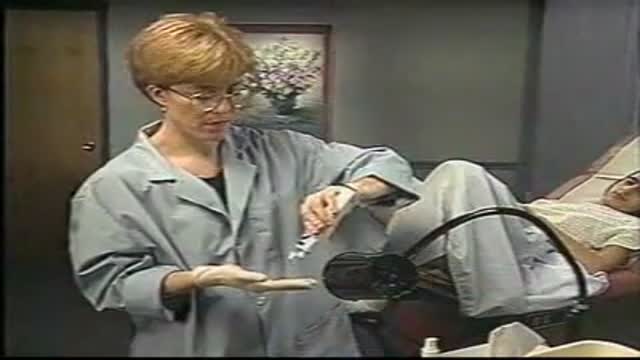
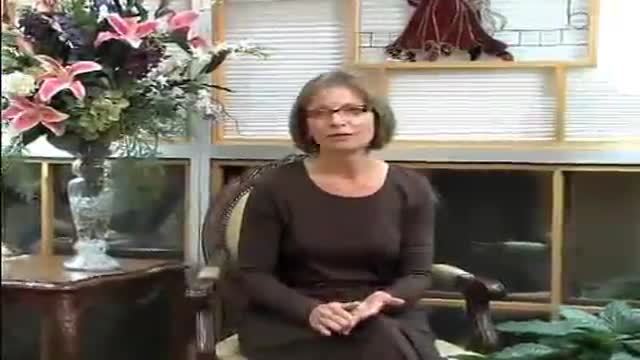
Hi, I'm Teresa Sisko and I'd like to talk to you today a little bit about doing your own breast self-exam and the value that it can bring to overhaul breast health. There are three main components now to detection for early breast cancer and that first is mammography. It's the best tool. It's the gold standard that we have right now for early detection and at age appropriate. And right now the recommendation is that you have your baseline by age 40 and that every year after age 40 you have your routine screening mammogram.
The next component is having a good breast exam by your provider and your provider or your nurse practitioner or your physician are going to bring more objectivity as they're doing their exam with you. And the third component is doing your own breast self-exam and you bring expertise about yourself that nobody else has. So it's important that you're familiar with yourself. If you're all doing all three of those things, you're having your mammogram, you're having your physician or your nurse practitioner do a breast exam with you and you're doing
your own exam, you're doing everything that you possibly can to ensure your overhaul breast health. There's three components to good breast self-exam and remember that you bring expertise about yourself that nobody else has. And the mission when you're doing your own exam is not a mission to find a problem but it's to become familiar with yourself so that you would know if something looked different or felt different. For when you're actually doing your own breast self-exam, we've developed a little handout that you can kind of use as an excellent tool.
It kind of goes through again guidelines as far as the recommendations for when you're doing your mammogram and doing your breast self-exam. But then it actually is going to step you through the process of the breast self-exam. And there's three components basically. You're looking at a visual exam, part of the exam you could do in the baths have a shower and the other part you should do ideally when you're lying down because the breast can feel very different when you're lying down versus when you're standing. The visual exam, the importance there is just standing in front of a mirror with
your hands relaxed looking at what's normal for you. None of us are perfectly symmetrical so you just need to become familiar with what's normal for you. Put your hands on your hips and do kind of a flexing motion. You can put your hands above your head. And basically what that's doing is just getting that breast tissue to kind of move. And what you're looking for in particular is any dimpling of the skin or if all of a sudden the nipple was being pulled in or pointing off into a different direction.
This could be an indication of a change that's going on to the breast. Other things that you can be looking for are skin changes. If all of a sudden one breast looked really red or inflamed, that could be an indication of a problem. And what you want to do is make sure that you check with your physician or your nurse practitioner if there's something that looks different than what's normal for you. Doing a visual exam too I always encourage women to go beyond their breasts and look at their skin in general.
You're looking for moles that could change. You're looking for sores that aren't healing, discoloration of the breast that's not unusually normal for you. And particularly if something is happening on one breast and not the other. Part of the exam you can do in the bath or shower and this is a great time. We tend to be there anyhow. We have privacy. And you can use your soapy hand. If you're having a period, the best time to do your exam is when your period is done. Ideally day seven to ten is the day that would be a good time to be doing it.
Day one is the day that you get your period. If you're not having a period and you're not on any hormone replacement therapy or if you're on a cycling kind of pattern on hormone replacement therapy, you can talk to your doctor or your nurse practitioner as to when would be the best time. But often you can just take them a day of the month, first day of the calendar, whatever works for you to help you remind yourself to do that exam. In the bath, tub or shower, remember that the best tool that we have as women
if we have both breasts is to use the opposite breast as a comparison. So if I felt something over in this area, I'm going to examine the other breast over in this area there. Key to remember that though is that if I have my hand up when I'm examining this breast, when I want to go over here, I want to put my hand up and examine in the same position. Good kind of tool for us as women is to think about the face of a clock. So if we're examining ourselves, this is going to be 12,
it's going to be three, six, nine o'clock. If I'm going to be doing the opposite breast, I'm lifting this up. And again, this is going to be 12, three, six, and nine. So when I'm comparing, I'm comparing nine o'clock here to three o'clock here. So think of the face of a clock and that's an helpful tool for us to do. Ideally, you'll do some of the exam when you're lying down because the breasts, again, like I said, can feel very different when you're lying down versus when you're standing.
If you're lying down and when you put your hand behind your head, the breast falls off to the side. You can actually roll and examine that area. Again, be creative and kind of go through and try to examine the entire breast. And when you're examining, you're examining from the collar bone to the midline of your chest, below the fold, and way up into the underarm. It's not just the pendulous part of the breast that you want to be paying attention to.
The reverse side of this handout has some of the more warning signs. We've talked a little bit about the dimpling of the skin or if the nipple was inverted. I do want to say that some women naturally can have an inverted nipple. And if that's something that you've always had, then that can be just a natural occurrence for you. Basically, what the key word here, though, when you're looking for doing your exam, is just change. Something that's different than normal for you. Nipple discharge, 90% of the time nipple discharge is not related to a breast cancer,
but it always needs to be evaluated. So if you're noticing discharge, particularly discharge that comes on its own, you want to make sure that you talk to your doctor or your nurse practitioner about it and have them evaluate it from that point. If you should feel anything unusual in the breast, and women describe their breast cancers or non-cancerous changes in a variety of ways that could be a thickening, a hard lump, a little pee, a ropey feeling. But what they'll all have in common is they'll say it was different than anything that they'd felt before.
So again, the key is, and the whole reason we encourage you to do breast-self exam, is to become familiar with yourself. Remember again that you bring that expertise about yourself that nobody else has. So anything that you would feel unusual, make sure that your doctor or your nurse practitioner is aware of it. The other thing that you're looking for is any kinds of skin changes. Some rare types of cancers can show up like an inflammatory process, where the breasts may look reddened, discolored, may or may not have pain associated with it,
but it looks again different than what's normal. Make sure that you see your nurse practitioner. If they treat you for an infection or another process and it's not responding, make sure that you go back in and talk to your provider again. Another thing to be looking for is if all of a sudden the pores look really enlarged on the skin. We call that port orange or skin of the orange, but it sometimes can be associated with a problem occurring underneath that area. The other thing to be aware of is any changes in the nipple itself,
particularly a scaly crustiness that could occur on the nipple. And this isn't just the normal dry skin that responds to lotion. This would be something that you maybe tried lotion on and it just hasn't been effective for you. Make sure that again that you see your provider and that if they treat you and it's not responding that you make sure that you go back and see your provider. So this handout is a very useful tool. And remember too that if you're not sure about doing your breast exam,
when you're in seeing your provider, ask them to step through the process with you and they'll be able to help you kind of identify areas in your breast that you may want to be familiar with.
Transcript auto-generated from the video’s audio for accessibility and study. Educational content only — not medical advice.
Video Overview
From our Women Health collection: Women's health videos: reproductive health, pregnancy, menopause, screenings and common conditions explained by specialists. Browse all Women Health videos →
Medical Videos
Free medical and surgery videos for patients, students and professionals — trusted since 2007.
Founded by Dr. Mohamed Ibrahim, MD, PhD — physician-scientist.
Follow us on Facebook · Instagram
SORT BY-
Top Comments
-
Latest comments