
- Physical Examination
- Surgical Examination
- Ophthalmology
- Clinical Skills
- Orthopedics
- Surgery Videos
- Laparoscopy
- Pediatrics
- Funny Videos
- Cardiothoracic Surgery
- Nursing Videos
- Plastic Surgery
- Otorhinolaryngology
- Histology and Histopathology
- Neurosurgery
- Dermatology
- Pediatric Surgery
- Urology
- Dentistry
- Oncology and Cancers
- Anatomy Videos
- Health and Fitness
- Radiology
- Anaesthesia
- Physical Therapy
- Pharmacology
- Interventional Radiology
- Cardiology
- Endocrinology
- Gynecology
- Emergency Medicine
- Psychiatry and Psychology
- Childbirth Videos
- General Medical Videos
- Nephrology
- Physiology
- Diet and Food Health
- Diabetes Mellitus
- Neurology
- Women Health
- Osteoporosis
- Gastroenterology
- Pulmonology
- Hematology
- Rheumatology
- Toxicology
- Nuclear Medicine
- Infectious Diseases
- Vascular Disease
- Reproductive Health
- Burns and Wound Healing
- Kidney Zone Podcast
- Other
Fluids and Your Kidneys
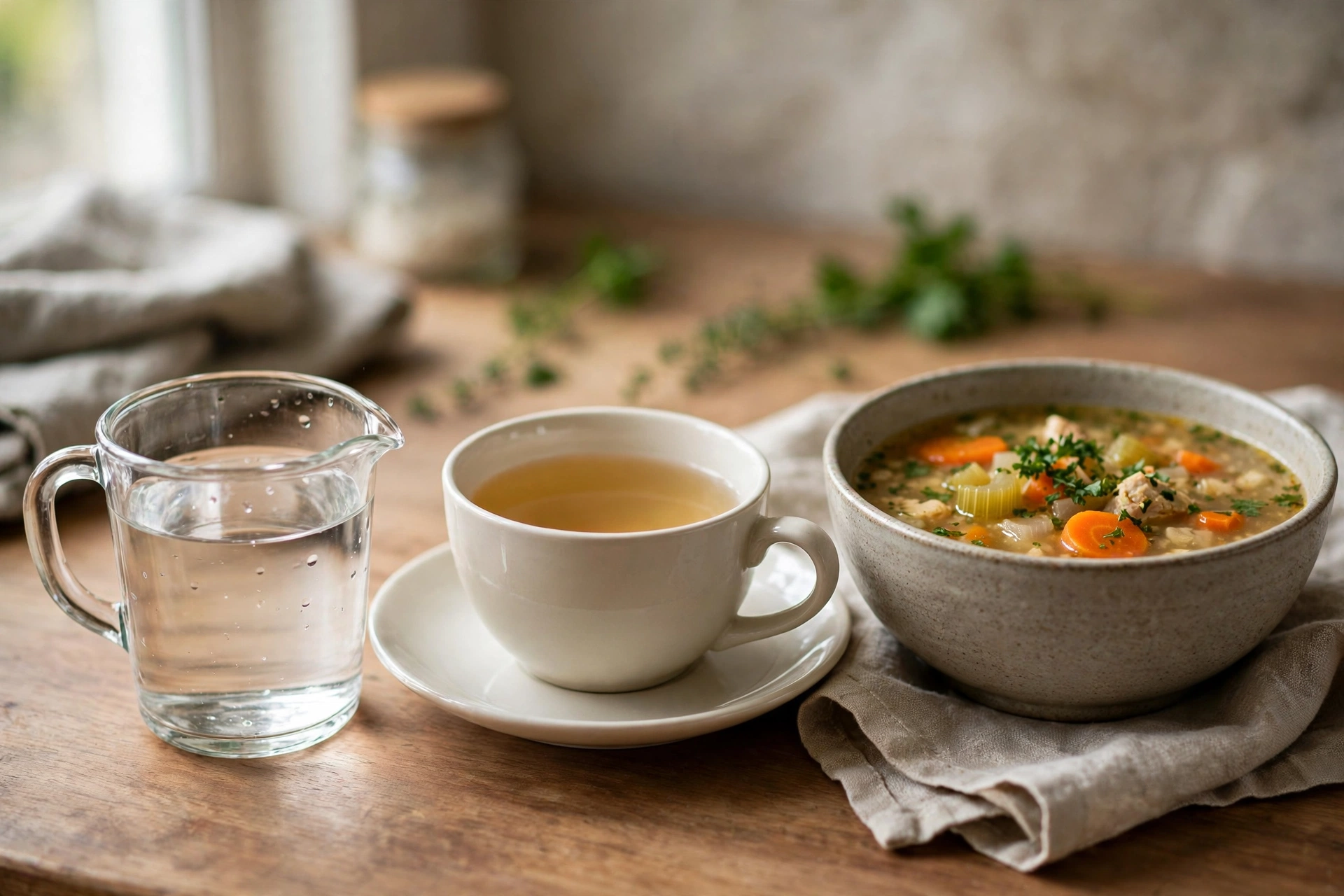
Fluid is everything that is liquid at room temperature — drinks, soups, ice, jelly and ice cream all count when fluid is restricted.
Why it matters in kidney disease
Fluid balance is one of the kidneys' main jobs. Healthy kidneys adjust urine output to match what you drink; failing kidneys cannot, so fluid accumulates — raising blood pressure, swelling ankles, and in severe cases collecting in the lungs and causing breathlessness. On hemodialysis, the fluid gained between sessions must all be removed in a few hours, and large gains make treatment harder on the heart.
Not everyone with kidney disease needs a fluid restriction. Early CKD usually needs none; many transplant patients are encouraged to drink well. Restrictions are most common in advanced CKD and hemodialysis. Your team sets your allowance, often based on how much urine you still pass.
Where it hides
- Soups, stews, gravies and sauces
- Ice, ice lollies and ice cream; jelly and custards
- Melons, oranges and other juicy fruits in quantity
- Water taken with medicines across the day — small sips that add up
- Yogurt, milk on cereal and milky drinks
Practical swaps
- Large glasses → a small cup or glass, filled fully — it feels like more than a half-filled big glass
- Drinking from thirst habit → ice chips or frozen grapes, which melt slowly and stretch the sensation of drinking
- Salty meals (which drive drinking) → lower-sodium cooking; the less salt, the less thirst
- Dry mouth → sugar-free sweets, chewing gum, or rinsing your mouth with water without swallowing
- Forgotten allowance → measure your day's allowance into a jug each morning and pour from it, so you can see where you stand
Related conditions
Related procedures & tests
Related symptoms
Frequently asked questions
What counts as fluid?
Anything liquid at room temperature: water, tea, coffee, juice, milk, soups, sauces, ice, jelly, ice cream and custard, and the liquid in juicy foods. Your team can show you how to tally a typical day. Foods that are solid — bread, rice, vegetables — contain water too but are not usually counted in an allowance.
How do I know if I am gaining too much fluid?
Weigh yourself daily at the same time, in similar clothing; rapid gain over a day or two is fluid, not fat. Swelling ankles, tight shoes or rings, and breathlessness — especially lying flat or waking you short of breath at night — are warning signs. Breathlessness needs same-day medical advice; do not wait for your next dialysis session or appointment.
These pages are general education about eating with kidney disease, dialysis or a kidney transplant. They are not medical advice and do not replace your own care plan. Kidney diets are individual: what is right for you depends on your stage, your blood tests, your medicines and your other conditions. Always talk to your care team or renal dietitian before changing what you eat, and never stop or change a medicine because of something you read here.