
- Physical Examination
- Surgical Examination
- Ophthalmology
- Clinical Skills
- Orthopedics
- Surgery Videos
- Laparoscopy
- Pediatrics
- Funny Videos
- Cardiothoracic Surgery
- Nursing Videos
- Plastic Surgery
- Otorhinolaryngology
- Histology and Histopathology
- Neurosurgery
- Dermatology
- Pediatric Surgery
- Urology
- Dentistry
- Oncology and Cancers
- Anatomy Videos
- Health and Fitness
- Radiology
- Anaesthesia
- Physical Therapy
- Pharmacology
- Interventional Radiology
- Cardiology
- Endocrinology
- Gynecology
- Emergency Medicine
- Psychiatry and Psychology
- Childbirth Videos
- General Medical Videos
- Nephrology
- Physiology
- Diet and Food Health
- Diabetes Mellitus
- Neurology
- Women Health
- Osteoporosis
- Gastroenterology
- Pulmonology
- Hematology
- Rheumatology
- Toxicology
- Nuclear Medicine
- Infectious Diseases
- Vascular Disease
- Reproductive Health
- Burns and Wound Healing
- Kidney Zone Podcast
- Other
Iron and Your Kidneys
Iron is needed to make red blood cells. Kidney disease and dialysis both raise the risk of iron shortage and anaemia.
Why it matters in kidney disease
Iron is essential for making haemoglobin, the part of red blood cells that carries oxygen. Kidney disease attacks red-cell production from several directions: the kidneys make less erythropoietin (the hormone that orders new red cells), dialysis and frequent blood tests cause small ongoing losses, appetite falls, and some kidney diets restrict iron-rich foods. The result — anaemia — is a major cause of the fatigue, breathlessness and poor concentration people blame on 'just kidney failure'.
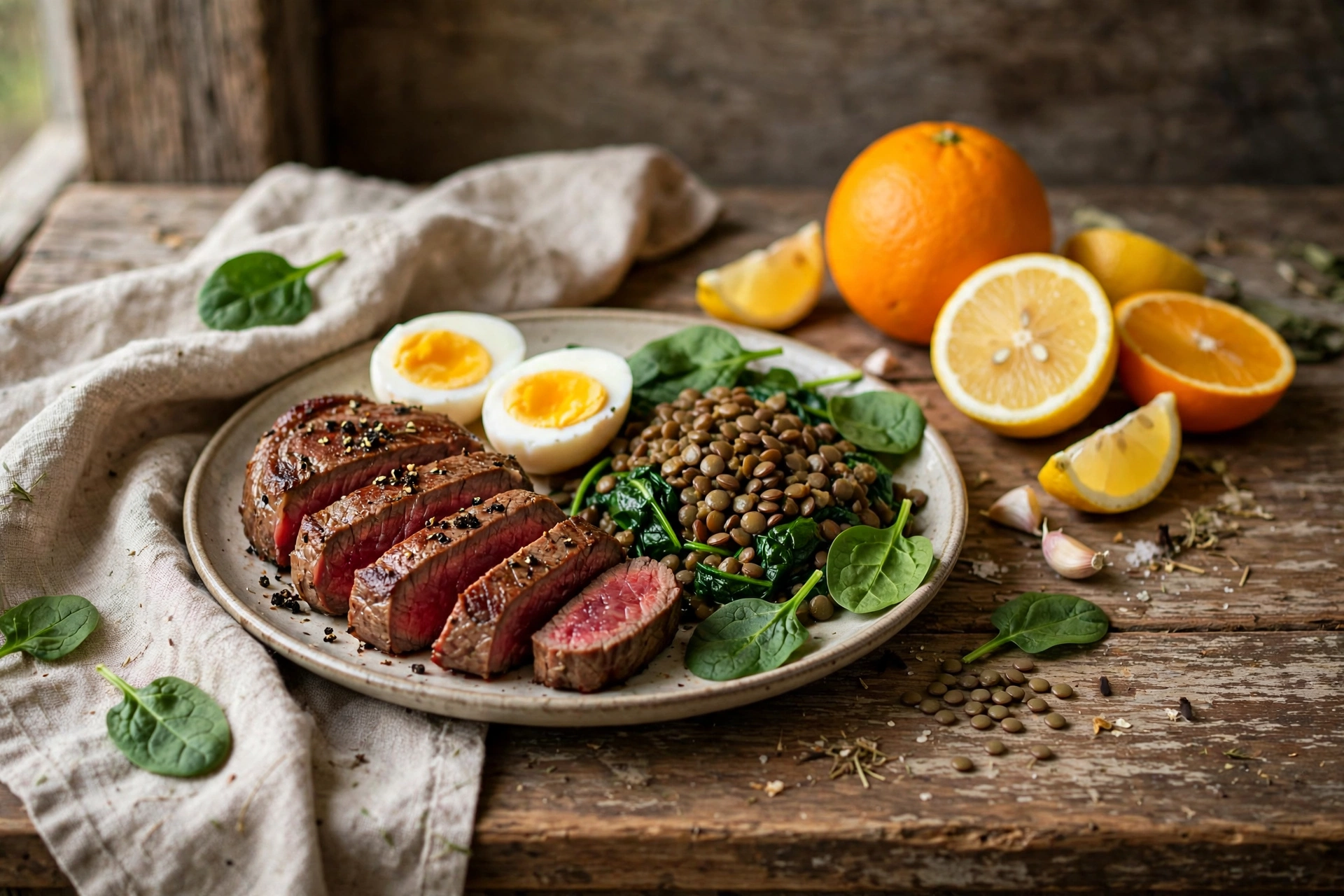
Iron comes in two food forms. Haem iron in meat, fish and poultry is absorbed well. Non-haem iron in plants and eggs is absorbed less easily, but vitamin C eaten at the same meal improves its uptake — while tea and coffee with the meal reduce it.
Where it hides
- Red meat — the richest everyday haem source (also higher in phosphorus and, for stone formers, purines: portions are a team decision)
- Shellfish, oily fish and poultry (dark meat has more iron than breast)
- Eggs, beans, lentils, tofu and fortified cereals (non-haem iron)
- Spinach and other leafy greens — contain iron, though less absorbable than folklore suggests, and high in potassium and oxalate for some patients
- Iron supplements — prescribed as tablets or given intravenously on dialysis units
Practical swaps
- Tea or coffee with meals → move them to between meals so they do not block iron absorption
- Plant iron alone → pair it with a vitamin C food you can eat (peppers, citrus you are allowed, berries) to boost uptake
- Skipping meat entirely by accident → include a modest portion of meat, fish or poultry regularly if your team is treating anaemia
- Self-treating with iron tonics → ask for ferritin and iron blood tests first; iron overload is also harmful, and supplements can clash with phosphate binders and some antibiotics
Related conditions
Related symptoms
Frequently asked questions
Can food alone fix anaemia of kidney disease?
Usually not by itself. Kidney anaemia is mainly a hormone problem — too little erythropoietin — so treatment often combines iron (by mouth or by vein) with erythropoietin-type injections when needed. Food supports that treatment: enough iron, folate and vitamin B12 give the medicines raw material to work with. If you are breathless or exhausted, ask for a blood count and iron studies rather than just eating more spinach.
Why did my iron tablets upset my stomach — and do timings matter?
Oral iron commonly causes nausea, constipation or black stools. Taking it exactly as your team directs matters: some binders and medicines block its absorption if taken together, and food blunts absorption too. If side effects are stopping you taking it, tell your team — intravenous iron on the dialysis unit or clinic is a common alternative.
These pages are general education about eating with kidney disease, dialysis or a kidney transplant. They are not medical advice and do not replace your own care plan. Kidney diets are individual: what is right for you depends on your stage, your blood tests, your medicines and your other conditions. Always talk to your care team or renal dietitian before changing what you eat, and never stop or change a medicine because of something you read here.