
- Physical Examination
- Surgical Examination
- Ophthalmology
- Clinical Skills
- Orthopedics
- Surgery Videos
- Laparoscopy
- Pediatrics
- Funny Videos
- Cardiothoracic Surgery
- Nursing Videos
- Plastic Surgery
- Otorhinolaryngology
- Histology and Histopathology
- Neurosurgery
- Dermatology
- Pediatric Surgery
- Urology
- Dentistry
- Oncology and Cancers
- Anatomy Videos
- Health and Fitness
- Radiology
- Anaesthesia
- Physical Therapy
- Pharmacology
- Interventional Radiology
- Cardiology
- Endocrinology
- Gynecology
- Emergency Medicine
- Psychiatry and Psychology
- Childbirth Videos
- General Medical Videos
- Nephrology
- Physiology
- Diet and Food Health
- Diabetes Mellitus
- Neurology
- Women Health
- Osteoporosis
- Gastroenterology
- Pulmonology
- Hematology
- Rheumatology
- Toxicology
- Nuclear Medicine
- Infectious Diseases
- Vascular Disease
- Reproductive Health
- Burns and Wound Healing
- Other
Latest videos


After watching our video on nasal irrigation for natural sinus relief, visit http://www.nasalcleanse.com/index.html. Learn how & why this natural sinus remedy really works! Unlike messy, old-fashioned neti pots or competitors with badly designed, backflow-prone squeeze bottles that can cause sinus infection, NasalCare has a patented nasal rinse system that delivers a comfortable, soothing formula throughout the nasal passages, preventing sinus infection, allergy and post nasal drip. A mix of sea salt and Aloe Vera extract washes away nasal irritants and the common causes of colds and flu while providing nasal congestion relief. NasalCare also acts as a sinus rinse for allergy treatment. Used for centuries in the Orient as a natural remedy and preventative measure for all sinus conditions, nasal irrigation is just catching on here.

Tummy Tuck Surgery Video

This a very interesting video showing liposuction and tummy tuck surgery video
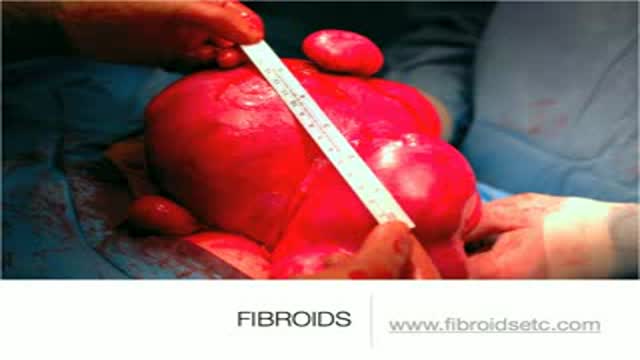
A uterine fibroid (also uterine leiomyoma, myoma, fibromyoma, leiofibromyoma, fibroleiomyoma, and fibroma) (plural of ... myoma is ...myomas or ...myomata) is a benign (non-cancerous) tumor that originates from the smooth muscle layer (myometrium) and the accompanying connective tissue of the uterus. Fibroids are the most common benign tumors in females and typically found during the middle and later reproductive years. While most fibroids are asymptomatic, they can grow and cause heavy and painful menstruation, painful sexual intercourse, and urinary frequency and urgency. Uterine fibroids is the major indication for hysterectomy in the US.[2] Fibroids are often multiple and if the uterus contains too many leiomyomatas to count, it is referred to as uterine leiomyomatosis. The malignant version of a fibroid is uncommon and termed a leiomyosarcoma.
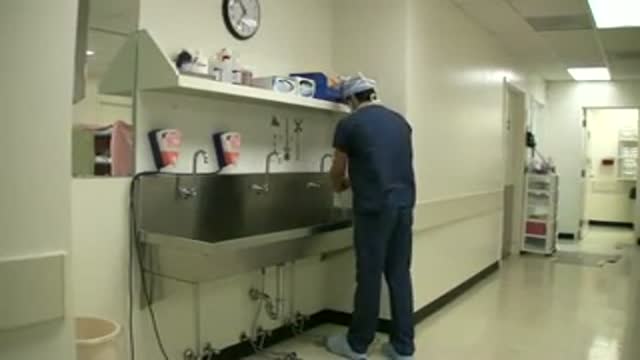
Chapel Hill Tubal Reversal Center - www.tubal-reversal.net - illustrates proper hand hygiene technique for surgical scrub to disinfect the hands prior to entering the operating room for tubal ligation reversal surgery.
Breast Recurrence Cryosurgery: Theoretical, experimental and clinical research since 1995;
International Institute for Cryosurgery, Rudolfinerhaus, Vienna, Austria
A closure device and method to close the abdomen between surgical procedures and maintain a normal physiologic tension on the fascia to prevent undue retraction. In one embodiment, the closure device includes a “needled carabiner” attached to a rubberband of specific tension. The rubberband mimics the physiologic tension the abdominal wall normally experiences during daily activities and allows the abdominal compartment to expand as needed to maintain a healthy intra-abdominal pressure. The bands contract to maintain the intra-abdominal pressure and slowly pull the abdominal fascia back to the midline to facilitate surgical closure of the abdomen. In one embodiment, the “needled carabiner” includes a hinged surgical needle with a protected cap. The hinged needle is placed outside the normal suture line, thereby limiting the amount of surgical trauma the fascia endures. The strength of the rubberbands may be varied to accommodate differently sized individuals.
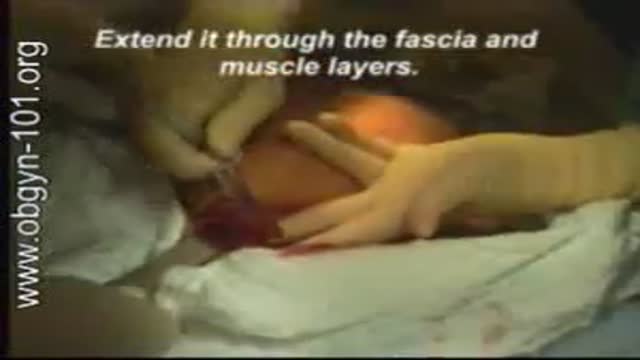
At one time, women who had delivered by cesarean section in the past would usually have another cesarean section for any future pregnancies. The rationale was that if allowed to labor, many of these women with a scar in their uterus would rupture the uterus along the weakness of the old scar. Over time, a number of observations have become apparent: Most women with a previous cesarean section can labor and deliver vaginally without rupturing their uterus. Some women who try this will, in fact, rupture their uterus. When the uterus ruptures, the rupture may have consequences ranging from near trivial to disastrous. It can be very difficult to diagnose a uterine rupture prior to observing fetal effects (eg, bradycardia). Once fetal effects are demonstrated, even a very fast reaction and nearly immediate delivery may not lead to a good outcome. The more cesarean sections the patient has, the greater the risk of subsequent rupture during labor. The greatest risk occurs following a “classical” cesarean section (in which the uterine incision extends up into the fundus.) The least risk of rupture is among women who had a low cervical transverse incision. Low vertical incisions probably increase the risk of rupture some, but usually not as much as a classical incision. Many studies have found the use of oxytocin to be associated with an increased risk of rupture, either because of the oxytocin itself, or perhaps because of the clinical circumstances under which it would be contemplated. Pain medication, including epidural anesthetic, has not resulted greater adverse outcome because of the theoretical risk of decreasing the attendant’s ability to detect rupture early. The greatest risk of rupture occurs during labor, but some of the ruptures occur prior to the onset of labor. This is particularly true of the classical incisions. Overall successful vaginal delivery rates following previous cesarean section are in the neighborhood of 70 This means that about 30of women undergoing a vaginal trial of labor will end up requiring a cesarean section. Those who undergo cesarean section (failed VBAC) after a lengthy labor will frequently have a longer recovery and greater risk of infection than had they undergone a scheduled cesarean section without labor. Women whose first cesarean was for failure to progress in labor are only somewhat less likely to be succesful in their quest for a VBAC than those with presumably non-recurring reasons for cesarean section. For these reasons, women with a prior cesarean section are counseled about their options for delivery with a subsequent pregnancy: Repeat Cesarean Section, or Vaginal Trial of Labor. They are usually advised of the approximate 70successful VBAC rate (modified for individual risk factors). They are counseled about the risk of uterine rupture (approximately 1in most series), and that while the majority of those ruptures do not lead to bad outcome, some of them do, including fetal brain damage and death, and maternal loss of future childbearing. They are advised of the usual surgical risks of infection, bleeding, anesthesia complications and surgical injury to adjacent structures. After counseling, many obstetricians leave the decision for a repeat cesarean or VBAC to the patient. Both approaches have risks and benefits, but they are different risks and different benefits. Fortunately, most repeat cesarean sections and most vaginal trials of labor go well, without any serious complications. For those choosing a trial of labor, close monitoring of mother and baby, with early detection of labor abnormalities and preparation for
Liposuction, also known as lipoplasty (”fat modeling”), liposculpture suction lipectomy or simply lipo (”suction-assisted fat removal”) is a cosmetic surgery operation that removes fat from many different sites on the human body. Areas affected can range from the abdomen, thighs, buttocks, to the neck, backs of the arms and elsewhere.
Suction-assisted lipectomy of bilateral outer thighs
Several factors limit the amount of fat that can be safely removed in one session. Ultimately, the operating physician and the patient make the decision. There are negative aspects to removing too much fat. Unusual “lumpiness” and/or “dents” in the skin can be seen in those patients “over-suctioned”. The more fat removed, the higher the surgical risk.
While reports of people removing 50 pounds (22.7 kg) of fat has been claimed, the contouring possible with liposuction may cause the appearance of weight loss to be greater than the actual amount of fat removed. The procedure may be performed under general or local (”tumescent”) anesthesia. The safety of the technique relates not only to the amount of tissue removed, but to the choice of anesthetic and the patient’s overall health. It is ideal for the patient to be as fit as possible before the procedure and not to have smoked for several months.
New robotic surgery procedure pioneered at Washington University School of Medicine in St. Louis to remove tumors from kidneys in a minimally invasive way

A new promising technique in saving the lives of patients with cancer of the esophagus. It is minimally invasive and the recovery time is quicker than ever. H. Lee Moffitt Cancer Center
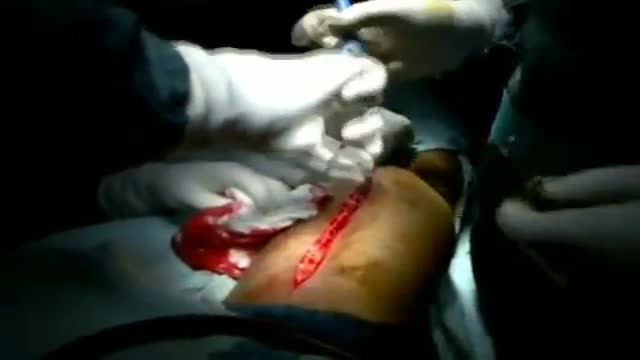
A case of soft tissue Sarcoma of the thigh presenting as a long standing mass that recently showed rapid gross and fluctuation. Patient 34 years old presented with sever pain and inability to walk. Abscess like symptoms
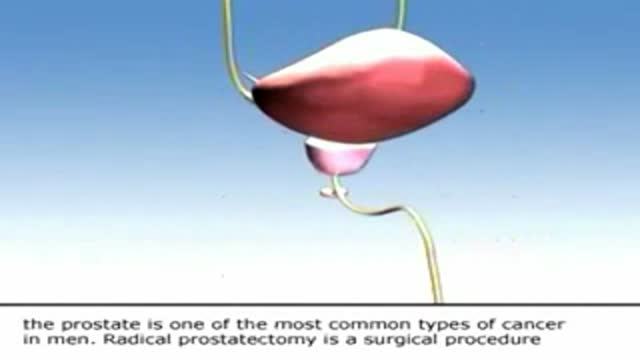
This is an educational video for the prostate cancer patients and their families. Depending on the individual patient, a radical prostatectomy, might be a procedure that your urologist could recommend as treatment. Here is a brief demonstration of this procedure.

A video showing the process of childbirth via vaginal delivery.

A spontaneous vaginal delivery (SVD) occurs when a pregnant woman goes into labor with or without use of drugs or techniques to induce labor, and delivers her baby in the normal manner, without forceps, vacuum extraction, or a cesarean section. Assisted vaginal delivery (AVD) occurs when a pregnant woman goes into labor with or without the use of drugs or techniques to induce labor, and requires the use of special instruments such as forceps or a vacuum extractor to deliver her baby vaginally.
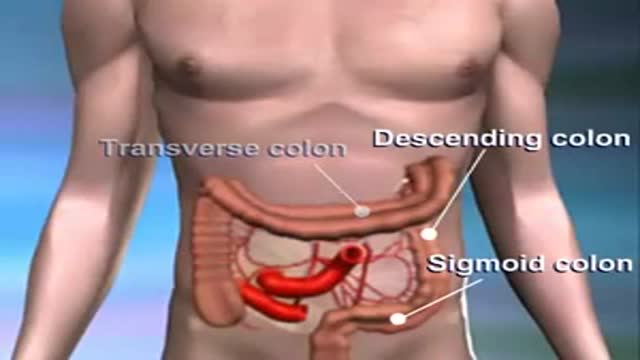
Colon cancer usually begins as a non-cancerous growth. If caught early enough, it can be safely removed with little to no complications.

Source ABC7, 24 November 2009 An initial single-arm Phase II trial (ACT II) has reported promising preliminary data in 23 patients who received CDX-110 vaccine. Median time to disease progression was 16.6 months and estimated median overall survival was 33.1 months. This compared favorably with data for a historical control group in which median time to progression was 6.4 months and median overall survival was 15.2 months. The study was sponsored by Celldex Therapeutics Inc. of Phillipsburg, NJ
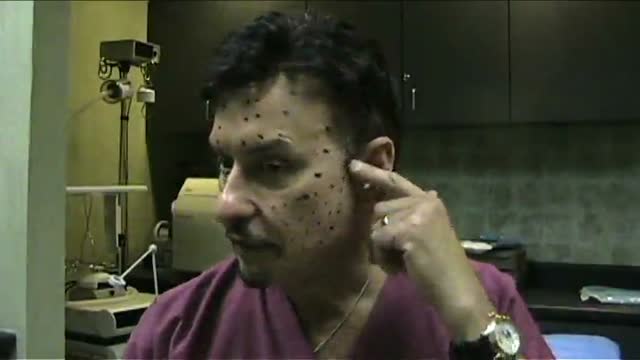
Looking for Smart Lipo treatment in Shrewsbury, Monmouth, New Jersey, then visit Medispa. For successful liposuction procedures consider our smart lipo treatment offers, at a cost that suits your pocket.
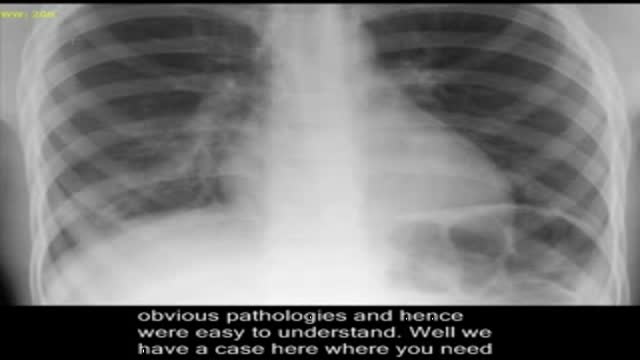
Subtle pneumonia. How to diagnose pneumonia on chest x-ray. Please visit my website for disclaimer. www.academyofprofessionals.com. Multiple choice questions are also available for those who might want to enhance their knowlege or test themselves.
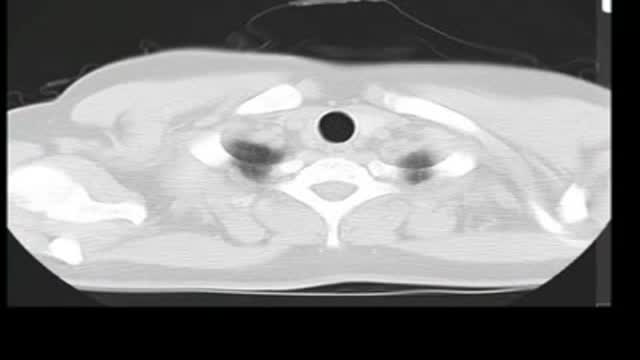
Pulmonary alveolar proteinosis. Please see disclaimer on my website. www.academyofprofessionals.com. MCQs are also available.
