- Physical Examination
- Surgical Examination
- Ophthalmology
- Clinical Skills
- Orthopedics
- Surgery Videos
- Laparoscopy
- Pediatrics
- Funny Videos
- Cardiothoracic Surgery
- Nursing Videos
- Plastic Surgery
- Otorhinolaryngology
- Histology and Histopathology
- Neurosurgery
- Dermatology
- Pediatric Surgery
- Urology
- Dentistry
- Oncology and Cancers
- Anatomy Videos
- Health and Fitness
- Radiology
- Anaesthesia
- Physical Therapy
- Pharmacology
- Interventional Radiology
- Cardiology
- Endocrinology
- Gynecology
- Emergency Medicine
- Psychiatry and Psychology
- Childbirth Videos
- General Medical Videos
- Nephrology
- Physiology
- Diet and Food Health
- Diabetes Mellitus
- Neurology
- Women Health
- Osteoporosis
- Gastroenterology
- Pulmonology
- Hematology
- Rheumatology
- Toxicology
- Nuclear Medicine
- Infectious Diseases
- Vascular Disease
- Reproductive Health
- Burns and Wound Healing
- Kidney Zone Podcast
- Other
Sweat Glands
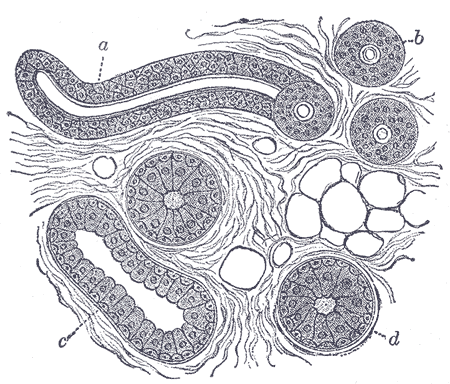
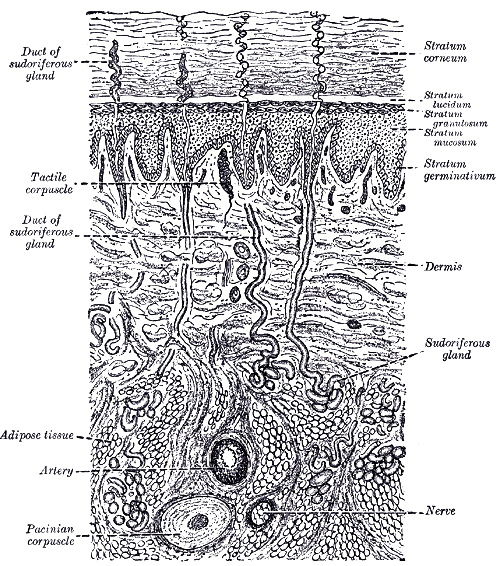
Gray's Anatomy (1918) plate, public domain
Sweat glands cool the body: 2-4 million eccrine glands open directly onto the skin almost everywhere and secrete watery sweat whose evaporation sheds heat. They are densest on the palms, soles and forehead and are switched on by the sympathetic nervous system in response to temperature and emotion. Apocrine glands, opening into hair follicles in the armpits and groin, activate at puberty and produce the secretion whose bacterial breakdown causes body odour.
Key facts
- You can sweat over a litre an hour in heavy exercise or heat, though rates vary greatly between people.
- Sweat itself is nearly odourless; odour develops when skin bacteria metabolise apocrine secretions.
- Palms and soles sweat mainly with emotion, the rest of the body mainly with heat.
- Sweat contains salts, which is why heavy sweating without replacement can cause cramps and why cystic fibrosis is tested by sweat salt levels.
What can go wrong
Overactive sweating (hyperhidrosis) — often focused on palms, soles, armpits or face — can be socially disabling and is assessed for causes such as thyroid overactivity. New generalised sweating, especially drenching night sweats, can signal infections or lymphoma and merits review. Blocked glands in hot conditions cause prickly heat; inflamed apocrine areas cause hidradenitis suppurativa, with painful recurrent boils in the armpits and groin.
Related procedures & tests
Related symptoms
Frequently asked questions
Why do we sweat when anxious?
The sympathetic nervous system primes the body for action — and pre-emptively switches on cooling, particularly in the palms and soles, which also improves grip.
What is hyperhidrosis?
Sweating beyond what temperature control requires, often focal (palms, soles, armpits), starting in youth and symmetrical — distinct from new generalised sweating, which prompts a search for a cause.
Educational information only. This atlas explains normal anatomy and describes conditions in general terms; it is not medical advice and does not replace assessment by a qualified clinician. If you have symptoms that worry you, seek medical care.